
- LOGIN
- MemberShip
- 2026-07-22 15:42:30
- Company
- Galafold reimbursed as first-line drug for Fabry disease
- by Nho, Byung Chul Aug 04, 2025 05:54am
- Reimbursement for Handok's Fabry disease treatment, Galafold (migalastat), will be expanded to cover its use as a first-line treatment starting on the first of this month. Previously, Galafold was covered only for patients aged 16 and older who had been administered enzyme replacement therapy (ERT) intravenously for at least 12 months. With this expansion of reimbursement, Galafold can now be prescribed as a first-line treatment without 12 months of enzyme replacement therapy. In addition, as stated in the approval, patients aged 12 years and older (weighing 45 kg or more) will be eligible for insurance reimbursement. Galafold is the world's first oral treatment for Fabry disease, developed by Amicus and supplied by Handok in South Korea. It is currently used in 45 countries, including the United States, the United Kingdom, Australia, Japan, and Europe, and was approved in Korea in 2017 and became listed for reimbursement in 2019. Unlike enzyme replacement therapy, which requires patients to visit the hospital once every two weeks for intravenous injections lasting several hours, Galafold is an oral treatment that patients can take themselves once every two days. This improves the convenience of medication administration and quality of life for Fabry disease patients. Galafold demonstrated a sustained and long-term safety profile in maintaining kidney function and reducing cardiac mass index when switching from enzyme replacement therapy to Galafold in Fabry disease patients with a compliant genotype, as confirmed by a 30-month long-term clinical trial. Additionally, in the switching group, cardiac adverse reactions occurred in 20% of patients receiving enzyme replacement therapy, but the rate decreased to 7% after switching to Galafold. Galafold demonstrated efficacy and safety not only in patients switching from enzyme replacement therapy but also in treatment-naive patients. In the Phase III FACET study, a 24-month clinical trial of Galafold in treatment-naive or enzyme replacement therapy-naive patients with Fabry disease harboring a compliant mutation, cardiac mass index decreased significantly from baseline, with a greater reduction in patients with left ventricular hypertrophy. (Overall: -7.7 ± 3.7 g/m², patients with left ventricular hypertrophy: -18.6 ± 8.3 g/m²) Additionally, in the long-term real-world patient registry study followMe , Galafold maintained stable renal function over an average treatment duration of 3.9 years, and that Fabry disease-related clinical events occurred in less than 80% of patients, confirming renal preservation and multi-organ benefits. Recently, the results of the ASPIRE study in pediatric patients were published in the May issue of the international academic journal ‘Molecular Genetics and Metabolism.’ The ASPIRE study showed that pediatric patients treated with Galafold maintained stable renal and cardiac markers, plasma lyso-Gb3 levels, and improvements in pain, gastrointestinal symptoms, and quality of life. Additionally, no new adverse reactions or unexpected safety issues were observed in the safety evaluation.
- Company
- Otsuka launches once-every-2-months inj 'Abilify Asimtufii'
- by Whang, byung-woo Aug 04, 2025 05:54am
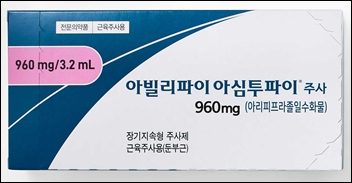
- Product photo of Otsuka Pharmaceutical Korea announced on August 1 that it will launch 'Abilify Asimtufii Inj (aripiprazole monohydrate),' starting in August, as the reimbursement coverage by the National Health Insurance has been applied. 'Abilify Asimtufii Inj' is an extended-release formulation administered once every two months. It was approved on February 26 by the Ministry of Food and Drug Safety as a monotherapy for the treatment of schizophrenia and bipolar I disorder. A single administration can sustain a stable blood drug concentration for two months, thus it is expected to contribute to reducing the burden of medication and increasing treatment convenience in patients with psychiatric diseases. Abilify Asimtufii Inj is being launched as two dosages: 960 mg and 720 mg. The convenience of administration has been improved. For Abilify Maintena Inj, preparation before administration requires vigorous shaking for about 20 seconds after reconstitution. However, Abilify Asimtufii has been simplified, requiring only 10 gentle taps followed by shaking for 10 seconds, eliminating the need for a reconstitution process. Furthermore, similar to the existing 1-month prolonged-release injectable Abilify Maintena, patients stably taking oral aripiprazole can initiate treatment, or patients currently on Abilify Maintena can switch to Abilify Asimtufii on their next scheduled dose. A healthcare professional must administer it into the gluteal muscle. This formulation is an atypical antipsychotic drug that acts as a dopamine-serotonin system psychotropic agent. The efficacy of the drug was demonstrated in the treatment of schizophrenia and bipolar I disorder through partial agonism at dopamine D2 receptors and serotonin 5-HT1A receptors, and antagonism at serotonin 5-HT2A receptors. Sung-ho Moon, CEO of Korea Otsuka Pharmaceutical, said, "In the treatment of schizophrenia and bipolar I disorder, medication adherence is a crucial factor for patients' long-term prognosis, relapse prevention, recovery of social function, and improvement in quality of life," and added, "In Korea, medication adherence for psychiatric treatments is lower compared to other developed countries. Therefore, long-acting injectables will play an important role not only in therapeutic efficacy but also in improving adherence." Moon further added, "With Abilify Asimtufii, Otsuka Pharmaceutical Korea will actively support patients with schizophrenia and bipolar disorder in Korea to overcome their illnesses and improve their quality of life." Meanwhile, Abilify Asimtufii is currently used in over 26 countries, including the United States, Canada, the United Kingdom, and the EU.

- Company
- Integrated CKM approach, the new paradigm for CKD treatment
- by Whang, byung-woo Aug 04, 2025 05:53am
- “In the past, we relied solely on single agents such as ACE inhibitors or ARBs to treat chronic kidney disease, but now an integrated approach that simultaneously manages cardiovascular, renal, and metabolic conditions is rising as the option. In this context, the results of the CONFIDENCE study, a recent study on the early combined use of SGLT-2 inhibitors and Kerendia, are drawing attention.” With new drugs being introduced for chronic kidney disease in people with diabetes, an area where there were relatively few treatment options, treatment strategies are also evolving. In particular, given that many kidney disease patients have comorbidities such as diabetes, obesity, and heart disease, there is a growing emphasis on the use of the cardio-kidney-metabolic (CKM) approach. Professor Prabir Roy-Chaudhury (President of the American Society of Nephrology )Professor Prabir Roy-Chaudhury, Drs. Ronald and Katherine Falk Eminent Professor and President of the American Society of Nephrology, emphasized the importance of treatment strategies that consider the close association between cardio-kidney-metabolic in a recent interview with Dailypharm. Professor Chaudhury emphasized the importance of an integrated approach to CKM because there are now methods available in the real-world that can significantly impact all three components of CKM. He explained, “It is rare for kidney disease patients to have kidney abnormalities alone; most have various comorbidities such as diabetes and obesity, making it essential to maximize treatment efficacy through an integrated CKD framework. In other words, a treatment that can influence all areas of CKM—kidneys, diabetes, and even obesity—has become important.” Emphasis on integrated CKM management... results of the CONFIDENCE study draw attention One of the drugs that has recently attracted attention as a core component of this integrated approach is Kerendia (finerenone). Kerendia is the first non-steroidal mineralocorticoid receptor (MRA) antagonist with a new mechanism of action that directly inhibits inflammation and fibrosis in the kidneys. In large-scale Phase III studies such as FIDELIO-DKD and FIGARO-DKD, Kerendia has been proven to inhibit kidney function decline and reduce the risk of cardiovascular events. Its reimbursement was approved in South Korea in February last year, leading to an increase in prescriptions. Professor Chaudhury said, “Kerendia is gaining attention as a new treatment strategy for chronic kidney disease in patients with type 2 diabetes due to its mechanism that directly targets kidney inflammation and fibrosis. It also shows potential to delay progression to dialysis.” Notably, the recently published CONFIDENCE study results demonstrated that early combination therapy with Kerendia and an SGLT-2 inhibitor significantly reduced proteinuria (UACR), presenting new possibilities in practice. The study results showed that when the two drugs were administered together, the urine-albumin-creatinine ratio (UACR) at 180 days after treatment initiation decreased by an average of 52% compared to baseline, showing a 29% greater reduction than the Kerendia monotherapy group and a 32% greater reduction than the SGLT-2 inhibitor monotherapy group. Professor Chaudhury said, “In the CONFIDENCE study, patients who received the combination therapy early on showed a 32% greater reduction in UACR at 180 days compared to the monotherapy group. These results demonstrate that early use of two drugs with different mechanisms of action can achieve greater efficacy in reducing albuminuria at six months.” He emphasized, “It is important to actively treat indicated patients with Kerendia from the early stages to reduce the urine-to-creatinine ratio (UACR).” Regarding safety concerns associated with the use of the combination of drugs, he said, “Combination therapy with the two drugs not only reduced proteinuria but also showed that it could be managed at an acceptable level when treatment approaches were tailored to individual patient characteristics.” Drug combination therapy opens a new treatment paradigm In particular, the main reason the professor is paying close attention to the results of the CONFIDENCE study is that he sees the potential for a “cure” for chronic kidney disease accompanied by diabetes. Professor Chaudhury said, “The key question to consider in the treatment of chronic kidney disease in people with diabetes is whether the combination of four classes of drugs can significantly reduce the number of patients progressing to end-stage kidney disease requiring dialysis or transplantation.” He added, “Just as we have entered an era where a cure is now a realistic possibility in cancer treatment, we have reached a stage where we can discuss the potential for cure in diabetes-associated chronic kidney disease through the combination of various medications.” He further emphasized, “From this perspective, the CONFIDENCE study is the first to bring us one step closer to our ultimate goal of a cure. It is particularly meaningful as the first study to demonstrate the potential of targeting different pathways to achieve the goal of a cure.” The significance of this study is that it provides direction for the simultaneous initiation of multiple classes of therapies and paves the way for their incorporation into future treatment guidelines. “Early diagnosis and improved access to treatment necessary for chronic kidney disease” Professor Chaudhury also stressed the need for improved disease awareness and education among patients, medical professionals, and the general public, as well as the importance of early diagnosis. He stated, “What is needed in all countries is education and improved awareness of the disease. We should not just check the kidneys when someone has diabetes or high blood pressure, but strengthen kidney disease screening for the entire population.” In particular, Professor Chaudhury emphasized that diabetes patients should regularly check albuminuria and eGFR from the time of diagnosis to monitor kidney damage early and intervene actively if abnormalities are detected. He explained, “Public health policies encompassing early diagnosis and improved access to treatment are necessary. Doctors, nurses, researchers, the pharmaceutical industry, insurers, and regulatory agencies must all work together.” Finally, he emphasized, “Proper use of new drugs is just as important as their development. The direction we should pursue is to actively disseminate and apply new treatment information to help patients maintain a healthy life without progressing to dialysis.”
- Company
- Rinvoq joins the competition in the alopecia areata trt. mkt
- by Whang, byung-woo Aug 04, 2025 05:53am
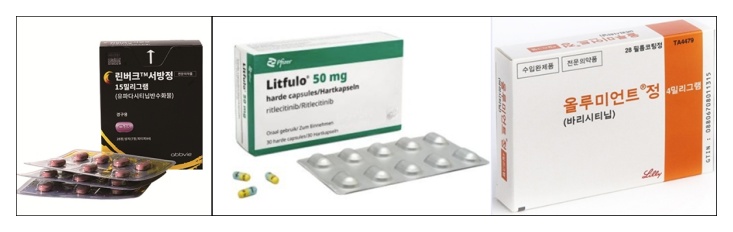
- AbbVie's JAK inhibitor Rinvoq (upadacitinib) is expected to enter the market competition following successful clinical trials for alopecia areata. Product photo of RinvoqAbbVie recently announced positive topline results from the No.2 study of the Phase 3 clinical program (UP-AA program) for Rinvoq in adult and adolescent patients with severe alopecia areata. In this trial, the primary endpoint has been met, with a significant increase in the proportion of patients achieving 80% or more scalp hair regrowth (the primary endpoint) at Week 24 compared to the placebo group. Based on these results, Rinvoq emerged as a strong candidate to join the alopecia areata treatment market. Specifically, 44.6% of patients in the Rinvoq 15mg arm and 54.3% in the Rinvoq 30mg group achieved 80% or more scalp hair regrowth (SALT score ≤20) at Week 24, compared to only 3.4% in the placebo group. Key secondary endpoints, including improved eyebrow and eyelash hair growth, achieving ≥90% scalp hair regrowth (SALT ≤10), and attaining complete scalp hair regrowth (SALT=0), were also met in both Rinvoq dose groups. The safety profile was largely consistent with what has been observed in existing Rinvoq indications, with no new safety signals identified. Arash Mostaghimi, Professor of Dermatology at Harvard Medical School and Brigham and Women's Hospital, said, "The sudden and often unpredictable hair loss experienced by patients with alopecia areata severely impacts their self-esteem and mental health," and added, "There is a desperate need for more therapies that help hair regrowth on the scalp and other areas. These results, showing the potential for upadacitinib to be an important new treatment option, are very favorable." Kori Wallace, the Vice President and Global Head of Immunology Clinical Development at AbbVie, stated, "UP-AA is the first pivotal clinical study to establish and achieve high goals such as SALT=0. These study results demonstrate AbbVie's commitment to advancing new therapies with the potential to improve the lives of patients with immune-mediated diseases." AbbVie plans to initiate global regulatory procedures based on these results. The clinical trial results announced included patients from Korea, suggesting that a swift approval process is anticipated. Third alopecia areata treatment is expected to emerge, and competition is anticipated If Rinvoq receives marketing authorization, it will become the third JAK inhibitor available in the domestic alopecia areata treatment market. Currently, two oral JAK inhibitors, Eli Lilly Korea's Olumiant (baricitinib) and Pfizer Korea's 'Litfulo (ritlecitinib),' can be used for the treatment of severe alopecia areata in Korea. Olumiant, approved by the Ministry of Food and Drug Safety (MFDS) in March 2023, became the first treatment for severe alopecia areata in adults in Korea. This drug was approved based on the results of the BRAVE-AA clinical trial, which showed that at 36 weeks, approximately 38.8% of patients receiving the 4 mg dose achieved 80% or more scalp hair regrowth, demonstrating superior efficacy compared to the placebo group (6.2%). Litfulo, the first alopecia areata treatment to gain an indication for adolescents aged 12 and older, received MFDS approval in September 2024 and was launched in Korea in March this year. In terms of mechanism of action, Olumiant simultaneously inhibits JAK1 and JAK2, while Litfulo selectively acts on JAK3 and TEC family kinases. The prevailing view in clinical settings is that sufficient data on treatment outcomes is needed for these two therapies, as a direct comparison is currently challenging. However, for adult patients, Olumiant could be considered for faster hair regrowth, while Litfulo might be preferred if safety concerns, such as the risk of infection, are prioritized. Compared to Olumiant, Litfulo is in the stage of accumulating prescription experience since its domestic launch, and its efficacy and safety profile in real-world patient populations will need further observation. (from left) Litfulo and Olumiant The late entrant Rinvoq is expected to join the market competition, backed by strong Phase 3 data. Rinvoq, as a selective inhibitor of JAK1, has a distinct target profile from existing drugs and is expected to appeal based on its proven efficacy and accumulated safety data from previous immune disease indications, such as atopic dermatitis. Notably, the high response rate of approximately half of the patients at week 24, confirmed in this trial, is expected to be a distinct strength in terms of short-term efficacy compared to competing drugs. Furthermore, adolescent patients were included in Rinvoq's global clinical trials, suggesting a high probability of securing an indication for ages 12 and older, similar to Litfulo, if approved in the future. This indicates that, in competition with Olumiant, which is limited to adult patients, Rinvoq will have a broader patient population. In competition with Litfulo, the experience accumulated in various indications, such as atopic dermatitis, will be a differentiating point. AbbVie has already successfully established Rinvoq as a treatment for atopic dermatitis in the dermatology field, leading to observations that it will effectively expand the alopecia areata indication to dermatology specialists, who are in the same prescribing group. In terms of treatment accessibility, the successive emergence of Olumiant and Litfulo in the field of alopecia areata, which previously had no approved treatments, marked a turning point in the treatment paradigm. With Rinvoq being introduced, the range of treatment options is expected to broaden further. However, the fact that alopecia areata cannot be reimbursed with the National Health Insurance and remains as the non-reimbursed drug is expected to be a barrier to market expansion.

- Company
- Janssen, Pharma distribution industry agree on margin adj
- by Son, Hyung Min Aug 01, 2025 06:18am
- The conflict between Janssen Korea and the pharmaceutical distribution industry over distribution margin reductions has been resolved with a negotiated settlement. The distribution industry achieved an outcome that maintains existing trade relationships, including with small and medium-sized distributors, while also improving the proposed margin reduction terms. Janssen Korea, in turn, reconfirmed its commitment to cooperation with the distribution industry, setting a precedent for mutual growth. According to industry sources, on August 1, the Korea Pharmaceutical Distribution Association recently announced that it has reached a final agreement with Janssen Korea regarding the reduction in distribution margin, following numerous negotiations. Notably, trade was maintained even for small and medium-sized distributors whose contracts were nearing expiration, and the entire distribution industry is deemed to have secured fair trade conditions without the involvement of the Fair Trade Commission. Previously, Janssen Korea had notified its distribution partners of a plan to pursue a two percentage point reduction from existing margins. While there were variations depending on individual contract terms, for example, a distributor with an existing 8% margin would see it adjusted to 6%. The distribution industry's position was that while some pharmaceutical companies had attempted margin adjustments of around one percentage point, a two percentage point adjustment was unprecedented. In response to this measure, member companies in Korea protested, standing firm and expressing their intent to refuse the distribution of Janssen products, stating that "they cannot handle products at a loss if margin cuts are enforced." In response, the Association immediately formed an emergency response committee and held several rounds of negotiations with Janssen Korea. Both sides narrowed their differences and finally formulated a negotiation proposal. While the specific details remain confidential, according to the Distribution Association, the distribution margins have been adjusted to an acceptable level, and trade terms that had burdened the distribution industry have been improved. The fact that small and medium-sized distributors whose contracts were expiring were not marginalized and could continue their business is considered a significant achievement. The pharmaceutical distribution industry and Janssen Korea officially convened a meeting to discuss distribution margin reductions. The Korea Pharmaceutical Distribution Association feels that this margin reduction conflict with Janssen Korea has strengthened its internal cohesion and external negotiation power. An official from the Distribution Association said, "Throughout numerous meetings, we conducted negotiations, conveying the strong voices of our member companies and the demand for mutual growth with the distribution industry. As negotiations continued, Janssen Korea, which had initially been unyielding, came to a consensus with the association and the distribution industry regarding the margin reduction, thus concluding the negotiations." Janssen Korea also issued a positive statement. The company said, "Through this negotiation, we were able to derive positive alternatives related to margin rates with our distribution companies," and added, "We thank the pharmaceutical distribution industry for their cooperation and are pleased to be able to continue a patient-centered collaborative relationship in the future." Park Ho-young, Chairman of the Korea Pharmaceutical Distribution Association, said, "This is the result of conveying the opinions of our member companies directly and not giving up until the end." He added, "While the outcome may not be entirely satisfactory for some member companies, the fact that we created an opportunity for mutual growth through the united strength of the distribution industry is positive." Park stated, "With margin reductions recurring over a long period, the distribution industry has already reached its acceptance limit," and added, "Pharmaceutical companies should refrain from easily resolving their management difficulties through margin adjustments."

- Company
- NMOSD drug Enspryng’s reimbursement expanded in KOR
- by Whang, byung-woo Aug 01, 2025 06:16am
- Pic of Enspryng Roche Korea announced on the 31st that the reimbursement criteria for Enspryng (satralizumab), a treatment for neuromyelitis optica spectrum disorder (NMOSD), will be expanded from August 1st per a notification from the Ministry of Health and Welfare. Enspryng is indicated for the treatment of adult patients with anti-aquaporin(AQP4) antibody-positive NMOSD. It selectively targets the interleukin-6 (IL-6) receptor, a key pathogenic factor in the disease, to inhibit IL-6 signaling. As the only subcutaneous injection formulation approved for NMOSD, it allows for maintenance therapy with a single subcutaneous injection every four weeks. This revision of the reimbursement criteria comes about a year and a half after Enspryng was first listed for reimbursement in December 2023. Under the revised notification, the criteria for Enspryng’s reimbursement, which previously required at least two symptom relapses within the last two years, have been relaxed to allow reimbursement only after at least one symptom relapse within the past year. Under the previous reimbursement criteria, patients had to wait for their second relapse of symptoms, even if they experienced their first relapse during initial treatment, before they could be prescribed Enspryng. However, with the revision, the treatment environment has been improved so that patients can quickly receive reimbursement for Enspryng even if they experience only one relapse during existing treatment. The expansion is expected to allow more patients with relapsing NMOSD to enjoy Enspryng’s treatment benefits. NMOSD is an inflammatory autoimmune disorder of the central nervous system that can cause lifelong physical weakness. Eight to nine out of ten patients experience recurrent relapses, and as even a single relapse can cause severe neurological deficits, early and aggressive relapse prevention treatment is crucial. Enspryng’s safety and efficacy in reducing the risk of relapse were demonstrated through two global Phase III trials - SAkuraStar and SAkuraSky - that were conducted on adult NMOSD patients. Study results showed that in anti-aquaporin-4 antibody-positive patients, approximately 9 out of 10 patients receiving combination therapy with immunosuppressants and approximately 7 out of 10 patients receiving monotherapy with Enspryng remained relapse-free at approximately 2 years (96 weeks). No cases of death or anaphylaxis (hypersensitivity reactions) were reported following Enspryng administration in either clinical study, and most adverse reactions were mild to moderate in severity. In particular, recently published real-world data from Japan showed that 96.6% of patients treated with Enspryng did not experience recurrence at 6 months (26 weeks). "Enspryng is an innovative treatment that has demonstrated its effect in reducing the risk of recurrence in patients with NMOSD in multiple clinical studies,” said Ezat Azem, General Manager of Roche Korea. “With the reimbursement expansion, patients who experience relapse with existing treatments will be able to use Enspryng more quickly without unnecessary delays, which will contribute to improving treatment outcomes and quality of life for patients.”

- Company
- Roche's HR+ breast cancer drug 'Itovebi' wins nod in Korea
- by Whang, byung-woo Aug 01, 2025 06:15am
- Product photo of ItovebiRoche Korea announced on July 30 that it has received approval of the breast cancer treatment Itovebi (inavolisib) from the Ministry of Food and Drug Safety. Itovebi, recently approved, can be used for the treatment of PIK3CA mutation-positive, hormone receptor-positive (HR+), human epidermal growth factor receptor 2-negative (HER2-) breast cancer patients. Itovebi is indicated to be used in combination with palbociclib and fulvestrant therapy in adult patients with locally advanced or metastatic HR+, HER2-, and PIK3CA gene mutation-positive breast cancer that has recurred within 12 months during or after adjuvant endocrine therapy. For patients with a history of CDK4/6 inhibitor treatment as adjuvant therapy, it must be more than 12 months since the end of the CDK4/6 inhibitor treatment. For premenopausal and male patients, LHRH agonists are co-administered. Hormone receptor-positive breast cancer is the most common type, accounting for approximately 60% of all breast cancers, and about 40% of these are estimated to have a PIK3CA gene mutation. Activation of the PIK3CA mutation results in the dysregulation of the PI3K signaling pathway. Thus, existing treatments alone are often insufficient, resulting in a poor prognosis. The current approval is based on the Phase 3 INAVO120 study, which confirmed the clinical utility and safety of Itovebi. In 161 patients with locally advanced or metastatic HR+, HER2-, and PIK3CA mutation-positive breast cancer whose disease progressed within 12 months during or after adjuvant endocrine therapy, and who had no prior systemic treatment, Itovebi in combination with palbociclib and fulvestrant therapy showed a significant overall survival (OS) benefit compared to the control group (n=164) receiving placebo in combination with palbociclib and fulvestrant. Additionally, a median follow-up of 34.2 months, the median overall survival (OS) for the Itovebi treatment group was 34 months (95% CI, 28.4-44.8), and the risk of patient death was reduced by 33%. In contrast, the median overall survival for the control group (at a median follow-up of 32.3 months) was 27 months. Professor Seock-ah Im of Seoul National University Hospital's Department of Hemato Oncology, who led the INAVO120 study, explained, "The PIK3CA mutation promotes tumor growth and rapidly progresses the disease, which can lead to a poor prognosis, thus creating a significant unmet need for new treatments in this area." She added, "Itovebi has not only confirmed more than double the extension of progression-free survival (PFS) compared to existing standard therapies in patients with PIK3CA mutations, but it is also the only PI3K inhibitor to confirm overall survival extension." Ezat Azem, CEO of Roche Korea, said, "We are pleased to provide a new first-line treatment option for domestic PIK3CA gene mutation breast cancer patients, for whom treatment options have been limited," and added, "As a leader in breast cancer treatment, we will continue to contribute to the advancement of the breast cancer treatment environment in Korea." Meanwhile, Itovebi is Roche's first targeted therapy in the hormone receptor-positive field, following its leading position in HER2+ breast cancer treatment with Herceptin, Kadcyla, Perjeta, and Phesgo. Itovebi received Breakthrough Therapy designation from the U.S. FDA in May 2024 and FDA approval in October of the same year.
- Company
- Beyfortus likely to face restrictions on public advertising
- by Whang, byung-woo Jul 31, 2025 06:15am
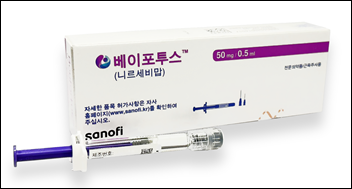
- Sanofi is now compelled to revise its strategy as public advertising of Beyfortus (nirsevimab), an RSV preventive antibody injection, faces regulatory obstacles in Korea. Pic of Beyfortus According to Dailypharm’s coverage, the Korea Pharmaceutical and Bio-Pharma Manufacturers Association (KPBMA) Drug Advertising Review Committee ruled that Beyfortus is “not subject to advertising review.” In South Korea, vaccines for the prevention of infectious diseases are classified as prescription drugs or over-the-counter drugs, and are allowed some advertising to the general public. However, under the Regulations on Prior Review of Pharmaceutical Advertisements, vaccine advertisements must undergo prior review by the KPBMA’s Advertising Review Committee. In effect, the KPBMA’s decision has made it difficult for Beyfortus to be advertised on TV or online to general consumers. Beyfortus is an antibody injection that is administered once to all newborns and infants under 12 months of age to prevent RSV infection for at least 5 months, and it was approved by the Ministry of Food and Drug Safety in April last year. Inoculation with Beyfortus began in domestic hospitals and clinics starting in early February and has been administered to infants and young children, and is now being approved by drug committees in general hospitals as well. Sanofi has been working to raise awareness of RSV disease with the launch of its product. A representative example is the “RSV Story Contest,” which aims to collect and share experiences about the disease. However, in the case of Beyfortus, the company will face limitations in building brand awareness and expanding market reach through public advertising, which is the most straightforward way to promote the product. With the approval of Beyfortus, Sanofi has taken steps to raise awareness of the disease. The current Pharmaceutical Affairs Act imposes strict regulations on advertising for prescription drugs. According to Article 68, Paragraph 6 of the Pharmaceutical Affairs Act, prescription drugs, except for vaccines, may only be advertised in specialized media or academic journals targeting medical and pharmaceutical professionals. Public media advertising is exceptionally permitted for vaccines used for preventive vaccination, but public advertising for other prescription drugs is prohibited. Beyfortus is approved for preventive purposes, but as it was approved as an antibody drug, not a vaccine, it is not covered by this exception. The advertising ban has caused quite a stir. First, the company now has an urgent need to raise awareness of the product through other means. Normally, when a new vaccine is released, a large-scale vaccination campaign is launched through TV commercials and online promotions, but this is rendered difficult for Beyfortus. In addition, existing premium vaccines have employed strategies such as using celebrities as models to naturally promote specific vaccines as “OOO vaccines,” but this has also become difficult. In other words, Sanofi, which wanted to promote Beyfortus in the domestic market through advertisements, will inevitably face restrictions on its future marketing strategies. As a solution, Sanofi is expected to shift its sales and marketing focus to medical professionals, akin to the prescription drug market. With general consumer advertising blocked, Sanofi is likely to prioritize product promotion through medical professional channels such as academic conferences and symposia. This is an indirect marketing approach that aims to increase consumer awareness through indirect promotional activities centered on departments such as pediatrics, obstetrics and gynecology, and infectious diseases. In fact, it is rumored that several obstetrics and gynecology hospitals have already begun recommending Beyfortus vaccinations to parents of newborns. In this regard, Sanofi is still awaiting the results of KPBMA’s preliminary review. A Sanofi official stated, “The possibility of advertising Beyfortus to the general public is currently under review by the KPBMA, and we are awaiting the results of the review.”
- Company
- MSD Korea begins Januvia drug price difference compensation
- by Son, Hyung Min Jul 31, 2025 06:14am
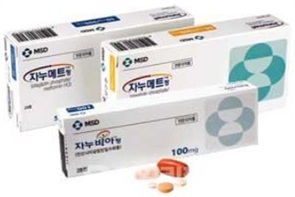
- Product photo of Januvia products There are changes regarding the Januvia drug price difference compensation issue, which had been stalled for nearly two years. MSD Korea has officially informed the distribution industry that it will begin accepting applications for Januvia compensation starting next month, August 1. However, this compensation is limited to the quantity sold before the transfer of marketing rights to Chong Kun Dang, and whether compensation on sales will be made still requires discussion. According to industry sources on the 31st, MSD Korea sent an official letter to the Korea Pharmaceutical Distributors Association on the 29th, stating that it will begin accepting applications for compensation due to the Januvia drug price reduction starting August 1st. This compensation will apply only to the quantity directly sold by MSD Korea before July 15, 2023, the date when Chong Kun Dang acquired exclusive domestic marketing rights for Januvia. Until now, the disagreement between MSD Korea and Chong Kun Dang regarding Januvia drug price difference compensation had not narrowed, leading to ongoing confusion in the distribution industry and local pharmacies. However, with MSD Korea announcing the compensation procedure for the drug price reduction, it is expected that discussions on compensation will begin. An MSD Korea official said, "We believe a significant portion of the inventory still exists with pharmaceutical distributors and healthcare institutions." They added, "We will proceed with compensation through prompt and accurate procedures to minimize damage." They further added, "We have continuously put efforts into responding responsibly regarding compensation for the price difference due to the Januvia drug price reduction," and explained, "We plan to begin accepting compensation applications starting August 1st and officially proceed with the procedures." However, the party responsible for compensation for sales made after July 15, 2023, the date of the marketing rights transfer, has not yet been determined. The drug prices for the Januvia family products, including Januvia, Janumet, and Janumet XR, were sequentially reduced between September and October 2023 due to patent expirations. MSD Korea stressed its position that it has no responsibility for compensation for the period after September 2023, the time of the Januvia drug price reduction, as Chong Kun Dang took over exclusive sales and revenue rights for Januvia following the marketing rights transfer agreement. Januvia is a DPP-4 inhibitor, containing sitagliptin, used to treat diabetes and is developed by MSD. Following Januvia's launch, MSD and Chong Kun Dang have been jointly promoting these products since 2016. However, in 2023, MSD Korea reorganized its chronic disease business unit to focus on its oncology and vaccine businesses, transferring the rights for the Januvia Family to Chong Kun Dang. Chong Kun Dang has been exclusively handling the domestic sales of Januvia as of July 15, 2023. MSD Korea's position is that since the marketing and revenue rights were already transferred at that time, they bear no responsibility for compensation related to the drug price reduction after September 2023, when the price cut occurred. MSD Korea said, "We transferred all domestic rights, including marketing and manufacturing rights, for Januvia products to Chong Kun Dang in July 2023, transferring exclusive sales and marketing authority," and added, "Accordingly, Chong Kun Dang is responsible for price difference compensation due to drug price reductions that occurred after that point." Chong Kun Dang believes that it is unfair to transfer the responsibility for compensation when the marketing authorization holder had not been officially changed. Therefore, difficulties in negotiation are anticipated. The marketing authorization was indeed transferred to Chong Kun Dang on July 23, 2024, after which the business transitioned to a global direct import structure. An official from the Korea Pharmaceutical Distributors Association said, "As MSD Korea has delivered an official letter stating its position on compensation, Chong Kun Dang is also expected to clarify its stance soon," and added, "It is a desirable direction for both companies to clearly define their areas of responsibility and proceed with compensation." They further commented, "We suffered significant losses by not receiving price difference compensation for over a year. We faced severe difficulties in the middle, and we hope to find an amicable solution."

- Company
- GSK Korea appoints Gunnar Riediger as new General Manager
- by Whang, byung-woo Jul 31, 2025 06:14am
- Gunnar Riediger, new Country President & General Manager of GSK Korea GSK Korea announced on the 30th that it has appointed Gunnar Riediger as its new General Manager, effective August 1. The new GM joined GSK in 2004 through the company's global talent development program, the “Future Leaders Program,” and has led healthcare operations across Latin America for over 20 years. He has held key roles including Vaccines Business Unit Head, BioTech Business Unit Head, and Global Vaccines Market Lead at GSK Brazil. Based on these experiences, as a seasoned leader, Riediger worked to maximize the potential of GSK's pipeline, pioneered innovative market entry strategies, and consistently invested in leadership development programs focusing on challenging thinking and accountability, achieving outstanding results. Ridiger then served as Country President & General Manager of GSK Colombia since 2023, successfully launching key products across the company’s vaccine, specialty medicine, and oncology portfolios. Based on these achievements, GSK Colombia has been recognized as one of the fastest-growing multinational pharmaceutical companies in Colombia in 2024, among other accolades. “I am honored to join GSK Korea, a company that has achieved remarkable results to date,” said Riediger. “I look forward to driving the next chapter of GSK Korea's growth by continuously supplying innovative vaccines and medicines to improve the quality of life for Korean patients and strengthening collaboration to advance Korea’s biopharmaceutical industry.”
