
- LOGIN
- MemberShip
- 2026-05-05 03:45:44
- Company
- ‘Leclaza will be free as first-line Tx until reimbursement'
- by Kim, Jin-Gu Jul 11, 2023 05:41am
- Wook-Je Cho, CEO of Yuhan Corp announced that it will be providing its anticancer drug ‘Leclaza (lasertinib)’ for free as a first-line treatment until its reimbursement is extended to cover first-line treatment. Cho announced the company’s launch of the Early Access Program (EAP) at a press conference it had held on the 10th at the Seoul Plaza Hotel to celebrate Leclaza’s approval as a first-line treatment in Korea. Leclaza is Korea's 31st homegrown novel drug that was approved for the treatment of NSCLC in January 2021. At the time of its approval, the drug was approved as a second-line treatment for patients with locally advanced or metastatic NSCLC who developed resistance after being previously treated with 1st generation or 2nd generation EGFR-TKIs. Last month, the company received additional approval for Leclaza as a ‘first-line treatment for non-small-cell lung cancer. Cho said, “The company will return a certain proportion of its profits to support the treatment of lung cancer. We will allow free access to Leclaza (as a first-line treatment) for patients suffering from lung cancer until the drug is applied reimbursement." In other words, the company will be providing Leclaza for free as a first-line treatment to all patients that wish to use the drug in the first line until the use is covered by reimbursement. Cho emphasized, “Regardless of the amount, all patients who need and want Leclaza will be able to benefit from our EAP.” Also, Cho dismissed the concerns that the EAP could violate fair competition with its competitors, saying "We feel confident because we have no alternative purpose." “Many patients with EGFR-positive NSCLC have been filing one petition after another through the National Assembly, the Ministry of Health and Welfare, and the President's Office. Many patients cannot afford to use Leclaza because the drug costs KRW 100 million a year without insurance reimbursement. After the drug was approved as a first-line treatment, we decided that it was right to provide its benefit faster to more patients.” “Carrying on the spirit of our founder, Dr.Ilhan New, we will be giving back our profits to society through the EAP. Regarding issues of compliance that have been voiced, we feel confident in providing EAP because we have no alternative purpose.”
- Company
- 'Leclaza effective as 1st-line treatment in Koreans'
- by Kim, Jin-Gu Jul 11, 2023 05:41am
- On the morning of the 10th, Professor Jin-Hyoung Kang of Medical Oncology at the Catholic University of Korea Seoul St. Mary's Hospital, said, "LASER 301,' the global Phase III clinical trial on Leclaza (lazertinib), is the only study that demonstrated the drug's efficacy as a first-line treatment for EGFR mutation-positive non-small cell lung cancer patients in Korea,” during a press conference held to celebrate Leclaza's approval as first-line treatment at Seoul Plaza Hotel. Leclaza is Korea's 31st homegrown novel drug that was approved for the treatment of NSCLC in January 2021. At the time of its approval, the drug was approved as a second-line treatment for patients with locally advanced or metastatic NSCLC who developed resistance after being previously treated with 1st generation or 2nd generation EGFR-TKIs. Last month, the company received additional approval for Leclaza as a ‘first-line treatment for non-small-cell lung cancer. During the conference, Professor Byoung-Chul Cho of Medical Oncology at the Yonsei Cancer Center explained the results of the LASER 301 Phase III clinical trial, which served as the basis for the approval of Leclaza as a first-line treatment. Among the total of 393 patients worldwide that were enrolled in the trial, 258 were Asians, and 172 of those were Korean patients. Cho emphasized that there were no significant differences between the overall results and the results in Asian patients. Professor Byoung-Chul Cho of Medical Oncology at the Yonsei Cancer CenterCho said, "The median progression-free survival (mPFS) in the Leclaza arm was 20.6 months, which is a statistically significant improvement compared with the 9.7 months in the gefitinib arm. The mPFS in Asian patients were consistent with those of the overall global patient population." “The subgroup analysis of patients with EGFR mutation subtypes also yielded noteworthy results. In patients with exon 19 deletion mutation, the mPFS in the Leclaza arm was 20.7 months, compared with the 10.9 months in the gefitinib arm. In patients with exon 21 L858R substitution mutation, the mPFS for the Leclaza arm was 17.8 months, compared with the 9.6 months in the gefitinib arm." "The results are encouraging. Leclaza demonstrated superior antitumor effect even in patients with an exon 21 L858R substitution mutation, who are known to have a relatively poorer prognosis than those with an ex19del mutation. Leclaza showed consistent results regardless of EGFR mutation subtypes.” Kang also mentioned the therapeutic benefits of Leclaza in Korean patients. He particularly highlighted the fact that although a higher proportion of patients with brain metastasis or the L858R mutation - factors known to have a poor prognosis - were present in Korean patients, the results were similar or even slightly better. Kang explained, "The LASER 301 trial included 172 Korean patients, and among them, one-third already had brain metastasis before the trial began. The investigator-assessed mPFS in the gefitinib arm was 9.6 months, compared with the 20.8 months in the Leclaza arm." Professor Jin-Hyoung Kang of Medical Oncology at the Catholic University of Korea Seoul St. Mary"These PFS results were consistently observed even in the subgroup of patients with brain metastasis. The safety data were also consistent with the previously reported clinical results." Kang noted, "Leclaza is the first treatment to demonstrate therapeutic benefits in a clinical trial that included a significant number of patients among the third-generation EGFR TKIs. The investigator-assessed mPFS of Korean patients with ex19del mutation in the Leclaza arm was approximately 2 years (23.3 months)." “The mPFS of Korean patients with exon 21 L858R substitution mutation who were treated with Leclaza was 17.8 months, compared with the 9.6 months in the gefitinib arm. Leclaza showed consistent effect regardless of type of EGFR mutation in all Korean patients, just as in the global patient population." Kang added that not enough data has been accumulated yet to determine overall survival (OS), which is another major endpoint. “Regarding the much-anticipated OS data, the follow-up period is still too short to obtain sufficient overall survival data. Only 29% of the data has been obtained so far.”
- Company
- Pricing negotiations for Spinraza's reimb begin in KOR
- by Eo, Yun-Ho Jul 11, 2023 05:41am
- The spinal muscular atrophy treatment ‘Spinraza’ has finally entered the last stage of its reimbursement extension in Korea. According to Dailypharm coverage, Biogen is undergoing drug pricing negotiations with the National Health Insurance Service for its SMA treatment Spinraza (nusinersen). Also, another SMA treatment, Roche Korea’s ‘Eveysdi (risdiplam)’ has passed the NHIS’s Drug Reimbursement Evaluation Committee review and has started pricing negotiations almost at the same time with Spinraza. Discussions on the reimbursement and reimbursement extension of SMA treatments had seemingly made rapid progress due to rising demand for the abolition of Spinraza’s discontinuation standards, however, the discussions became prolonged as the requested range of reimbursement was broader than what the government and pharmaceutical companies had expected. Spinraza is currently reimbursed for the treatment of 5q Spinal Muscular Atrophy in patients that satisfy all of the following conditions: ▲received genetic diagnosis of 5q SMN-1 deficiency or mutation; ▲had onset of SMA-related clinical symptoms and signs at the age of 3 or less; and ▲ are not using permanent ventilators. In other words, only patients whose symptoms have been found before the age of 3 were allowed reimbursement until now. The reimbursement extensions currently under discussion aim to expand that age limit to ‘the age of 18 or less.’ At the time, the government had planned to proceed with discussions on the reimbursement listing of Evrysdi after agreeing on the scope of extended reimbursement for Spinraza, and both drugs entered into final negotiations. Whether the SMA drugs that have now entered the last hurdle to their reimbursement in Korea after various twists and turns, will be able to reach the finish line remains to be seen. The SMA treatments currently available in Korea with reimbursement are as follows: Spinraza, and Novartis Korea’s one-shot treatment ‘Zolgensma (onasemnogene abeparvovec-xioi).’ Spinraza is injected using a syringe directly into the cerebrospinal fluid (CSF), and Zolgensma is injected as an intravenous infusion. Evrysdi, which is attempting to be newly reimbursed, is an oral formulation that can reduce the socioeconomic burden borne by SMA patients and their caregivers such as school/work interruption, transportation costs, and nursing care that accompany the required injections. Also, Evrysdi can reduce drug costs for infant patients through customized prescriptions by age and weight.
- Company
- Yuhan provides Leclaza with 6 million won per month for free
- by Kim, Jin-Gu Jul 11, 2023 05:40am
- Leclaza Regarding Yuhan's providing free medicines to patients until the first treatment of Leclaza is covered by insurance, Yuhan said, "It is not an act of inducing patients and there is no problem under the Fair Trade Act." On the 10th, Yuhan held a press conference for permission for the first treatment of Leclaza at the Plaza Hotel in Seoul. On this day, CEO Cho Wook-je announced the free supply of Leclaza through the Expanded Access Program. Yuhan Corporation launches large-scale 'EAP' for the first time as a domestic pharmaceutical company EAP is a humanitarian system that provides treatment opportunities by supplying new drugs free of charge to patients who do not have adequate treatment. Usually, instead of patients participating in clinical trials, new drugs are administered more rapidly. According to Article 34 of the Pharmaceutical Affairs Act, 'drugs for clinical trials shall not be used for purposes other than clinical trials. However, if the approval of the Minister of the Ministry of Food and Drug Safety falls under each of the following subparagraphs, the relevant drug may be used for purposes other than clinical trials.' At this time, the exceptions are limited to 'patients with life-threatening serious diseases such as terminal cancer or acquired immunodeficiency syndrome' or 'emergency patients prescribed by Prime Minister Ordinance, such as life is in jeopardy or there is no alternative treatment method'. Based on this clause, Yuhan Corporation's plan is to supply Leclaza's first-line clinical trial drug to patients. If the clinical trial for the first treatment of Leclaza is conducted in the form of a researcher's clinical trial, Leclaza will be supplied to the participating patients. Yuhan had already operated EAP in the same way until Leclaza was approved as a second-line treatment and reimbursement was applied. In the pharmaceutical industry, Leclaza's EAP operation is seen as the first attempt among domestic pharmaceutical companies. This is because it is the first drug developed by a domestic company for an expensive and life-threatening treatment such as cancer. Cho Wook-je, CEO of Yuhan Corporation, said, "Because the drug is so expensive, there are many people who find it difficult to use Leclaza due to economic conditions. We will provide it free of charge through EAP until Leclaza is officially covered by reimbursement." The scale will be determined upon request from medical staff treating lung cancer on site.” "Tagrisso and Leclaza both use EAP as non-reimbursed drugs, and there is no problem with fair competition" Some criticize Yuhan's plan to use Leclaza for sympathy, saying that it violates fair competition. It is criticized that, as in the case of Novartis Glivec in the past, support for drug prices through EAP can be seen as an act of luring patients. Regarding this, Yuhan Corporation said, “It is different from the Glivec case,” and drew a line, saying, “We operated the same program until the benefit was applied after the second treatment was approved, but there was no problem.” Gleevec In 2013, Novartis stopped subsidizing the cost of Glivec, a leukemia treatment. Until just before that, Novartis subsidized 5% of the drug cost for patients taking Glivec. Since 95% of the cost of leukemia treatment was supported by health insurance finances, patients took Glivec virtually free. In June 2013, when the release of a large number of generic products was announced ahead of the expiration of the Glivec patent, Novartis decided to stop supporting the drug price. It is based on the judgment that supporting the price of Glivec even though a generic with the same ingredients has been released can be considered an act of attracting patients and can constitute an unfair trade act under the Fair Trade Act. If the competitive drug Tagrisso is covered, it is likely to be seen as an act of attracting patients, but since both drugs are not covered by insurance as the first-line treatment, there is no problem under the Fair Trade Act. An official from Yuhan Corporation said, "We understand that supporting the cost of medicines with the benefit applied is against fair competition. The case of Gleevec falls under this category." Once the reimbursement is decided, the free provision ends immediately. At this time, the patient has to pay all of his or her own expenses.” The official said, "The monthly cost of Leclaza alone is about 6 million won. According to the PFS results, if the drug is administered continuously for 20 months, the amount that the patient will have to bear will exceed 120 million won." It is purely a decision for the patient. From the company or doctor's point of view, there is nothing to take 10 won." "There will be more participants than in the second treatment... Lexraza is provided without size restrictions" Yuhan expects that the number of patients participating in EAP related to the first treatment will increase compared to the second treatment. According to Yuhan Corporation, around 10 patients participated in EAP after Leclaza's second-line treatment was approved and until insurance coverage was applied. It is explained that the number of participants was not large because the process from approval to reimbursement was fast and the procedure for participating in EAP was complicated. The key is when the primary treatment benefit is applied. The longer it takes for coverage of Leclaza to expand as a first-line treatment, the more patients are expected to participate in the compassionate use program. Yuhan plans to provide Leclaza in any size, no matter how long it takes to get paid. An official from Yuhan Corporation said, "It is impossible to estimate how many patients will participate in the program. Therefore, it is currently unknown how much the related budget will be. However, we expect more patients to participate than in the second treatment." AstraZeneca, which has a competitive drug, seems to refrain from the official response. However, AstraZeneca Korea explained that it is not considering a separate legal response against Yuhan Corporation. An official from AstraZeneca Korea said, “We are doing our best to increase the accessibility of patients who use Tagrisso in Korea,” and “We are reviewing ways to work for patients.”
- Company
- Will the non-reimbursed Gavreto vanish in Korea?
- by Jung, Sae-Im Jul 10, 2023 05:21am
- The possibility that the new RET-targeted anticancer therapy ‘Gavreto (pralsetinib)’ will vanish without ever being released in Korea has been rising. With Roche giving up sales rights for Gavreto, the prospects of its reimbursement listing in Korea had also gone up in smoke. As Blueprint Medicines, the original developer of Gavreto, does not have a branch in Korea, the company would need to find a new partner to market the drug in Korea, which is more easily said than done. According to the Health Insurance Review and Assessment Service, the Drug Reimbursement Evaluation Committee determined Gavreto inadequate for reimbursement and made a ‘non-reimbursement’ at its 7th 2023 DREC meeting that was held on the 6th. Drugs that receive a non-reimbursement decision, not a conditional pass or re-discussion decision, must reapply for reimbursement with supplementary materials. As such drugs need to undergo all the steps for reimbursement again, the time to their reimbursement listing becomes delayed indefinitely. Also, it is unclear which pharmaceutical company will reapply for Gavreto’s reimbursement in the future. Before, Roche Korea was in charge of its approval and distribution in Korea. Roche had paid $775 million upfront for Gavreto’s global sales right in all countries excluding China. However, in March, only 2 years and 7 months after signing the agreement, the company returned the rights for Gavreto to Blueprint due to lower sales expectations. With the termination of the collaboration, Roche will be supplying Gavreto until February next year. To continue supply, the original developer Blueprint Medicines will need to directly supply the drug or find a new partner. Without its own Korean subsidiary, the realistic alternative for Blueprints would be to resume supply through a new partner. So far, there has been no word on Gavreto’s new partner. Roche Korea submitted an application for the reimbursement of Gavreto in November last year. However, its discussions fell through after the global termination of the collaboration was announced ahead of its CDDC review. Roche Korea was unable to continue the drug pricing negotiations for the drug in a situation where it was unclear which company would continue marketing the drug. As a result, Gavreto’s reimbursement standards were not set at the CDDC meeting, resulting in its non-reimbursement by DREC. The market conditions are also working against Gavreto. Its competitor, Lilly's 'Retevmo (selpercatinib)', passed DREC review in May and is set to be reimbursed soon. The reimbursement listing timing for Retevmo and Gavreto, both of which received domestic approval in the same month, widened significantly in the reimbursement listing process. Unlike Retevmo, which passed the Drug Committees (DCs) of major general hospitals in January of this year, Gavreto was unable to even be registered for prescriptions. At this rate, it is highly likely that Retevmo will dominate the domestic RET mutation-targeting therapy market. In addition, Gavreto recently voluntarily withdrew its thyroid cancer indication in the U.S. With Retevmo already owning the indication, Gavreto lost the opportunity to extend its indication to the area. This signifies the lower profit expected for Gavreto in Korea. Previously, sales of Retevmo surpassed Gabretto in global sales, reducing the sales expectations for Gavreto. It seems that it will not be easy to find a pharmaceutical company that will sell Gavreto in this situation, as the patient group is small, sales expectations are low, and reapplications need to be made for its reimbursement. If Gavreto goes through the withdrawal process at this pace, Retevmo will become the only targeted anti-cancer drug that can treat RET mutation-positive cancer in Korea. RET is one of the major emerging biomarkers that induce cancer. It causes malignant tumors through fusion mutations or point mutations. RET mutations are partially found in several cancer types, including lung cancer, breast cancer, and colorectal cancer. The rate of RET mutations in non-small cell lung cancer is about 2 to 6%, and RET fusion mutations have been reported in up to 40% of thyroid cancers.
- Company
- 3 new asthma drugs resumed discussion on reimbursement
- by Eo, Yun-Ho Jul 10, 2023 05:21am
- Three new asthma drugs, which had been uninsured for at least three years, started the insurance benefit listing process, but only one drug made progress. According to related industries, Handokteva's eosinophilic asthma treatment Cinqair passed the HIRA Pharmaceutical Reimbursement Evaluation Committee. However, GSK Korea's Nucala and Korea AstraZeneca's Fasenra were not considered. These drugs are interleukin (IL)-5 antagonists and have a mechanism of reducing the level of eosinophils, a type of leukocyte involved in the induction of asthma. It received attention at the time of approval as a valid treatment option that did not exist before but was not included in the reimbursement list due to drug price issues. Drugs with the same mechanism started the listing process again at the same time, but the reason for the different results is believed to be that only Cinqair followed the general listing track. For the remaining drugs, companies are known to want to apply a risk-sharing agreement. It remains to be seen whether the two unlisted drugs of this evaluation committee can find a compromise with the government and continue the listing process. There are no registered drugs for severe asthma since Novartis Korea's Xolair entered insurance coverage in 2020. The disease area of 'asthma' looks the same, but three drugs and Xolair are prescribed for allergic asthma. There is a difference in the details of the indications. However, by the government's standards, Xolair became the target of comparison, and the drug's price was unbearable for three new biologics, so the reimbursement listing process was suspended.
- Company
- New AML drug Vyxeos can be prescribed at general hospitals
- by Eo, Yun-Ho Jul 10, 2023 05:21am
- The new drug ‘Vyxeos’ that was introduced to Korea by Handok Pharmaceuticals may now be prescribed at general hospitals in Korea, According to industry sources, Vyxeos (daunorubicin+ cytarabine), a treatment for adults with newly diagnosed, therapy-related acute myeloid leukemia (t-AML) or AML with myelodysplasia-related changes (AML-MRC), has passed the drug committees (DCs) meetings of several medical institutions in Korea including the National Cancer Center, Samsung Medical Center, Seoul National University Hospital, and Asan Medical Center, and Sinchon Severance Hospital. However, Vyxeos is yet to be reimbursed in Korea. Its reimbursement agenda had been deliberated by the National Health Insurance Service’s Cancer Disease Deliberation Committee last month, but the committee was unable to set the reimbursement standards. Vyxeos was developed by a global pharmaceutical company Jazz Pharmaceuticals headquartered in Ireland, and Handok owns the exclusive rights to its sales in Korea. The overall prognosis of adults with therapy-related acute myeloid leukemia (t-AML) or AML with myelodysplasia-related changes (AML-MRC) is poor, and t-AML or AML-MRC patients have demonstrated low remission rates and shorter overall survival (OS) after intensive chemotherapy compared to other AML patients. Intensive chemotherapy, the 7+3 regimen of cytarabine and daunorubicin, had remained the standard therapy for over 50 years since its introduction in the 1970s. This is why an unmet need existed in the field for some time. Vyxeos is a liposomal formulation of a fixed combination of daunorubicin and cytarabine in a 1:5 molar ratio. Vyxeos liposomes accumulate and persist at a higher concentration in the bone marrow, where they are preferentially taken up intact by leukemia cells, maximizing synergistic antitumor activity. In a Phase III trial that demonstrated the efficacy of Vyxeos, the median overall survival of patients with t-AML or AMLM-MRC that were treated with Vyxeos was 9.6 months, which was longer compared with the 6 months in patients that received the 7+3 arm. Also, 48% of the Vyxeos-treated patients achieved complete remission (CR) and complete remission with incomplete neutrophil or platelet recovery (CRi), which was higher than the 33% in the 7+3 arm. The safety profile in both arms was similar.
- Company
- Daiichi's sales rose & Astellas' sales fell
- by Jung, Sae-Im Jul 10, 2023 05:20am
- Among Japanese pharmaceutical companies that have entered the domestic market, 4 out of 7 subsidiaries with settlements in March expanded their sales. Daiichi Sankyo Korea's sales reached 253.2 billion won, ranking first among Japanese pharmaceutical companies. As a result of analyzing the performance for the 2022 business year (April 1, 2022, to March 31, 2023) of 7 pharmaceutical companies with settlements in March submitted to the Financial Supervisory Service on the 10th, the total sales amounted to KRW 1,115.4 billion, up from 11,557 in the previous year. decreased by 3% compared to the billion won. During the same period, operating profit fell 18% from 97.9 billion won to 80.2 billion won. 4 out of 7 companies succeeded in expanding their top line. Four companies saw an increase in operating profit. More than half improved performance, but the decline in performance at a particular company affected overall performance. Daiichi Sankyo Korea posted 253.2 billion won in sales last year, up 3% from the previous year. It surpassed Astellas Pharmaceuticals Korea and rose to No. 1 among Japanese pharmaceutical companies (including the December settlement). Operating profit fell 16% to 22.1 billion won. Lixiana·Sevikar sales made stable performance.. Since last year, it has been taking on a new challenge with the approval of the anti-cancer drug Enhertu. There were also changes in the members of the organization, such as increasing the number of experts in anticancer drugs. As a result, selling and administrative expenses increased and operating profit decreased. Enhertu is a next-generation antibody-drug conjugate (ADC) that has proven efficacy not only in HER2-positive but also in HER2-low-expressing breast cancer for which there was no treatment. In May, HER-2-positive breast cancer and stomach cancer passed the HIRA committee and benefits became possible. If the benefit is applied within the year, it is expected to have a great impact on Daiichi Sankyo Korea's sales. Takeda Pharmaceutical Korea and Astellas Korea Pharmaceutical, which cost about 200 billion won, obtained conflicting results last year. Takeda Pharmaceutical Korea saw an increase in sales and a decrease in operating profit, while Astellas Pharmaceutical Korea saw a decrease in sales and an increase in operating profit. Last year, Takeda Pharmaceutical Korea's sales were 249.6 billion won, up 8% from the previous year. Operating profit fell 6% to 7.6 billion won. Anticancer drugs such as Zejula, Alunbrig, and Ninlaro contributed to sales expansion with steady growth. However, the decrease in operating profit was mainly due to the increase in the cost of sales. Last year, Takeda Korea's cost of sales was 177 billion won, up 13 percent from 156.4 billion won the previous year. Astellas Pharmaceutical Korea recorded 232.2 billion won in sales last year, down 6% from the previous year. Representative products, such as Betmiga and Harnal, are continuously declining in sales. Instead, the company is pinning its hopes on Xospata, a leukemia drug that succeeded in applying for reimbursement last year. Saving on SG&A expenses, operating profit increased by 16% last year to KRW 17.6 billion. Eisai's sales decreased by 34% from 212.9 billion won in 2021 to 140.5 billion won last year. During the same period, operating profit also decreased by 77% to 5.2 billion won. Sales of existing products such as Lenvima have declined, while new drugs such as Jyseleca have not yet generated significant sales in the market. Eisai, which exceeded 200 billion won in annual sales for the first time in 2019, fell back to the 100 billion won level in three years. Lecanemab is a promising new drug that will bring Eisai back. Lecanemab, jointly developed by Biogen and Eisai, is a drug that can fundamentally treat Alzheimer's disease and is expected to exceed 1 trillion won in global sales by 2027. Lecanemab, which received conditional approval from the FDA last year, was recently approved as an official drug, raising expectations for commercialization. In particular, Eisai, not Biogen, is leading the commercialization of Lecanemab. Eisai submitted an application for domestic approval of Lecanemab last month. Santen Korea recorded 120.2 billion won and 16.9 billion won in sales and operating profit, up 10% and 6%, respectively. Mitsubishi Tanabe Korea had the same sales as the previous year, but its operating profit increased by 7%. Ono Pharma recorded sales of 50.1 billion won, up 23% last year thanks to the growth of the immuno-oncology drug Opdivo.
- Company
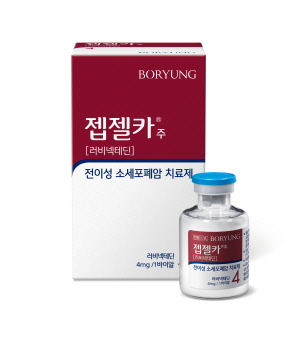
- Boryung’s new drug Zepzelca lands in Big 5 hospitals in KOR
- by Eo, Yun-Ho Jul 07, 2023 05:43am
- Zepzelca, a new drug introduced to Korea by Boryung, can now be prescribed in the Big 5 general hospitals in Korea. According to industry sources, the small cell lung cancer treatment Zepzelca (lurbinectedin) has passed the drug committees (DCs) of all the top 5 tertiary hospitals in Korea – Samsung Medical Center, Seoul National University Hospital, Seoul St. Mary’s Hospital, Seoul Asan Medical Center, and Sinchon Severance Hospital, and has been listed in 60% of all medical institutions nationwide that offer lung cancer treatment services. The only issue that remains is that Zepzelca is yet to be reimbursed. The company is preparing to submit an application for its reimbursement. The new anticancer drug was developed by Spanish pharmaceutical company PharmaMar S.A., and is indicate for the treatment of metastatic small-cell lung cancer that failed first-line platinum-based chemotherapy. Zepzelca is a novel drug with a mechanism of action that simultaneously ‘induces apoptosis by inhibiting DNA transcription,’ and ‘inhibits cancer cell proliferation, immune checkpoint activity, and angiogenesis through the inhibition of transcriptional activity in tumor-associated macrophages.’ The drug was approved by the Ministry of Food and Drug Safety in September last year and was released and prescribed in February this year. The drug was approved in July 2020 in the US. Zepzelca positioned itself as the leading second-line treatment for small-cell lung cancer in the US and posted sales of USD 5.35 million last year. Over 40% of small-cell lung cancer patients received Zepzelca as a second-line treatment. In Korea, Boryung owns the exclusive right to the sales and distribution of Zepzelca since 2017. Based on a study that became the basis of Zepzelca’s approval that was published in Lancet Oncology, patients treated with Zepzelca showed an overall response rate of 35%, with a mean duration of response of 5.3 months. Due to its convenience in administration of being administered once every 3 weeks and manageable side effects In addition to such clinical benefit, the drug has been evaluated to have a superior effect over other drugs that had been previously used in Korea. Zepzelca is also recommended in international guidelines including the the National Comprehensive Cancer Network and European Society for Medical Oncology.

- Company
- Release of triple-combo diabetes drugs imminent
- by Kim, Jin-Gu Jul 07, 2023 05:43am
- The release of the ‘triple combination therapies' appear to be in sight. However, unlike the 2-drug combos that are already in fierce competition even in the pre-release stage, industry interest in 3-drug combos is currently at best lukewarm. The pharmaceutical industry pointed to the relatively challenging development environment for triple combination drugs as well as the impurity issues that exist. Nevertheless, there are predictions that in the long term, the paradigm for antidiabetic combos will shift from dual therapy to triple therapy combinations. 96 companies own 100 2-drug combos vs. 2 companies own 7 3-drug combos According to industry sources on the 6th, Daewon Pharmaceutical and Hanmi Pharmaceutical recently applied for the reimbursement of their 'dapagliflozin, sitagliptin, and metformin’ triple combination therapy for diabetes. The drugs, Daewon Pharmaceutical's ‘Dapasita-M’ and Hanmi Pharm's ‘Sildapa M,' are expected to be released after September. This is because the patent for the original sitagliptin drug Januvia will expire on September 1st. Currently, the competition for antidiabetic combination drugs focuses on dual combinations. As of the 5th, 96 pharmaceutical companies have received marketing approval for 100 dual combination products that combine SGLT-2 inhibitors and DPP-4 inhibitors. This is in contrast to the fact that only 7 triple combination products from 2 companies have received marketing authorizations. In the case of dual combinations, the dapagliflozin and sitagliptin combination accounts for the absolute majority with 93 products from 92 companies. Many of these products are also expected to be released when the patent for Januvia expires. While the interest in dual combination therapies is highly heated despite the possibility that a large amount of the products will be released at the same time, the attention towards triple combination therapies is still lukewarm. Marketing approval state of SGLT2i + DPP4i combination therapy for diabetes Considering the expanded reimbursement scope for diabetes treatments that had been granted earlier this year, the phenomenon is somewhat puzzling. In May, the government limited the reimbursement scope for diabetes treatment to combinations of ▲SGLT-2 inhibitors, DPP-4 inhibitors, and Mmtformin, ▲SGLT-2 inhibitors, TZD, and metformin, ▲Some SGLT-2 inhibitors and sulfonylurea or in combination with insulin. The SGLT-2 inhibitor and DPP-4 inhibitor combination, which includes a majority of the dual combination therapies, was not included in the reimbursement scope. When prescribing to patients, doctors have to add metformin to the dual combination therapy drugs to receive reimbursement. "Difficult combine metformin due to its large dose… Impurity issues and concerns in development cost also exist" The analysis is that multiple factors have contributed to this phenomenon. The relatively complex product development is considered the primary reason among them. The dose of metformin, which is much larger compared to the other two drugs, posed an obstacle. The dose of dapagliflozin is set to 5mg and 10mg, while sitagliptin is set to 50mg and 100mg. However, the dose of metformin is set much higher at 500mg, 750mg, and 1000mg. Technically, combining the three ingredients is not difficult. However, due to the significant differences in dosages of each ingredient, the stability of the final product may be somewhat compromised. There are three main methods of combining the three ingredients: single-layered tablet, double-layered tablet, and coating Metformin with DPP-4 inhibitors and SGLT-2 inhibitors. Among these methods, dapagliflozin and sitagliptin can be combined relatively thinly in single- and double-layered tablets due to their small doses. As a result, there is a higher possibility that the two ingredients may not interact adequately. The method of coating metformin to the duo is not significantly different, but achieving a uniform thickness is difficult. This process poses certain challenges, such as the need for repeated bioequivalence tests to verify the uniform pharmacokinetic action of all ingredients. The impurity issue is also another factor that makes the development of triple combination therapy challenging. Among the three ingredients in the combination therapy, impurities have been detected in metformin and sitagliptin. As a result, when manufacturing pharmaceuticals with these ingredients, companies must validate whether or not impurities exist and submit one year’s worth of safety data to the Ministry of Food and Drug Safety. The so-called ‘1+3 joint bioequivalence’ system is also considered a factor that makes product development challenging. Under the Pharmaceutical Affairs Act that was implemented in 2021, the number of consignor pharmaceutical companies is limited to three per one consignee. This imposes a higher cost burden on small and medium-sized pharmaceutical companies in the development process compared to the past. An official from the pharmaceutical industry said, "Companies that started product development before the implementation of the regulation may be fine, but the potential burden for companies considering new development after that is substantial." They further explained, "In the past when 10 to 20 companies could share the cost, each company had a smaller burden. However, we can now only recruit up to four companies, which imposes a larger cost burden for each company." Another official stated, “The guideline set by the Ministry of Food and Drug Safety for the bioequivalence testing of combination therapies have become more stringent, requiring more extensive clinical trials than before. If the total cost for developing a combination therapy is around KRW 6 to 8 billion, each company should now bear approximately KRW 2 billion. This is not an easy decision for small and medium-sized pharmaceutical companies to make." "In the long term, triple combination therapies will increase… Numerous companies have already started development” However, the predominant forecast is that the number of companies venturing into the development of triple combination therapies will increase in the long term. This analysis is based on the fact that triple combination therapy is considered more advantageous than dual combination therapies in terms of convenience in taking the medicine and applicability for reimbursement. An industry official said, “While it is considered more challenging compared to dual combination therapies, the development and manufacturing of triple combination therapies is not inherently difficult. The market will move in the direction of reimbursement, to triple combination therapies.” Another industry official added, "As dual combination therapies are not eligible for reimbursement and require additional intake of metformin, the demand for triple combination therapies is expected to steadily increase in the future. Apart from Daewon Pharmaceutical and Hanmi Pharmaceutical, several other companies have already started or are considering the development of triple combination therapies."
