
- LOGIN
- MemberShip
- 2026-05-04 22:46:48
- Company
- HK Inno.N releases its GERD drug K-CAB in Singapore
- by Chon, Seung-Hyun Sep 05, 2023 05:40am
- Professor Prakash Gyawali (Department of Gastroenterology at Barnes-Jewish Hospital, Washington University Hospital) is giving a lecture at the K-CAB Launch Symposium in Singapore On the 4th, HK Inno.N announced that it had officially released its novel gastroesophageal reflux disease (GERD) treatment K-CAB in Singapore. HK Inno.N held a symposium to celebrate K-CAB’s launch at the Conrad Centennial Singapore Hotel on August 31st. K-CAB was approved in February in Singapore under the same brand name, K-CAB. HK Inno.N will export the finished product to its local partner, United Italian Trading Corporation (UITC), which will be in charge of local sales and marketing of K-CAB in Singapore. The symposium, which was held for gastroenterologists in Singapore, was hosted by UITC. At the symposium, Professor Prakash Gyawali (Department of Gastroenterology at Barnes-Jewish Hospital, Washington University Hospital) and Professor Hwoon-Yong Jung (Department of Gastroenterology at Asan Medical Center) shared the latest knowledge in using K-CAB. During his presentation, Professor Gyawali focused on the superiority and safety of K-CAB, emphasizing the drug’s rapid onset of action and safety in terms of hepatotoxicity over other P-CAB class drugs. Professor Jung shared his prescription experience with K-CAB in Korea. Professor Jung said, “K-CAB had provided a better treatment option for GERD patients in Korea.” K-CAB has been exported as a technology or finished product to 35 countries overseas. Among them, the drug has been launched locally in China, Mongolia, the Philippines, Mexico, Indonesia, and Singapore. Also, the company is preparing to launch K-CAB in Peru after receiving approval in July. Dal-won Kwak, CEO of HK Inno.N, said, “Singapore’s pharmaceutical market stands out among Southeast Asian countries, as it has been showing 11% YoY growth for the past 3 years. We will continue to work closely with our local partners to ensure the successful approval and launch of K-CAB overseas. K-CAB, which was released in March 2019, is a new drug for gastroesophageal reflux disease (GERD) in the P-CAB (potassium-competitive acid blocker) class. It has a new mechanism of action that inhibits gastric acid secretion by competitively binding to the proton pump and potassium ion located in the final stage of acid secretion. Its sales exceeded KRW 100 billion in prescriptions in its 3rd year of release in 2021 and recorded sales in the KRW 100 billion range for 2 consecutive years thereafter. Also, K-CAB posted prescriptions amounting to KRW 74.1 billion in the H1 this year, heralding a record that exceeds KRW 100 billion for three consecutive years.
- Company
- Humira market biosimilar share
- by Kim, Jin-Gu Sep 04, 2023 05:04am
- Two years have passed since the biosimilar of the autoimmune disease treatment Humira was launched in the domestic market, and its share in the adalimumab market was found to be around 14%. According to IQVIA, a pharmaceutical market research firm, on the 2nd, the market for 'Adalimumab' ingredients in the first half of this year was 50.1 billion won, a 9.9% increase from 45.6 billion won in the first half of last year. Adalimumab is a TNF-alpha inhibitor that treats autoimmune diseases such as rheumatoid arthritis and psoriasis. AbbVie's Humira is the original drug. It was well known as the product with the highest sales in the world until last year. In Korea, sales were 104 billion won in 2020, 92.4 billion won in 2021, and 93.8 billion won in 2022. In particular, the decline in sales in 2021 compared to 2020 is large because the drug price was reduced by 30% with the release of Humira biosimilar. Samsung Bioepis launched Adalloce as a Humira biosimilar in the third quarter of 2021. Then, in the third quarter of last year, Celltrion released Yuflyma. Although two years have passed since launch, the market share of the two biosimilars appears to be only around 14%. This is in contrast to the Avastin biosimilar, which increased its market share in the Bevacizumab market to more than 35% within two years of its launch. Samsung Bioepis Adalloce recorded sales of 5.8 billion won in the first half of last year, more than doubling from KRW 2.7 billion in the same period last year. Cumulative sales exceeded 10 billion won in the first quarter of this year and accumulated 14.5 billion won by the second quarter. Celltrion Yuflyma has been gradually expanding its influence, posting cumulative sales of 1.3 billion won since its launch in the third quarter of last year. Sales in the first half of this year were 800 million won. In addition, LG Chem has announced the release of a Humira biosimilar. LG Chem applied for product approval for Humira biosimilar ‘LBAL’ at the end of last year. LG Chem confirmed the equivalence and safety of LBAL and the original drug Humira in phase 3 clinical trials conducted in Korea and Japan with its Japanese partner Mochida Pharmaceutical, respectively. In the safety category, the incidence of adverse events (AEs) was similar in the LBAL group and the Humira group. In the case of the original Humira, quarterly sales are maintained at around 22 billion won, except for a 30% price cut following the release of biosimilars. In fact, Humira sales in the first half of last year amounted to 43.4 billion won, a 1.4% increase from 42.9 billion won in the same period last year. Analysis suggests that the company is successfully protecting sales overall despite the launch of biosimilars.
- Company
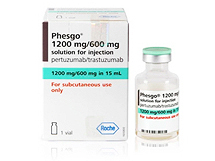
- Will Phesgo be listed with pricing premiums as a biobetter?
- by Eo, Yun-Ho Sep 04, 2023 05:04am
- Whether another biobetter after Nexviazyme will be receiving premium pricing in Korea is gaining attention. According to industry sources on the 30th, Roche Korea’s subcutaneous fixed-dose combination injection Phesgo (pertuzumab, trastuzumab) that combined ‘Perjeta’ and ‘Herceptin’ has passed the Health Insurance Review and Assessment Service’s Cancer Disease Deliberation committee review. Therefore, after undergoing the Drug Reimbursement Evaluation Committee review, Roche will sign agreements with the National Health Insurance Service regarding the supply and quality control obligations for Phesgo. If successfully listed, Phesgo will become the first anticancer drug and the second drug to benefit from the biobetter preferential treatment plan. In 2016, the government announced a plan to provide preferential pricing for biosimilars and biobetters, which are improved versions of already approved biopharmaceuticals, that have contributed to the improvement of Korea’s healthcare. In the case of Nexviazyme, In consideration of how biobetters are more difficult to develop compared to incrementally modified drugs (chemical drugs), the overall price of Nexviazyme was set at the 100-120% range of the original drug. However, since the implementation of the system, no drug has benefitted until now, and Nexviazyme became the first drug to benefit from the 1st. Phesgo was recognized for its innovation in improving patient convenience and reducing treatment time by changing the IV-injected Herceptin and Perjeta into a fixed-dose subcutaneous injection and was named the first biobetter approved for cancer in Korea. Metastatic HER2-positive breast cancer patients who had received maintenance therapy with IV Herceptin and Perjeta injections every three weeks may reduce their administration and monitoring time by 90% from 270 minutes (90min+180min) to 20 minutes (5min+15min) when switching to Phesgo. Also, as Phesgo is a subcutaneous formulation injected in the thigh rather than into the veins, it can reduce blood vessel and nerve damage that can be caused by repeated intravenous injections. The NCCN guidelines state that Phesgo can be used in the place of Perjeta and Herceptin, In fact, in the UK, 90% of patients treated with Herceptin and Perjeta switched to Phesgo within a year after its launch. Therefore. If listed, a significant number of patients receiving Herceptin-Perjeta treatment are expected to switch to Phesgo as well.
- Company
- Can Koselugo pass the Pharmaceutical Evaluation Committee?
- by Eo, Yun-Ho Sep 04, 2023 05:04am
- Koselugo, a new drug for pediatric neurofibroma, is once again awaiting discussion for listing on insurance benefits. Attention is focused on whether AstraZeneca Korea's neurofibromatosis new drug Koselugo, which was decided for re-discussion at HIRA last month, will be presented to the committee on the 7th. Koselugo failed to reach an agreement at the committee last month even though the pharmaceutical company submitted supplementary data and a risk-sharing plan. This disease begins in childhood with milk-coffee spots measuring 1 to 3 cm. Afterward, they experience symptoms such as optic nerve glioma (brain tumor) around the age of 6 and scoliosis between the ages of 6 and 10. In adults, Lisch nodules, which are hamartomas that occur in the iris, are most commonly found. The possible part can be removed surgically or treated with chemotherapy or radiation. However, even after surgery, most cases recur, and most of them are major surgeries, putting a significant burden on both the medical staff and patients. In particular, recurrences are frequent in pediatric patients, so even after multiple surgeries, they have to take painkillers and often suffer from speech and motor difficulties. Koselugo is a treatment jointly developed by AstraZeneca and MSD. It inhibits the growth of cell lines by blocking MEK activity. In the SPRINT phase 2 clinical trial, which served as the basis for approval, Koselugo achieved ORR, the primary endpoint, by reducing tumor size by more than 20% in 68% of administered patients. Additionally, 82% of patients who showed a partial response maintained the response for over 12 months. Among patients who did not receive treatment, half experienced disease progression after 1.5 years, but only about 15% of patients who used Koselugo experienced disease progression even after 3 years.
- Company
- Enhertu posts KRW 7.4 bil in H1 sales without reimb
- by Kim, Jin-Gu Sep 01, 2023 05:44am
- Daiichi Sankyo Korea’s HER2-positive breast cancer treatment ‘Enhertu (trastuzumab deruxteca); has raised sales of over KRW 7 billion in H1 this year without reimbursement. According to the market research institution IQVIA on the 31st, Enhertu posted sales of KRW 7.4 billion in H1 this year, making KRW 2.2 billion in Q1 and KRW 5.2 billion in Q2. Even without reimbursement listing, sales of the drug had exceeded KRW 7 billion. This indicates the many breast cancer patients in need of the treatment. The non-reimbursed cost of Enhertu is known to be in the KRW 5 million range per injection. Enhertu is an antibody-drug conjugate (ADC) that was approved by the Ministry of Food and Drug Safety in September last year. It is used to treat HER2-positive breast cancer. More specifically, Enhertu is indicated to treat unresectable or metastatic HER2-positive breast cancer who have received two or more prior anti-HER2-based regimens in the metastatic setting, and locally advanced or metastatic HER2-positive gastric or gastroesophageal junction adenocarcinoma who have received a prior trastuzumab-based regimen. Also, in December, the drug’s indication was extended to treat patients with unresectable or metastatic HER2-positive breast cancer who have received one or more prior anti-HER2-based regimens. However, the drug is making small progress in terms of reimbursement listing. The drug passed the Health Insurance Review and Assessment Service’s Cancer Disease Deliberation Committee review after redeliberation in May, but remains pending thereafter, without being deliberated at the 4 subsequent Drug Reimbursement Evaluation Committee meetings that followed. The next DREC meeting will be held on September 7th, but whether Enhertu will be deliberated then remains unknown. Patients have been long awaiting its reimbursement listing, to the extent that a public petition had been registered on its coverage. The petition was filed in January this year and received 50,000 consents on its need in only 5 days. The agenda was then referred to the National Assembly’s Health and Welfare Committee and started the reimbursement listing process. Enhertu demonstrated a significant improvement in progression-free survival (PFS) in the head-to-head DESTINY-Breast03 trial that compared Enhertu with trastuzumab emtansine (T-DM1) in patients in patients with HER2-positive unresectable or metastatic breast cancer previously treated with one or more anti-HER2 therapy. Results showed that Enhertu also continued to demonstrate a clinically meaningful improvement in progression-free survival (PFS) with a 22-month improvement in median PFS over T-DM1. The median PFS for patients in the Enhertu arm was 28.8 months compared to 6.8 months for T-DM1. Also, in terms of overall survival (OS), the key secondary endpoint in the trial, Enhertu demonstrated a statistically significant 36% reduction in risk of death versus T-DM1. Also, in the DESTINY-Breast01 trial, Enhertu demonstrated continued anticancer effect in patients with unresectable or metastatic HER2-positive breast cancer who have received two or more prior anti-HER2-based regimens that include T-DM1, trastuzumab, and pertuzumab. Results showed that Enhertu met its main efficacy outcome with a confirmed objective response rate (ORR) of 60.9% % (95% CI, 53.4-68.0) and a mPFS of 16.4 months.
- Company
- Two targeted anticancer therapies fail reimb in KOR
- by Eo, Yun-Ho Sep 01, 2023 05:44am
- Two anticancer drugs that target a very small number of lung cancer patients with EGFR exon 20 insertion mutation for which existing TKIs were ineffective, were both unable to receive reimbursement in Korea. According to industry sources, no reimbursement standards were set for both Takeda Pharmaceuticals Korea’s ‘Exkivity (mobocertinib)’ and Janssen Korea’s ‘ Rybrevant (amivantamab)’ w at the Health Insurance Review and Assessment Service’s Cancer Disease Deliberation Committee meeting that had been held on the 30th. This is the second time Rybrevant failed to establish reimbursement standards at the CDDC level. EGFR exon 20 insertion mutations in NSCLC are so rare that it is found in only 2% of all NSCLC patients harboring EGFR mutations in Korea. With no suitable treatment available for the specific condition, even the NCCN guidelines have only been recommending platinum-based chemotherapy for the patients. And even this is subject to reimbursement cuts. Although lung cancer in itself is not a rare disease, NSCLC with EGFR exon 20 insertion can be classified as a rare condition. Unlike other common EGFR mutations, NSCLC patients with EGFR exon 20 insertion mutations have a 75% higher risk of death, a 5-year survival rate of 8%, and a life expectancy of less than 2 years. However, with both drugs failing to pass the CDDC barrier, it would take some time for Korea to have extended treatment for EGFR exon 20 insertion mutation NSCLC. The key is whether the condition will be recognized for its rarity during reimbursement evaluations and the drugs be accepted as a rare cancer treatment. Meanwhile, Exkivity demonstrated its efficacy through a Phase I/II study. In the study, patients who were treated with Exkivity showed an objective response rate (ORR) of 28% and a median duration of response (DoR) of 17.5 months. In particular, the median time to response after Exkivity treatment was 1.9 months, demonstrating the rapid effect of the drug from initial treatment. Rybrevant showed an ORR of 40% in a Phase I trial, during which the drug demonstrated a complete response of 4% and a partial response of 36%.
- Company
- Released next-generation growth hormone drug
- by Kim, Jin-Gu Aug 31, 2023 05:25am
- The domestic growth hormone drug market, which is rapidly growing, has faced a variable with the release of new products by major companies. LG Chem, the No. 1 company in the market, replaced the existing Eutropin with the next-generation product, Eutropin S, further solidifying its leading position, followed by Dong-A ST and Pfizer. In particular, Pfizer plans to add NGENLA, a once-a-week medication, to its lineup starting next month. Depending on the success of this product, considerable changes are expected in the growth hormone market in the future. Expected to exceed 250 billion won in the growth hormone market, successful replacement of LG Chem’s Eutropin S generation. According to IQVIA, a pharmaceutical market research institute, on the 29th, the size of the domestic growth hormone drug market in the first half of last year was 135.6 billion won. It increased by 18% from 114.6 billion won in the first half of last year. The domestic growth hormone drug market is rapidly growing in recent years. The market, which was worth 145.7 billion won in 2019, exceeded 150 billion won in 2020 and 200 billion won in 2021. Last year, it further expanded to 238.6 billion won. In the case of this year, it recorded 130 billion won in the first half alone and is expected to expand to more than 250 billion won by the end of the year. It was found that related sales of major companies increased together. LG Chem's combined sales of Eutropin and Eutropin S increased by 19% in one year from 42.1 billion won in the first half of last year to 50 billion won in the first half of this year. LG Chem received permission for Eutropin S in April last year. Then, at the end of last year, sales began in earnest. Compared to existing products, the expiration date has been increased from 18 months to 24 months. LG Chem explains that the expiration date has been extended, improving supply stability and making it possible to check the remaining capacity. It is an analysis that it succeeded in a natural generational change with existing products. Sales of Eutropin S increased from 5.5 billion won in the fourth quarter of last year to 19.3 billion won in the first quarter of this year and 19.7 billion won in the second quarter. Existing Eutropin sales decreased to 15.5 billion won, 5.5 billion won, and 4.9 billion won during the same period. In the case of combined sales, it has been on an upward trend since the addition of new products. Pfizer, No. 3 in the market, announces the release of NGENLA once a week. LG Chem's Eutropin/Eutropin S, Dong-A ST's Growtropin II, and Pfizer's Genotropin/Genotropin goquick pen are rapidly catching up. In particular, the increase in related sales of the two companies was found to be greater than that of LG Chem, the market leader. Dong-A ST's Growtropin II posted sales of 33.2 billion won in the first half. Compared to 21.2 billion won in the first half of last year, it increased by 57% in one year. Growtropin II, which exceeded 10 billion won in quarterly sales in the first quarter of 2022, exceeded 15 billion won in sales in the first quarter of this year, and quarterly sales are about to reach 20 billion won. Pfizer's Growtropin series is showing even greater sales growth. The combined sales of Growtropin and Genotropin goquick pen increased by 86% in one year from KRW 14.1 billion in the first half of last year to KRW 26.3 billion in the first half of this year. Genotropin, a cartridge-type product, increased by 48% from KRW 8 billion to KRW 11.8 billion, and Genotropin goquick pen, a pen-type product, increased 2.4 times from KRW 6.1 billion to KRW 14.5 billion. It is analyzed that sales of Genotropin goquick pen, a next-generation product, are gradually expanding as the domestic supply of the two products stabilizes after 2020. Pfizer plans to add a new product to its lineup. Pfizer received permission for NGENLA Prefilled Pen Injection in January of this year. This product will be applied for reimbursement from next month. NGENLA is a product that lengthens the half-life by modifying the molecule of Genotropin. If the existing Genotropin was administered daily, NGENLA is administered once a week. However, the indication is limited to the treatment of growth failure in children (3 years of age or older) due to pituitary growth hormone secretion disorders. Pfizer plans to continue supplying Genotropin even if a new treatment is released, as NGENLA has a smaller indication range than Genotropin. In addition, Merck's Saizen increased sales by 27% from 16.1 billion won in the first half of last year to 20.4 billion won in the first half of this year. Sales of Novo Nordisk Norditropin nordiflex plunged from 16.3 billion won in the first half of last year to 1.1 billion won in the first half of this year. Norditropin is known to have been discontinued in Korea since the third quarter of last year. The company initially announced the timing of domestic resupply at the end of November last year but corrected it to say that it is currently undecided. In the first half of the year, sales of Cyzen Korea Scitropin decreased by 8% from 3.8 billion won to 3.4 billion won, and Ferring Zomacton's sales increased from 1.1 billion won to 1.2 billion won.
- Company
- Hemophilia drug Hemlibra’s sales rise twofold with reimb
- by Chon, Seung-Hyun Aug 31, 2023 05:25am
- Sales of JW Pharmaceutical’s hemophilia drug ‘Hemlibra’ have surged recently. The reimbursement extensions that had been made for the drug in May had increased the number of eligible patients, raising sales by over twofold. According to the pharmaceuticals research institution IQVIA, Hemlibra’s sales in 1H this year were KRW 5.7 billion, up 61.6% YoY. Hemlibra’s Q1 sales rose 15.3% YoY to KRW 2.1 billion, and Q2 sales rose 112.0% YoY to KRW 3.6 billion. Hemlibra is a genetic recombinant drug functioning as a routine prophylaxis agent for hemophilia A caused by coagulation factor VIII deficiency. The drug employs the bispecific antibody technology which simultaneously binds to factor IX and factor X. Unlike previous coagulation factor VIII preparations, Hemlibra is the only non-factor therapy option, the injection is injected subcutaneously once every 4 weeks. It was developed by Chugai Pharmaceutical, a Japanese subsidiary of the multinational pharmacuetical company Roche. JW Pharmaceutical secured the domestic development and sales rights for Hemlibra in Korea in 2017 and received approval from the Ministry of Food and Drug Safety in 2019. Quarterly sales of Hemlibra (Unit: KRW 1 million, Data: IQVIA) The reimbursement extension was what contributed to Hemlibra’s rapid rise in Q2 sales. Since May, Hemlibra has also been reimbursed for ‘patients aged 1 years or older with hemophilia A and do not have factor VIII inhibitors.’ Hemlibra was first reimbursed for ‘severe hemophilia A patients with inhibitors in May 2020, and has been extended to cover patients without inhibitors from May this year.’ According to JW Pharmaceutical, there are about 1,700 patients hemophilia A patients in Korea. Among them, approximately 70% of patients have severe hemophilia A. Among patients with severe hemophilia A, the overwhelming majority have no factor VIII inhibitors. The company explains that more than 60% of domestic hemophilia A patients are now eligible to receive reimbursement for Hemlibra. Hemlibra's sales surged 68.4% in Q2 compared to the previous quarter even though the reimbursement was only applied for 2 two months since May. Since its domestic release in 2020, Hemlibra’s cumulative sales have reached KRW 22.7 billion, exceeding KRW 20 billion in 3 years. The company predicted that usage would also increase rapidly with the broad reimbursement extension. Last year, Hemlibra's global sales amounted to CHF 3.82 billion (about KRW 5.7 trillion), a 27% increase compared to the previous year (CHF 3.02 billion). Currently, more than 20,000 patients in 144 countries around the world are using Hemlibra. JW Pharmaceutical expects the drug to provide great treatment benefits to patients based on its proven efficacy and safety in large-scale clinical trials. In the HAVEN1 trial that was conducted on patients with inhibitors, prophylactic treatment with Hemlibra reduced the annual bleeding rate (ABR) to 3.3 times, which is a 79% reduction compared to existing prophylactic bypassing agents. In the HAVEN3 trial, which was conducted on patients without inhibitors, Hemlibra demonstrated a 68% reduction in ABR to 1.5 compared to coagulation factor VIII prophylactic treatments. In a study that compared the effects of Hemlibra in patients with and without inhibitors, both showed similar effects and long-term effectiveness. The purpose of prophylaxis (maintenance therapy) as the standard treatment for hemophilia patients is to prevent bleeding while maintaining the patient's blood coagulation factor VIII’s activity at a certain level. Hemlibra was found to maintain a constant concentration. The company also added that Hemlibra’s safety was demonstrated through various clinical trials. The HAVEN 1-4 trials showed that most side effects among patients who received Hemlibra were mild injection site reactions.
- Company
- The obesity market doubled in 5 years
- by Chon, Seung-Hyun Aug 31, 2023 05:25am
- Saxenda widens the gap with Qsymia. The imminent release of large products such as Wegovy. The domestic obesity market is expanding at a rapid pace. As demand for weight loss through pharmaceuticals increases, the market size has more than doubled in the past five years. Saxenda's quarterly sales exceeded 20 billion won and its market share approached 50%. With the imminent release of large-scale products such as Mounjaro and Wegovy, which are popular overseas, a reorganization of the market is expected in the future. According to IQVIA, a pharmaceutical research institute, on the 31st, the size of the domestic obesity treatment market in the first half of last year was 96.7 billion won, a 17.9% increase from the same period last year. The obesity market grew 24.5% from the previous year to 44.4 billion won in the first quarter, and reached 52.3 billion won in the second quarter, a 12.9% increase from the previous year, reaching the largest size ever. This is the first time that the obesity treatment market has exceeded 50 billion won in quarterly sales. The obesity market continues to grow steadily, increasing by 39.2% over the past three years from 37.6 billion won in the second quarter of 2020. Compared to 24.3 billion won in the second quarter of 2018, it has increased by 115.2% in 5 years. As satisfaction with recently introduced obesity treatments has increased, the number of people trying to lose weight using medications has also increased significantly. Novo Nordisk's Saxenda led the expansion of the obesity treatment market. Saxenda occupied about half of the obesity treatment market and operated a robust monopoly system. In the first half of last year, Saxenda's sales increased 53.3% from the previous year to 39.6 billion won. Saxenda's sales in the first quarter increased 53.0% from the previous year to 15.9 billion won, and in the second quarter, sales increased 53.5% to 23.7 billion won, exceeding 20 billion won in quarterly sales for the first time. Saxenda, released in Korea in 2018, is the world's first obesity treatment drug approved as a GLP-1 (Glucagon-Like Peptide 1) analog. It has the same ingredients as Victoza (ingredient name: liraglutide), which is prescribed for type 2 diabetes patients, but the usage and dosage are different. Saxenda enjoyed explosive popularity as it was recognized as relatively safe because it works by the exact mechanism as GLP-1 in the human body to suppress appetite and induce weight loss. Saxenda has been leading the obesity treatment market for 19 consecutive quarters since taking the lead in the obesity treatment market with sales of 5.6 billion won in the fourth quarter of 2018, immediately after its launch. Saxenda's sales gap with the new product Qsymia narrowed to 800 million won in the first quarter of 2021, but the gap has widened significantly since then with even more rapid growth. In the second quarter of last year, Saxenda's sales gap with Qsymia reached 14.9 billion won. Saxenda's sales share in the obesity treatment market in the second quarter reached 45.3%. Qsymia recorded sales of 8.8 billion won in the second quarter, up 12.2% from the previous year, but the gap with leader Saxenda widened significantly. Qsymia, released at the end of 2019, is a drug with the same ingredient that Alvogen Korea secured domestic sales rights in the United States in 2017. It is a combination of Phentermine Hydrochloride and Topiramate. Alvogen Korea signed a joint sales contract with Chong Kun Dang at the end of 2019 and began domestic sales in earnest. Qsymia threatened its lead by increasing its market share to 18.4% in the first quarter of 2021, but its share has since stagnated. Qsymia's market share in the second quarter was 17.0%, significantly lower than Saxenda. The industry predicts that the market will change significantly in the future with the emergence of significant obesity treatments that have proven commercial feasibility overseas. Last April, the Ministry of Food and Drug Safety approved Novo Nordisk's Wegovy. Wegovy is a GLP-1 analog from the same family as Saxenda. Novo Nordisk improved Saxenda from once daily administration to once weekly administration. After Wegovy was launched in the U.S. market, demand soared to the point where it was out of stock. It is so popular that even Ozempic, a diabetes treatment with the same ingredients and usage method, is sold out. Eli Lilly Mounjaro received approval from the Ministry of Food and Drug Safety last June. Mounjaro is a next-generation GLP-1 analog that activates both GLP-1 and GIP receptors with once-weekly administration. Mounjaro has been approved as a treatment for type 2 diabetes and is expected to secure an indication for obesity treatment in the future. Mounjaro, which received US approval last year, recorded sales of 2 trillion won in the first half of this year. If Mounjaro is approved as an obesity treatment, it is expected to spark an obesity treatment craze along with Novo Nordisk's Wegovy.
- Company
- Reimb for the petitioned ADC drug Enhertu unclear
- by Eo, Yun-Ho Aug 31, 2023 05:25am
- Reimbursement discussions for the anticancer drug ‘Enhertu’ that received 50,000 consents in a national petition are making slow progress. Daiichi Sankyo Korea’s HER2-directed antibody-drug conjugate (ADC) Enhertu (trastuzumab deruxtecan), which finally passed the Health Insurance Review and Assessment Service’s Cancer Disease Deliberation Committee review after redeliberation in May, remains pending, undeliberated at the 4 subsequent Drug Reimbursement Evaluation Committee meetings. The next DREC meeting will be held on September 7th, but whether Enhertu will be deliberated then remains unknown. The drug is currently receiving review at the pharmacoeconomic evaluations subcommittee level, but no conclusion has yet been reached on the drug’s cost-effectiveness. However, with the review nearing the 150-day deadline at HIRA’s level, how the discussion will progress is gaining much attention. For reimbursement, Daiichi Sankyo was known to have prepared various plans to reduce the financial burden, such as by presenting the drug price of Enhertu at the lowest level in the world and considering applying the risk-sharing agreement (RSA) scheme. However, due to the significant efficacy of Enhertu that was demonstrated through a Phase III trial, which had not been small compared to other existing treatments, the government is having difficulty calculating an appropriate drug price. Enhertu demonstrated a significant improvement in progression-free survival (PFS) in the head-to-head DESTINY-Breast03 trial that compared Enhertu with trastuzumab emtansine (T-DM1) in patients in patients with HER2-positive unresectable or metastatic breast cancer previously treated with one or more anti-HER2 therapy. The interim analysis results that were updated in 2022 showed that Enhertu also continued to demonstrate a clinically meaningful improvement in progression-free survival (PFS) with a 22-month improvement in median PFS over T-DM1. The median PFS for patients in the Enhertu arm was 28.8 months compared to 6.8 months for T-DM1. Also, in terms of OS, the key secondary endpoint in the trial, Enhertu demonstrated a statistically significant 36% reduction in risk of death versus T-DM1 Also, in the DESTINY-Breast01 trial, Enhertu demonstrated continued anticancer effect in patients with unresectable or metastatic HER2-positive breast cancer who have received two or more prior anti-HER2-based regimens that include T-DM1, trastuzumab, and pertuzumab. Results showed that Enhertu met its main efficacy outcome with a confirmed objective response rate (ORR) of 60.9% % (95% CI, 53.4-68.0) and an mPFS of 16.4 months. Enhertu was approved by the Ministry of Food and Drug Safety in September last year based on the DESTINY-Breast01 and DESTINY-Gastric01 trials. In Korea, Enhertu is indicated to treat ▲ unresectable or metastatic HER2-positive breast cancer who have received two or more prior anti-HER2-based regimens in the metastatic setting and ▲ locally advanced or metastatic HER2-positive gastric or gastroesophageal junction adenocarcinoma who have received a prior trastuzumab-based regimen. Also, in December, based on the DESTINY-Breast03 trial, the drug’s indication was expanded to treat patients with unresectable or metastatic HER2-positive breast cancer who have received one or more prior anti-HER2-based regimens.
