
- LOGIN
- MemberShip
- 2026-07-23 05:03:31
- Company
- GC Biopharma ships first batch of ‘Alyglo’ to the U.S.
- by Son, Hyung-Min Jul 10, 2024 05:48am
- GC Biopharma announced on the 8th that it has completed the shipment of the first batch of its blood product ‘Alyglo’, which was approved by the U.S. Food and Drug Administration (FDA) late last year. The shipment will be delivered to specialized pharmacies through warehouses and distributors in the U.S. and is expected to be available for prescription from the middle of this month. Alyglo is a 10% liquid intravenous immunoglobulin treatment used to treat Primary Humoral Immunodeficiency. It received marketing authorization from the FDA in December last year, After approval, GC Biopharma has been carrying out activities to commercialize the drug around its U.S. subsidiary (GC Biopharma USA, Inc.), including signing PBM contracts formulary listings, as well as securing specialty pharmacies. On the 1st of this month, GC Biopharma signed a contract with a large Pharmacy Benefit Manager (PBM) in the U.S. to include Alyglo in its formulary and has also completed contracts with well-known specialty pharmacies and distributors that it targeted as core distribution channels. The company plans to actively secure additional vertically integrated channels, such as PBMs, specialty pharmacies, and distributors, to tap into the U.S. market. The U.S. immunoglobulin market is the world's largest at approximately KRW 16 trillion (USD 11.6 billion) and has been growing at a CAGR of 10.9% over the past 10 years (2013-2023). GC Biopharma’s strategy is to rapidly expand its market share by generating $50 million in sales this year and recording a growth rate of more than 50% every year thereafter.

- Company
- Tecentriq reapplies for reimb in early stage NSCLC
- by Eo, Yun-Ho Jul 10, 2024 05:48am
- The immuno-oncology drug Tecentriq is reattempting to expand insurance reimbursement to early-stage lung cancer. According to Dailypharm coverage, Roche Korea's PD-L1 inhibitor Tecentriq (atezolizumab) will be presented to the Health Insurance Review and Assessment Service's Cancer Disease Deliberation Committee today (July 10). The specific indication is “postoperative adjuvant therapy after resection and platinum-based chemotherapy for the treatment of patients with PD-L1 TC ≥50% Stage II-IIIA NSCLC. NSCLC is the leading type of lung cancer, accounting for about 85-90% of lung cancer deaths in Korea. Most patients are diagnosed at locally advanced or metastatic stages and about half of the NSCLC patients who undergo complete resection still experience relapse after surgery, which poses a significant burden on the patients’ part. Tecentriq was deliberated as an agenda by the CDDC in May last year but failed to receive reimbursement standards at the time. This time, however, the company is equipped with a new weapon. At the recent American Society of Clinical Oncology (ASCO) meeting, the company added data on Tecentriq’s overall survival (OS) improvement. The data was from the 5-year follow-up of Tecentriq’s Phase III trial, IMpower010. Results showed that in patients with stage II-IIIA NSCLC with PD-L1 expression greater than 50% following complete resection and platinum-based chemotherapy, the OS was 82.7% with Tecentriq adjuvant therapy, significantly higher than that found in the optimal supportive care arm (65.3%). It remains to be seen if Tecentriq can achieve a different outcome by the CDDC this time. Tecentriq is indicated in multiple types of lung cancer and is the first immuno-oncology drug to be approved as a first-line treatment for patients with extensive stage small cell lung cancer in combination with carboplatin and etoposide (chemotherapy). The company is also conducting multiple clinical studies to address unmet medical needs in advanced or metastatic NSCLC as a monotherapy or in combination with other targeted therapies, chemotherapies, and immuno-oncology drugs.
- Company
- Industry struggles to develop new atopic dermatitis drugs
- by Son, Hyung-Min Jul 09, 2024 05:51am
- The domestic pharmaceutical bio-industry is facing difficulties in developing new drugs for atopic dermatitis. Recently, Kangstem Biotech's stem cell therapy drug completed Phase III clinical trials, but the results fell short of expectations. JW Pharmaceutical's atopic dermatitis drug candidate failed to prove its efficacy in a Phase II clinical trial. Nevertheless, the companies’ challenge to develop atopic dermatitis drugs continues. Enzychem Lifesciences submitted an IND for Phase II trial earlier this month, and Shapreon is conducting Phase I/IIa clinical trials in Korea and the United States. SCM Life Science, Daewoong Pharmaceutical, and Novacell Technology are also developing new drugs with new mechanisms of action for atopic dermatitis. #iOn the 19th, according to industry sources, Kangstem Biotech announced on the 4th that its atopic dermatitis drug candidate ‘Furestem-AD inj' failed to meet the primary endpoint in Phase III clinical trials. This is the second time in 2019 that Kangstem Biotech has failed to achieve statistical significance with Furestem-AD. In October 2019, the company failed to achieve statistical significance in the Eczema Severity Index (EASI)-50 endpoint with Furestem-AD and discontinued trials. Furestem-AD is being developed for patients with moderate-to-severe atopic dermatitis eczema who have not responded to existing treatments, including topical and systemic steroids. The Phase III trial was conducted from September 2021 through August 2023 and enrolled a total of 315 adult patients with moderate-to-severe chronic atopic dermatitis who had not responded to existing treatments. The primary endpoint was the percentage of patients achieving Eczema Severity Index (EASI)-50, a measure of atopic severity, at 12 weeks. EASI-50 is defined as a 50% improvement in atopic dermatitis symptoms after treatment. Clinical results showed that 33.0% of patients achieved EASI-50 in the Furestem-AD treatment arm compared to 29.3% of patients in the placebo arm. The percentage of patients achieving EASI-50, which is a measure of atopic severity, was 58% at 1 year, 66% at 2 years, and 75% at 3 years with Furestem-AD. While Furestem-AD was associated with a higher rate of EASI-50 achievement than placebo, the difference was not statistically significant (P=0.6111). However, Kangstem Biotech plans to proceed with the license application due to the significant effect of Furestem-AD in long-term administration. Furestem-AD increased the EASI-50 achievement rate to 48.1% at week 16 and 58.1% at week 24. In terms of safety, Furestem-AD was associated with fewer adverse events than placebo after week 12. JW Pharmaceutical's innovative new drug candidate also failed to meet the primary endpoint. The Danish pharmaceutical company LEO Pharma returned the rights to JW1601, an atopic dermatitis drug, and terminated the technology transfer agreement with JW Pharmaceutical. JW1601 has a dual mechanism of action that selectively acts on the histamine H4 receptor to block the activity and migration of immune cells that cause atopic dermatitis and inhibit histamine signal transduction. Histamine is a neurotransmitter involved in allergic reactions. However, the global Phase II trial reportedly failed to meet its primary endpoint. As there are no atopic dermatitis drugs with this mechanism of action, it could have become a first-in-class drug if developed but did not reach commercialization. The company plans to review future development directions, including the possibility of securing new indications. Development of new atopic dermatitis drugs continue Despite the failure experienced by some companies in proving the efficacy of their drug candidates in clinical trials, the challenge of developing new drugs for atopic dermatitis continues in the domestic pharmaceutical and biotech industry, SCM-AGH, a stem cell therapy for atopic dermatitis being developed by SCM Life Science, also secured positive results in Phase II clinical trials. The company held an IR meeting last month to explain the detailed clinical results of SCM-AGH and future development plans. In a study comparing the efficacy and safety of SCM-AGH versus placebo, SCM-AGH met its primary endpoint. The drug also showed significant results in the secondary endpoint, ESAI-90 at 24 weeks. Also, no adverse events were reported among the 55 subjects who received SCM-AGH. The no adverse events were deemed positive as some inflammation treatments have been associated with safety concerns. SCM Life Science plans to conduct a Phase III clinical trial in Korea with Handok. On the 3rd, Enzychem Lifesciences filed an IND to initiate a Phase II clinical trial for atopic dermatitis to the Ministry of Food and Drug Safety. Based on its immunomodulatory function, EC-18’s mechanism quickly eliminates the hypersensitive immune response caused by allergens, which is the main cause of atopic dermatitis. The trial will evaluate the efficacy and safety of EC-18 in 120 patients with moderate or severe atopic dermatitis. Shapreon’s atopic dermatitis treatment, NuGel, is in clinical trials in the U.S. After receiving global Phase II IND approval for NuGel from the U.S. Food and Drug Administration (FDA) in September last year, Shapreon successfully enrolled its first patient in March of this year. NuGel works by activating GPCR19, which blocks the inflammasome pathway to inhibit cytokine secretion. In addition, Daewoong Pharmaceutical is conducting 2 clinical trials in the United States. DWP212525, which targets JAK3 and TEC family kinase (TFK), is in the preclinical trial, and DWP213388, a BTK-ITK inhibitor, is in its Phase I clinical trial. Novacell, an affiliate of DongKoo Bio&Pharma, is developing NCP112 for the treatment of mild-to-moderate atopic dermatitis targeting formyl peptide receptor 2 (FPR2), a G protein-coupled receptor (GPCR) involved in inflammation.

- Company
- Takeda seeks top-line growth to KRW 300 billion
- by Hwang, Byung-woo Jul 09, 2024 05:51am
- Takeda Pharmaceuticals Korea achieved a double win last year, seeing improvements in sales and operating income. In particular, thanks to the growth of its anti-cancer drug portfolio, the company's sales exceeded the KRW 250 billion mark for the first time in 3 years since 2020, increasing sales growth for the second consecutive year. Takeda Pharmaceuticals Korea logoIn the long run, the key question will be whether the growth of products such as Obizur, which will be listed for reimbursement this year, can offset the decline in sales of Dexilant and Pantoloc. Japanese pharmaceutical companies count the period from April 1 to March 31 as the first fiscal year, and the 16th fiscal year audited report, which includes last year's sales, records performance from April 1, 2023, to March 31, 2024. Sales rebound since 2021... second consecutive year of growth According to the audit reports disclosed in the Data Analysis, Retrieval and Transfer System (DART), Takeda Pharmaceuticals Korea’s (Takeda Korea) 16th fiscal period sales amounted to KRW 253.9 billion, surpassing the KRW 250 billion mark for the first time in 3 years. Takeda had posted sales of KRW 252.6 billion in 2020, and the sales fell to KRW 231.5 billion in 2021. It then rebounded to KRW 249.5 billion in 2022 and continued its upward trend. In line with the revenue growth, operating profit also rose, reaching KRW 9 billion. This is the highest in the last 5 years, with operating profit in the last 4 years being KRW 8.1 billion in 2020, KRW 8 billion in 2021, and KRW 7.5 billion in 2022. Net income also grew from KRW 6.8 billion to KRW 7.9 billion during the same period. This revenue growth indicates that Takeda Korea improved externally and internally last year. This was influenced by the company’s decrease in selling, general, and administrative expenses (SG&A). Commissions paid decreased from KRW 19.5 billion in the 15th period to KRW 5.1 billion in the 16th period, offsetting the increase in other SG&A expenses. In the footnote, it was indicated that the amount of commission paid to Baxalta GmbH of KRW 25.8 billion in the 15th period was eliminated in the 16th period with the company being merged and acquired by Takeda Pharmaceutical International AG. (from the left)Adcetris, ZejulaOncology products lead sales growth...sees sales growth in all major items Takeda Korea's sales recovery to KRW 250 billion was driven by growth in its oncology portfolio. Sales of Alunbrig and Adcetris grew more than 20% year-on-year, and Zejula grew 19%. According to the drug research institution IQVIA, Luprin recorded the highest sales of KRW 30.6 billion. After reaching KRW 32.2 billion in 2019, sales dropped to KRW 27.6 billion in 2022 but surpassed the KRW 30 billion mark again in 2023. In addition, Zejula, which is expanding its influence every year, had the second highest sales among anti-cancer drugs, with sales of KRW 22.6 billion in 2023, up from KRW 19 billion in 2022, and Alunbrig's sales increased from KRW 11 billion to 13.6 billion won during the same period. Sales of Adcetris showed the highest growth. Its sales increased by 29%, from KRW 7.6 billion in 2022 to KRW 9.8 billion in 2023. Taken together, the sales growth of major anticancer drugs last year was about KRW 13 billion. As a result, the company’s oncology portfolio will continue to drive sales growth this year. However, there is the possibility that Adcetris' sales growth may be limited hereon due to its lowered drug price cap on July 1. GI drug sales will inevitably decline...Obizur’s reimbursement is soon expected In the GI space, Mezavant's sales growth was notable. It crossed the KRW 10 billion mark for the first time with sales of KRW 10.1 billion in 2023, up 26% from the KRW 8 billion in 2022. In addition, sales of Kinteles grew 14% to KRW 16.5 billion in 2023 (from KRW 14.5 billion in 2022), and orphan drug Replagal grew 17% to KRW 16 billion (from KRW 13.6 billion in 2022). However, there were also some items that took a turn for the worse. Sales of Dexilant and Pantoloc decreased 8% (from KRW 16.7 billion to KRW 15.3 billion) and 7% (KRW 13.3 billion to KRW 12.4 billion), respectively, compared to 2022, and sales of Adynovate decreased by nearly 20%, from KRW 6.8 billion in 2022 to KRW 5.4 billion in 2023. Considering this, there are voices that it is necessary to prepare a portfolio to expand sales in the long term. The most anticipated item is the reimbursement of Obizur, a treatment for adults with acquired hemophilia A, which was reimbursed in February. The drug for the rare blood disorder has a limited patient population but is expected to contribute to sales with its differentiated sales.
- Company
- HCV testing added to the National Health Screening Program
- by Hwang, Byung-woo Jul 08, 2024 05:46am
- The government's decision to introduce the long-discussed hepatitis C antibody testing to the national screening program is expected to have a positive impact on its treatment market. According to industry sources, the decision is encouraging as it enables the first step of identifying hepatitis C patients. However, how to link diagnosis and treatment will be a challenge in the future, as the treatment rate has been dropping despite patient identification. Recently, the Ministry of Health and Welfare held the 2nd National Health Screening Committee Meeting in 2024 and confirmed the introduction of new hepatitis C testing and the expansion of osteoporosis screening subjects in Korea’s general health screening program. As a result of the decision, people aged 56 and older will be able to receive an antibody test for hepatitis C during national health screening from 2025. According to the Korean Association for the Study of the Liver (KASL), hepatitis C is responsible for about 10% to 15% of liver cancer cases in Korea. Between 54% and 86% of hepatitis C patients progress to chronic hepatitis, and 15% to 51% of which progress to cirrhosis. The risk of liver cancer in cirrhosis is 1-5% per year, with the risk increasing with age. However, hepatitis C can be cured by taking oral antiviral drugs for 8 to 16 weeks, so screening and treating infected people early is the best way to prevent the spread of the disease. This is why the pharmaceutical industry’s hopes are rising on how the introduction of hepatitis C testing will lead to increased patient identification and treatment. An industry official said, "There had been a large unmet need in hepatitis C, but due to a lack of policy and awareness, many patients were unaware of their infection and were diagnosed late, often after the disease had progressed to liver cancer. The industry is pleased that a meaningful policy has been established." Will sales of AbbVie and Gilead’s treatments also rebound? Currently, the leading hepatitis C treatments are AbbVie’s Mavyret (glecaprevir/pibrentasvir) and Gilead Sciences' Epclusa (sofosbuvir/velpatasvir) and Vosevi (velpatasvir/sofosbuvir/voxilaprevir). In terms of sales, Mavyret sold KRW 57.3 billion in 2019, KRW 46.9 billion in 2020, KRW 46.6 billion in 2021, KRW 39.3 billion in 2022, and KRW 24.3 billion in 2023, showing a yearly decline. Epclusa and Bosebi Vosevi to generate sales in earnest after being granted reimbursement in November 2022, generating KRW 16.1 billion and KRW 3.5 billion respectively last year. In general, Mavyret’s sales have declined with Epclusa and Bosebi taking its place. However, the overall market for hepatitis C drugs has been on a decline or drifting sideways. Since 2020, the combined sales of the 3 products have been in the low to mid KRW 40 billion range. This is not unrelated to the decline in the number of hepatitis C patients in Korea. According to statistics from the Korea Disease Control and Prevention Agency’s Infectious Disease Portal, the number of hepatitis C patients decreased from ▲11,849 in 2020 to ▲11,115 in 2021, ▲8,308 in 2022, and ▲7,225 in 2023 Considering this situation, the introduction of hepatitis C antibody testing in the national health screening program is expected to lead to an increase in the use of hepatitis C treatment as well. An official from the KASL said, "Our society has been pondering how to combat hepatitis C for a long time, and although it is late, we are glad that screening for hepatitis C became possible through the national health screening program. The increase in screening will help us identify and treat patients at an earlier stage." However, there is also a view that additional efforts would need to be made to actively treat patients even after the national screening. According to KASL’s Fact Sheet which was published in 2023, the cure rate for hepatitis C patients was only 58.1% in 2019. This means that 4 out of 10 people diagnosed with hepatitis C do not actually receive treatment. It's also unclear how well the national screening program will be able to identify patients, given that the target age for screening is 56. For this reason, the KDCA is working on a plan to subsidize the cost of confirmatory tests for those who test positive for hepatitis C antibodies in the national health screening program so that they can be confirmed faster. A doctor at A General Hospital said, "The problem in Korea has been the low screening rate itself. Various studies have been conducted on how to treat the confirmed patients afterward. I think the introduction of hepatitis C testing in the national health program will increase patient treatment as well as the use of treatment."
- Company
- New PNH drugs introduced into AstraZeneca’s reign
- by Son, Hyung-Min Jul 08, 2024 05:45am
- Competition is in full swing in the paroxysmal nocturnal hemoglobinuria (PNH) market, which is currently dominated by AstraZeneca's treatments such as Soliris and Ultomiris, with the introduction of new drugs that have new mechanisms of action soon to emerge in the market. Recently, Handok's Empaveli is nearing reimbursement in Korea, and Novartis has filed for domestic marketing authorization of its new drug Fabhalta. Amid the introduction of such new drugs, AstraZeneca is defending its market by receiving approval for Voydeya, which is used as an adjuvant therapy with Soliris and Ultomiris. According to industry sources on the 6th, Handok's Empaveli (pegcetacoplan) was approved adequate for reimbursement by the Health Insurance Review and Assessment Service's Drug Reimbursement Evaluation Committee. Empaveli passed the committee 2 months after being approved in May, ahead of drug pricing negotiations with the National Health Insurance Service. New PNH drug introduced by Handok in Korea Empaveli is a treatment for paroxysmal nocturnal hemoglobinuria (PNH) developed by the U.S. company Apellis. The drug’s license in countries other than the U.S. is owned by the Swedish Orphan Biovitrum (Sobi). Handok entered into a strategic partnership with Sobi in October last year to introduce Empaveli in Korea. PNH is a rare and life-threatening disease caused by the destruction of red blood cells in the blood vessels, leading to symptoms of bloody urine and complications such as acute renal failure. Empaveli is the first PNH treatment to target the C3 protein. By blocking C3 cleavage, the drug prevents intravascular and extravascular hemolysis. Empaveli’s efficacy was confirmed over Soliris (eculizumab) in the Phase III PEGASUS trial. In the study, the level of lactate dehydrogenase (LDH), a marker of intravascular hemolysis, remained below 1.5 times the upper limit of normal for 48 weeks in the Empaveli treatment arm. The percentage of patients who remained transfusion-free for 16 weeks was also higher in the Empaveli treatment arm (85%) compared with the Soliris arm (15%). The efficacy of Empaveli was also confirmed in the PRINCE trial in treatment-naïve PNH patients. After 26 weeks of follow-up, 85.7% of patients in the Empaveli arm showed stable hemoglobin levels, and LDH levels were well controlled to normal levels in the Empaveli arm. In addition to Empaveli, other new drugs from multinational pharmaceutical companies are also preparing to enter Korea. Novartis recently submitted a new drug application (NDA) for its PNH drug Fabhalta (iptacopan) in Korea. Novartis Fabhalta is a factor B inhibitor that acts proximally in the immune system's alternative complement pathway, providing comprehensive control of red blood cell destruction. The advantage of Fabhalta is its formulation. As an oral agent, Fabhalta offers dosing convenience compared to the existing intravenous formulations like Soliris and Ultomiris (ravulizumab). Fabhalta’s efficacy was confirmed in patients who failed complement C5 inhibitor treatment or had received no prior therapy. Study results showed that 82% of patients in the Fabhalta arm achieved a 2g/dL increase in hemoglobin at week 24 without red blood cell transfusions. In addition, Roche's C5 complement inhibitor Piasky (crovalimab) also showed clinical benefit. Piasky demonstrated non-inferiority to Soliris across multiple endpoints, including the rate of abrupt hemolysis and the rate of hemoglobin level stabilization. AZ Voydeya approved in Korea as add-on therapy to Soliris and Ultomiris The PNH market has been dominated by AstraZeneca, which owns new C5 complement inhibitor class drugs, including Soliris and Ultomiris. However, the introduction of other new drugs is expected to increase competition in the area. AstraZeneca will defend the market with its oral factor D inhibitor, Voydeya add-on therapy. Voydeya was approved in Korea on March 28 as an add-on therapy for PNH patients with symptoms or signs of extravascular hemolysis (EVH) who are using Soliris and Ultomiris. Complement C5 inhibitors are expected to complement the development of EVH and anemia experienced by some patients with PNH. Voydeya has received the Breakthrough Therapy designation in the U.S. and PRIority MEdicines (PRIME) status in Europe. Voydeya's domestic approval was based on the Phase III ALPHA trial. In the trial, Voydeya met its primary endpoint of change in hemoglobin level in patients on C5 complement inhibitors that experience EVH. Specifically, Voydeya demonstrated an improvement compared with placebo in the primary endpoint of change in hemoglobin concentration from baseline to week 12. Voydeya also achieved a 60% increase in hemoglobin of 2g/dL or greater at Week 12 without transfusion compared to 0% with placebo. In terms of safety, the most common treatment-emergent adverse events were headache and diarrhea.
- Company
- K-Bio receives FDA Orphan Drug Designations with novel drugs
- by Son, Hyung-Min Jul 08, 2024 05:45am
- In the first half of the year, Korean biopharmaceutical companies succeeded in obtaining numerous Orphan Drug Designations. Few patients have rare diseases but developing innovative new drugs can create added value and an exclusive position in the market. In the United States, if a drug is designated as an orphan drug, it is provided seven years of the market exclusivity period. Additionally, the company is provided with support for development and reduced taxes. After completing a phase 2 trial, the drug can be conditionally sold. As a result, biopharmaceutical companies in Korea actively seek FDA orphan drug designation. According to industry sources on July 8th, the U.S. Food and Drug Administration (FDA) granted Orphan Drug Designation (ODD) to novel drug candidates from Boryung, Rzynomics, NeoImmunetech, SPARK Biopharma, SN BioScience, Ingenium Therapeutics, Dr. Noah Biotech, Hanmi Pharm and GC Biopharma, and GI Innovation. FDA ODD program grants companies that have developed treatments for fewer than 100,000 patients with rare and incurable diseases incentives such as expedited review, reduced taxes, and market exclusivity. K-Bio pharmaceuticals with FDA-approved Orphan Drug Designations in the first half of the year. (From the top, by month) Novel drug candidates from Boryung (BR-101801), Rzynomics (RZ-001), NeoImmunetech (NT-I7), SPARK Biopharma (SBP-401), SN BioScience (SNB-101), Oscotec (cevidoplenib), Ingenium Therapeutics (Gengleucel), Dr. Noah Biotech (NDC-011), Hanmi Pharm and GC Biopharma (LA-GLA), and GI Innovation (GI-102). Boryung’s BR-101801, a novel drug candidate to treat blood cancer, was the first to receive FDA ODD this year. Boryung is investigating the potential of BR-101801 in various blood cancers, including peripheral T-cell lymphoma and mycosis fungoides. In January, it received the approval for the treatment of angioimmunoblastic T-cell lymphoma. BR101801 is the first-in-class drug candidate to inhibit phosphoinositide 3-kinase (PI3K)γ/ δ and DNA-dependent protein kinase (DNA-PK). It can effectively induce cell death through triple target inhibition and suppress a cancer protein c-Myc. In recently disclosed phase 1b study results, BR101801 was demonstrated as a potential candidate to treat various lymphomas. The clinical studies evaluated the efficacy and safety of BR101801 in patients with peripheral T-cell lymphoma (11 patients), T-cell lymphoma (11 patients), diffuse large B-cell lymphoma (2 patients), and marginal zone lymphoma (1 patient). Over a follow-up of 12.9 months (median value), the objective response rate (ORR) in 19 evaluable patients with peripheral T-cell lymphoma and T-cell lymphoma was 31.6%. 4 patients showed complete response (CR), and 2 showed partial response (PR). The progression-free survival (PFS) was confirmed to be 7.5 months, but overall survival (OS) and duration of response (DOR) did not reach median values. For the safety profile, the most common adverse reactions occurred were rashes, an increase in AST/ALT, and coughs. Treatment-associated death did not occur. Boryung plans to apply for a Phase 2 Investigational New Drug (IND) application next year and continue to investigate the efficacy of BR101801. NeoImmuneTech’s NT-I7 received an ODD in the treatment of pancreatic cancer. NT-I7 is a novel drug candidate that targets interleukin (IL)-7, which regulates T-cell development and function. It has been investigated for various indications. Besides the current ODD for pancreatic cancer, NT-I7 received ODDs in the treatment of CD4 lymphocytopenia (2019), multifocal leukoencephalopathy (2020), and glioblastoma (2023). The current ODD in the treatment of pancreatic cancer was based on the Phase 2a results investigating Keytruda combination therapy. The study evaluated the effectiveness and safety of NT-I7 in combination with Keytruda in 50 patients with metastatic colorectal cancer and 48 pancreatic patients who had previously undergone treatments. The clinical results indicated that 3 out of 48 patients with pancreatic cancer have shown partial response (PR). The median overall survival time (OS) was 11.1 months. Additionally, NeoImmuneTech plans to investigate the potential of NT-I7 in combination with cancer vaccines. A Fabry disease treatment, ‘LA-GLA,’ which is under joint development by Hanmi Pharm and GC Biopharma, successfully received an ODD in the United States. LA-GLA is formulated for once-per-month subcutaneous administration. Fabry disease is a type of lysosomal storage disorder (LSD) resulting from a deficiency in a particular enzyme due to a genetic cause, leading to metabolic alterations. Last month, Hanmi Pharm disclosed results demonstrating that LA-GLA inhibits cell death in podocytes, which is important for kidney function in Fabry disease patients. Also, LA-GLA has significantly improved the peripheral sensory functions and histopathological features of nerve cells. Last month, GI Innovation’s GI-102, a candidate immunotherapy for cancer, received FDA ODD. The company is developing GI-102, which acts on CD80 and interleukin (IL)-2. IL-2 is involved in immune cell proliferation and activation, and CD80 blocks CTLA-4, a receptor preventing immune cells from attacking cancer cells. According to the clinical results disclosed at the American Society of Clinical Oncology (ASCO 2024) annual meeting, held in Chicago, U.S., response rates of GI-102 have been confirmed in various diseases, such as melanoma and non-small cell lung cancer (NSCLC). An ORR of 17.4% was observed in 23 patients (7 skin melanoma patients, 4 NSCLC patients, and 3 ovarian cancer patients). The reported overall ORR was 42.9%, and the disease control rate (DCR) was 85.7%, including three cases of partial response (cPR) confirmed in patients with metastatic skin melanoma who had previously experienced ICB. GI Innovation aims to obtain conditional approval for its GI-102 and is assessing the potential for technology transport. They are also examining the potential of using GI-102 in combination with NK cell therapy, as well as GI-102 monotherapy.
- Company
- Roche Korea starts reimb process for Columvi in Korea
- by Eo, Yun-Ho Jul 08, 2024 05:45am
- The reimbursement listing process for ‘Columvi,' the first bispecific antibody treatment option for lymphoma, will begin in Korea. According to Dailypharm coverage, Roche Korea's CD20-CD3 bispecific antibody for diffuse large B-cell lymphoma (DLBCL) Columvi (glofitamab) is expected to be presented to the Health Insurance Review and Assessment Service's Cancer Disease Deliberation Committee meeting on the 10th. Columvi was approved in Korea last December for the treatment of adult patients with relapsed or refractory diffuse large B cell lymphoma (DLBCL), after two or more lines of systemic therapy. The drug is a third-line treatment option for DLBCL, like Novartis’s chimeric antigen receptor (CAR)-T-cell therapy Kymriah (tisagenlecleucel). The two drugs have different benefits; therefore the choice will likely be based on each patient's condition and circumstance. Columvi demonstrated efficacy in the Phase I/II NP30179 trial in 155 patients with relapsed or refractory DLBCL after two or more prior systemic therapies. Results showed that Columvi achieved a complete response (CR) of 40% and an overall response rate(ORR) of 81%. The efficacy was also consistent across all subgroups. The most common adverse event was cytokine release syndrome (CRS). Adding to the encouraging data, at the 2024 Congress of the European Hematology Association (EHA 2024), the company unveiled the results of the Phase III STARGLO study, which demonstrated an improvement in overall survival (OS) with Columvi. The STARGLO study enrolled patients with relapsed or refractory (R/R) diffuse DLBCL who were not eligible to receive an autologous stem cell transplant after one or more prior systemic therapies, or who had received two or more prior systemic therapies. In the primary analysis (median follow-up 11.3 months), Columvi and gemcitabine+oxaliplatin (GemOx) combination significantly improved the primary endpoint of OS with a 41% lower risk of death compared to rituximab+GemOx. Seok Jin Kim, Professor of Hematology and Oncology at Samsung Medical Center, said, "There had been much unmet need in DLBCL for more effective third-line treatment options for patients who fail first-line or experience repeated relapses. We expect the introduction of Columvi to significantly improve the outcomes for patients with relapsed or refractory lymphoma in Korea."
- Company
- "Allowing switching between atopic dermatitis treatments"
- by Hwang, Byung-woo Jul 05, 2024 05:49am
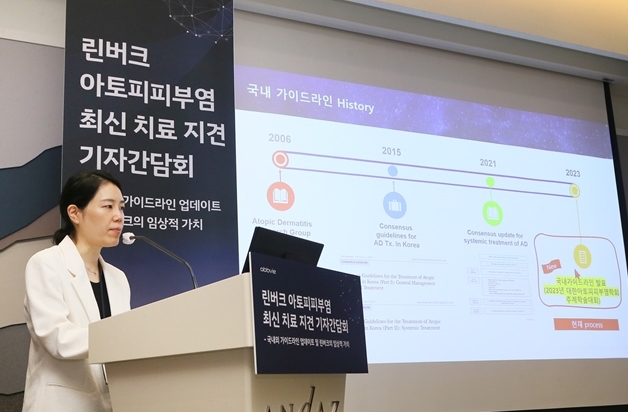
- More options became available with the approval of biologics and JAK inhibitors to treat atopic dermatitis. However, limitations in switching treatments have been indicated to make effective treatments difficult. Opinions have been suggested that the Korean government must follow the global trend as foreign countries do not limit switching between biologics and JAK inhibitors for treating moderate-to-severe atopic dermatitis. Han Tae-young, Professor of Nowon Eulji Medical Center (Insurance Director at the Korean Atopic Dermatitis Association)During a press conference hosted by Abbvie, titled 'Press conference for the latest Rinvoq value for atopic dermatitis,' on July 3rd, Professor Han Tae-young of Nowon Eulji Medical Center (Insurance Director at the Korean Atopic Dermatitis Association), emphasized the need for switching between treatments. Switching treatments has become a persistent issue in clinical practice for atopic dermatitis due to increasing treatment options and a growing number of patients. Concerns have been raised about fairness in comparison to psoriasis, another area in dermatology where switching treatments is more possible. "Few countries among major nations limit reimbursement for switching therapies. In South Korea, reimbursement is not available for switching between biologics and JAK inhibitors, posing challenges for effective treatment.," Han stated. Typically, the efficacy of atopic dermatitis treatments is assessed based on the Eczema Area and Severity Index (EASI)-75 achievement rate. Currently approved treatments show varying efficacy levels: some achieve up to 80% efficacy by the 52-week mark, while others demonstrate 60% or lower efficacy, indicating variability depending on the patient. "Various treatments are available for atopic dermatitis, but in cases where there is no response, some patients may not experience any benefit," Han said. "Atopic dermatitis is a condition with heterogeneous characteristics that requires finding the proper treatment for each patient. However, this process can be hindered if switching treatments is not allowed." Presented by Professor Han Tae-young at the press conference on July 3rd.Until now, the Health Insurance Review and Assessment Service (HIRA) and the Korean Atopic Dermatitis Association have discussed switching between treatments. However, no progress has been made due to a lack of evidence. Recently, revising guidelines in domestic and major countries indicates a positive change. They have mentioned the latest guidelines from major countries such as the United States and Europe for switching treatments, thereby increasing the possibility of switching treatments. The 2024 guidelines updated by the American Academy of Dermatology, notably the first update in a decade since 2014, strongly recommend biologics and JAK inhibitors for the treatment of moderate-to-severe atopic dermatitis. They also include recommendations for switching therapies if initial treatments fail. "It is recommended that switching to other biologics or JAK inhibitors be considered in cases of inadequate treatment response or when the treatment cannot be used due to side effects," Han mentioned. When switching between treatments for atopic dermatitis was initially discussed, there was insufficient evidence based on guidelines. However, there are increasing expectations as switching between treatments is mentioned. Han explains that the HIRA increasingly anticipates supplementary data from the Korean Atopic Dermatitis Association regarding switching between treatments as the situation evolves. "To establish evidence, the association plans to gather patient data showing favorable treatment outcomes through switching therapies, even in cases where they are not covered by insurance," Han said. "They intend to present this data to support their initiative. However, predicting an exact timeframe is challenging, considering the detailed information requested by the HIRA."
- Company
- HLB ‘FDA meeting complete...no supplement data required'
- by Son, Hyung-Min Jul 05, 2024 05:48am
- HLB announced on the 2nd that it had completed the meeting with the U.S. Food and Drug Administration (FDA) to resume the license review of its new liver cancer drug. At the meeting, which was attended by HLB's US subsidiary Eleva and Chinese partner Jiangsu Hengrui Pharmaceuticals, the FDA said it "strongly recommends submitting a re-examination application" to expedite the main review, which was delayed due to the issuance of the complete response letter (CRL), and delivered an official Post Action Letter (PAL) along its position. HLB is interpreting the letter as meaning that "no additional supplementary information will be requested as Jiangsu Hengrui Pharmaceuticals has already faithfully submitted supplementary data regarding the points raised after the CMC on-site inspection visit in December for camrelizumab, which is used in combination with rivoceranib, a new drug for liver cancer." In May, HLB announced that it had received a CRL from the FDA regarding the application submitted requesting the approval of the combination therapy rivoceranib and Jiangsu Hengrui Pharmaceuticals’ immune-oncology drug camrelizumab as a first-line treatment for liver cancer. The primary reason for the CRL was reportedly due to a BIMO (Bioresearch Monitoring) finding, which identified the manufacturing facility and key clinical sites for camrelizumab. At the time, the company explained that the CRL was due to a facility issue. Regarding BIMO on-site inspection, the FDA said that "the BIMO was not the primary reason for issuing the CRL. The BIMO will be conducted during the re-examination period upon submission of the documentation." Now that the uncertainty surrounding the liver cancer drug has been removed, HLB plans to focus on completing the remaining steps for its global approval. Yong-Hae Han, CTO of HLB, said, “We were assured by Jiangsu Hengrui Pharmaceuticals that they have already submitted sufficient supplementary documents to address the FDA's points, so we plan to fully prepare and submit our request for re-examination as soon as possible. Although our plan was somewhat delayed than scheduled, it was an opportunity for us to conduct a complete inspection of the production plant to enhance the external credibility of our product quality, and were able to officially reflect the superior data of our new liver cancer drug to the application. We expected these changes to have a positive effect in the future."
