
- LOGIN
- MemberShip
- 2026-07-23 00:16:34
- Company
- Roche's new PNH drug 'Piasky' expected to be launched in KOR
- by Eo, Yun-Ho Dec 06, 2024 05:56am
- A new PNH drug, 'Piasky,' is expected to be launched in South Korea. According to industry sources, Roche Korea is currently undergoing the approval review process for Piasky (crovalimab), a treatment for Paroxysmal Nocturnal Hemoglobinuria (PNH). This drug received the U.S. Food and Drug Administration (FDA) approval in June. In August, it was commercialized in Europe. In February Piasky was designated as an orphan drug in South Korea. Discovered by Japan's Chugai Pharmaceutical and developed by Roche, crovalimab is a type of new anti-complement (C5) antibody. Low-dose subcutaneous administration every four weeks enables circulation of the drug in the blood, thereby repeatedly inhibiting the complement. The drug's potential was confirmed based on the Phase 3 COMMODORE 2 study, which directly compared the drug to AstraZeneca's 'Soliris (eculizumab).' The study results showed that subcutaneously injected crovalimab provides disease control. The safety of the drug was non-inferior compared to Soliris, a standard therapy that is intravenously administered every two weeks. In the clinical study, adverse reactions occurred in 78% of the crovalimab group and 80% of the eculizumab group. The most common adverse reactions were infusion-related reactions. Based on the efficacy and the safety data secured from a separately conducted Phase 3 COMMODORE 1 study, patients with PNH who switched from complement C5 inhibitors that are approved and in use to crovalimab also showed a stable effectiveness profile. Meanwhile, competition in the market for PNH is expected to get more intense. AstraZeneca has launched Ultomiris (ravulizumab) as a follow-up drug to Soliris. The European patent for Soliris expired in 2023, while the U.S. patents are set to expire in 207. Unlike Soliris, which is intravenously injected every two weeks, Ultomiris offers an expanded administration interval once every eight weeks. Novartis obtained the U.S. approval of 'Fabhalta (iptacopan),' an orally administered treatment for PNH. Fabhalta is a Factor B inhibitor that acts proximally in the immune system's alternative complement pathway, providing comprehensive control of red blood cell (RBC) destruction. Additionally, 'Epysqli,' Samsung Biepis' biosimilar to Soliris, has been commercialized in South Korea. It was the first case of Soliris biosimilars to receive domestic approval, and Samsung Bioepis also obtained approval in Europe last year.
- Company
- GC Biopharma will distribute and sell Fluad Quad in Korea
- by Kim, Jin-Gu Dec 05, 2024 05:53am
- GC Biopharma will distribute and sell CSL Seqirus’s quadrivalent flu vaccine, ‘Fluad Quad Prefilled Syringe (Fluad Quad),’ in Korea. According to industry sources on the 3rd, GC Biopharma recently signed a contract with Meditip to distribute and sell Fluad Quad in Korea. Meditip holds the domestic rights to the main product of the Australian pharmaceutical company CSL Seqirus. It has domestic licenses for the quadrivalent influenza vaccine Fluad Quad and another cell-based quadrivalent influenza vaccine, Flucelvax Quad. GC Biopharma already owns its own quadrivalent influenza vaccine, GC Flu. With the addition of Fluad Quad from Seqirus, the company is expected to distribute and sell it alongside GC Flu in Korea. GC Biopharma has been strengthening its external partnerships in recent years. In December 2022, it signed an agreement with GSK to co-market the shingles vaccine Shingrix. Earlier last year, it signed a deal with Sanofi to co-promote the antiplatelet drug Plavix. Around the same time, it expanded its deal with BMS to sell the hepatitis B drug Baraclude.
- Company
- Sales of new CAR-T drugs Carvykti 88%↑· Kymriah stalled
- by Son, Hyung Min Dec 05, 2024 05:53am
- Sales performance of Chimeric Antigen Receptor (CAR)-T Cell therapies has been interchanging. Novartis' Kymriah, which entered the market first, is troubling as latecomer competitors enter the market. In contrast, sales of Jansen's Carvykti and BMS' Breyanzi expanded significantly due to expanded indications. According to the pharmaceutical industry on December 3, Carvykti generated sales of US$286 million (about KRW 40 billion) in Q3, up 88% YoY. Carvykti recorded US$629 million in net sales for 9 months this year, up 84% from US$341 million last year. CAR-T is a gene and cell therapy, which involves engineering T-cells to express receptors responding to particular types of cancer cells. The cells are then injected into the patient. This approach has shown potential effectiveness in patients unresponsive to conventional anticancer treatments. Carvykti's strength lies in its efficacy. Initially utilized as a fourth-line treatment for multiple myeloma, subsequent clinical trials have expanded its indication to second-line therapy in the U.S. and Europe. Clinical studies have demonstrated that Carvykti significantly prolongs survival in multiple myeloma patients. Sales trend of major new CAR-T drugs (unit: US$1 million). Sales of BMS' two new CAR-T drugs, Breyanzi and Abecma, also significantly increased. First, Breyanzi recorded sales of US$224 million in Q3, up 143% YoY. Breyanzi's 9 months sales of this year amounted to US$484 million, up 84% YoY. Breyanzi has shown an upward trend for four consecutive quarters after recording sales of US$92 million in Q3. Breyanzi's strength lies in its broad scope of use. Breyanzi secured indications to treat relapsed·refractory diffuse large B-cell lymphoma (DLBCL), chronic lymphocytic leukemia, and follicular lymphoma. Analysis suggests it has the most potential to treat various blood cancers among other new CAR-T drugs. BMS seeks to expand approval for Breyanzi in countries in the field of lymphoma. Breyanzi recently secured follicular lymphoma indication in Japan, and it is under review for approval in Europe. Abecma generated sales of US$124 million in Q3, up 33% YoY. Breyanzi is the fifth approved new drug of CAR-T in the U.S. It targets BMCA, an index involved in immune cell overgrowth. Unlike CD19-targeting Kymriah and Breyanzi, Abecma has a novel mechanism of action, thereby opening a new market. Sales of Yescarta·Kymriah have stalled following the introduction of competing drugs Sales of Gilead Sciences' Yescarta, which has been in a leading position in the market for new CAR-T drugs, slightly decreased from the previous year. Yescarta recorded US$387 million in Q3, down 1% YoY. Yescarta is the new CAR-T drug introduced to the market following Kymriah. Yescarta was quickly established in the market after successfully expanding its indications. In March 2021, Yescarta was initially approved for follicular lymphoma. Last year, it was approved for the second-line treatment of DLBCL and acute lymphocytic leukemia. However, as Carvykti and Breyanzi rapidly became competing drugs to Yescarta, the upward trend of Yescarta has been slow. Yescarta's Q2 sales of last year amounted to US$380 million, and Q3 sales slightly increased to US$391 million. However, sales have been stalled after recording US$380 million in Q1 of this year. Sales of Novartis' Kymriah has been continued to slow down. Kymriah recorded sales of US$102 million in Q3, down 18% YoY. Kymriah recorded sales of US$120 million in Q1 this year, showing a decreasing sales trend for three consecutive quarters. Kymriah was approved to treat relapsed and refractory DLBCL and acute lymphocytic leukemia as the first among new CAR-T drugs, opening a new market. However, as the additional indication was delayed, Kymriah fell behind the competition. Yescarta secured an indication to treat follicular lymphoma in the United States in March 2021. Kymriah was approved for the indication a year later, in May 2022. Yescarta and Breyanzi were approved for the second-line treatment of lymphoma. However, Kymriah failed to demonstrate effectiveness in the clinical trial. Novartis expects Kymriah to demonstrate strength in terms of the safety profile. Certain CAR-T drugs have shown neurotoxicity-related adverse reactions. Novartis anticipates the use of Kymriah, which has superior tolerability, will expand to elderly and high-risk patients.
- Company
- Biosimilars Onbevezy·Remsima compete for sales lead in KOR
- by Chon, Seung-Hyun Dec 05, 2024 05:53am
- Biosimilars developed by Celltrion and Samsung Bioepis have been expanding their presence in the domestic market. Samsung Bioepis' Onbevezy has surpassed sales of KRW 10 billion, becoming the top-selling biosimilar developed in South Korea. Since Q3 of last year, Celltrion's Remsima has allowed Onbevezy to take a market-leading position. However, it shows a rebound, with quarterly sales increasing to KRW 10 billion, reducing the gap with the market leaders. According to the Financial Supervisory Service on December 5, domestic sales of Samsung Bioepis' Onbevezy increased by 12.9% year-over-year (YoY), with KRW 11.5 billion. Onbevezy has recorded the highest sales among domestically developed biosimilar products, surpassing Remsima by a difference of KRW 300 million. Sales trends were analyzed based on disclosed sales by Boryung and Celltrion Pharm, companies selling biosimilars from Samsung Bioepis and Celltrion. Domestic sales trend of major biosimilars developed in KOR. Onbevezy (purple), Remsima (blue), Herzuma (orange), and Truxima (grey). (unit: KRW 1 million, source: FSS) Onbevezy is a biosimilar to the anticancer drug Avastin. It is an anticancer drug used to treat patients with metastatic colorectal cancer, metastatic breast cancer, non-small cell lung cancer, advanced or metastatic renal cell carcinoma, glioblastoma, epithelial ovarian cancer, carcinoma of the fallopian tube, primary peritoneal cancer, and cervical cancer. Samsung Bioepis launched Onbevezy in September 2021 in the Avastin market. Celltrion and Alvogen Korea also entered the market. In Q2, Onbevezy surpassed sales of KRW 10 billion for the first time, maintaining the increasing trend through Q3 2024. The sales of Onbevezy exceeded Remsima, reaching KRW 9.2 billion in Q1. However, Onbevezy allowed for a reversal in Q2. Onbevezy regained the market-leading position in Q3 2023, exceeding Remsima's sales. It maintained this position for five consecutive quarters. Onbevezy's cumulative sales in Q3 amounted to KRW 34.6 billion, an increase of 17.4% YoY compared to last year's KRW 29.5 billion. Onbevezy entered the market first among other biosimilar products. Analysis suggests that a customized marketing strategy maximized the synergy. After obtaining the domestic approval of Onbevezy, Samsung Bioepis signed an exclusive sales agreement with Boryung, one of the Korean companies with strength in the field of anticancer drugs. In May 2020, Boryung newly established an ONCO (anticancer) sector. The company independently separated the sector from the prescription medicine sector. Boryung secured sales rights to various anticancer drugs and biosimilars owned by Korean and international companies. With the LBA (Legacy Brands Acquisition) strategy of acquiring sales rights for original anticancer drugs, Boryung secured Gemzar and Alimta. Boryung also secured Korean sales rights for Herceptin biosimilar from Samsung Bioepis. Remsima, which Celltrion Pharm sells, recorded sales of KRW 11.2 billion in Q3, up 13.3% from last year. Remsima is a biosimilar to the autoimmune disease treatment Remicade. It was approved as the first domestically developed antibody biosimilar in 2012. Remsima is used to treat Crohn’s disease, ankylosing spondylitis, ulcerative colitis, and rheumatoid arthritis. Upon launch, Remsima continued to take the leading sales position among biosimilars in South Korea for over 10 years. Last year, Remsima recorded KRW 13.4 billion in Q2. However, it generated KRW 80-90 billion in sales from Q3 2023 to Q2 this year, giving over the leading position in biosimilar sales to Onbevezy. Q2 sales of Remsima increased by 15.7% from the previous quarter, exceeding KRW 10 billion, and it continued to show an increasing trend in Q3. The sales difference between Remsima and Onbevezy was KRW 1.8 billion in Q1. As these drugs recovered an upward trend, the difference was reduced to KRW 300 million in Q3. Onbevezy generated much higher sales. Remsima's cumulative sales in Q3 amounted to KRW 31.8 billion, up 1.2% from the previous year. Celltrion's Herzuma and Truxima generated over KRW 10 billion in sales, showing a stable presence in the market. Herzuma and Truxima are biosimilar to Herceptin and MabThera, respectively. Herzuma's domestic sales amounted to KRW 5.5 billion in Q3, up 20.9% YoY. Herzuma's cumulative sales in Q3 amounted to KRW 15.9 billion, up 46.3% YoY, exceeding last year's sales of KRW 14.9 billion in 9 months. In 2022, Herzuma recorded sales of KRW 13.8 billion. Truxima's sales in Q3 amounted to KRW 3.1 billion, up 12.2% from last year. Cumulative sales in Q3 amounted to KRW 8 billion, down 27.2%. Truxima generated KRW 13.8 billion and KRW 14.9 billion in 2022 and last year, respectively.

- Company
- Boryung starts in-house producing lung cancer drug 'Alimta'
- by Heo, sung-kyu Dec 04, 2024 05:56am
- As Boryung has started in-house production of 'Alimta (pemetrexed),' a non-small cell lung cancer (NSCLC) treatment that Boryung acquired the sales right in 2022, attention is drawn to the background. Analysis indicates that Boryung aims to take a share of the market worth KRW 20 billion as part of a synergistic strategy for operating a manufacturing facility at the Yesan Campus. Product photo of According to the pharmaceutical industry on December 25, Boryung withdrew its import approval for two 'Alimta Inj' items that the company had imported from Lily. After that, Boryung is reported to have acquired approval for domestic production of the items. The current approval and withdrawal are intended to transition from imported to domestically produced items. Boryung's 'Alimta' is an NSCLC treatment approved in the U.S. in 2004. Alimta is used as a chemotherapy or used in combination with the immune checkpoint inhibitor Keytruda for treating patients with nonsquamous NSCLC. After commencing the anticancer agent business in 2019, Boryung has expanded the anticancer cancer agent business. In line with this, Boryung signed an agreement to acquire domestic sales rights from Lily in 2022. At that time, Boryung invested about KRW 100 billion to acquire Lily's sales rights and approval for Alimta in South Korea. Ahead of the time of the contract, the sales of Alimta in 2021 amounted to approximately KRW 20 billion, and Boryung had been focusing on anticancer business, such as acquiring 'Gemzar (gemcitabine).' After the acquisition, Boryung transitioned an acquired item to in-house production in about two years. The rate of return is expected to be significantly greater. Alimta's sales increased after the acquisition. Based on Boryung's business report, Alimta generated KRW 22.6 billion in 2023. Boryung's sales performance has risen to KRW 30.5 billion, based on the business report in Q3. Considering that in-house produced items yield a higher rate of return than imported items, Boryung will likely have an improved rate of return amid rising sales. Additionally, in-house production of 'Alimta' is expected to increase the capacity utilization rate of its manufacturing plant. The average capacity utilization rate of Boryung's manufacturing plant for anticancer injectables in Yesan Campus is 74.07%, based on the Q3 business report. Consequently, when the company fully produces 'Alimta' in-house, it will likely improve the rate of return and more use of the anticancer injectable manufacturing line. Yet, the introduction of in-house produced items is estimated around early 2025. The estimated product entry relates to remaining stocks of imported items and reimbursement procedures for newly approved items during the in-house production process. "Once imported volume is all used, we will receive pricing of the in-house produced item, then launch," Boryung's representative stated regarding this issue. "Drug pricing is expected to be around February 2025."
- Company
- SK Bioscience wins 2nd trial on pneumococcal patent dispute
- by Kim, Jin-Gu Dec 04, 2024 05:56am
- SK Bioscience has won the second trial of its patent infringement lawsuit against Pfizer over its pneumococcal vaccine, overturning the ruling made in the first trial. The two companies have been engaged in a long-running lawsuit over SK Bioscience's 13-valent pneumococcal vaccine, ‘Skypheumo Prefilled Syringe (Skypheumo).’ According to the pharmaceutical industry on the 3rd, the patent court recently ruled in favor of the plaintiffs in the appeal of SK Bioscience's patent infringement lawsuit against Pfizer and Wyeth LLC. The two companies' conflict over Skypheumo dates back to 2017. Wyeth, the Korean patent holder for the pneumococcal vaccine Prevenar 13, and its Korean distributor, Pfizer, filed a lawsuit alleging that SK Bioscience's Skypheumo infringed on their patent rights. The case went to the 3rd court, and the Supreme Court sided with Pfizer in 2019 with a settlement recommendation. The Supreme Court ruled that Pfizer's patent was valid and banned SK Bioscience from producing and launching Skypheumo until 2027. SK Bioscience voluntarily withdrew the marketing authorization for Skypheumo, then in June 2021, and again received marketing authorization for Skypheumo. The conflict between the two companies persisted since then. Faced with difficulties in launching the vaccine in Korea, SK Bioscience signed a license agreement to transfer the technology to Russian pharmaceutical companies to develop the vaccine in the region and supply the undiluted solution of the pneumococcal vaccine. SK Bioscience believed that the supply of an undiluted solution for research trials, not the finished product, was outside the scope of patent infringement. However, Pfizer and Wyeth put the brakes on the act as well. In 2020, the companies filed a patent infringement lawsuit and won the first trial in August last year. SK Bioscience appealed, and eventually, the patent court overturned the first ruling and ruled in favor of SK Bioscience. The ruling is expected to have a significant impact on other disputes between the two companies. The Korea Trade Commission under the Ministry of Trade, Industry, and Energy has been investigating SK Bioscience for unfair trade practices. Pfizer and Wyeth have sued to sanction SK Bioscience's export of its undiluted solution. Pfizer and Wyeth sued SK Bioscience in 2019, and the KTC sided with Pfizer in February this year and issued a correction order. SK Bioscience responded by filing an appeal with the Seoul Administrative Court. In October of this year, Pfizer-Wyeth filed another suit against SK Bioscience with the same allegations. The industry’s analysis is that the KTC sided with Pfizer because of the first patent infringement ruling. It is analyzed that the KTC issued a correction order to SK Bioscience based on Pfizer’s win in the first patent infringement trial. However, as the second trial of the patent infringement lawsuit resulted in a ruling that was opposite to the first trial, there is the prospect that the KTC’s judgment may also change regarding SK Bioscience's unfair trade practices.
- Company
- Sanofi announces entering the RSV vacc. market for children
- by Whang, byung-woo Dec 04, 2024 05:56am
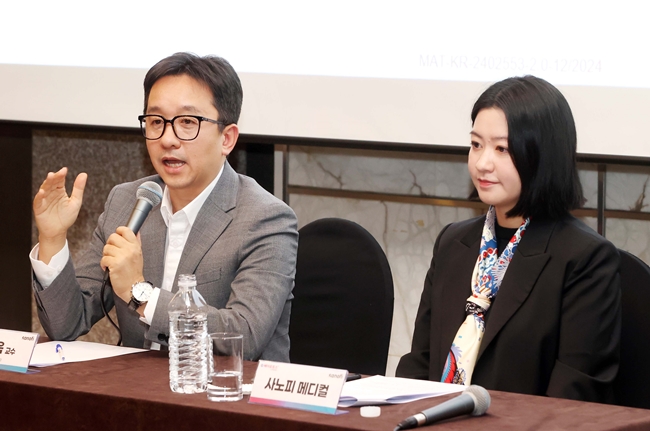
- Sanofi has announced the launch of Beyfortus, an injectable antibody drug to prevent respiratory syncytial virus (RSV) lower respiratory tract disease, for the first time in South Korea. The company aims to take a market share. As clinical practices are in high demand for the vaccine, proactive RSV prevention will become possible following the launch of Beyfortus. Sanofi held a press conference to showcase the preventative effects of its Beyfortus (active ingredient: nirsevimab), an injectable antibody drug for infants to prevent RSV lower respiratory tract disease (left: Ki Wook Yun, Professor of Seoul National University College of Medicine). On December 3, Sanofi held a press conference introducing the preventative effects of its Beyfortus (active ingredient: nirsevimab), an injectable antibody drug to prevent RSV lower respiratory tract disease for infants. Beyfortus was approved by the Ministry of Food and Drug Safety (MFDS) in May as an injectable antibody to prevent RSV. It can be administered to all newborns and infants during their first RSV season. Beyfortus can also be given to infants under 24 months who are at high risk for severe RSV disease during their second RSV season. Previously, RSV immunization product for infants and children in South Korea was only available for high-risk infants and children who are expected to have a high risk of contracting severe RSV disease, including preterm infants. However, Beyfortus can be treated in all infants and children. "Individuals of all ages can contract RSV, but 90% of infants under 2 years old become infected. When infected, a mild cold symptom can advance to lung infections, possibly leading to hospitalization," Ki Wook Yun, Professor of Seoul National University College of Medicine, explained. "When infants without completely developed bronchial tubes contract RSV, symptoms can be worse. It could result in socioeconomic loss in addition to affecting family members." According to Yun, taking care of one's hygiene was the only RSV prevention available. There were unmet needs for RSV prevention, and Beyfortus is expected to bring a positive change. The Phase 3 MELODY study, which was the basis of Beyfortus approval, showed that evaluating the effectiveness of Beyfortus in 3012 infants during their first RSV season, Beyfortus reduced the lower respiratory infection by RSV, which requires medical attention, by 74.5%. Vaccination with Beyfortus is non-reimbursed at launch. However, the early vaccine rate is expected to be high considering that needs rather than cost drive the market for young children. Yet, around the time of the launch, vaccination is expected to focus on high-risk patient groups due to cost hurdles. "Based on the reported price at launch, the cost hurdle is relatively high considering insufficient RSV awareness. When RSV is circulating, there would be more demand for vaccination. However, around the time of the launch, caregivers to patients who have high-risk diseases would be more likely to access vaccination." Ahead of the upcoming launch, Sanofi puts efforts into raising awareness of RSV disease. For example, Sanofi has started an 'It turned out to be RSV, story contest,' aiming to gather patient stories related to the disease and share them. In the long run, entering the National Immunization Program (NIP) will be a concern. Given the effects of other NIP vaccines, Beyfortus effectively reduces the disease burden. "RSV infection poses a greater burden on infants and young children. Compared to the pneumococcal vaccine, which is immunized yearly, the cost effect of Beyfortus is sufficient. In the future, the drug must be listed in the NIP, and more children will have access to immunization," Yun said.
- Company
- GSK seeks HIV paradigm shift with long-acting injectable
- by Whang, byung-woo Dec 04, 2024 05:56am
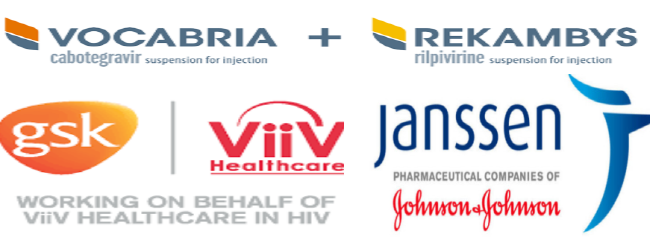
- With the long-acting HIV drug Vocabria+Rekambys combination therapy seeking insurance reimbursement coverage, attention is being paid to whether the drug’s introduction will bring about a shift in the treatment environment. GSK Korea applied for the reimbursement of the Vocabria+Rekambys combination in May According to industry sources on the 3rd, GSK Korea has completed pharmacoeconomic evaluations for its new HIV drug combination, Vocabria (cabotegravir)+Rekambys (rilpivirine), and is awaiting review by the National Health Insurance Review and Assessment Service Drug Reimbursement Evaluation Committee. GSK Korea filed for reimbursement review in May and may be presented as an agenda at the last Drug Reimbursement Evaluation Committee meeting of the year, which is scheduled for December. Vocabria+Rekambys was previously approved by the MFDS in February 2022 as a combination therapy for the treatment of HIV-1 infection in adult patients who are virologically suppressed, have no history of virologic failure, and have no known or suspected resistance to either cabotegravir or rilpivirine. Its biggest strength is convenience. While traditional HIV treatments require daily oral dosing 365 days per year, the Vocabria+Rekambys combination can be administered as a monthly or bimonthly intramuscular injection, reducing dosing frequency to up to six times per year. In the head-to-head SOLAR study, which directly compared the Vocabria+Rekambys combination with the conventional three-drug regimen (BIC/FTC/TAF), Vocabria+Rekambys demonstrated non-inferior virologic suppression compared to the three-drug regimen, demonstrating both efficacy and convenience. SOLAR trial’s 11/12 month viral suppression results Patients who switched to Vocabria+Rekambys reported higher treatment satisfaction at 11-12 months of treatment compared to patients who continued on their existing oral regimen. The expected clinical benefit of the less frequent dosing is that patients may feel less anxious about disclosing their HIV status. According to the '2024 HIV Treatment Awareness’ survey conducted by Love4One, an organization for people living with HIV, 73% of people living with HIV in Korea responded that they felt afraid of being judged by others when taking HIV medications. In addition, 53% said they had difficulty taking the medications because of inconveniences such as having to take them on time every day or on an empty stomach. At the Korean Society of Infectious Diseases’s Annual Fall Meeting, Yeon-Sook Kim, Professor of Infectious Diseases at Chungnam National University Hospital, said, “South Korea is still one of the countries where HIV is still highly stigmatized and discriminated against, which can affect the peoples’ adherence to medication, leading to virological failure or resistance to treatment.” “In Korea, HIV remains a disease with a high unmet need in terms of adherence and quality of life (QoL), and the introduction of long-acting HIV injectables will be an important turning point in positively improving the lives of people living with HIV in Korea,” added Professor Kim. The key question is whether the Vocabria+Rekambys combination, which has been already approved for 2 years, will be eligible for reimbursement coverage in Korea. Currently, Vocabria is licensed and reimbursed in the United States (FDA approval in 2021), as well as in A8 countries and Australia, which are key reference countries used during HIRA’s reimbursement evaluations. The cost of the two-drug combination varies by country, but in the UK and Canada, where the price is determined through health technology assessment (HTA) like Korea, the convenience of the once-every-2-month cycle regimen was recognized. Based on a single administration, its reimbursement price was set at approximately GBP 1637.49 (KRW 2.9 million) in the United Kingdom and approximately CAD 2568.71 (KRW 2.57 million) in Canada.
- Company
- 4 out of 5 pharmas saw export sales expanded
- by Kim, Jin-Gu Dec 03, 2024 05:53am
- Export sales of four out of five pharmaceutical and biotech companies have increased year-over-year (YoY). The net export sales of 28 major pharmaceutical companies increased from KRW 5.3405 trillion to KRW 6.6449 trillion over a year, up 25.6%. Samsung Biologics' export sales increased by over KRW 600 billion. Export sales of Celltrion and SK Biopharmaceuticals increased by over KRW 100 billion over a year. Dongwha Pharmaceutical·Daewon Pharmaceutical·Boryung reported that their export sales increased over twofold over a year. Export sales of 23 out of 28 pharmas↑…Net export sales KRW 5.3T→KRW 6.4T According to the Financial Supervisory Service (FSS) on December 2, net export sales of 28 major pharmaceutical and biotech companies for this year's Q3 amounted to KRW 6.4449 trillion, up 26% from KRW 5.3205 trillion from Q3 last year. This is a result of summing 28 KOSPI-and KOSDAQ-listed pharmaceutical and biotech companies that have generated over KRW 10 billion in cumulative export sales in Q3. The subsidiaries have been excluded from the calculation. 23 of the 28 companies (79%) investigated had increased export sales compared to YoY. Dongwha Pharm's export sales increased over five-fold over a year. Export sales of Daewon Pharmaceutical and Boryung have more than doubled. Those of SK Biopharmaceuticals·Dongkook Pharmaceutical·JW Life Science·Shingpoong Pharmaceutical have ramped up over 50%. Export sales of Yungjin Pharmaceutical·Hugel·PharmaResearch·Celltrion·HK inno.N·Samsung Biologics·Daewoong Pharmaceutical ramped up over 20%. At the same time, those of GC Biopharma·Jeil Pharmaceutical·Dong-A ST·Yuhan·Chong Kun Dang·Il-Yang Pharmaceutical·Hanmi Pharmaceutical increased over 10%. In contrast, export sales of SK Bioscience decreased to 1/10 over a year. JW Pharmaceutical saw a decrease of over a half, and those of Kyungbo Pharmaceutical·Huons decreased over 20%. Samsung Biologics·SK Biopharmaceuticals exports continue to soar…more than KRW 100B hike over a year Samsung Biologics, Celltrion, and SK Biopharmaceuticals seem to maintain a steep increasing trend in export sales. Cumulative export sales of Samsung Biologics increased by over KRW 600 billion in Q3. Cumulative export sales in Q3 2023 amounting to KRW 2.6211 trillion increased to KRW 3.2909 over a year, up 26%. Exports to all regions increased. European export sales rose by 21%, from KRW 1.794 trillion to KRW 2.1726 trillion. U.S. export sales increased by 37%, from KRW 574.5 billion to KRW 788.1 billion. Exports to other markets outside the U.S. and Europe grew 29%, from KRW 172.4 billion to KRW 221.7 billion. Export sales of Samsung Biologics are experiencing rapid growth every year. Export sales increased 2.3-fold from KRW 1.2217 trillion in 2021 to KRW 2.8466 trillion in 2022, followed by a 41% rise to KRW 3.58 trillion in 2023. This year, the company has achieved nearly KRW 3.3 trillion in exports by Q3, making it highly likely to surpass KRW 4 trillion in annual export sales. Since 2015, Samsung Biologics has secured a total order of US$14.235 billion (approximately KRW 20 trillion). Of this amount, US$7.497 billion has been delivered. The remaining order backlog is US$6.738 billion (approximately KRW 9 trillion). If client companies succeed in product development, the anticipated volume from the order backlog could increase to US$12.317 billion (approximately KRW 17 trillion). Celltrion's cumulative export sales for Q3 increased by 30%, from KRW 623.5 billion to KRW 810 billion YoY. European exports saw significant growth, driven by the expansion of export destinations for Remsima SC, which rose by 57% from KRW 283.5 billion in Q3 2023 to KRW 444.9 billion in Q3 this year. Exports to the North American market slightly decreased from KRW 236.7 billion to KRW 232.8 billion. However, Celltrion anticipates improvement in export performance after Q4, as sales of Zymfentra, approved as a new drug in the U.S., begin to generate. SK Biopharmaceutical's cumulative export sales surged 66%, from KRW 228.1 billion to KRW 378.6 billion. This growth is attributed to the strong sales of the epilepsy drug Xcopri (cenobamate) in the North American market. Dongwha·Daewon·Boryung sales surged over twofold…attributed to changes in corporate acquisition·sales strategy Mid-sized pharmaceutical companies, including Dongwha·Daewon·Boryung, have also shown significant improvements in export sales. Dongwha Pharmaceutical's export sales, which amounted to KRW 13.6 billion in Q3 last year, surged over fivefold to KRW 69.8 billion within a year. This increase is attributed to the acquisition of a Vietnamese pharmacy chain. In August 2023, Dongwha Pharmaceutical acquired a 51% stake in TRUNG SON Pharma for KRW 39.1 billion. TRUNG SON Pharma's sales have been newly reflected in Dongwha Pharmaceutical's export sales starting this year. TRUNG SON Pharma recorded sales of KRW 54.2 billion in the first half of this year. Excluding Trung Son Pharma's sales, the remaining export sales increased by 15%, from KRW 13.6 billion to KRW 15.6 billion. Daewon Pharmaceutical's export sales in Q3 2023 amounted to KRW 8 billion. However, it surged over threefold to KRW 23.6 billion over a year. Export sales expansion from Pelubi and sales generated from a cosmetic company that Daewon Pharmaceutical acquired at the end of last year have likely contributed to the total. In December 2023, Daewon Pharmaceutical acquired SD Biotechnologies, a cosmetics·health functional food company. Daewon finalized its decision to acquire SD Biotechnologies in August last year, completing the acquisition process with a payment of KRW 20 billion in December. SD Biotechnologies recorded cumulative sales of KRW 27.8 billion in Q3 this year, with 49% of the total, or KRW 13.6 billion, generated from overseas markets, including China. Additionally, Daewon Pharmaceutical is expanding its key product, Pelubi (pelubiprofen), globally. In September 2023, Daewon Pharmaceutical signed an agreement with Indonesian pharmaceutical company PT Interbat to export finished products of its non-steroidal anti-inflammatory drug, Pelubi. The contract is valued at US$ 3 million (approximately KRW 4 billion), spanning five years. Daewon Pharmaceutical is accelerating its entry into Southeast Asia and Latin America markets, including Indonesia, the Philippines, Vietnam, and Mexico. Boryung's cumulative Q3 exports rose from KRW 4.9 billion last year to KRW 10.4 billion this year, recording more than twofold increase YoY. The export sales of the Kanarb family increased from KRW 1 billion to KRW 2.4 billion, and Gelfos exports surged from KRW 400 million to KRW 4.7 billion. For Gelfos, analysis suggests the product is recovering from partnership-related setbacks. Gelfos, Boryung's flagship over-the-counter medication, has historically been a strong export performer, sometimes surpassing domestic sales. In 2022, Gelfos recorded KRW 9.1 billion in exports, exceeding its domestic sales of KRW 7.8 billion. Gelfos export sales plunged last year, probably due to new contracts and terminations with Chinese partners. In 2021, Boryung signed an exclusive sales agreement with China's Sinopharm for Gelfos. However, this contract was terminated in August 2023 due to poor sales performance. Boryung shifted its strategy to target the Chinese market directly. Leveraging its Chinese local subsidiary, Boryung focuses on direct partnerships with distributors and agents in China. As a result, analysts suggest that Gelfos export sales, which had plunged last year, is gradually recovering to previous levels.
- Company
- Reasonable compromise between industry-govt is key
- by Eo, Yun-Ho Dec 03, 2024 05:52am
- The pharmacoeconomic evaluation exemption system has received unflattering attention since its implementation. It is no wonder that the government has been gathering voices in support of its 'reduction' under the pretense of 'improvement'. The PE exemption system is the only system in Korea's insurance policy landscape that helps patients with rare diseases and rare cancers get the treatments they need. Applying double pricing through risk-sharing agreements (RSAs) and other measures has also contributed to reducing barriers and improving access to new drugs, but the PE exemption system has made otherwise impossible acceptance possible. But always, the government has to work with a limited amount of finances. This is why the government’s proposed plan to use RWD for reevaluations is also seen as a ‘reduction’ measure. -The growing interest in RWD and the industry's original sin How did RWD come to be in the spotlight? Of course, it's not a new concept, but the pharmaceutical industry is the one that has mentioned RWD and RWE. As mentioned in the first part of the feature article (Is RWD needed for post-listing control of PE-exempt drugs?), the level of evidence for RWD is lower than that of randomized controlled trials (RCTs). As the KRPIA points out, the results can vary depending on the intentions of the entity collecting the data, and there is a high risk of bias. However, multinational pharmaceutical companies have been actively promoting RWD data of their new drugs whenever it is released. Especially when the research results on Asians and Koreans were released, they were often covered in articles and discussed in interviews. It is not uncommon to see comments from experts who highly regard the evidence level of RWD. The RWD includes patients with higher disease severity than RCTs but the results are good, it is highlighted even more. In other words, data with a low level of evidence is being used to promote the efficacy of a drug. Re-evaluation of PE exemption drugs is a different story. But it's worth asking whether the industry is really finding it difficult to collect the data and whether it could have been more proactive in discussing with the government to find a compromise. As one MA (Market Access) representative at a multinational pharmaceutical company said, “I know that the industry has used RWD to its advantage. However, we do not have RWD available for all of our drugs, and it is very costly to extract the data. It is clearly unreasonable to unilaterally request RWD for the evaluation of PE exemption drugs.” “And even if the RWD results are better than RCTs, it is unlikely that they will increase the price of the drug. It is more likely that they will raise the barrier and act as a mechanism for price reduction.” Post-listing control will nevertheless be added to the system...then what? So what can be done? In single-arm trials, uncertainty exists in the control group even for RWD, which makes it difficult to conduct PE evaluations that require a comparator-control analysis. The industry argued that the indirect comparison guideline should be revised to allow more drugs to be evaluated using meta-analysis of all available data, which would then increase pharmacoeconomic evaluations. Various post-listing mechanisms have led to a 50% reduction from the initial listing price of drugs that have comparator drugs that were listed a long time ago or become off-patent. For example, clinical reevaluation and the price ceiling amount reevaluations were conducted the previous year, and a reduction in the actual transaction price, a revision of the price-volume agreement system, and external reference pricing reevaluations were set to be conducted this year. However, it is also clear that the number of high-priced anti-cancer drugs and orphan drugs is increasing rapidly, and there will be more drugs that would want to seek listing through the PE exemption system. KRPIA emphasized, “To improve the system in practice, the government, along with researchers who have experience in building pharmacoeconomic evaluation data, and the pharmaceutical industry that is required to submit the data, should work together to come up with an improvement plan to ensure that innovative treatments are supplied promptly to patients.” “We are not saying that we will look at RWE unconditionally. We prioritize RCTs or equivalent data and consider alternatives when this is not possible. We are well aware that the level of data evidence is very important, as is the opinion of the industry. We will continue to listen to the stakeholders' views on the burden of administrative costs on industry and the establishment of a national registry.”
