
- LOGIN
- MemberShip
- 2026-07-22 23:21:18

- Policy
- Drug price cuts will be applied in bulk next month
- by Lee, Tak-Sun Jan 18, 2024 06:07am
- A number of products are expected to receive price cuts next month as a result of the second round of reevaluations the government conducted on the insurance price ceiling of listed drugs. The drug price adjustments, which were initially set to be applied in January, were pushed back to February. Also, in consideration of the returns and difference settlements that need to be made by pharmacies, sufficient time is expected to be given between the announcement and the effective date of the pricing adjustments. According to industry sources on the 17th, the second round of negotiations after reevaluation of the insurance price ceiling of listed drugs will be completed this month and be reported to the Health Insurance Policy Deliberation Committee (HIPDC). About 3,220 products were subject to the second round of negotiations. As this includes all of the evaluated items, some that are not subject to pricing adjustments are also included in the negotiations. Therefore, it is expected that the actual number of products that receive price cuts will be fewer than this. In the first round of reevaluations that were conducted in September last year, 12,800 items were subject to negotiations, but 7,400 items were applied pricing adjustments. The second round of price ceiling reassessment will cover some specialty oral drugs and aseptic drugs that were included in the bioequivalence demonstration by the Ministry of Food and Drug Safety in 2020. The second round of reevaluations included some prescribed oral drugs and aseptic drugs that were required to demonstrate bioequivalence by the MFDS in 2020. Initially, the Ministry of Health and Welfare had planned to apply the drug price adjustments in January after reporting the results to HPIDC in December last year. However, it was postponed in February due to concerns about the burden borne by pharmacies. Also, drug price ceiling adjustments following the investigation into actual transaction prices had been set to be applied in January at the time. However, this was also postponed thereafter. Therefore, the adjustment period will likely be further delayed to after March, as the results were not reported to HIPDC’s meeting this time. The pricing adjustment date for the second round of price ceiling reevaluations is also expected to be a few days after the first of next month, just as it had been in the first round of price ceiling reevaluations. In the first round, the adjustments were announced on Aug. 23 last year, notifying its implementation on Sept. 1, but the actual implementations were made on Sept. 5 to account for return and settlement confusion among pharmacies. Meanwhile, the reevaluation of the price ceiling of listed drugs is being conducted to maintain or reduce the price of listed drugs depending on whether the drug meets the requirements of self-bioequivalence testing and DMF listing. If the listed drug satisfies both requirements, the ceiling price is maintained as is; however, if the drug satisfies only one of the two requirements, the price is reduced to 85%, and to 72.25% if both requirements are not met.
- Policy
- Stability data requirement eased for metformin approvals
- by Lee, Hye-Kyung Jan 17, 2024 05:29am
- The Ministry of Food and Drug Safety (Minister Yu-Kyoung Oh) will change and ease the stability test submission data requirements for approvals (and changes) of metformin-containing preparation that had been strengthened following the detection of an impurity (N-nitrosodimethylamine (NDMA, NDMA). Metformin is used for the treatment of Type 2 diabetes and has been approved for 120 single-agent and 1,227 combination drug products. The government’s action follows a scientific analysis of NDMA-related stability test data that have been submitted to the MFDS to date and the conclusion that the changed data requirements are sufficient to ensure the quality of the drugs within their expiration date. The MFDS had strengthened the data submission requirements since July 2020 after NDMA was detected in metformin products to strictly control the impurity level to be lower than the standard. The stability test data required for product approval (and changes) has been strengthened to the level of new drugs. As a result, companies had to submit 12 months of long-term storage stability test data when applying for new approvals or changes to their metformin products. However, in the future, the companies will again only need to submit 6 months of long-term storage test data. The MFDS expects this improvement to help ensure the rapid development and launch of metformin products and access to treatment for patients and will continue to make the best efforts to operate Korea’s drug approval system flexibly and reasonably based on its expertise in regulatory science.
- Policy
- High-priced drugs receive reimb in the new year
- by Lee, Tak-Sun Jan 17, 2024 05:29am
- Ultra-high-priced drugs whose costs exceed KRW 100 million are being listed for reimbursement one after another in the new year. Following Koselugo’s reimbursement this month, Luxturna, which will cost KRW 1 billion, is expected to be reimbursed next month. With such ultra-high-priced drugs being listed one after another, voices have been rising on the need to strengthen post-listing management to efficiently manage the financial expenditures of Korea’s national health insurance. According to industry sources on the 16th, ‘Luxturna Inj,' an ultra-expensive drug that costs KRW 950 million, has completed drug pricing negotiations with the NHIS and is set to be reported to the Health Insurance Policy Deliberation Committee this month. The drug is a ‘one-shot treatment’ that shows an effect after a single dose, similar to previously listed drugs like Kymriah and Zolgensma. Luxturna is indicated for the treatment of adult and pediatric patients with vision loss due to inherited retinal dystrophy caused by confirmed biallelic RPE65 mutations and who have sufficient viable retinal cells. It is estimated that there are about 50 patients who are eligible to receive LUXTERNA in Korea. The issue is its high price. The drug costs about USD 710,000 per single dose in the US, which roughly translates to KRW 950 million in Korean won. Feeling burdened by the high price, patients have been awaiting the drug’s reimbursement listing since it was approved by the Ministry of Food and Drug Safety in September 2021. However, a sense of anxiety filled the air when Luxturna’s pricing negotiations, which began in September, failed to finish within the set deadline and extended the deadline. Fortunately, the two sides quickly reached an agreement during the extended negotiation period. The company and the government reportedly shared the price burden at a reasonable level through the risk-sharing agreement system. Since this drug is an ultra-high-priced one-shot treatment like Kymriah and Zolgensma, it is likely to raise follow-up management issues even after listing. Ultra-high-priced KRW 950 million Luxturna awaiting to be reimbursed in Korea The neurofibromatosis treatment Koselugo Cap (selumetinib, AstraZeneca) has been reimbursed from the 1st of this month. The drug has succeeded in receiving reimbursement listing for 2 years and 6 after filing an application in June 2021. The expanded scope of subjects eligible for waiving submission of pharmacoeconomic evaluation data (PE exemption drugs) that was implemented in January last year played a decisive role in its reimbursement listing. The company agreed upon three risk-sharing types of RSA – the refund type, expenditure cap type, and initial treatment cost refund type – with the NHIS reducing the burden of health expenditures on the government’s part. With the reimbursement listing, patients only need to a copayment rate of 10% of the annual cost of KRW 200 million required for its use, reducing the burden to a KRW 10 million range. The cost of new drugs being listed recently is well over KRW 100 million. Zolgensma, which was listed for reimbursement in 2022, is currently the most expensive drug on the reimbursement list, at a price of KRW 1.98173 billion per kit. With these high-price drugs increasing healthcare expenditures, health authorities are also focusing on the post-listing management of these high-priced drugs. With the introduction of Kymriah and Zolgensma, a performance evaluation system that applies reimbursement through post-evaluations has been introduced. HIRA is seeking to broaden the scope of the system to manage PE exemption drugs and has been also promoting the reevaluation of existing drugs. From this year, it also established the 'Pharmaceutical Performance Evaluation Department, which will be responsible for the post-listing management of listed high-priced drugs. The NHIS plans to secure the financial soundness of its system by advancing the risk-sharing agreement system. To this end, it plans to minimize financial uncertainties by applying a performance-based risk-sharing system at the patient level and strengthening follow-up management of drugs using systems including the price-volume agreement system. The government’s plan for managing high-priced drugs is also expected to be included in the 2nd Comprehensive National Health Insurance Plan that is expected to be announced this month.
- Policy
- Caution required for use of ADHD drug methylphenidate
- by Lee, Hye-Kyung Jan 16, 2024 06:09am
- The warnings and precaution section of the attention deficit hyperactivity disorder (ADHD) treatment ‘methylphenidate’ is expected to add warnings for increased intraocular pressure and glaucoma. The Ministry of Food and Drug Safety (MFDS) prepared a change to the label of drugs that contain methylphenidate based on a review of the safety information on methylphenidate products by the U.S. Food and Drug Administration (FDA) and is conducting an opinion inquiry until the 26th. 14 methylphenidate products are currently approved in Korea, including Janssen Korea’s ‘Concerta OROS Er Tab,’ Whan In Pharm’s ‘Penid Tab,’ and Myung-In Pharm’s ‘Perospin Tab.’ The labeling change will be made separately, for ‘delayed release capsule’ products ‘film-coated extended-release tablets,’ and ‘uncoated immediate release tablets.’ The updated general warnings and precautions for delayed-release capsule products will include increased intraocular pressure and glaucoma. Due to reports of increased intraocular pressure (IOP) associated with methylphenidate treatment, the warning and precautions section will be changed to state that patients with abnormally elevated IOP should only be prescribed treatment if the benefits outweigh the risks. Patients with a history of abnormal IOP elevation or open-angle glaucoma should have their IOP monitored closely during treatment. For the extended-release film-coated tablets, ‘very rare motor and verbal tics’ will be added to the post-marketing surveillance data as an adverse event, and the general warnings and precautions will specify that patients should be monitored periodically for the onset and worsening of tics during methylphenidate therapy in addition to conditions such as IOP elevation and glaucoma and that treatment should be discontinued when clinically appropriate. The general warnings and precautions section for uncoated immediate-release tablets will include ‘Clinical evaluation of tics should be performed prior to use as well as family history,’ in addition to IOP elevation and glaucoma. During treatment with methylphenidate, patients should be regularly monitored for the onset and worsening of tics or Tourette syndrome, and treatment should be discontinued when clinically appropriate.’ Meanwhile, the treatment efficacy of methylphenidate ADHD has been demonstrated in clinical trials in children and adolescents aged 6 to 17 years of age and adult ADHD patients aged 18 to 65 years who meet the who meet the DSM-IV criteria.
- Policy
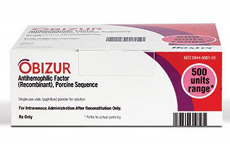
- AHA drug Obizur to soon receive reimb in Korea
- by Lee, Tak-Sun Jan 12, 2024 07:06am
- Takeda Pharmaceuticals Korea’s hemophilia drug Obizur is expected to soon be reimbursed in Korea. The company was found to have completed pricing negotiations with the National Health Insurance Service recently. The drug received conditional approval from the Health Insurance Review and Assessment Service's Drug Reimbursement Evaluation Committee in October last year. According to industry sources on the 11th, Takeda Pharmaceuticals Korea recently completed negotiations with the NHIS on Obizur’s reimbursement and is set to be reported to the Health Insurance Policy Deliberation Committee of the Ministry of Health and Welfare soon. Obizur can be reimbursed in Korea in the month following the HIPDC report. Obizur is used to treat bleeding in adult patients with acquired hemophilia A. At the DREC meeting that was held in October, the committee determined Obizur’s reimbursement was adequate at a price below the appraised value. The importer, Pharmaceuticals Korea, is understood to have accepted this condition. The company also accepted a price less than 100% of the weighted average price of its substitute, thus omitting negotiations on its insurance ceiling price. Therefore, the company only needed to negotiate the estimated claims amount with the NHIS. If reimbursed, Obizur’s reimbursement process will be complete in one year since its marketing authorization in March last year, serving as a good example of expedited reimbursement. Unlike existing bypassing agents, Obizur replaces blood coagulation Factor VIII with AHA indications. Its unique mechanism of action allows Obizur to become the only AHA drug that can stably monitor patients’ blood factor VIII levels using standard assays, enabling individually tailored dosing. In a prospective, non-randomized, open-label Phase II/III study of 28 patients with AHA that evaluated the safety and efficacy of Obizur, all patients that were treated with Obizur had a positive response to treatment at 24 hours after initial dosing. A positive response was one where bleeding had stopped or was reduced, with clinical improvement or with factor VIII activity above a pre-specified target. Takeda Pharmaceuticals Korea said, “Obizur is a gene recombinant therapy that was produced by deleting the B-domain from a porcine factor VIII that is comparable to human Factor VIII. Therefore, the inhibitory antibodies in the human body do not readily recognize the treatment, allowing Obizur to replace the inactivated human coagulation factor VIII to help blood clotting and control bleeding.
- Policy
- Enhertu’s reimb to be redeliberated at next DREC meeting
- by Lee, Tak-Sun Jan 12, 2024 07:05am
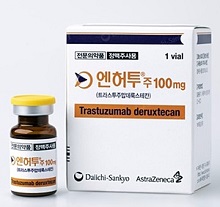
- Reimbursement for the new breast cancer drug ‘Enhertu Inj,’ which was first deliberated by the Drug Reimbursement Evaluation Committee, will be redeliberated at next month's DREC meeting. At the same meeting, JW Pharmaceutical’s iron deficiency treatment ‘Ferinject Inj (ferric hydroxide carboxymaltose complex) was deemed adequate for reimbursement and moved on to conduct pricing negotiations with the National Health Insurance Service. The Health Insurance Review and Assessment Service said on the 11th that it deliberated as above at its 1st Drug Reimbursement Evaluation Committee meeting in 2024 (DREC). At the meeting, DREC deliberated on the reimbursement adequacy of ‘Ferinject Inj’ and ‘Enhertu Inj 100mg.’ Deliberation results of 1st DREC meeting in 2024 The reimbursement adequacy of Enhertu Inj 100mg (trastuzumab deruxtecan, Daiichi Sankyo Korea), which attracted attention as a drug that was having difficulty passing deliberations due to its high cost despite its high effect, was not concluded at this meeting and will be redeliberated at the February meeting after the company submits an improved financial sharing plan. The drug is indicated for ▲HER2-positive breast cancer and ▲HER2-positive gastric or gastroesophageal junction (GEJ) adenocarcinoma. On the other hand, Ferinject Inj, which is used to treat iron deficiency, was deemed adequate for reimbursement. Meanwhile, ‘Lorviqua Tab 25, 100mg (lorlatinib, Pfizer Korea),’ which applied for expanded scope of use as a Risk-Sharing Agreement drug, was deemed to be eligible for the expanded reimbursement for anaplastic lymphoma kinase (ALK)-positive metastatic non-small cell lung cancer if the company accepts a price below the evaluated value.
- Policy
- HIRA establishes new Pharmaceutical Benefits Dept
- by Lee, Tak-Sun Jan 11, 2024 05:44am
- High-priced drugs are changing the drug expenditure review paradigm in Korea. The high cost borne from the use of high-price drugs is increasing the importance of post-listing evaluation of high-priced drugs. To address this shift, the Health Insurance Review and Assessment Service established a ‘Pharmaceutical Performance Evaluation Department’ earlier this year, which is in charge of the post-listing management of high-priced drugs. This is the first time another pharmaceutical department has been established in HIRA since the Pharmaceutical Benefits Department was separately established from the Benefits Listing Department in 2006. According to industry sources on the 9th, HIRA had newly established a Pharmaceutical Performance Evaluation Department under its Health Insurance Review and Assessment Research Institute through restructuring earlier this year. The Pharmaceutical Performance Evaluation Department will be led by Director-General So-young Lee, who also serves as the Head of the Health Insurance Review and Assessment Research Institute. Lee graduated from Chung-Ang University College of Pharmacy and has a strong background in pharmaceutical listing management, including experience as the Director-General of HIRA's Benefits Listing Department. Also, Director Mi-Kyung Kim was appointed to the Pharmaceutical Performance Evaluation Department, who returned after receiving education at the Seoul National University School of Public Health. The Pharmaceutical Performance Evaluation Department will take over duties of the New Drug Performance Management Department that was established as a temporary organization under the Pharmaceutical Benefits Department in September 2022. That department had been temporarily established to address the need for post-listing management of high-priced drugs in line with the reimbursement listing of Kymriah, which costs KRW 360 million per dose. Specifically, the new department will be responsible for evaluating and analyzing the outcomes of patients receiving high-priced drugs at medical institutions. The number of items that are subject to performance evaluations has increased to 4, and includes Kymriah Zolgensma, Spinraza, and Evrysdi. Kymriah (above) and Zolgensma, drugs receiving post-marketing evaluation as high-priced drugs The Drug Performance Evaluation Department currently consists of 9 people under the Director-Genral and plans to expand its workforce in the future. For now, it is in charge of evaluating the performance of high-priced drugs, but in the future, it is expected to serve as a window for the post-listing management of PE exemption drugs that waived submission of pharmacoeconomic evaluation data. HIRA’s webpage introduces the duties of the Pharmaceutical Performance Evaluation Department as ▲ matters related to preparing the basis for performance management of high-priced drugs and system operations ▲ matters related to RWD utilization (E-form, etc.), and post-listing management ▲ matters related to cost-effectiveness evaluation and economic evaluation (reevaluation) of high-priced drugs ▲ matters related to research on the price, listing, and usage of drugs subject to performance evaluations. The post-listing management PE exemption drugs were also mentioned in the recently concluded report on ''Measures to improve the PE exemption system.' In the report, the researchers said, "The economic feasibility of listed PE exemption drugs were evaluated in all other HTA-based major countries,” suggesting the need for reevaluation of these listed drugs for the proper management of the price of drugs that will potentially be used as comparators for the listing of latecomers. The need for post-listing evaluation of PE exemption drugs based on RWE data was also mentioned during a public hearing on 'Measures to Manage Performance-based Reimbursement of Drugs using RWD/RWE' that was held in November last year. Ji-hye Byun, an associate researcher who published the RWE guideline for performance-based reimbursement management, is also in the Drug Performance Evaluation Department. When the plan to improve the post-management of PE exemption drugs is prepared, which is being promoted in earnest this year, the Pharmaceutical Performance Evaluation Department is likely to take the lead and take over the post-listing management work. The establishment of the Pharmaceutical Performance Evaluation Department holds significance as it serves as proof that the drug review paradigm has been changing. HIRA’s Pharmaceutical Benefits Department was separately established from the Benefits Listing Department in 2006 in response to the need to strengthen the management of drug prices and drug expenses. At the time, the measure was made in preparation for the positive-list system set to be introduced in December of the same year. If the positive-list system, which selects and applies reimbursement benefits to only clinically and economically high-value drugs, has led to changes in drug management work, it is interpreted that the new department opened a new paradigm in drug management that complements areas missed by the positive-list system, extending its work to post-management of high-value drugs. in his New Year's speech, Jung-Gu Kang, Director of HIRA, said, “Reimbursement for ultra-high-priced drugs and rare and incurable diseases has been rising as an ongoing issue recently. The entry of rapidly listed ultra-high-priced drugs into Korea’s reimbursement system after waiving economic evaluation has raised the need for post-management of drugs.” He added, “We want to create a mechanism that can monitor the treatment performance of a drug on each patient so that effective drugs can be administered to the public, and also reduce the risk of wasting major health insurance financial expenditures by strengthening post-listing management of drugs based on performance management."
- Policy
- MFDS to resolve production of chemotherapy drug '5-FU'
- by Lee, Hye-Kyung Jan 10, 2024 05:42am
- MFDS resolves One of the domestic pharmaceutical companies has agreed to produce the chemotherapy drug ‘5-fluorouracil (5-FU) injection.’ This measure will significantly aid in the treatment of cancer patients. ‘Since November last year, we received an information from the Korean Society of Health-system Pharmacists about a drug shortage of the chemotherapy drug 5-FU, and we reached out to the manufacturing company to investigate the cause,’ Kim Seonyoung, an official from the Ministry of Food and Drug Safety (MFDS)’s Heath Insurance Policy Review Committee stated. JW Pharmaceutical is responsible for the distribution of 5-FU, with Il Dong pharmaceutical serving as the Contract Manufacturing Organization (CMO). The MFDS discovered that Il Dong Pharmaceutical's efforts to upgrade certain facility units disrupted the production schedule of 5-FU. “To facilitate the drug’s distribution, we have expedited the production schedule, including stages like product quality testing and post-manufacturing processes. We have confirmed successful distribution of the drug on January 4th,” Official Kim stated Furthermore, another domestic pharmaceutical company has agreed to starting production of 5-FU as soon as the active ingredient is secured. This is expected to significantly improve the efficiency of the drug’s distribution starting from next month. Only one domestic pharmaceutical company is currently responsible for the distribution of 5-FU. To prevent any potential distribution instabilities, the committee inquired with several domestic pharmaceutical companies about their ability to produce the drug,” Official Kim mentioned. “With one of these companies now committed to distribution, more efficient distribution is likely starting in February.” The domestic pharmaceutical company that has agreed to produce 5-FU has requested not to disclose its name publicly. The Korean Pharmacists for Democratic Society (KPDS) announced a statement in response to the news about the supply shortage of 5-FU, a drug that has been listed as a shortage prevention drug (SPD) since 2010, that began in Dec. 2023. “Cancer patients are facing delays in chemotherapy schedules by 1 to 4 weeks or are frequently switching to alternative drugs,” the KPDS criticized. “The government claims to have a system in place for monitoring the supply and demand of essential medicines and receiving company reports on supply halts, in collaboration with relevant agencies and experts. However, details regarding the government's actions and corrective measures are lacking.”
- Policy
- Will Enhertu be discussed in this year’s 1st DREC meeting?
- by Lee, Tak-Sun Jan 10, 2024 05:42am
- The schedule for the Health Insurance Review and Assessment Service’s Drug Reimbursement Evaluation Committee meetings in 2024 has been finalized and released. The committee meeting will be held at the beginning of each month, starting with the first meeting on the 11th of this month. According to industry sources on the 8th, the 2024 DREC meeting schedule has been finalized. It will be held at the start of each month - on the 11th of this month, the 1st of next month, the 7th of March, the 4th of April, and the 2nd of May. At this month's meeting, it will be interesting to see if the new breast cancer drug Enhertu, which has been struggling at the pharmacoeconomic evaluation stage, will be presented for deliberation. Although the drug offers a significantly improved effect over existing drugs, it has faced difficulties in pharmacoeconomic evaluations due to its prolonged administration period. Therefore, when the government recently announced that the ICER threshold will be flexibly operated for innovative new drugs in the 'Innovative New Drug Appropriate Value Recognition Plan', Enhertu was considered to become a beneficiary. However, the plan to recognize the fair value of innovative new drugs has not yet been implemented. If Enhertu’s reimbursement agenda successfully passes the DREC review, it will not have to wait for the new system to settle into the country. Last month, Enhertu reportedly submitted supplementary pharmacoeconomic evaluation data to HIRA. In addition, an application for a price increase adjustment for the pediatric cough expectorant tulobuterol will be reviewed by the committee. Tulobuterol is facing difficulties in supply and demand due to the discontinuation of the original product, the increase in the unit cost of raw materials, and the increase in pediatric respiratory diseases. In response, the government plans to increase the drug price to encourage production. 2024 DREC Meeting Schedule The 2024 reimbursement adequacy reevaluation plan is also expected to be discussed in the February meeting. The first results of the reevaluation are expected to be presented to DREC in its August meeting and the final results at the December meeting. In addition, the reevaluation of sodium hyaluronate eye drops, which was not decided last year, is also expected to be redeliberated and reported to the DREC within the year. In addition, it is analyzed that the reevaluation of drug prices through external reference pricing, and the pharmacoeconomic evaluation data waiver system among others, may be discussed at this year's meeting.
- Policy
- Data Exclusivity Bill for IMDs may soon be legislated
- by Lee, Jeong-Hwan Jan 09, 2024 05:49am
- A bill to amend the Pharmaceutica Affairs Act, which grants a 6-year data exclusivity for incrementally modified new drugs that have obtained domestic marketing authorization, was reviewed during the plenary session of the Legislation and Judiciary Committee that was held on the afternoon of the 8th. If approved by the committee, the bill will be passed during the plenary session tomorrow (Sept. 9) and be legislated. The bill also suggest abolishing the drug re-review system and replacing it with a risk management plan (RMP). In particular, there is great interest in the new provision in the bill that recognizes exclusive rights to new and incrementally modified drugs and protects clinical trial data submitted at the time of drug approval. Specifically, the bill provides 10 years of protection from the date of approval for orphan drugs. This can be extended by an additional year if a pediatric indication is added. New drugs are granted 6 years of data exclusivity from the date of approval, and drugs that submit new clinical trial data, such as cto hanging the type of active ingredient to improve the safety, efficacy, and utility of already approved drugs, are granted 6 years of exclusivity from the date of approval. Based on this provision, IMDs can be granted a 6-year data protection period based on the provision. In addition, drugs designated by the Prime Minister's Decree that require submission of new clinical trial data are granted a 4-year data protection period. The existing reexamination system provides 10 years of data protection for orphan drugs, 6 years for new drugs and drugs with new active ingredients, formulation ratios, and routes of administration, and 4 years for new drugs with new efficacy and effect. If the bill passes the National Assembly, it is expected the data exclusivity of IMDs developed many domestic pharmaceutical companies will be recognized, Teh bill provides exclusivity when developing improved versions of their existing drugs, especially in terms of fficacy or utilit, with raises possibility of the development of a cash cow during new drug development. The bill is likely to pass the National Assembly because the Ministry of Food and Drug Safety (MFDS) is in favor of it and has been involved in its legislation, and it is in line with the government's policy of creating domestic blockbuster drugs. The MFDS said, "We agree with the purpose of the amendment to reduce the burden of data submissions to the pharmaceutical industry by integrating the drug reexamination system and risk management system, and to enhance Korea R&D capabilities in the pharmaceutical industry by establishing a legal basis for the drug data protection system."
