
- LOGIN
- MemberShip
- 2026-07-22 16:20:46

- Policy
- 3-way race starts in faslodex mkt with new generic entry
- by Lee, Tak-Sun Feb 03, 2025 05:52am
- Breast cancer treatment A new generic company entered the fulvestrant drug market that has been a battle between the original’s owner AstraZeneca and the first generic developer Boryung. The new entrant, Korus Pharm, will spark three-way competition in the market with its product being reimbursed this month. According to industry sources on the 31st, Korus Pharm’s breast cancer treatment, ‘Elbracan Inj (fulvestrant ) will be reimbursed from this month. The original fulvestrant is AstraZeneca’s Faslodex Inj, which was released in 2008 in Korea. The competition started after Boryung first released the generic version, ‘Fulvet Inj.’ in 2022. Elbracan, which is being released this time, differs from the other two and the fact that it is manufactured domestically. Elbracan is manufactured at Korus Pharm’s Chuncheon manufacturing plant. On the other hand, Faslodex Inj and Fulvet Inj. are imported finished drugs. Another point is the difference in the drug price. Elbracan’s price has been adjusted to 53.55% of the highest insurance price, which is KRW 288,194 per pack. On the other hand, the premium pricing term for Faslodex and Fulvet has been extended and has not yet been reduced to the level of 53.55%. The premium pricing benefit is scheduled to end in August this year. As a result, the price of Faslodex has remained at 70% of the original first-year price, at KRW 376,724 since the generic’s entry. The price of Boryung’s Fulvet has been maintained at KRW 357,888 with the innovative pharmaceutical company premium. The Elbracan listed this time is about KRW 80,000 to 90,000 cheaper, so it will be interesting to see how the lower price will affect the market competition in the early stages of its entry. Meanwhile, the launch of the generic product Ibrance (Palbociclib) that is used in combination with Faslodex is expected to intensify the onslaught of domestic generic products in the Faslodex-Ibrance combination market as Kwangdong Pharmaceutical and Daewoong Pharmaceutical have been granted approval for their respective Ibrance generic products. Boryung has also been expanding its portfolio of breast cancer treatment drugs, including last year signing a contract with Bixink Therapeutics to jointly market and sell the breast cancer drugs Nerlynx (neratinib) and Fulvet (fulvestrant).
- Policy
- Will external reference pricing reevals be further delayed?
- by Lee, Jeong-Hwan Feb 03, 2025 05:52am
- The Ministry of Health and Welfare plans to concentrate on advancing the regulations on the post-management of generic drug pricing that are being redundantly implemented in Korea. Regarding the introduction of the external reference pricing that has been gaining industry-wide attention, the MOHW reaffirmed its stance on its necessity, but that it will take steps to slow down the process, such as going through discussions with the pharmaceutical industry. The government has shown some consensus to the opinion that in addition to the postmarketing regulations that are already in place such as the Price Volume Agreement (PVA) scheme and actual transaction price reduction system, adding the external reference pricing reevaluations are conducted will pose a burden on the domestic pharmaceutical industry. On the 2nd, Joong-Kyu Lee, Director of the Bureau of Health Insurance Policy at MOHW, explained the post-marketing drug pricing policies that will be conducted this year at a meeting with the Korea Special Press Association. First, Director Lee explained the MOHW’s plans for managing the overall postmarketing drug price control system this year. In addition, Lee also expressed its intention to look into the appropriate timing for the implementation of the external reference pricing reevaluations. If implemented, the external reference pricing reevaluations will lead to additional drug price cuts for many generics, which is why many domestic pharmaceutical companies that base their business on generics are paying attention to the specific implementation method and timing of the system. Director Lee plans to incorporate the external reference pricing reevaluations into the process of improving the postmarketing drug price control system, which had been operated individually and partially in an unreasonable manner, so that the individual systems can be linked flexibly and efficiently in consultation with the pharmaceutical industry, experts, etc. In particular, considering how Korea’s pharmaceutical industry generates profit through generic manufacturing sales and exports, Lee also mentioned the need to improve the system for generic drug pricing. “The United States is a country that imports generics, so the price share is low, but the Korean pharmaceutical industry produces generics, so the share is high,” said Lee. ”And as the proportion of doctors’ prescriptions for the original drug is not low, so drug expenditure management is necessary on the government’s part.” Lee also said, “We are looking at how to improve redundant post-marketing drug price control measures in place, which is double and triple layered. The pharmaceutical industry is talking about the fact that the re-evaluation is intertwined, making it difficult to predict when and how much drug prices will be reduced, such as when the price of drugs that have been reduced after PVA negotiations undergo actual transaction price reevaluations.” Director Lee also promised to strive to compensate prices for innovative drugs by balancing the weight between post-marketing drug price control and innovative drug price compensation. This is in line with the MOHW’s plan to advance the mechanism for post-marketing control of drug costs to improve the sustainability of the health insurance finances last year. “Post-marketing drug price control is necessary (despite the pharmaceutical industry's appeals). However, the system itself does also need to be modified,” he said. ”Our internal judgment is that it would be better to strike a balance between post-marketing drug price control and rewarding innovation value.” Lee added, “We will be implementing external reference drug pricing. However, we plan to conduct this while overhauling the post-marketing drug pricing system. If our intentions play out, we may be able to conduct the external reference pricing reevaluations concurrently. All these options are being discussed.”
- Policy
- 'Lixiana' patent expires next year, good news for
- by Lee, Hye-Kyung Jan 24, 2025 05:51am
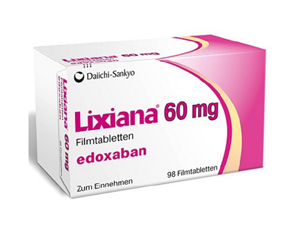
- Product photo of As the patent of 'Lixiana (edoxaban),' a Direct Oral Anti-Coagulant (DOAC), is set to expire, generic companies are entering the competition. On January 21, the Ministry of Food and Drug Satefy (MFDS) approved bioequivalence tests, which are open-label, randomized, two groups, single time-point, cross-over Phase 2 trials involving healthy adult study participants oral administration on an empty stomach, for Hanlim Pharm's 'Edoxaban' and Daiichi Sankyo Korea's 'Lixiana Tab 60 mg.' The Lixiana patents listed in the Ministry of Food and Drug Safety's (MFDS) patent registry are two types: the substance patent, which is set to expire on November 2026, and the composition patent, which is set to expire on August 2028. For the Lixiana composition patent, 10 companies, including Boryung, Dong-A ST, HK inno.N, Samjin Pharm, Shinil Pharma, Chong Kun Dang, Kolmar Pharma, Kolmar Korea, Hutex, and Hanmi Pharmaceutical, have successfully avoided the patent through passive rights scope confirmation trials. Korean companies that won patent avoidance can launch their generics when the substance patent expires in November 2026. To meet this schedule, these companies have been applying for approvals of generic Lixiana and bioequivalent tests since 2023. Dong-A ST was the first to obtain approval for its generic version of Lixiana in 2021. However, despite winning patent avoidance, the company did not meet the requirement for being the first request for trial, so it failed to obtain a right to priority sale. Without a right to priority of sale, 12 companies, including Genuone Sciences, Genu Pharma, Hutex Korea Pharmaceutical, Handok, Shinil Pharma, Ahngook Pharm, Shinpoong Pharm, Nexpharm Korea, Samsung Biologics, Korea Prime Pharm, and Union Korea Pharm, have received approvals for 29 generic products. Additionally, as companies such as CMG Pharmaceutical, Hanlim Pharm, Theragen Etex, and Vivozon conduct bioequivalence tests, competition intensifies in the generic market even before product launches. Lixiana has been ranked top for a long time in the DOAC market, with yearly prescription sales of KRW 100 billion. According to a pharmaceutical market research firm, UBIST, Lixiana's prescript sales for 2023 amounted to KRW 105.3 billion, up 9% from KRW 96.7 billion in 2022. It recorded KRW 55.7 billion in the first half of last year. Lixiana has maintained a leading position in the market since it ranked first in 2019. Analysis suggests that joint sales with Daewoon have contributed positively to the increase in prescription sales.
- Policy
- Hokunalin Patch has been removed from Korea’s reimbursement
- by Lee, Tak-Sun Jan 24, 2025 05:51am
- Hokunalin Patch, asthma and bronchitis deodorant based on tulobuterol, will be removed from the reimbursement list. The move was made upon the expiry of the item’s marketing authorization last month. As a result, only domestic generic versions of the drug are available in South Korea. According to industry sources on Jan. 22, Abbott's 3 versions of Hokunalin Patch (0.5 mg, 1 mg, and 2 mg) will be removed from the reimbursement list on Jan. 1 next month. The drug's domestic license expired on Jan. 1. The medication is an adhesive strip that is applied to the skin. It is characterized by its 24-hour effectiveness after a single application. In particular, it is used for infants and children suffering from asthma as well as acute and chronic bronchitis, as it has fewer side effects than oral medications and can be used from the age of 6 months. Abbott has already announced that it will discontinue the domestic supply of Hokunalin in 2022. The reasons included the end of the contract with the manufacturer and the rising cost of raw materials. However, the company had maintained the domestic marketing authorization for the drug, and with the expiration of the license and the removal from the reimbursement list, Hokunalin Patch will disappear into history. However, there is a six-month grace period before August 1 to apply for insurance reimbursement benefits. The withdrawal of Hokunalin from the domestic market was also due to the emergence of generic drugs. Generic versions of the drug have been available since 2010, and 19 pharmaceutical companies currently maintain licenses. The use of Tulobuterol Patch has been increasing due to the recent surge in respiratory diseases. In response, the government designated the transdermal tulobuterol patch as a national essential medicine in November 2023. In addition, in March last year, the upper insurance price limit was raised by up to 27.2% to address the supply-demand imbalance. However, the field reports that there is still a shortage of tulobuterol deodorant. The number of products being withdrawn is also increasing. From August 2023 to January this year, 21 products from nine pharmaceutical companies did not renew their licenses. “Tulobuterol patch is a product with a high production cost and not much profit,” said an industry official. ”Recently, the price of raw materials has risen, and due to intensified competition between generic companies, more and more companies are leaving.”
- Policy
- Govt plans to expand CDMO capacity by 2.5 times
- by Lee, Hye-Kyung Jan 24, 2025 05:51am
- The government plans to expand Korea’s CDMO manufacturing capacity 2.5 times by 2032 to become the No. 1 global CDMO by 2032. It will also support domestic companies with a 'megafund' by expanding the size of the K-Bio-Vaccine Fund, currently at KRW 600 billion, to over KRW 1 trillion. The government launched the National Bio Commission in anticipation of the global bio market growing to KRW 3.3 trillion by 2027. According to the 'Vision and Mission of the National Bio Commission (draft)’ released at the first meeting, the government will quickly create mega funds worth more than KRW 1 trillion, such as the K-Bio-Vaccine Fund, for early investment and scale-up of bio companies, and build a growth ladder by expanding policy finance and trade insurance support, including preferential interest rates and expanded loan limits. To promote R&D activities of companies, the government will activate M&As and expand tax credits by adding bio-related technologies such as bio buffer and bio jet fuel to the list of national strategic technologies. Also, it will support corporate growth by expanding support bases such as K-Biodesk and Boston CIC (Cambridge Innovation Center) in major overseas countries, along with management consulting and overseas certification support. Sung-hyuk Yoon, Director General of the Ministry of Trade, Industry and Energy “The KRW 1 trillion megafund will be based on the KRW 50 billion Korea Fund for startups in the bio sector, the KRW 300 billion fund created by the Ministry of Health and Welfare, and the KRW 100 billion fund dedicated to green bio and food tech by the Ministry of Agriculture, Food and Rural Affairs,” said Sung-hyuk Yoon, Director General of the Ministry of Trade, Industry and Energy's Advanced Industry Policy Bureau. The K-Bio-Vaccine Fund, which the government has been funding since 2023, is worth KRW 306.6 billion. The third and fourth funds are currently being established, and if the fifth fund is added this year, it will total KRW 600 billion. To expand private investment, the government will reactivate M&A by abolishing the obligation to sell VC stakes and providing loan guarantees for acquisition funds, and expand tax credit benefits by adding bio-related technologies such as bio buffers and bio aviation oil to the list of national strategic technologies. In addition, by 2032, domestic CDMOs plan to expand their production capacity to 2.5 times the current level. “The production capacity of CDMOs in Songdo, Incheon is about 870,000 liters,” said Yoon, adding, ”Domestic CDMOs such as Samsung Biologics are planning to invest KRW 21 trillion, and if this amount is executed, the production capacity will increase to 2.16 million liters by 2032, making it possible to rank first in the world in terms of sales and capacity.” To support the manufacturing base of domestic biotech companies that have the technology to discover new drug candidates but do not have production facilities, the government plans to utilize five public CDMOs already established to help them commercialize their technologies, including cell line manufacturing, sample, and finished product production. In addition, the government will build a Korean bio cluster. It plans to promote convergence between various fields such as red, green, white, and blue bio by linking high-tech medical complexes, R&D zones, and industrial complexes nationwide, and create an ecosystem that runs from R&D to commercialization by attracting key institutions (universities, research institutes, companies, and hospitals). In addition to establishing a 'Bio Cluster Commission’ under the National Bio Committee, it will jointly utilize regional equipment, experts, and startup support programs through a 'virtual platform' connecting 20 clusters, and expand exchanges with leading clusters overseas. “The health and medical sector has been investing and industrializing for so long that there are currently about 18 clusters across the country,” said an MOHW official. ”We cannot physically gather all of them like the Boston cluster in the United States, so we will create a system to share resources based on the virtual platform, such as the facilities, equipment, and incubation centers that each cluster has.”
- Policy
- If atrial fibrillation develops, Rx 'Omega-3' API
- by Lee, Hye-Kyung Jan 23, 2025 05:54am
- Product photo of Kuhnil The administration of the active ingredient 'omega-3-acid ethyl esters90,' which is used for treating dyslipidemia, will be permanently discontinued if a patient develops atrial fibrillation. Starting February 10, the Ministry of Food and Drug Safety (MFDS) will modify the approval specification based on the results of the European Medicines Agency (EMA)'s safety assessment and monitoring of 'omega-3-acid ethyl esters90.' Last year, EMA's Pharmacovigilance Risk Assessment Committee (PRAC) agreed to add atrial fibrillation (irregular, rapid contraction of the heart) as a common side effect to the product information for medicines containing omega-3. The review result of a Periodic Safety Update Single Assessment (PSUSA) procedure conducted by the PRAC highlighted a dose-dependent increased risk of atrial fibrillation in patients with established cardiovascular disease or cardiovascular risk factors treated with omega-3 compared to placebo. The atrial fibrillation risk is highest with a dose of 4g per day. EMA concluded that if atrial fibrillation develops, omega-3 treatment should be permanently discontinued. The MFDS also concluded to reflect such change on the approval specification for omega-3-acid ethyl esters (monotherapy) and will include the clause, 'atrial fibrillation has been reported to be a common side effect' in the adverse reaction section. Additionally, the MFDS will add a clause that 'a dose-dependent increased risk of atrial fibrillation in patients with established cardiovascular disease or cardiovascular risk factors is observed. If atrial fibrillation develops, omega-3 treatment should be permanently discontinued' in the general safety section. Omega-3-acid ethyl esters90 is the only prescription medicine available containing omega-3 fatty acids and Kuhnil's 'Omacor' in the original drug. 56 Omacor generics have been approved. Omacor is a medicine made of omega-3 fatty acids extracted from fish oil. It is used for the treatment of hypertriglyceridemia. According to a pharmaceutical market research firm, UBIST, Omacor's outpatient prescription sales were reported to be KRW 34.6 billion.
- Policy
- MFDS approves immune thrombocytopenia drug Tavalisse
- by Lee, Hye-Kyung Jan 23, 2025 05:54am
- The Ministry of Food and Drug Safety (MFDS) announced on the 20th that it has approved Tavalisse Tab 100 mg (fostamatinib sodium hydrate), an orphan drug used to treat immune thrombocytopenia in adults. Adult immune thrombocytopenia is an autoimmune disease in which antibodies against platelets are produced and platelets are destroyed in the spleen, resulting in petechiae and purpuric spots on the skin. Tavalisse inhibits the activation of spleen tyrosine kinase (Syk), which inhibits the production of antibodies against platelets, thereby preventing platelet destruction while also interfering with platelet ingestion by macrophage. Spleen tyrosine kinase is a non-receptor tyrosine kinase that is widely present in blood cells and plays an important role in activated signal transduction within beta cells of the pancreas. The MFDS said, “We expect the treatment to provide a new treatment opportunity for patients with adult immune thrombocytopenia who have had an inadequate response to previous treatments,” the agency said. In July 2023, Tavalisse was designated as a priority review target and fast-tracked for rapid introduction into Korea. In particular, JW Pharmaceutical applied for health insurance reimbursement benefits to the Health Insurance Review and Assessment Service last year using the approval-evaluation linkage system. JW Pharmaceutical signed a contract with Japan's Kissei Pharmaceutical in 2021 for the domestic distribution right to Tavalisse. The original developer is the U.S. company Rigel Pharmaceutical, and Kissei acquired the development and exclusive commercialization rights for the Korean, Japanese, Chinese, and Taiwanese markets in 2018. “We will continue to make the best efforts to quickly supply new treatments to patients with rare and intractable diseases based on our regulatory science expertise, to expand treatment opportunities for the patients,” said the MFDS.

- Policy
- MOHW to 'carefully review' post-dispensing notification law
- by Lee, Jeong-Hwan Jan 22, 2025 05:54am
- A bill to add the Health Insurance Review and Assessment Service to the post-notification subjects for dispensing substitute drugs by pharmacists is scheduled to be reviewed on the 21st, but the government's cautious stance is expected to be a hurdle. The Ministry of Health and Welfare has not changed its stance on the bill, saying it should be carefully reviewed considering the scope of the HIRA’s work and concerns about the safety of drug use caused by the increased notification term. Physicians and hospital organizations are also opposed to the expansion of post-notification, citing concerns that it would undermine the doctors' prescription rights and delay the time of notification to doctors. There are a total of three bills related to dispensing substitute drugs pending in the National Assembly as of the 19th. Rep Byung-Deok Min, Young-seok Seo, and Sujin Lee of the Democratic Party of Korea have separately introduced the 3 bills. The bills are to change the “dispensing substitute drugs” clause in the Pharmaceutical Affairs Act to “same-ingredient drugs” (Young-Seok Seo, Sujin Lee) and to expand the subjects for post-notification of substitute drug dispensing to include HIRA (Byung-deok Min, Young-Seok Seo, and Sujin Lee). MOHW-HIRA “Drug safety concerns arise due to increased notification period of dispensing substitute drugs” The MOHW has been showing a cautious stance on both the provisions to change the ‘dispensing substitute drugs’ clause and the post-notification to HIRA clause. This is a reversal of the opinion as the MOHW had expressed plans to accept the post-notification provision for the same Act mentioned in the bill introduced by Rep. Young-Seok Seo in the 21st National Assembly. The MOHW explained, “Changing the phrase to same-ingredient drug dispensing may be misunderstood as being able to substitute will all drugs that contain the same ingredients,” adding, “There are differences in perceptions and positions between the medical and pharmaceutical communities on dispensing substitute drugs, so careful review is necessary.” “We agree on the need to improve the convenience of the post-notification system, which is currently conducted via phone or fax.” It added, “However, stipulating that the review committee should receive the results of the dispensing substitute drugs and renotify the prescribing physician should be carefully reviewed considering the purpose of the organization's establishment, the scope of its work, and concerns about drug safety due to the increased notification period.” HIRA also expressed a cautious view. “The notification period would inevitably increase when post-notification is made through the review committee. If a weakening incident occurs in a situation without the doctor’s awareness, patient safety issues can also arise as a concern. Since HIRA can only perform the tasks entrusted by law, separate grounds for entrusting alternative notification-related tasks is necessary.” “A unique identification number in accordance with the Personal Information Protection Act, regulations based on handling sensitive information, and provisions on granting immunity for HIRA in the event of a weakening incident would also be necessary.” Doctors and hospitals oppose the revisions...only pharmacists are in favor In addition to the cautious stance expressed by MOHW and HIRA, there are many other expected legislative hurdles. The opposition of doctors and hospital organizations is one of them. In addition, legislation to promote dispensing substitute drugs is expected to be more difficult in the 22nd National Assembly. This is because the NA Health and Welfare Committee is composed of a large number of doctors. In the 21st National Assembly, the bill to promote dispensing substitute drugs failed to pass due to the strong opposition of a single lawmaker who was a physician, although a number of lawmakers, including 3 pharmacists (Young-Seok Seo, Jeong-sook Seo, and Hye-sook Jeon), emphasized the need for legislation. The ratio of doctors and pharmacists in the 22nd National Assembly's Welfare Committee was 5 (Yoon Kim, Myung-ok Seo, Jia Han, Sun-min Kim, Joo-young Lee) to 1 (Young-Seok Seo), which is a great increase in the cap compared to the 21st National Assembly. Just in the 1st Subcommittee of the Legislative and Judiciary Committee alone there are 3 physicians (Yoon Kim, Myung-ok Seo, and Joo-young Lee). Of course, it cannot be assumed that physicians will necessarily oppose the bill to enable dispensing of substitute drugs. However, it is widely believed that the majority of doctors will serve as a major obstacle to the bill's passage. The Korean Medical Association and the Korean Hospital Association also opposed the bill. The KMA said, “If the details of the dispensing substitute drugs are first sent to HIRA, pharmacists can arbitrarily change the drug without the consent of the doctor, which may undermine the doctor's prescription right. It will be difficult to respond quickly to the patient’s drug side effects and may cause liability problems for the prescriptions and side effects.” The KHA also said, “It may be difficult to share information on dispensing substitute drugs between doctors and pharmacists, which may delay the doctors' recognition of inappropriate substitutions and further actions required by the patients. Frequent changes to doctors’ prescriptions may affect treatment outcomes.” Only the Korean Pharmaceutical Association is in favor. “It is often difficult to notify the prescribing doctors and dentists due to lack of fax numbers or telephone connection failures,” said the KPA, ”Improving the process to electronically notify HIRA will eliminate administrative inconveniences and streamline the process to facilitate dispensing substitute drugs.”
- Policy
- Yuyu seeks to expand the scope of its fexofenadine to ETC
- by Lee, Tak-Sun Jan 21, 2025 05:54am
- Yuyu Yuyu Pharma, which developed a 60mg OTC drug containing the antihistamine fexofenadine, is now seeking to enter the specialty drug market. Currently, only Handok, the original drugmaker, and Hanmi Pharm own a 180 mg fexofenadine product, but Yuyu Pharma is expected to barge in and pave its way into the two-drug market with its new product. According to industry sources on the 20th, Yuyu Pharma’s Fexoone Tab. 180mg (fexofenadine hydrochloride) will be reimbursed as of the 1st of next month. The upper insurance price ceiling was set at KRW 309 per tablet, which is cheaper than Handok’s Allegra Tab 180 mg (KRW 310) and Hanmi Pharmaceutical’s Fexonadine Tab 180 mg (KRW 314). Since there are two other drugs containing the same ingredient, and Yuyu Pharma met all the criteria for pricing premiums the company was able to receive the highest price of KRW 314, but Yuyu lowered its price to KRW 309 to become the lowest-priced drug in the market. Fexofenadine hydrochloride is a 2nd generation antihistamine. Depending on the dose, it is divided into over-the-counter and ethical-the-counter (specialty) drugs, with 60mg and 120mg classified as OTC and 30mg and 180mg classified as ETC drugs. However, Yuyu’s 60mg formulation recently received approval as an ETC drug. The 60mg dose, which was developed by Yuyu, has never been available before. The 120mg version is usually taken as a single pill before bed, but the effects do not last until the next day. In contrast, the company said that the 60mg version can as two pills a day to remain effective throughout the day. With Yuyu receiving approval for the 60mg formulation as an OTC, ETC, fexofenadine 60mg became an OTC/ETC drug. With the addition of Fexoone Tab 180 mg, Yuyu now has 4 fexofenadine products on Korea’s reimbursement list. The four items include Fexogien 60mg, an OTC drug, Fexogien 60mg, an ETC drug, and Alesta 120mg, a general drug. Of these, Fexozien 60mg and Fexoone 180mg have been or will be reimbursed. Yuyu’s focus on fexofenadine is likely influenced by the fact that the second-generation antihistamines olopatadine and bepotastine are undergoing reimbursement reevaluations this year. The company focused on developing fexofenadine as an alternative to these drugs. The original fexofenadine, Allegra, generated KRW 7.2 billion in outpatient prescription sales (UBIST) last year. It has the advantage of having steady market sales. It will be interesting to see if Yuyu’s fexofenadine expansion strategy will gain success.
- Policy
- CKD completes acquisition of diabetes drug 'Januvia'
- by Lee, Tak-Sun Jan 21, 2025 05:54am
- Chong Kun Dang has completed the sale transfer and takeover of 'Januvia (sitagliptin phosphate hydrate),' a diabetes drug that generates annual sales of KRW 23 billion in South Korea. Conseqently, what was previously labelled as MSD's is now labelled as Chong Kun Dang's in South Korea. According to industry sources on January 20, the pharmaceutical company label for three Januvia items (25 mg, 50 mg, 100 mg) registered in the National Health Insurance Service's reimbursement list will be changed from MSD Korea to Chong Kun Dang. The change is due to adjustments following the sale transfer and takeover. The insurance authority allows the final ceiling price to be the same as the transferred item if the acquired item holds the production rights. As a result, the prices will remain the same: KRW 200 for Januvia Tab 25 mg, KRW 301 for Januvia Tab 50 mg, and KRW 453 for Januvia Tab 100 mg. In 2023, Chong Kun Dang signed an agreement with the MSD headquarters to acquire all domestic rights for three items: Januvia, Janumet, and Janumet XR. Chong Kun Dang will acquire domestic sales and distribution rights, as well as approval, trademark, and production rights. The contract period is from July 15, 2025, to August 31, 2038. Chong Kun Dang has been selling the Januvia series since 2016 through joint promotion with MSD Korea. Now that Chong Kun Dang wholly owns Januvia's domestic rights, it has secured a stable cash cow. Januva recorded outpatient sales of KRW 23 billion in 20224, according to UBIST. The annual sales performance of Januvia, Janumet, and Janumet XR exceeds KRW 100 billion. Currently, Chong Kun Dang has completed the process for Januvia's permit and is expected to takeover the reimbursement permit soon. The company is proceeding with the sale transfer and takeover of Janumet XR Tab. Chong Kun Dang explained on the sale transfer and takeover of the Januvia series as "By securing the Januvia series in addition to previously acquiring Duvie, new drug for diabetes, we have stably expanded treatment options for patients."
