
- LOGIN
- MemberShip
- 2026-09-08 03:15:14
- Policy
- Warehouse-style pharmacy ad bill clears judiciary committee
- by Lee, Jeong-Hwan Aug 05, 2026 01:17pm
- A proposed revision to the Pharmaceutical Affairs Act aimed at regulating exaggerated signage and advertising by warehouse-style pharmacies has passed the National Assembly’s Legislation and Judiciary Committee, raising expectations that the Ministry of Health and Welfare may be able to move forward with an enforcement rule revision it previously announced.The Ministry of Health and Welfare has expressed concern that over-the-counter medicines are being sold and consumed with few barriers amid the proliferation of warehouse-style pharmacies, and has argued for tighter regulation and oversight. It preemptively announced a revision to the enforcement rules under the Pharmaceutical Affairs Act, but the proposal has remained stalled for a long period without any progress.The Fair Trade Commission had challenged shortcomings in the ministry’s regulatory approach to promotional terms such as “largest,” “best” and “warehouse-style pharmacy,” increasing the likelihood that the enforcement rule revision would be put on hold.The situation has now entered a new phase after the related Pharmaceutical Affairs Act amendment cleared the Legislation and Judiciary Committee.As of the 3rd, the bill regulating advertising and promotion by warehouse-style pharmacies is poised to become law if it passes the National Assembly plenary session and is subsequently promulgated by the government.The ministry has sought to revise the enforcement rules to restrict displays and advertisements using expressions such as “warehouse-style,” “factory-style,” and “pharmacy mecca,” which could encourage excessive medicine purchases and misuse.The ministry determined that exaggerated advertising portraying medicines as mass-market consumer goods or discount products could undermine public health.However, the Fair Trade Commission concluded that restricting freedom of business and price competition solely through subordinate regulations would be excessive, bringing the proposed enforcement rule revision to a stop.Against this backdrop, the passage of a Pharmaceutical Affairs Act amendment sponsored by Rep. In-soon Nam through the Legislation and Judiciary Committee has changed the regulatory outlook.Rep. Nam’s bill ▲explicitly prohibits displays that could cause a pharmacy to be mistaken for a pharmaceutical wholesaler or manufacturing establishment, as well as ▲displays and advertising that could mislead consumers or encourage excessive medicine purchases. At the same time, it expressly delegates the detailed prohibited criteria and scope to an ordinance of the Ministry of Health and Welfare (enforcement rules).Should the bill clear the plenary session following its passage through the Judiciary Committee, the ministry is expected to be in a position to reannounce the proposed enforcement rule revision regulating warehouse-style pharmacies.The legislation would address the Fair Trade Commission’s concern over the lack of a statutory basis and provide explicit legal authority to prohibit pharmacy advertising and promotional expressions such as “largest,” “best,” “warehouse-style” and “factory” through the enforcement rules.An official from the Health and Welfare Committee said, “If Rep. In-soon Nam’s amendment to the Pharmaceutical Affairs Act passes the plenary session and is promulgated by the government, the enforcement rules regulating advertising and promotion by warehouse-style pharmacies are more likely to be revised following a renewed legislative notice. This would be different from the previous situation, in which the ministry independently preannounced an enforcement rule revision without first amending the parent statute. By securing a statutory basis, the government may create the conditions needed to overcome the opposition of the Fair Trade Commission."
- Policy
- 'Drug efficacy classification number' reform has been initiated
- by Lee, Jeong-Hwan Aug 05, 2026 01:17pm
- The South Korean government is initiating preliminary research to revise and modernize the domestic drug efficacy classification number system, which has remained largely unchanged since its establishment in the 1960s.Beginning with a comparative study against the global standard, the World Health Organization's (WHO) Anatomical Therapeutic Chemical (ATC) classification system, the government aims to enhance the international compatibility of the South Korean classification system and establish precise classification criteria aligned with drug efficacy and indications.On the 4th, the Ministry of Food and Drug Safety (MFDS) announced that it is initiating a comparative study between domestic drug classification numbers and WHO-ATC classification codes.The framework of the current domestic drug efficacy classification number system has been maintained without significant alteration since its introduction in the 1960s.Defined as a numerical structure under the MFDS administrative rule "Guidelines on Barcode Display and Management of Pharmaceuticals," the system assigns 3-digit or 4-digit numerical codes to classify all drugs authorized and distributed in Korea based on their therapeutic efficacy and intended use.The problem is criticism that the system, owing to its outdated origins and misalignment with global classification standards, fails to accurately reflect the diverse efficacy and mechanisms of action (MoAs) of modern therapeutics.Because its hierarchy is overly simplistic and lacks granular differentiation, accurately categorizing drugs by actual clinical efficacy remains difficult. Furthermore, persistent compatibility issues have been raised regarding international market expansion and data exchanges with overseas regulatory agencies.In response, the MFDS plans to overcome the limitations of the current framework and evaluate the feasibility of system improvements from multiple angles by conducting a comparative review against the globally utilized WHO-ATC classification system.First, the agency will investigate current labeling practices across major overseas regulatory authorities and assess the potential ripple effects on other domestic institutions, beginning with a comprehensive examination of how the WHO-ATC classification system is currently utilized domestically and internationally.The study will analyze overall regulatory systems where major overseas authorities, such as the European Medicines Agency (EMA), assign ATC codes to newly approved products and explicitly mandate them in drug labeling (package inserts).To analyze domestic impacts and cross-agency ramifications, the MFDS will survey the operational use of existing classification numbers across relevant organizations, including the Ministry of Health and Welfare (MOHW), the Health Insurance Review and Assessment Service (HIRA), and the Financial Supervisory Service (FSS), while evaluating the systemic and institutional effects of a transition to ATC codes from various perspectives. Additionally, the scope of HIRA's current operations related to ATC classification will be explicitly defined.Specific criteria and procedures will also be established to perform precise comparative analysis between existing drug classification numbers and ATC classification codes.The MFDS plans to minimize confusion in the field by systematizing mapping methodologies between legacy classification numbers and ATC codes, verifying data consistency, and conducting preliminary surveys on drugs that would be reclassified into different or entirely distinct categories compared to current listings.A standardization plan will be formulated to provide guidelines or assign preliminary in-house ATC classification codes for existing approved drugs or newly authorized products that have not yet been assigned official ATC codes.The MFDS intends to conduct this research through November of this year. The Pharmaceutical Approval Management Division has been appointed as the lead department.The MFDS explained, "The current drug efficacy classification number system was established in the 1960s and has been used for a long time without major updates," and added, "There have been some cases where proper classification by efficacy and indication is difficult due to incompatibility with international standards and a limited number of hierarchical levels. This is the rationale behind launching a comparative review with the internationally recognized WHO-ATC classification system."

- Policy
- Vinobelin wins reimbursement 1 month after approval
- by Jung, Heung-Jun Aug 04, 2026 10:51am
- Chong Kun Dang's vinorelbine-based anticancer agent Vinobelin Inj. will be added to Korea's National Health Insurance reimbursement list just 1 month after receiving marketing authorization.With successive withdrawals of other vinorelbine products from the market mounting concerns over a therapeutic vacuum, Chong Kun Dang has stepped in to fill the void.According to industry sources on the 30th, Vinobelin Inj. (vinorelbine tartrate), which was approved on June 30, will be listed for reimbursement only about one month after its approval.Both the 13.85 mg and 69.25 mg strengths will be reimbursed. Having met all reimbursement requirements, the products will be priced at KRW 24,210 and KRW 80,186, respectively.Chong Kun Dang said the swift reimbursement process was possible thanks to full administrative support from the government and that commercial supply is expected to begin in early September.A Chong Kun Dang official said, "We began developing an alternative after learning that supply of this essential medicine would be discontinued. From the time we submitted the marketing authorization application late last year, we received substantial support and attention from the Ministry of Food and Drug Safety, the Korea Orphan & Essential Drug Center, the Health Insurance Review and Assessment Service, and the Ministry of Health and Welfare. We expect to be able to start supply in early September."Vinobelin Inj. is designated as a National Essential Medicine in Korea. Although the market is relatively small and profitability is limited, vinorelbine has long served as a standard treatment and demand remains in routine clinical practice.While other treatment options are available for non-small cell lung cancer and breast cancer, cytotoxic chemotherapy such as vinorelbine continues to play an important role in patients who are refractory to immuno-oncology drugs or who lack actionable genetic mutations.However, the domestic supply chain has been under strain for several years. The problem began in 2022 when Alvogen Korea withdrew ‘Alvogen Vinorelbine Inj.' from the market.Pfizer Korea subsequently discontinued supply of ‘Pfizer Vinorelbine Tartrate Inj.' after its product approval expired in 2023. Last year, Bukwang Pharmaceutical also halted production of ‘Navelbine Inj.,’ making it difficult to secure vinorelbine products in Korea from January this year.With no pharmaceutical company willing to supply the essential anticancer drug due to API procurement challenges and poor commercial viability, Chong Kun Dang has stepped in with Vinobelin Inj. to help address the treatment gap.As a result, the government actively supported the project throughout the regulatory process, allowing not only marketing approval but also reimbursement listing to be completed in an exceptionally short period.

- Policy
- Gov-Industry dispute over non-covered care intensifies
- by Lee, Jeong-Hwan Aug 04, 2026 10:50am
- Tensions between the government and the medical community are escalating over tightened regulation of non-covered medical services, including the introduction of the managed reimbursement system.Although disputes over physicians' autonomy in providing non-covered services have persisted for years, the latest flashpoint is the government's decision to bring manual therapy under the managed reimbursement framework.The medical community plans to challenge the system's constitutionality, arguing that it unlawfully infringes on physicians' professional autonomy and patients' rights. The government, meanwhile, maintains that stronger oversight is necessary to curb unnecessary and excessive medical care while reinforcing regional, essential, and public healthcare services, suggesting that the conflict is likely to deepen.In particular, as the ruling Democratic Party of Korea is emphasizing the need to manage medical institutions that focus solely on non-covered treatments rather than essential or covered medical services, attention is turning to the legislative direction of the government and the National Assembly.On Aug. 3, the Seoul Medical Association plans to file a constitutional petition with the Constitutional Court challenging the managed reimbursement system.According to the medical community, reclassifying manual therapy under managed reimbursement effectively allows the government to regulate both the price of non-covered services and the number of treatments patients may receive, thereby infringing upon physicians' clinical autonomy as well as patients' right to receive appropriate medical care.The medical community argues that the policy creates an environment in which physicians cannot provide, and patients cannot receive, what they consider the most appropriate treatment.The competent ministry, the Ministry of Health and Welfare, however, contends that managed reimbursement is intended to reduce unnecessary use of non-covered services and excessive price variations, thereby easing patients' financial burden while improving the sustainability of the National Health Insurance system.The latest escalation in tensions was fueled by media reports indicating that, alongside the introduction of managed reimbursement, the government is considering targeted regulation of medical institutions that provide only non-covered services, such as cosmetic and dermatology clinics.The report, which suggested that the ministry was considering measures including special legislation on the management of non-covered care to regulate healthcare providers that generate revenue exclusively from non-covered services without providing any reimbursed care, elicited robust opposition from medical professionals asserting that state intervention in clinical practice constituted an overreach.The ministry later issued a statement rejecting those reports, saying it had never considered making reimbursed services legally mandatory or imposing penalties on medical institutions that provide only non-covered care.Rather, it reaffirmed that previously announced policies, including the managed reimbursement system, will be implemented as planned to strengthen oversight of unnecessary non-covered services.What is noteworthy is that some lawmakers from the Democratic Party of Korea have also expressed concern over the growing concentration of medical institutions on non-covered care.Rep. Jin-sook Jeon and Rep. Young-seok Seo, both members of the National Assembly's Health and Welfare Committee, cited data showing medical institutions that do not submit any National Health Insurance claims and emphasized the need for legislative and policy measures to address the worsening outflow of healthcare professionals from essential care and the increasing concentration of providers in non-covered fields such as dermatology and cosmetic medicine. As a result, industry observers believe the National Assembly could eventually pursue special legislation aimed at regulating excessive reliance on non-covered medical services among frontline healthcare providers.Rep. Jeon said, "Although a significant amount of newly established clinics operated by general practitioners are registered as dermatology clinics, many have no National Health Insurance claims related to the treatment of skin diseases. The government must go beyond simply increasing the number of physicians and instead address the concentration of healthcare professionals in specific practice areas. It should establish reimbursement systems and institutional incentives that encourage physicians to choose public, regional, and essential healthcare.Rep. Seo said, "There are inherent limitations in understanding clinical practice at medical institutions that do not file National Health Insurance claims. Given concerns that the number of cosmetic medical clinics operated by general practitioners and focused primarily on non-covered services continues to increase, there is a need to assess the current situation and consider appropriate management measures."An official from the Health and Welfare Committee commented, "Debate over physicians' autonomy in providing non-covered medical services has long been a controversial issue. Differences exist not only between the ruling and opposition parties but also among individual lawmakers. Since strengthening essential healthcare remains a key policy priority of the current administration, opinions within the committee also differ considerably regarding the direction of future policy and legislation. It will therefore be important to watch whether related bills are introduced and how they proceed through the legislative process."
- Policy
- Successful commercial entries of ‘ODTs’
- by Lee, Tak-Sun Aug 04, 2026 10:50am
- Orally disintegrating tablet (ODT) products are entering the blockbuster chronic disease treatment market.Commercial sales of an amlodipine ODT for hypertension begin this month, and a pitavastatin ODT for hyperlipidemia successfully achieved commercialization late last month.As chronic disease ODT products are trending in the South Korean pharmaceutical market, attention is focused on whether these products can deliver strong performance.On July 27, the Ministry of Food and Drug Safety (MFDS) approved two dosage strengths (2mg, 4mg) of GL Pharma's "Pitael ODT," a pitavastatin calcium hydrate ODT.Subsequently, on July 30, three pharmaceutical companies, Kukje Pharma, Theragen Etex, and Huons, consecutively obtained marketing authorizations for the same active ingredient and dosage form.Recently, approvals and product launches of waterless ODTs have been expanding rapidly in the South Korean market for chronic disease therapies, including dyslipidemia and hypertension.In the dyslipidemia segment, following the MFDS approval of the world's first rosuvastatin + ezetimibe combination ODT in June, pitavastatin monotherapy ODTs were consecutively approved in late July.In the hypertension field, BC World Pharmaceutical expanded its lineup by launching "Ambaro OD Tab." (5mg, 10mg), a calcium channel blocker (CCB) containing amlodipine besylate, on the 1st of this month, signaling that the full-scale commercialization of ODT products across cardiovascular therapeutics is hitting its stride.BC World Pharmaceutical has fortified its third ODT portfolio entry with "Ambaro OD Tab.", following its telmisartan-based "Telvaro OD Tab." and rosuvastatin-based "Suvaro OD Tab." This strategic expansion of its cardiovascular portfolio specifically targets enhanced convenience for elderly patients, individuals with dysphagia (swallowing difficulties), and polypharmacy patients requiring long-term treatment for hypertension and hyperlipidemia.The pharmaceutical industry is focusing on developing and launching ODT formulations for chronic conditions because of a practical calculation: improving patient compliance alongside securing favorable drug pricing protection.The current oral tablet generic market is saturated with dozens of late-entry competitors subject to the "tiered drug pricing system," where prices drop sequentially based on approval order, leaving little room for profitability. In contrast, ODT formulations are recognized as "novel dosage forms" that enhance patient convenience, allowing manufacturers to secure the maximum price tier (53.55% of the original drug price) of the existing tablet market, making them highly attractive commercial targets for pharmaceutical companies.However, it remains to be seen whether these commercialized ODT drugs can translate their market entry into meaningful prescription sales performance.Industry insiders who view the commercial outlook for ODTs favorably cite the growing proportion of elderly patients and favorable sales margin structures for pharmaceutical companies as key drivers.A domestic pharmaceutical representative said, "Chronic diseases such as hypertension and hyperlipidemia account for a very high proportion of patients aged 65 and older. Many of these patients suffer from dysphagia, making it difficult to swallow multiple pills at once, or face significant inconvenience when taking medication on the go without water," and explained, "Sine BC World Pharmaceutical or GL Pharmtech neutralized bitter drug tastes using proprietary taste-masking technologies, dramatically improving patient adherence."The representative added, "From a manufacturer's perspective, while the existing tablet market makes it difficult to even recover marketing costs due to harsh tiered pricing cuts, ODTs secure top-tier pricing. This provides the financial flexibility needed to execute impactful sales and marketing activities directed at healthcare professionals, enabling rapid market penetration."Conversely, industry observers who express skepticism regarding the actual commercial success of ODT products point to prescribing habits among physicians and inherent limitations of the ODT dosage form itself.Another pharmaceutical industry source noted, "The chronic disease therapy market is characterized by strong physician trust and prescribing habits rooted in originators and established solid oral tablets, such as Hanmi Pharm's 'Rosuzet,' and added, "It remains uncertain how many prescribers will switch from established tablets proven safe over time solely for the convenience of 'waterless' administration."The representative added, "ODT formulations are sensitive to moisture, making packaging management and storage challenging. Furthermore, as the tablet dissolves in the mouth, some patients complain of oral residue or a strange sensation," and noted, "Given that dozens of pharmaceutical companies are jumping into the same active ingredient simultaneously, even with maximum drug pricing guaranteed, it will ultimately lead to fierce sales battles among competitors, making it difficult to generate blockbuster sales as expected."
- Policy
- Innovative pharma can qualify for R&D ratio with a valid global GMP cert
- by Lee, Jeong-Hwan Aug 03, 2026 05:19pm
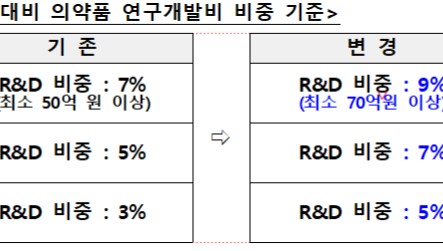
- Pharmaceutical companies applying for new 'Innovative Pharmaceutical Company certification' or seeking to extend their existing status must submit GMP (Good Manufacturing Practice) proof documentation from the U.S. or European Union (EU) governments "before its expiration date" to qualify for the lower 5% research and development (R&D) investment threshold.According to the current Innovative Pharmaceutical Company certification guidelines, companies holding rigorous GMP certifications from advanced markets such as the U.S. or Europe receive preferential treatment, requiring a mandatory R&D investment ratio of "5% of pharmaceutical revenue" compared to the standard 7% or 9%. This new rule means pharmaceutical companies must pay significantly closer attention to expiration dates to maintain this incentive.On the 2nd, the Ministry of Health and Welfare (MOHW) announced the implementation of the revised "Enforcement Rule of the Special Act on Pharmaceutical Industry Promotion and Support." The revised enforcement rule took effect immediately upon its establishment on the 30th of last month.Under the revision to the Innovative Pharmaceutical Company certification guidelines, companies holding rigorous GMP certifications from advanced markets such as the U.S. or Europe receive preferential treatment, requiring a mandatory R&D investment ratio of "5% of pharmaceutical revenue" compared to the standard 7% or 9%. The MOHW initiated this revision to bolster the practical effectiveness and validity of the Innovative Pharmaceutical Company certification system. Companies applying for new certification or renewal must submit a valid GMP certificate issued by government agencies or public authorities in the U.S. or the EU.According to the revised enforcement rule, pharmaceutical companies must submit documentation before the explicit expiration date stated on their U.S. or European GMP certificates to obtain Innovative Pharmaceutical Company certification from the MOHW.While companies could previously qualify for the preferential 5% R&D investment threshold even if their certificates had already expired, expired GMP certificates will no longer be accepted for this preferential treatment moving forward.The existing framework acknowledges the global expansion capabilities of pharmaceutical companies holding recognized overseas GMP certificates (such as the U.S. FDA or the European EMA) by offering relaxed mandatory R&D investment ratio requirements during Innovative Pharmaceutical Company evaluations.Ultimately, Innovative Pharmaceutical Companies must invest at least 7% or 9% of their annual pharmaceutical sales into R&D, depending on their revenue size (set at KRW 100 billion). However, companies holding approved GMP status from global markets are eligible for the relaxed R&D investment threshold of "5% of sales," regardless of overall revenue.This latest measure strictly clarifies the prerequisites for claiming this exception. The pathway to obtaining benefits based on expired past GMP certificates is now closed, reflecting a clear policy intent to rigorously filter for companies that actively maintain global-standard GMP management capabilities at the precise time of application.Consequently, the standards that credit global facility investments as corporate innovation activities, thereby lowering mandatory R&D investment ratios, have become noticeably stricter than before.A pharmaceutical industry insider stated, "The legislative intent appears to be reducing administrative confusion and enhancing policy validity by explicitly codifying the required validity period of submitted documentation into the enforcement rule," and added, "For domestic pharmaceutical companies, this effectively reinforces the requirement to maintain drug quality competitiveness aligned with global standards, rather than treating GMP compliance as a one-time milestone."
- Policy
- Innovative pharma certification application starts Aug 18
- by Jung, Heung-Jun Jul 31, 2026 08:50am
- The Ministry of Health and Welfare plans to accept applications for innovative pharmaceutical company certification for one month, from Aug. 18 to Sept. 18.This year’s certification process will apply a fully overhauled system for the first time in 14 years. Key changes include a higher R&D spending threshold, revised disqualification standards related to illegal rebates, the creation of a separate category for multinational innovative pharmaceutical companies, and disclosure of the reasons for disqualified applications.On the 30th, the ministry promulgated and issued revisions to the enforcement decree, enforcement rules and related notices under the ‘Special Act on Fostering and Supporting the Pharmaceutical Industry.’The reform consists of 5 major changes. First, the R&D spending requirement for certification has been raised. The required ratio of pharmaceutical R&D expenditure to pharmaceutical sales was increased by 2 percentage points. However, the newly added supplementary provision will defer application of the higher threshold for 3 years from the effective date to ease the short-term burden on companies.Second, the disqualification criteria for rebates were revised. Previously, administrative sanctions imposed under the Pharmaceutical Affairs Act or the Fair Trade Act within the 5 years preceding the certification review were reviewed, meaning certification could be revoked over violations committed long ago.Under the revised rules, the reference point will change from the ‘date of the administrative sanction’ to the ‘date on which the violation ended.’ Rebates that ended more than 5 years earlier will no longer be subject to review.Where an administrative appeal or administrative lawsuit has been filed against a sanction, certification may be revoked within 1 year of the date on which a dismissal ruling or judgment is issued.Also, the detailed evaluation criteria have been simplified and quantified. The total evaluation score was reduced from 120 points to 100, while the number of assessment items was cut from 25 to 17. A new item assessing corporate social responsibility was also introduced to reflect contributions to pharmaceutical supply stability.Furthermore, a separate certification category for multinational innovative pharmaceutical companies was created. General innovative pharmaceutical companies and multinational innovative pharmaceutical companies will now be assessed under different criteria.Finally, new provisions require disclosure of detailed review results. The detailed evaluation criteria and minimum passing score of 65 points will be specified in the official notice, and companies that fail to obtain certification will be informed of the reasons.The ministry plans to complete new certifications within the year following deliberation by the Pharmaceutical Industry Promotion and Support Committee. The application notice will be posted on the ministry’s website.Chang-hyun Sung, Director General of the Health Industry Policy Bureau, said, “This first comprehensive reform of the innovative pharmaceutical company certification system in 14 years is intended to provide stronger support for innovative companies that actively invest in R&D. We will continue to provide every support so that Korean pharmaceutical and biotechnology companies can focus on new drug research and grow into global competitive enterprises.”

- Policy
- Mounjaro prescriptions top 1.5 million in 10 months
- by Jung, Heung-Jun Jul 30, 2026 09:09am
- More than 1.5 million prescriptions were issued for the obesity treatment Mounjaro (tirzepatide) during the first 10 months following its launch in Korea.Monthly prescriptions increased 14.7-fold from 18,579 in August last year, the first month after launch, to 273,140 in May this year.According to Drug Utilization Review (DUR) data submitted by the Health Insurance Review and Assessment Service to People Power Party lawmaker Jia Han of the National Assembly’s Health and Welfare Committee, Mounjaro was prescribed 1,501,161 times during the 10 months from its domestic launch in August last year through May this year.The figures are based on prescription records that underwent DUR checks at healthcare institutions to prevent duplicate prescribing and may therefore differ from the exact volume dispensed.By age group, patients in their 30s accounted for the largest share of cumulative prescriptions over the 10 months, at 36.0%, followed by those in their 40s (27.1%), 20s (16.9%), then 50s (14.6%). Patients in their 20s and 30s together accounted for 52.9% (794,781) of prescriptions.Prescription volume among teenagers continues rising. Monthly prescriptions for patients in their teens rose from 82 at launch to 2,594 in May this year.Prescriptions for Wegovy are likewise rising. A cumulative 1,228,867 prescriptions were issued from its launch in October 2024 through May this year, with patients in their 20s and 30s accounting for 46.4%.Concerns have repeatedly been raised within and outside the medical community over the misuse and overuse of obesity treatments such as Wegovy and Mounjaro. The government is also considering designating GLP-1 obesity treatments as ‘drugs with potential for misuse or abuse.’Rep Han said, “Mounjaro prescriptions exceeded 1.5 million within 10 months of launch, yet the government’s response remains limited to adding warnings about the risk of misuse. While ensuring patients’ treatment opportunities, management of GLP-1 obesity treatments should shift from distribution control to prescription oversight utilizing DUR to prevent misuse among adolescents and use solely for cosmetic weight loss.”
- Policy
- Revolade generics gain reimbursement one after another
- by Jung, Heung-Jun Jul 30, 2026 09:09am
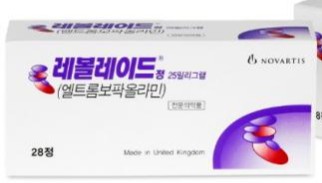
- Revolpag 25 mg and 50 mg will gain reimbursement listing next monthSK Plasma’s Revolpag Tab (eltrombopag olamine) is expected to join Korea’s reimbursement list next month, following the listings of the original drug Revolade and the generic version Elpag.The company is expected to compete directly with Pharmbio Korea, which launched its generic earlier. SK Plasma has also obtained approval for a 75 mg strength not available in the original, in an effort to differentiate its product.According to industry sources on the 28th, SK Plasma’s Revolpag Tab 25 mg and 50 mg, which were approved by the Ministry of Food and Drug Safety in May, are expected to be added to the reimbursement list next month.The reimbursement prices were set below the calculated ceiling prices, at KRW 28,398 for the 25 mg tablet and KRW 55,188 for the 50 mg tablet. This is a price lower than the original Revolade but higher than those of the competing generic Elpag.Revolade is priced at KRW 32,641 for the 25 mg tablet and KRW 63,435 for the 50 mg tablet. Pharmbio Korea’s Elpag has the lowest prices among the three products, at KRW 22,849 for 25 mg and KRW 44,405 for 50 mg.Elpag was listed for reimbursement as a generic in October 2024 and was the first generic to enter the market after completing its patent litigation.Revolade was first approved for thrombocytopenia in 2010 and later gained reimbursement coverage for severe aplastic anemia. In 2024, the reimbursement criteria were expanded to allow its use in patients with immune thrombocytopenia without prior splenectomy.According to the market research institution UBIST, Novartis’ Revolade generated KRW 4.7 billion in prescription sales last year, down 5% from the previous year. Pharmbio Korea’s Elpag has gradually expanded its market share on the strength of its lower price.SK Plasma is now joining the challenge. Once the later-entry Revolpag reaches the market, competition will be set among the original and two generic products.SK Plasma also received additional approval in June for a 75 mg version of Revolpag, a strength unavailable in both the original and the competing generic, for better market penetration.Patients with severe aplastic anemia (adults and adolescents) are instructed to take 75 mg once daily for six months. A single 75 mg tablet would therefore eliminate the inconvenience of taking individual 25 mg and 50 mg tablets together.Once SK Plasma secures reimbursement listing for the 75 mg strength in the second half, it is expected to begin a more aggressive push for market share based on this differentiation.

- Policy
- MFDS streamlines digital medical device approvals
- by Jung, Heung-Jun Jul 29, 2026 08:50am
- The Ministry of Food and Drug Safety (MFDS) (Commissioner: Yu-kyoung Oh) will clarify the standards for requiring clinical trial data in digital medical device approvals and broaden eligibility for special treatment under certified quality management systems.On the 27th, the MFDS revised its ‘Regulation governing the approval, certification, notification, review and assessment of digital medical products.’The revision was pursued as part of the ‘2026 Food and Drug Safety Initiatives,’ which were selected through direct communication with the public and consideration of needs identified in the field. It is intended to address difficulties experienced by companies during the approval process.Since the Digital Medical Products Act took effect in January last year, software-based digital medical devices have, in principle, been required to submit data including clinical trial results when applying for approval. However, applicants may omit such data or submit alternative data when they provide supporting grounds for an exemption and receive recognition from the MFDS commissioner.The MFDS analyzed the approval and review status of approximately 1,000 digital medical device software products authorized to date. Based on actual cases in which approval was granted using performance validation data without clinical trial data, it established more specific criteria for the submission and exemption of clinical evidence.In addition, considering the rapid pace of advancement in artificial intelligence technology, the scope of application for the certified quality management systems special exemptions will be expanded from the current Class II to unclassified targets. The period for granting actual-use special exemptions will be extended from a range of 1 year to up to 3 years.Myung-ho Kim, Director-general of the Medical Device Safety Bureau at MFDS, said, “This revision is expected to improve regulatory predictability, reduce unnecessary clinical trials and promote the development of products based on the latest AI technologies. We will soon issue detailed guidelines on quality management system certification and continue supporting the growth of Korea’s medical AI sector.”
