
- LOGIN
- MemberShip
- 2026-09-08 03:14:54
- Policy
- Last-minute talks heat up over looming drug price cuts
- by Jung, Heung-Jun Aug 18, 2026 08:54am
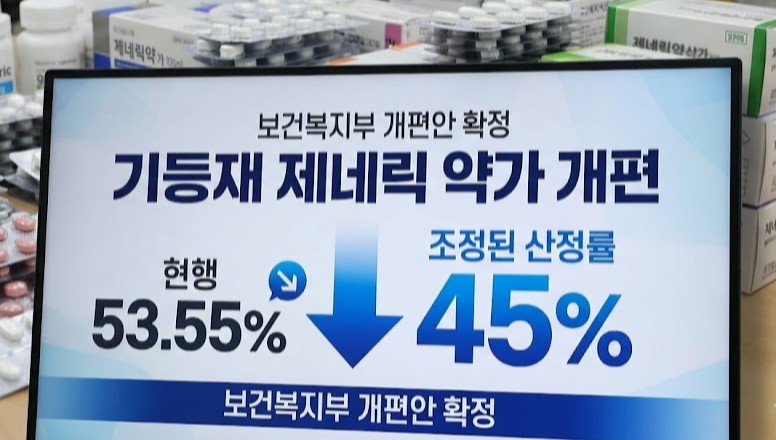
- With the notice on drug price reductions under the reassessment of already-listed drugs expected soon, the pharmaceutical industry and the government are set for final negotiations over key outstanding issues.The working-level consultative group is expected to meet ahead of the notice, which is anticipated around the end of this month, to discuss several major issues.According to relevant authorities and industry sources on the 13th, the final working-level discussions regarding the reassessment of already-listed drugs are expected to begin shortly. As the new pricing calculation rules have already been finalized through revisions to the relevant notice, the fifth meeting of the consultative group is expected to focus on the reassessment of already-listed drugs.The scope of drugs subject to reassessment and exemptions, reference prices, and methods of applying price reductions were discussed at the third meeting, but differences remain over the details. Therefore, attention is now focused on whether several major outstanding issues can be resolved in the upcoming discussions.Reference date for reassessment prices: 2012 or September this year?The reference date used to calculate the price reduction is one of the industry's key issues. Because the current price as of the reference date is used to set the 53.55% price, and then recalculated at the new 45% rate, the resulting reimbursement price varies depending on which reference date is used.The government has proposed using the reimbursement list set as of September this year as the reference point. The industry, however, argues that applying the 45% calculation rate to prices that have already been continuously reduced since the across-the-board price cuts in 2012 amounts to double regulation.The industry is therefore asking the government to treat reimbursement prices at the time of the 2012 across-the-board price cuts as the 53.55% level and calculate the new 45% prices.As the government previously cited September this year as the reference date during consultative meetings, the key question is whether it will accept the industry's proposal in consideration of the impact on the market.Price cuts for combination drugs…sum of single-drug prices at 45%, or 45% of the combination drug price?The method for reducing prices of already-listed combination drugs is another major issue. The industry is calling for the reduced price of a combination drug to be calculated by adding together the prices of its individual components after each has been recalculated at the 45% rate. The government, by contrast, is seeking to reduce combination drugs uniformly based on 45% of the current highest price of the combination drug itself, without linking the price to those of the individual components.Under the industry's proposed method, the extent of the reduction would vary depending on the dosage strengths and combination of ingredients. Applying the 45% rate uniformly without linking prices to the individual components, on the other hand, would result in an approximately 16% price reduction across the board.If a combination drug contains even one Phase 1 single-ingredient drug (one listed before 2013), its price reduction will begin this year. This classification method has substantially increased the number of combination drugs included in Phase 1.Ahead of the reassessment notice, the industry is expected to continue pressing until the last minute for combination-drug prices to be reduced based on the sum of the individual components' prices calculated at the 45% rate.Deferral for innovative companies’ products only for drugs meeting eligibility requirements?Another issue that remains to be finalized is whether the three- to four-year reassessment deferral granted to products developed by innovative and quasi-innovative pharmaceutical companies will also apply to drugs that do not meet the eligibility requirements.Because the preferential treatment for innovative and quasi-innovative pharmaceutical companies is essentially a company-level benefit, the industry has interpreted it as applying to all products marketed by eligible companies. At an earlier consultative meeting, however, the government raised the possibility of limiting the deferral to drugs that meet the eligibility requirements.The industry argues that products should not be divided according to whether they meet those requirements and that the three- to four-year deferral should apply to all products of qualifying companies.Under the new pricing calculation rules, price premiums for innovative and quasi-innovative pharmaceutical companies are also conditional on products meeting the eligibility requirements. The key question is whether the government will grant the same preferential reassessment deferral period regardless of whether individual products meet those requirements.
- Policy
- Criticism mounts over request easing telemedicine first-visit rules
- by Lee, Jeong-Hwan Aug 18, 2026 08:54am
- Rep. Chil-seung Kwon held a policy forum on the 13th at the National Assembly Members’ Office Building to discuss subordinate regulations under the Medical Service Act for telemedicine.With the full-scale implementation of telemedicine about 4 months away, the medical and pharmacy groups are pushing back against the platform industry's request that the "limit on prescription days for first-time patients" should be left to "the physicians' discretion" rather than legal and administrative standards.Healthcare groups argue that the platform industry's request amounts to a belated attempt to neutralize safeguards against the adverse effects of telemedicine that were agreed upon after months of deliberation in the National Assembly, where multiple bills were consolidated and reviewed. In effect, the medical and pharmacuetical industry’s criticism is that the proposal disregards both the National Assembly's legislative authority and the government's administrative authority.The platform industry says it neither opposes nor rejects the principles of the Medical Service Act passed by the National Assembly to formalize telemedicine. Rather, it is asking policymakers to consider that an outright restriction, such as limiting first-visit prescriptions to seven days, could unintentionally infringe on the rights of physicians and patients and even threaten the viability of the telemedicine industry itself.Even after subordinate regulations under the Medical Service Act set a limit on prescription duration for first-time patients, the industry is asking for exceptions that would give physicians discretion to prescribe beyond that limit when patients consent to the disclosure of their medication or medical history.According to medical and pharmacy groups on the 14th, calls at a National Assembly policy forum the previous day to give physicians discretion over prescription duration for first-time telemedicine patients have drawn criticism as a demand that "disregards and undermines the intent of the Medical Service Act, the governing statute."“Limits on first-visit prescription duration is a closed discussion…undermining the legislative intent right before implementation.'"During deliberations on the Medical Service Act amendment, lawmakers from both ruling and opposition parties, the Ministry of Health and Welfare, and relevant professional groups reached a consensus on establishing clear guidelines for the safe implementation of telemedicine. These included ▲limits on eligible first-time patients and prescription duration, ▲restrictions on certain drugs with potential for abuse, and ▲limited permission for medication delivery. Given the nature of telemedicine and its greater potential for misuse than in-person care, clearly defining legal and administrative restrictions on prescription duration and the types of drugs that can be prescribed to first-time patients was a key premise of the legislative process.At the recent forum, however, Professor Hun-sung Kim of Seoul St. Mary's Hospital, Catholic University of Korea College of Medicine, who gave a presentation, and the Korea Telemedicine Industry Council argued that prescription duration for first-time patients should not be uniformly restricted but instead left entirely to physicians' discretion and responsibility.Medical and pharmacy groups have objected, saying “the proposal seeks to reverse an issue that has already reached the final stage through the legislative process without additional consultation or an administrative basis.”Healthcare groups are concerned that removing legal standards for telemedicine and relying solely on individual physicians' discretion could dismantle the minimum safeguards intended to prevent misuse and abuse.A medical industry official said, "Physicians' autonomy, discretion and responsibility must be exercised within a legal framework designed to protect patient safety. Calling for changes to standards reached after extensive review and agreement during the National Assembly's legislative process, with only 4 months left before implementation, shows disregard not only for the Assembly's legislative authority but also for the government's administrative authority."The pharmacy community also expressed similar concerns. "Limiting prescription duration for first-time patients is the minimum legal safeguard needed to prevent drug misuse and adverse effects in telemedicine. Without administrative restrictions, the consequences of drug misuse will ultimately fall on the public. Given that various problems involving telemedicine and platforms have already been identified during the pilot program, calls to ease restrictions on first-visit prescriptions are inappropriate."KTIC, “We are asking for exceptions when patients share their medical data”As controversy grew, the Korea Telemedicine Industry Council said its proposal was not a call for unconditional deregulation or opposition to the Medical Service Act, but rather a request to establish specific exceptions based on the availability of patient medical data.The association argues that if subordinate regulations uniformly limit first-visit prescriptions to seven days, the full-scale telemedicine program could end up being more restrictive than the pilot program, infringe upon the medical and medication rights of doctors and patients, and further lead to the collapse of the telemedicine industry itself.Seul Lee, co-chair of KTIC, said, "First of all, we are not denying or opposing the principles of the telemedicine provisions in the Medical Service Act passed by the National Assembly. However, even if prescription duration for first-time patients is limited to 7 days, as in Japan, flexible exceptions should be established so that physicians can prescribe for longer than 7 days when patients consent to disclosing their previous medication or medical history."Lee added, "When a patient's medical data are available, allowing room for physicians to exercise their own judgment rather than imposing an unconditional, uniform restriction would better protect physicians' right to provide care and improve patient convenience. If implementation of the Medical Service Act results in a full-scale program that regresses from the pilot program, it could cause considerable inconvenience for physicians and patients and negatively affect the telemedicine industry."Full-scale rollout 4 months away…debate over subordinate regulations likely to continueWith the full-scale implementation of the telemedicine program approaching, renewed controversy over prescribing authority for first-time patients is expected to complicate the Ministry of Health and Welfare's task of drafting subordinate regulations and detailed guidelines.However, because the issue was already discussed extensively at the National Assembly level, attempts to ease legal restrictions in the name of "physician discretion" are likely to face strong opposition from medical and pharmacy groups as well as criticism that they undermine the intent of the legislation.The ministry is reportedly planning to gather opinions from the platform industry, medical community, and pharmacy groups before issuing an advance notice of the legislation of the proposed subordinate regulations under the Medical Service Act in early September.
- Policy
- Price cuts loom over 3 or fewer same-class listed drugs
- by Jung, Heung-Jun Aug 14, 2026 08:45am
- Industry concerns are growing that lowering reimbursement prices under the price cuts applied to already-listed drugs—including products manufactured by three or fewer companies—could worsen medicine supply shortages.Some stakeholders have proposed exempting products made by three or fewer manufacturers from the reassessment process until a fourth manufacturer enters the market, at which point the price reduction could be applied.According to industry sources on the 13th, discussions are increasing over products with three or fewer manufacturers ahead of the implementation of reimbursement price cuts under the reassessment of already-listed drugs.The industry is requesting that products with three or fewer manufacturers be excluded from the reassessment program, which is scheduled to continue over the next 10 years beginning this yearThe concern is that as many of these products are already unprofitable, discouraging new market entrants, further price reductions could prompt existing manufacturers to discontinue production.Industry representatives note that when the government implemented across-the-board drug price cuts in 2012, it introduced preferential pricing for products with three or fewer manufacturers to help ensure a stable supply.Since then, original drugs in this category have received a 70% premium, while generics have received a 59.5% premium.One pharmaceutical industry official said, "Products manufactured by three or fewer companies should be excluded from uniform price reductions. Reassessment could simply be postponed until a fourth manufacturer enters the market, allowing a stable supply system to be maintained."Another industry source added, "If a product continues to have fewer than 3 manufacturers over time, it indicates that other companies have chosen not to enter because the market is not commercially viable. If one or two of the remaining manufacturers discontinue production, supply disruptions could occur. There is sufficient justification for exempting these products from reassessment."The issue was also raised during the working-level consultative body on drug pricing reform, but discussions have so far focused only on exempting products with a single listed manufacturer from reassessment.Expanding the exemption to products made by three or fewer manufacturers would reduce the scope of the reassessment compared with the government's original plan and would require further discussions with the authorities.Nevertheless, the industry argues that preventive measures are needed to avoid supply disruptions after the reassessment begins.An industry official said, "About 8,000 active ingredients are currently listed for reimbursement. Roughly half are supplied by only a single manufacturer. Among the remaining products, those produced by three or fewer companies—apart from certain central nervous system drugs with high market entry barriers—are generally low-profit, low-attractiveness products. If reimbursement prices are reduced further, production discontinuations could become a reality."

- Policy
- Subordinate regulations for telemedicine first visits in progress
- by Lee, Jeong-Hwan Aug 13, 2026 08:59am
- With telemedicine set to become a formal healthcare service in December, the government has begun working-level consultations with the medical community, pharmacists and intermediary platform operators to prepare amendments to subordinate regulations.The discussions mark the start of efforts to reconcile sharply differing views among professional groups over some of the most contentious issues, including geographic restrictions for first-time patients, limits on prescription duration and restrictions on drugs that may be prescribed remotely.According to the medical community on the 12th, the Ministry of Health and Welfare (MOHW) has met with the Korean Medical Association (KMA), the Korean Pharmaceutical Association (KPA) and the Korea Telemedicine Industry Association, among others, to gather views on key issues that must be addressed in the subordinate regulations before the full-scale launch of the system.The biggest points of contention are how to set geographic restrictions for first-time patients, how many days of medication may be prescribed upon a single visit for such patients, and which drug categories should be prohibited from remote prescribing.For geographic restrictions, one issue is whether remote first visits should be permitted only near the patient’s residence – when the medical institution providing telemedicine is located within the same city, county or district.Some have argued that a patient’s real-time location, based on GPS data, should instead be used to determine whether a remote first visit may be provided.The National Assembly and the MOHW agreed on the broad principle that first-time patients with no prior in-person treatment history should receive telemedicine only from medical institutions located within their area of residence. The Medical Service Act was amended accordingly to prevent patient concentration at major hospitals in the Seoul metropolitan area or at certain telemedicine-focused clinics, while also ensuring a safety net for emergency referrals to in-person care.The medical community and pharmacists’ association have also supported regional restrictions on first visits, deeming such safeguards necessary to prevent telemedicine from disrupting the ecosystem of frontline medical institutions and pharmacies.The platform industry, however, has opposed overly restrictive regional rules, arguing that more than 60% of users seek care from clinics in other regions when their usual hospitals are closed or during nights and holidays, and that excessively tight geographic restrictions would undermine the effectiveness of the system.There are also significant differences over limits on prescription duration for first-time patients. The medical community, pharmacists, and platform operators hold differing views on how many days of medication should be allowed for patients with no prior in-person treatment history, amid concerns over misuse and adverse events associated with long-term prescriptions issued remotely.The medical community and pharmacists argue that prescription duration should be kept as short as possible for patient safety. Their position is that telemedicine should be permitted only as a supplement to in-person care.Platform operators and some users, however, pointed to the irony of how even patients with chronic diseases who are already taking medication are classified as first-time patients when they change hospitals. They contend that setting blanket limits on prescription duration would increase the financial and time burden by stimulating more frequent medical visits.Restrictions on non-reimbursed medicines with high potential for misuse, including obesity and hair-loss treatments, are another major issue. The parties remain divided over whether remote prescribing should be restricted not only for existing prohibited categories such as narcotics, psychotropic drugs, drugs with misuse or abuse concerns (including erectile dysfunction treatments), and emergency contraceptives, but also for non-reimbursed drugs such as GLP-1 obesity treatments and hair-loss medicines.Against this backdrop, the National Assembly plans to hold a policy forum to seek broader social consensus on subordinate regulations for telemedicine.Rep. Chil-seung Kwon of the Democratic Party of Korea, a member of the National Assembly’s Health and Welfare Committee, will hold a policy forum at the National Assembly Members’ Office Building on the 13th under the title “Policy Forum on Subordinate Regulations under the Medical Service Act for Telemedicine (subtitle: Directions for Designing Subordinate Regulations to Support the Successful Introduction, Development and Safe Expansion of Telemedicine).”The MOHW plans to combine the views collected through working-level consultations with opinions presented at the National Assembly forum, refine the detailed criteria, and finalize the subordinate regulations in time for the amended Medical Service Act to take effect.A medical industry official said, “The key to transitioning telemedicine to a full-scale system is to guarantee public access to healthcare while minimizing the risks of drug misuse and medical accidents. It is the ministry’s responsibility to fully gather the views of the medical community, pharmacists and industry through working-level consultations and establish reasonable detailed guidelines, but a consensus may not be easy because the parties maintain sharply different stances.”
- Policy
- Will multiple-product listing rule apply to 14th drug transfers?
- by Jung, Heung-Jun Aug 13, 2026 08:59am
- Will the multiple-product listing management rule apply when a product belonging to the same-ingredient group that already exceeds 14 listed products is transferred before August next year?The answer is no. Because the multiple-product listing management rule did not exist under the previous regulations, it will not affect the reimbursement price of a transferred product.According to the Health Insurance Review and Assessment Service (HIRA) and industry sources on Aug. 12, products that already exceed the 14-product threshold will be exempt from the multiple-product listing management rule when ownership is transferred before Aug. 1 next year, as implementation of the revised reimbursement recalculation rule for transfers has been deferred until then..The multiple-product listing management system was newly introduced through this month's revision to the relevant notice. Under the system, drugs in a same-ingredient group that exceeds 14 listed products will have their reimbursement prices reduced to 85% of the lowest price one year later.Based on the rule, one may assume that a product beyond the 14th listing would become subject to the multiple-product listing management rule if it is transferred.However, until August next year, when the previous transfer rules continue to apply, the multiple-product listing management provision will not be applied.Under the previous rules governing transfers, “the reimbursement price was to be set at the lower of the final ceiling price and the amount calculated under Item 2.” At the time, however, Item 2 (Pricing calculation criteria) did not include any provision on multiple-product listing management.A HIRA official said, “The reimbursement price must be determined under the rules that were in effect before the revised provisions take effect, and those rules contained no provisions on multiple-product listing management. The previous rules did not require comparison with a revised calculated price incorporating the multiple-product listing management rule, so the rule has no bearing on such transfers.”In other words, products belonging to groups that already exceed the 14-product threshold may be transferred until August next year without concern that the transfer itself will trigger a price reduction under the multiple-product listing management system.How, then, will the rule apply to product transfers after August next year? A transfer made while a same-ingredient group contains 13 listed products (the 13th product) will still avoid the impact of multiple-product listing management.So if a large number of additional products are listed and the group exceeds 14 products at the time the 13th-listed product is transferred, the transferred product will remain exempt from the rule. This is because it retains its status as the 13th product in the listing order at the time of transfer, meaning the multiple-product listing management rule does not apply.
- Policy
- 45% rate to apply to generics listed from October
- by Jung, Heung-Jun Aug 12, 2026 09:23am
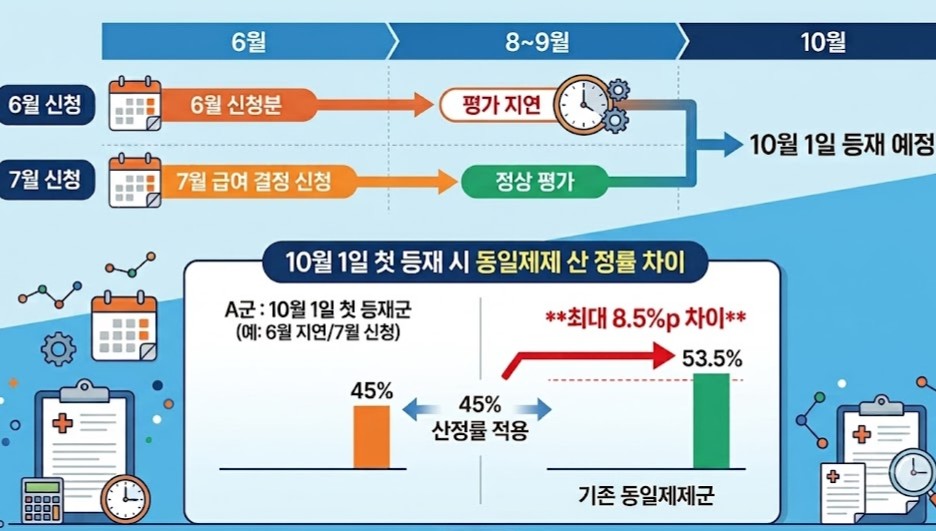
- A 45% reimbursement rate will apply to generics newly added to the reimbursement list from October, creating a temporary price gap between newly listed generics and already listed products until price cuts for existing products take effect.Price reductions for existing products are planned based on the September reimbursement list and could begin as early as November. This means that, at least for October, reimbursement rates for the same ingredient could differ by up to 8.5 percentage points between existing products and newly listed generics, ranging from 45% to 53.55%.The revised reimbursement rate applies to drugs submitted for reimbursement from July. Earlier applications may also be subject to the new rate if their evaluation is delayed due to reassessment requests or requests for supplementary data.(AI-generated image)According to relevant agencies and industry sources on Aug. 11, the 45% reimbursement rate will apply to drugs submitted in July as well as certain June applications whose evaluations have been delayed.In general, generics are listed about three months after reimbursement applications are filed. Accordingly, drugs submitted in July are expected to go through deliberation by the Health Insurance Policy Deliberation Committee at the end of September and be listed on Oct. 1.Although evaluation procedures are occasionally expedited because of drug supply concerns, no products submitted in July are expected to qualify for such accelerated review.Drugs submitted in June and scheduled for listing on Sept. 1 may also be subject to the 45% rate if their evaluations are delayed due to reassessment requests or supplementary data submissions.An industry official said, “Companies usually have to accept the outcome within about a week after being notified, but there are cases where an immediate launch is difficult or where acceptance is delayed because of lack of documentation. Companies can also request reassessment within 1 month if they believe the decision is incorrect.”However, industry observers expect only a very small number of products will opt to have their listing dates pushed back because of evaluation delays, given the significant gap in reimbursement rates.For already listed products, the first phase of price reductions this year is expected to lower the reimbursement rate to 49%. Following public notice and notification to pharmaceutical companies, the first round of reductions is scheduled between November and December.Another industry official said, “A public notice has not been issued yet, so it is uncertain whether the reductions can actually begin in November. Each company must be informed of the price cut for each product, and the authorities also need to gather opinions, including requests for redeliberation, so the schedule could be delayed.”Some expect pharmaceutical companies to intensify sales and marketing of existing products before the price reductions take effect. However, the scope for such activity may be limited because pharmacies and distributors are also seeking to minimize inventory losses and the burden of refunding the price differences.
- Policy
- Health and Welfare Committee receives first policy briefing in 2H
- by Lee, Jeong-Hwan Aug 11, 2026 03:16pm
- The National Assembly's Health and Welfare Committee is set to hold its first plenary meeting under the second half of the 22nd Assembly later this month, during which it will receive policy briefings from the Ministry of Health and Welfare (MOHW) and the Ministry of Food and Drug Safety (MFDS).Lawmakers are expected to question government officials on a range of key issues, including follow-up measures to strengthen the pharmaceutical industry's competitiveness after the implementation of the generic drug pricing system reform, tighter regulation of CSO (Contract Sales Organization) rebates, and expanded National Health Insurance (NHI) reimbursement for innovative medicines.Other major pharmacy-related agenda items are expected to include expanding the list of over-the-counter medicines available at convenience stores and tightening regulations on warehouse-style pharmacies.On the 9th, the ruling and opposition party secretaries of the National Assembly Health and Welfare Committee were coordinating the schedule for a plenary committee meeting later this month.With the ruling Democratic Party of Korea’s national convention set to conclude on the 17th, the ruling and opposition parties are reportedly discussing holding the plenary meeting sometime between the 18th and 21st.The main agenda will include ministry policy briefings, formation of legislative subcommittees, and settlement of accounts. As this will be the first policy briefing since the committee was reorganized for the second half of the current Assembly, lawmakers from both parties are expected to raise a broad range of healthcare policy issues.One of the committee's main areas of interest is follow-up administrative and legislative measures to improve the structure of Korea's pharmaceutical industry following the generic drug pricing reform.Lawmakers are closely watching how the MOHW plans to reshape the country's multi-generic market and increase the likelihood of developing domestically produced innovative medicines, following the introduction this month of lower reimbursement prices for generics and preferential pricing for innovative drugs.More specifically, the issues involve tightening the “1+3” restriction on consinged bioequivalence studies for generic drugs and strengthening regulations on contract sales organizations, or CSOs.Lawmakers seeking policies to address an environment in which the proliferation of generics produced through consinged bioequivalence studies leads to CSO rebates, ultimately reducing opportunities to create competitive homegrown blockbuster drugs, are expected to question Health and Welfare Minister Eun-Kyeong Jeong and Ministry of Food and Drug Safety Commissioner Yu-kyoung Oh about relevant countermeasures.Expanding National Health Insurance coverage for ultra-expensive new drugs is another major issue. The ministry has announced plans to launch a pilot program under which drugs are listed first and evaluated afterward, and has pledged to operate the insurance system in a way that accelerates coverage for new drugs proven to deliver therapeutic benefits to patients.At the same time, the ministry said it will continue reviewing the need to provide insurance coverage for new injectable obesity treatments such as Wegovy and Mounjaro, as well as prescription hair-loss treatments.Committee members from both parties are considering the need to question the government on how it will set priorities and ensure fairness in providing coverage for ultra-expensive new drugs and high-demand prescription medicines within the constraints of the National Health Insurance budget.Among pharmacy-related agendas, deregulation of convenience store medicines is expected to receive significant attention, as Minister Jeong has identified expansion of the list of OTC medicines available at convenience stores and easing restrictions on retail outlets as key policy priorities for the second half of the term.With the pharmacy community strongly opposing the ministry’s policy direction toward deregulating convenience-store medicines, pharmacists are expected to closely watch the line of questioning taken by lawmakers from both parties.Lawmakers are also expected to scrutinize regulations on warehouse-style pharmacies. An amendment to the Pharmaceutical Affairs Act restricting the signs and advertising used by warehouse-style pharmacies has passed both the relevant standing committee and the Legislation and Judiciary Committee and is awaiting a vote at a plenary session.Minister Jeong has announced plans for additional safeguards extending beyond sign and advertising regulations, including appropriate pharmacist staffing standards to reduce the risk that large pharmacies could encourage medication misuse or abuse.As a bill aimed at screening and preventing the registration of warehouse-style pharmacies involving outside capital and pharmacies illegally operated under a pharmacist’s name has also been introduced (Rep. Jeon Jin-sook) and remains pending in the National Assembly, lawmakers may therefore raise questions about the need for this legislation.A standing committee official said, “This policy briefing will be a watershed moment in determining the direction of the Lee Jae-myung administration’s healthcare and pharmaceutical and biotechnology policies during the latter half of its term. As the National Assembly begins full-scale legislative and administrative oversight activities with these agency briefings, discussions will accelerate on restructuring the generic drug industry, regulating pharmaceutical distribution, easing regulations on convenience-store medicines and regulating warehouse-style pharmacies.”
- Policy
- Entresto generic development speeds up ahead of patent expiry
- by Lee, Tak-Sun Aug 11, 2026 03:16pm
- Novartis 'Entresto'Generic drug development for 'Entresto (sacubitril·valsartan, Novartis),' a blockbuster heart failure and hypertension treatment generating sales of KRW 80 billion, is escalating again in South Korea.As the expiration date of the key patent, scheduled for September 2027, approaches, approvals for bioequivalence (BE) trials aimed at generic development are continuing to emerge. However, due to the drug's formulation characteristics, high regulatory hurdles for approval are expected to present substantial difficulties for actual commercialization.On August 5, Sinil Pharmaceutical received approval of the bioequivalence trial plan from the Ministry of Food and Drug Safety (MFDS) for an Entresto generic candidate (development code: SIL1129).Earlier this year, Sinil Pharmaceutical gave up midway on challenging the originator patent ('Pharmaceutical combinations of angiotensin receptor antagonists and NEP inhibitors,' set to expire on September 21, 2027), which other domestic drugmakers had successfully bypassed. However, with the patent expiration date drawing near, the company appears to have rejoined generic development targeting a market launch immediately following patent expiry.In addition to Sinil Pharmaceutical, companies such as Huvist Pharma and HK inno.N have also secured BE trial approvals for Entresto generic authorization this year.Challenges of "co-crystal complex" generic approvals…zero approvals since 2022Despite these bioequivalence challenges by generic developers, significant skepticism remains regarding whether generic products will ultimately reach the market. This is because deriving valid bioequivalence results and securing MFDS approval for Entresto generics is overwhelmingly more challenging compared to other medications.Entresto is not a simple physical combination drug, but a 'co-crystal complex' structure in which two active ingredients (sacubitril and valsartan) are bound at the molecular level like a single compound. Because its in vivo absorption and dissolution patterns are highly unusual, proving pharmacokinetic (PK) equivalence through conventional standard analytical methods is extremely difficult.In fact, since April 2022, approximately 20 Korean pharmaceutical companies submitted marketing authorization applications for Entresto generics to the MFDS following first-instance patent trial victories. However, not a single approval has been granted to date due to failure to overcome the MFDS's rigorous demands for quality analysis and equivalence data supplementation. Even after dismantling patent barriers, developers remain blocked by regulatory hurdles, leaving the likelihood of commercial development highly uncertain.Incrementally modified drugs dominate amid generic absence… securing market dominance via completed Phase 3 trialsWith generic drug development stagnated, analysis suggest that drugmakers pursuing the incrementally modified drug (IMD) track are taking the lead in the generic development race.Among those most highly secured MFDS product approvals first are developers of IMDs, including Chong Kun Dang (CKD-202A). Chong Kun Dang completely circumvented co-crystal issues by applying proprietary salt-modification technology instead of the originator's 'sodium salt co-crystal' structure. Furthermore, beyond simple bioequivalence, the company secured data reliability by completing Phase 3 clinical trials in actual patients.The single biggest weapon of the IMD track lies in its 'scope of indications.' While originator Entresto holds an indication for "essential hypertension", a market of 10 million patients, alongside chronic heart failure, simple generics face barriers to immediate entry into the hypertension indication due to remaining data exclusivity periods.Conversely, IMDs that have proven safety and efficacy through independent Phase 3 trials are not constrained by the originator's data protection requirements. Consequently, they can secure initial approval complete with the "hypertension indication," establishing a decisive foothold to monopolize this massive prescription market.Generic manufacturers are expected to initially pursue approval for the "chronic heart failure" indication, where data exclusivity has expired, before adding the hypertension indication at a later date. However, overcoming the MFDS's regulatory approval hurdles remains a prerequisite challenge.A pharmaceutical industry insider stated, "Due to analytical limitations inherent to the co-crystal formulation, Entresto generics are exceptionally difficult to pass the MFDS approval threshold," and added, "Ultimately, IMD developers that have resolved approval uncertainties by completing Phase 3 trials and securing the hypertension indication are highly likely to take control of the generic market."Meanwhile, Entresto recorded KRW 79.4 billion in outpatient prescription sales last year, according to UBIST. Market size continues to expand as the drug secured the hypertension indication in addition to its established heart failure indication.
- Policy
- Pfizer’s hemophilia drug Hympavzi passes DREC review
- by Lee, Jeong-Hwan Aug 10, 2026 08:43am
- On the 6th, Pfizer Korea's reimbursement application for its hemophilia treatment ‘Hympavzi (marstacimab)’ received conditional approval from Korea's Drug Reimbursement Evaluation Committee (DREC).On the day, the Health Insurance Review and Assessment Service (HIRA) announced that the committee had determined the therapy to be eligible for National Health Insurance reimbursement provided that Pfizer accepts the reimbursement price below the assessed value.‘Acceptance of the proposed reimbursement price below the assessed value’ means that reimbursement may be applied if the company agrees to the price range determined by HIRA.The company submitted a reimbursement application for Hympavzi as a routine prophylactic treatment to reduce or prevent bleeding episodes in adults weighing at least 35 kg and pediatric patients aged 12 years or older.The proposed reimbursement population includes patients with severe hemophilia A (congenital factor VIII deficiency) without factor VIII inhibitors and severe hemophilia B (congenital factor IX deficiency) without factor IX inhibitors.If Pfizer accepts a reimbursement price proposed by the DREC, the company may proceed to the next stages of the reimbursement process, including drug price negotiations with the National Health Insurance Service (NHIS) and final deliberation by the Health Insurance Policy Deliberation Committee (HIPDC) before a final reimbursement decision is made.
- Policy
- "Ban on platform wholesale act"·"warehouse pharmacy reg act" expected passage in AUG
- by Lee, Jeong-Hwan Aug 09, 2026 04:04pm
- Attention is focused on whether amendments to the Pharmaceutical Affairs Act, which include restricting non-face-to-face intermediation platforms from concurrently operating pharmaceutical wholesaling businesses and regulating exaggerated signage and advertising by "warehouse-style" or "factory-style" pharmacies, will pass the plenary session of the extraordinary National Assembly this month (August). On the 4th, the Democratic Party of Korea held a strategy meeting. It proposed to the People Power Party that a National Assembly plenary session be convened on the 13th to pass delayed public welfare legislation. The two pieces of legislation attracting significant interest from the healthcare industry are amendments to the Pharmaceutical Affairs Act that have already cleared both the standing committee and the Legislation and Judiciary Committee.They are known as the "ban on non-face-to-face platform wholesale establishment and operation act" and the "warehouse-style pharmacy signage and advertising regulation act".Among them, the bill banning platform wholesale operations has been delayed for nine months without being tabled before the plenary session, even after passing the Legislation and Judiciary Committee on November 26 of last year. The delay stems from opposition raised by certain ruling and opposition lawmakers and the Ministry of Small and Medium Enterprises and Startups, who sympathized with pushback from the platform and venture startup industries, stalling the plenary vote on the bipartisan-approved bill.According to National Assembly officials, the bill is expected to be tabled and passed during this month's plenary session in its original form without modifications.This is because the bill was passed with bipartisan consensus, and there is no reasonable justification or rationale to undergo revisions at a point when non-face-to-face is set to be fully institutionalized on December 24.Key provisions of the bill include adding non-face-to-face intermediation operators under the Medical Service Act to the grounds for disqualification from obtaining an herbal medicine dealer or pharmaceutical wholesaler license, while prohibiting pharmaceutical wholesalers from selling drugs directly or through third-party wholesalers to pharmacies that have entered into service contracts with affiliated non-face-to-face intermediation operators.The bill also includes provisions mandating pharmacists to verify patient prescription and administration histories for narcotics or psychotropic drugs via the Drug Utilization Review (DUR) system when dispensing such controlled substances, as well as linking the DUR system with the Narcotics Information Management System (NIMS).Regarding the bill regulating warehouse-style pharmacy signage and advertising, an amendment to the Pharmaceutical Affairs Act sponsored by Vice Speaker Nam In-soon was independently reviewed and passed by the Legislation and Judiciary Committee on the 29th of last month.The core of the bill prohibits pharmacy founders from using designations as their pharmacy's formal business name that could induce drug misuse or abuse, as specified by Ordinance of the Ministry of Health and Welfare.A grace period provision was also established under the amendment, allowing pharmacy founders who currently use prohibited designations, such as "warehouse-style pharmacy", to retain those names for only up to six months following the implementation of the revised act.Upon plenary passage of the Pharmaceutical Affairs Act amendment sponsored by Vice Speaker Nam, the Ministry of Health and Welfare (MOHW) is expected to initiate the enactment and revision of subordinate regulations under the Pharmaceutical Affairs Act to restrict terms that encourage drug misuse or abuse, such as "warehouse-style pharmacies".A Health and Welfare Committee official of the National Assembly stated, "Both parties are agreeing on the necessity to process delayed public welfare bills during the August special National Assembly session," adding, "The Pharmaceutical Affairs Act amendment banning non-face-to-face platforms from operating drug wholesaling, which passed the Legislation and Judiciary Committee last year but remained unhandled across the year, is highly likely to be processed this month".
