
- LOGIN
- MemberShip
- 2026-07-22 09:26:26

- Policy
- Pharma, preparing for the future…generic launch in 2030s
- by Lee, Tak-Sun Feb 03, 2026 06:24am
- Product photos of Tagrisso (left) and K-CAB (right).Are they already preparing for the future? The Korean pharmaceutical industry is preparing for generics that would be launched five years later. They are also fiercely competing to secure priority marketing authorization by filing patent applications and seeking approvals.According to the Ministry of Food and Drug Safety (MFDS), 'Otinib tablet (Chong Kun Dang),' a generic version of the non-small cell lung cancer treatment Tagrisso (osimertinib), was approved on the 27th and also secured the priority marketing authorization. When assigned a priority marketing authorization, the drug receives an exclusive sales period of 9 months, during which the sale of generics containing the same active ingredient is banned.However, the effective date of the priority marketing authorization is not approaching soon. It is set to begin on December 28, 2023, and terminate on September 27, 2034. Approximately 8 years remain until the product launch. This is because the Tagrisso patent is set to expire on the specified date.Generic versions of K-CAB (tegoprazan), a P-CAB for gastroesophageal reflux disease (GERD), are increasingly receiving approvals. Yet, the priority marketing authorization is scheduled to take effect after August 26, 2031.Until now, pharmaceutical companies that received K-CAB generic approvals include GC Cross, Withus Pharm, Genuonesciences, Korea Drug, Ildong Pharmaceutical, KyungDong Pharm, and Hutecs Korea.As K-CAB is a mega-blockbuster item generating over KRW 200 billion in annual sales, numerous companies are competing for approvals to gain pre-occupancy in the generic market.Generics to Daiichi Sankyo's neuropathic pain treatment Taleaje (mirogabalin besilate) can be launched on or after 2031.Five pharmaceutical companies have applied for approval of their products containing mirogabalin besilate. Several companies have started patent challenges, excluding substance patents. Huons, Daewoong Pharm, Dong-A ST, JW Pharmaceutical, KyungDong Pharmaceutical, and Samjin Pharm.Five pharmaceutical companies that successfully challenged patents would be leading candidates to obtain priority marketing authorization. Despite this advantage, more than 5 years remain until the launch of generics, as the patent on the active ingredient is set to expire on June 4, 2031.Taleaje is still a non-reimbursed drug, and its sales cannot be estimated yet. Despite this circumstance, Korean generic companies have anticipated the bright future of the Taleaje market and have entered the race to secure a generic position.

- Policy
- Korea’s Innovative Pharmaceutical Company certification overhaul
- by Lee, Jeong-Hwan Feb 03, 2026 06:24am
- Director Kang-seop LimAttention is focused on how much the domestic pharmaceutical industry's request for rationalization of the ‘one-strike-out’ rebate regulation will be reflected in the reform plan for the Korea Innovative Pharmaceutical Company certification system, for which a legislative notice is being prepared by the Ministry of Health and Welfare within February.The MOHW has gathered extensive industry feedback on the current rule mandating the immediate revocation of innovative certification for companies found guilty of illegal rebates. Based on this input, the ministry plans to partially modernize regulations that could excessively hinder innovation in the pharmaceutical industry.However, regarding the previously discussed proposal to shift from immediate revocation to a points-based penalty system for rebate violations, the MOHW said it remains cautious and has not yet reached a decision.On the 1st, Director Kang-seop Lim of the Pharmaceutical and Bio-Industry Division met with the Ministry of Health and Welfare's press corps and explained, “We will announce the legislative notice for the enforcement decrees, enforcement rules, and notices related to innovative pharmaceutical companies by February at the latest.”The overhaul of the Korea Innovative Pharmaceutical Company certification system has emerged as a key issue for the industry, as it will operate in line with the drug pricing reform scheduled for implementation this year.Under the proposed drug pricing reform, price premiums would be applied depending on whether a company is certified as an innovative pharmaceutical company and the proportion of R&D investment in new drugs within such companies.Regarding the industry’s primary demand of converting the immediate revocation of innovative certification for rebate violations to a points-based system, Lim said, “This is still under discussion, and no decision has been made.”However, Lim explained that the ministry is preparing the reform plan in full consideration of the industry's persistent demand that the current penalty, where innovative certification is immediately revoked upon confirmation of a rebate incident, is excessively harsh for pharmaceutical companies dedicated to innovation, including new drug development.As the importance of the certification system has grown significantly with the upcoming drug pricing system reform, Lim explained that the ministry is particularly examining the feasibility of introducing several of the improvement measures requested by pharmaceutical companies.Overall, the MOHW is expected to pursue an administrative approach that maintains a certain level of penalties for unfair pharmaceutical trade resulting from illegal rebates, while improving regulations that excessively revoke or withdraw innovative certification based on overly stringent standards.According to industry sources, discussions are underway on rationalizing elements such as the period of application for penalties imposed on companies involved in rebate violations within the legislative and administrative notice.Lim said, “Pharmaceutical companies have repeatedly requested that the criteria for revoking innovative certification due to rebate violations be made more reasonable than they are now. We are internally reviewing measures that can both partially accommodate industry demands while continuing to regulate illegal rebates.”He added, “The decision on whether to adopt a points-based system is still under discussion. Currently, a rebate violation immediately renders a company ineligible as an innovative pharmaceutical company, leading to automatic revocation of certification. We are considering various options to improve this framework in a more rational way. By early February, we must simultaneously announce draft amendments to the enforcement decree, enforcement rules, and public notices. We will prepare a revised innovative certification scheme that enhances predictability for pharmaceutical companies.

- Policy
- Expanding indications…TAVI reimb still limited
- by Hwang, byoung woo Feb 02, 2026 02:17pm
- While TAVI (Transcatheter Aortic Valve Implantation) is becoming the standard for aortic valve replacement globally, in Korea, it remains tied to reimbursement criteria of '80 years old and inoperable.'While technology is advancing, the system remains in place.In the global market, TAVI has surpassed surgical aortic valve replacement (SAVR). According to U.S. Medicare claims data, since the number of TAVI procedures overtook SAVR starting in 2016, the gap has continued to widen.The biggest problem is the reimbursement criteria, which are out of step with global trends. The U.S. (65 and older) and Europe (70 and older) already recommend TAVI as standard treatment, significantly lowering age and risk thresholds. In contrast, Korea still divides reimbursement benefits (5% patient co-payment) based on age 80.For this reason, although TAVI procedures increased rapidly after the 5% co-payment reimbursement was introduced in May 2022, most of the increase was among elderly patients aged 80 and older. The patient group in their 70s appears relatively unchanged.Currently, for a patient in their 70s to receive TAVI, they must either bear costs totaling tens of millions of won, even with selective reimbursement, or receive an "inoperable" determination from two thoracic surgeons.The fact that the procedure fee for TAVI, which requires a high level of concentration from medical staff and cooperation from a multidisciplinary team, is only about one-third that of a general stent insertion (PCI) is also a factor hindering market growth.Presentation materials from the Insurance Committee session of the Korean Society of Interventional Cardiology (KSIC) 2026 Conference in Winter, reorganized by DailyPharm.Currently, the TAVI reimbursed fee is around KRW 540,000. This is significantly lower than PCI (about KRW 1.5 million) or pediatric pulmonary valve implantation (about KRW 2 million). In contrast, the U.S. reflects complexity through a co-surgeon extra-charge structure.Particularly, during a TAVI procedure, an 'integrated heart medical team,' a so-called Heart Team consisting of thoracic surgery personnel, anesthesiology, and radiology, is mandatory.Experts point out that, given labor costs, such a Heart Team has a structure in which the hospital loses money the more procedures it performs. Under the current 'low fee structure,' it inevitably reduces the incentive for medical institutions to actively expand the procedure. Ultimately, advances in technology and the limitations of the system are leading to longer wait times for patients and reduced access to treatment.However, another hurdle, namely the leadership between medical departments, is also mentioned as a limitation to the expansion of reimbursement. Under current law, to decide whether to perform a TAVI procedure, 'unanimous agreement' from an integrated medical team, including two thoracic surgeons, is required.In reality, the procedure is fundamentally impossible in small-to-medium-sized hospitals where only one thoracic surgeon is stationed. For these reasons, concerns are raised that it may serve as a threshold for entering reimbursement rather than as a consultative body to discuss treatment methods.The government stated it would accelerate system improvements by conducting public opinion surveys in the first half of 2026.정부는 2026년 상반기 의견수렴을 통해 제도 개선에 속도를 내겠다고 밝혔다On the one hand, given the need for long-term survival rate research and valve durability, some view the expansion of TAVI reimbursement for low-risk groups as premature.Conversely, it is argued that consideration is needed to select the best treatment for the patient rather than simply applying it uniformly by age.Because of this, the current discussion on expanding TAVI reimbursement can be seen as a conflict between exercising a veto to protect the number of surgeries rather than for the patient's benefit, and concerns about the abuse of procedures whose long-term safety has not been verified.The government signaled visible institutional changes within the first half of 2026. Yoo Jung-min, director of the Division of Health Insurance Benefits at the Ministry of Health and Welfare (MOHW), who spoke at the Insurance Committee session of the recently held the Korean Society of Interventional Cardiology (KSIC) 2026 Conference in Winter, emphasized three major principles: ▲reflecting international trends ▲respecting medical judgment ▲ expanding patient treatment choice.The policy is to restructure the system so that the integrated medical team can discuss "the best treatment" rather than "inoperability."However, industry experts agree that "simple modification of wording is not enough." The opinion is that the distorted growth of the TAVI market can only be corrected if complex factors such as ▲a rational lowering of the age criteria (to age 75, etc.) ▲the realization of fees matching the difficulty of the procedure ▲the incentivization of formal Heart Team operations are considered in the reimbursement discussion.Yoo stated, "We will speed up discussions on system improvement by broadly collecting opinions from various expert groups, such as related academic societies and patient organizations, during the first half of this year," and added, "The Ministry will strive to bring changes that can be made across the overall TAVI reimbursement criteria."
- Policy
- ‘INN prescribing can hinder high-quality drug development’
- by Lee, Jeong-Hwan Jan 30, 2026 11:00am
- Rep. Jia Han (middle) hosted an NA forum on ingredient-name prescribing for drugs with unstable supply, together with the Seoul Medical Association.Amid diverse causes of drug supply instability, such as API shortages, export restrictions at the national and global level, quality issues leading to GMP violation sanctions, and pharmaceutical companies exiting markets due to deteriorating profitability, the medical community has argued that the “limited international nonproprietary name (INN) prescribing” policy adopted as a national agenda by President Jae-myung Lee may be ineffective or even be counterproductive.Critics further pointed out that because pharmacies cannot stock every medication, and as combination drugs for conditions such as hypertension and diabetes cannot be simply substituted, INN prescribing could lead to a “pharmacy hopping” situation in which patients must visit multiple pharmacies to find one stocking the specific drug listed on their prescription.The medical community also reiterated that even drugs with proven bioequivalence are not identical medications.Under INN prescribing, patients may receive generics from different manufacturers depending on which pharmacy they visit or on each pharmacy’s inventory situation, but equivalence among generics is not fully guaranteed.These views were presented on the 29th at a National Assembly forum titled “INN Prescribing for Drugs with Unstable Supply,” hosted by Rep. Ji-ah Han of the People Power Party and organized by the Seoul Medical Association. The presentation was delivered by Chung-gi Kim, Policy Director of the Korean Medical Association.Director Kim explained that drug supply instability arises from multiple causes.He explained that supply disruption arises from a multifaceted combination of structural causes, such as reduced global supply, manufacturing/quality issues, or pharmaceutical companies voluntarily withdrawing product approvals due to drug price/market conflicts, as well as logistical causes stemming from regional/temporal imbalances in distribution.Kim argued that attempting to resolve such multifactorial supply instability through INN prescribing is unreasonable.He cited several limitations of INN prescribing, including the potential to trigger “pharmacy hopping,” the fact that even bioequivalent generics cannot be regarded as identical drugs, and the possibility of discouraging qualitative advancement and formulation innovation in pharmaceuticals.Specifically, he diagnosed that INN prescribing is ineffective because it operates on the premise that a generic substitute exists when production or supply is restricted due to API shortages or quality issues like GMP violations.In cases where pharmaceutical companies voluntarily exit the market due to the low profitability of low-priced essential medicines, INN prescribing could further intensify price competition and accelerate market withdrawal by manufacturers.Even in situations of temporary supply instability caused by logistics imbalances, where certain pharmacies or time periods experience stockouts, INN prescribing offers little benefit, and issues could instead be addressed through direct supply management by medical institutions or adjustments in physicians’ prescribing practices.Director Kim specifically pointed out that, on average, a single pharmacy stocks over 2,000 to 3,000 types of drugs, highlighting the physical limitations of resolving supply instability through INN prescribing.Considering the inherent mismatch where pharmacies cannot stock every drug, and the fact that combination drugs for conditions like hypertension and diabetes, with their varied ingredients and dosages, cannot be simply substituted, INN prescribing risks creating a “pharmacy hopping” problem. This forces patients to search for a pharmacy that stocks all the drugs listed on their prescription.Kim further argued that when INN prescribing leads to substitution of originator drugs with generics, or substitution among generics, the ‘trap of bioequivalence’ may place patients in a situation where they cannot take the exact medicine prescribed by their physician.Furthermore, he argued that INN prescribing could act as a mechanism that discourages pharmaceutical companies from advancing the quality of drugs or pursuing formulation innovations.If ingredient-name prescribing is implemented, manufacturers may be discouraged from investing in high-quality medicines, such as reducing tablet size for patients with dysphagia, improving moisture resistance and stability for better storage and efficacy, masking unpleasant tastes, or optimizing drug release profiles.Kim stated, “Drug supply instability is a matter of national security. The current shortage is a structural phenomenon that has become chronic. This instability stems from dependence on global supply chains, low drug pricing and bidding structures, and weak quality and production incentives.”He elaborated, “The structure that maintains unsustainable prices causes pharmaceutical companies to abandon manufacturing and exit the market, leading to repeated shortages and the collapse of treatment continuity. The solution lies in securing resilience through demand management, including predictive early warning systems, appropriate drug price compensation, supply-chain diversification, and the introduction of alternative treatments.”Kim concluded, “We must shift the policy paradigm from individual drug-centered approaches to treatment-continuity-centered policies, and shift the focus from administrative convenience to clinical impact and patient safety. What is needed is not fragmented or temporary INN prescribing, but an integrated, cross-ministerial governance r framework.”
- Policy
- Gvn’t ‘Reviewing various measures to address drug shortages’
- by Lee, Jeong-Hwan Jan 30, 2026 11:00am
- The Ministry of Health and Welfare (MOHW) has clarified that it is not relying solely on International Nonproprietary Name (INN) prescribing as a solution to addressing Korea’s drug shortages.The ministry stated that its administrative goal is to identify the underlying causes and develop appropriate, stage-specific policy tools to address drug shortages in a targeted manner, in consideration of the varying causes of Korea’s unstable drug supply.It also presented a plan to establish a social governance framework to resolve the unstable supply of medicines. This will involve operating a discussion table where doctors, pharmacists, the government, pharmaceutical companies, and patients all participate, aligned with the implementation of the revised Pharmaceutical Affairs Act.On the 29th, Jun-hyuk Kang, Director of the Division of Pharmaceutical Policy at MOHW, stated at a National Assembly policy forum on INN prescribing for supply-unstable medicines that “the government does not believe that drug supply instability can be resolved solely through INN prescribing.”Kang emphasized that shortages arise from a wide range of factors, including manufacturing, distribution, prescribing, and dispensing, and that the government will identify the root causes and develop appropriate measures to address them.Kang further noted that while past government policies focused on establishing systems to foster the pharmaceutical industry, future efforts will involve administrative support for the industry from a national health security perspective to resolve the issue of unstable drug supply.Kang said, “While there have been efforts to foster the industry in the past, there has never been support for active pharmaceutical ingredients from a public health security perspective. We have pointed out issues such as import dependency and shortage monitoring, and we are strengthening measures on that part as well, including requiring pharmaceutical companies to report supply disruptions.”He added, “Regarding drug pricing, while we've emphasized the specificity of drugs until now, the drug pricing system announced late last year will set prices reflecting contributions to alleviating supply instability. The Ministry of Health and Welfare is examining diverse causes of supply instability and considering phased policy measures accordingly.”Regarding governance mechanisms for addressing drug shortages, Kang stated that although such a structure did not previously exist, it will be established with the enforcement of the amended Pharmaceutical Affairs Act.“There is currently a consultative body under the Pharmaceutical Affairs Act, but it is structured for government-only participation in maintaining the healthcare system. However, the revised Act, which takes effect late this year, provides for a new governance framework. It establishes criteria for essential medicines and enables responses to supply-unstable drugs.”He added, “We have created a structure where representatives recommended by medical associations, pharmacist associations, and patient groups can join and discuss issues related to drugs with unstable supply within this governance framework. Regarding drug usage, we are building a substitution dispensing information system. This will streamline the substitution dispensing process within the legally defined standards, improving convenience for both physicians and pharmacists.He added, “INN prescribing is not being discussed solely for cost savings. The government is considering INN prescribing only for essential medicines, from the standpoint of ensuring treatment continuity for patient life and health. The government is not viewing INN prescribing as the sole solution to supply instability.”
- Policy
- "No drugs available for pediatric obesity…low dose phentermine combi as an option"
- by Lee, Jeong-Hwan Jan 29, 2026 08:17am
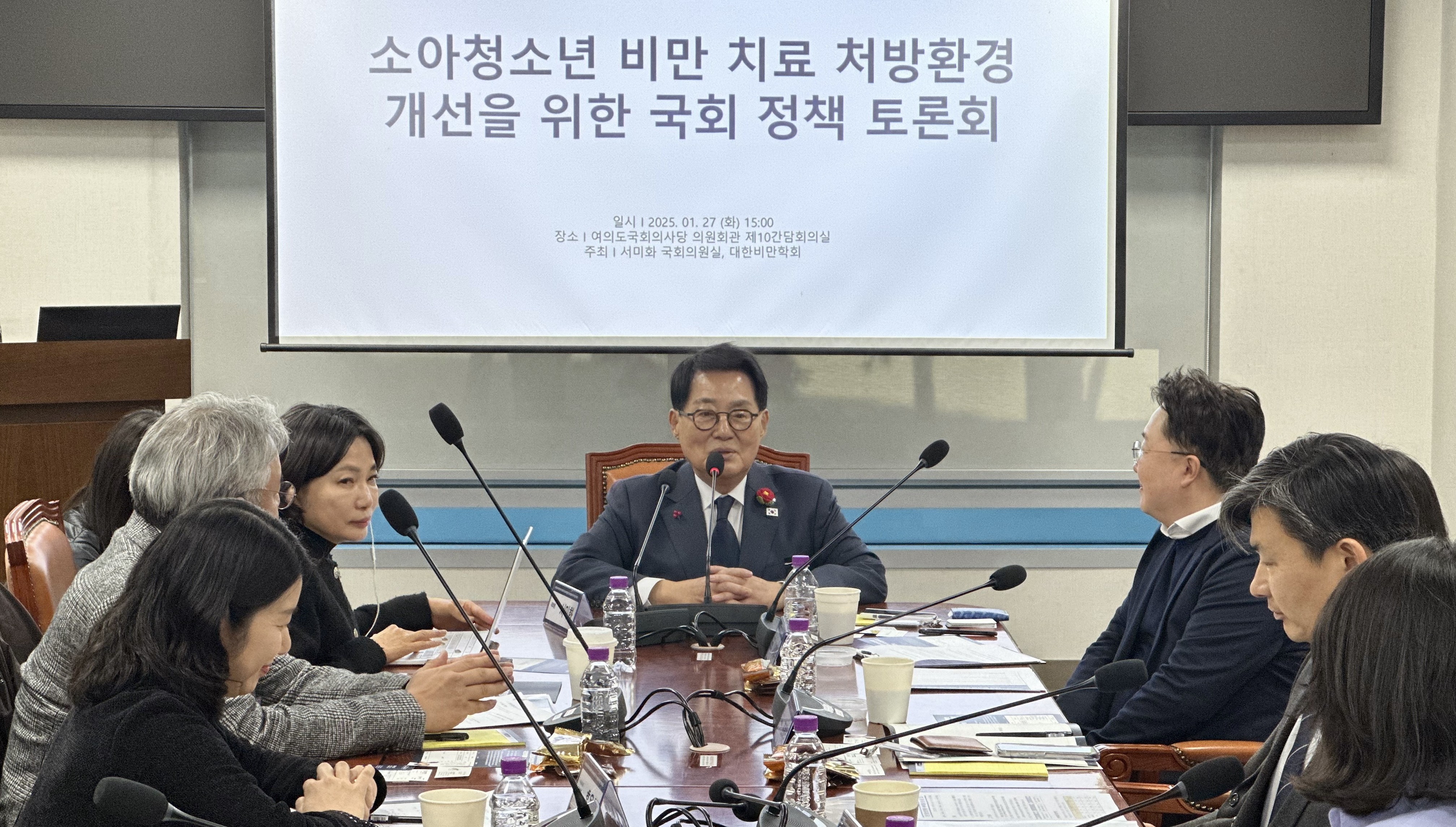
- On January 2, Rep. Seo Mi-hwa of the Democratic Party and the Korean Society for the Study of Obesity (KSSO) co-hosted a policy forum at the National Assembly Hall. Rep. Park Jie-won, a running candidate for the next National Assembly Speaker, attended to give a congratulating remarks.The medical community demanded the establishment of a regulatory track to allow limited prescribing of the psychotropic appetite suppressant phentermine·topiramate combination (Qsymia) in cases where the purpose of treating pediatric diseases, such as high-risk groups for adult-onset diseases, is clear.They argued that while obesity drugs such as GLP-1 analogs that can be used for pediatric patients aged 12 and older exist, they present challenges such as the difficulty of the injectable formulation and high medication costs; therefore, treatment options must be expanded by extending the indication for the low-dose phentermine and topiramate combination to those aged 12 and older.The Ministry of Food and Drug Safety (MFDS) understood the demands of prescribing clinicians and academia. Yet, it stated that the social controversy surrounding 'medical narcotic addiction' cannot be completely ignored.The MFDS explained that if a prescribing physician explains that the administration was for the purpose of treating a disease, the administration of narcotic appetite suppressants is possible even for pediatric patients.At the policy forum for expanding opportunities for pediatric obesity treatment medications, held on the 27th and hosted by the KSSO and Rep. Seo Mi-hwa of the Democratic Party, healthcare experts and the regulatory authority, the Ministry of Food and Drug Safety, met to exchange views on expanding the prescription of the phentermine/topiramate combination.Rep. Park Jie-won of the Democratic Party, the oldest active member of the National Assembly and a leading candidate for the next National Assembly Speaker, also attended the forum to support expanding obesity treatment options and to deliver congratulatory remarks.Rep. Seo Mi-hwa said, "Rep. Park Jie-won is the person who led me into politics," and added, "Along with Rep. Park, I will carefully review the opinions of medical sites and experts who believe that expanding treatment options for severe pediatric obesity is necessary.""Time to consider prescription options for pediatric patients aged 12 and older, even with restricted prescription conditions"Professor Hea Young Cho of the CHA University College of Pharmacy, who serves as the President of the Korean Society of Pharmaceutical Sciences and Technology (KSPST), appealed for the great necessity of creating a regulatory track to allow limited administration to pediatric patients aged 12 and older, highlighting Qsymia's low dependence and its clinically proven weight loss efficacy.In particular, Professor Cho noted that while the approval for phentermine monotherapy is set at age 16 and older, the reality that the low-dose phentermine·topiramate combination is more tightly regulated at age 18 and older has some irrational aspects.Professor Cho explained, "Phentermine monotherapy can be prescribed from age 16, yet the topiramate combination therapy is instead mandated for use in patients aged 18 and older," and added, "I wondered why this was the case. The prescription regulation for the combination is higher despite its lower phentermine content."Professor Cho further added, "Topiramate sustains weight loss effects by increasing satiety or stabilizing eating habits. Psychotropic components were developed as combination drugs to produce synergistic effects while lowering the dosage," and added, "Regarding dependence, the U.S. FDA manages the phentermine combination as Schedule IV, which is classified as having the lowest dependence."Professor Cho emphasized, "Because the weight loss effect of the low-dose phentermine combination has been scientifically proven, a relaxed prescription track must be created so that if necessary for pediatric treatment, the drug can be used while tracking and managing results through clinical monitoring," and added, "One way is to use a flexible prescription policy, such as lowering the prescription age for the phentermine combination by imposing limited prescription conditions and requiring sufficient clinical cases."Professor Hea Young Cho , Professor Park Jung-Hwan , Director Lee Jae Hyuk of the Korea Regulatory Affairs Professionals Society (from left)Professor Park Jung-Hwan of the Department of Endocrinology and Metabolism at Hanyang University Hospital, who serves as a director on the Committee of External Affairs and Policy of the KSSO, also urged the MFDS, the regulatory authority for the phentermine combination, not to take all management responsibility but instead grant obligations to prescribing doctors or selling pharmaceutical companies to operate the prescription age range flexibly.Professor Park said, "The use of low-dose phentermine combinations must be activated for pediatric patients. There is a case of a patient where we prescribed semaglutide up to stage 5, costing millions of won. However, the patient did not lose even 1kg of body weight," and added, "There are cases where phentermine·topiramate works for such patients."Professor Park stated, "Although semaglutide has been approved for use in pediatric patients, the reasons for obesity are diverse, so it would be good to relax the prescription age standards to accumulate and observe the necessary data and safety for the country," and "Rather than posing prescription restrictions, wouldn't it be more appropriate for the regulatory authority to open it up limitedly and present guidelines?"Director Lee Jae Hyuk of the Korea Regulatory Affairs Professionals Society also suggested that we should contemplate expanding medical options in the selection of medications for pediatric patients.The suggestion is that although the question of how to manage habitual and addictive drugs is a long-standing proposition for humanity, there is a great necessity to allow their use for medical or academic purposes.Lee said, "Even if production or distribution is strictly controlled, use should not be restricted as much as possible if medical necessity is recognized," and "Regardless of how the issue of abuse is managed as a separate focus, it is not a solution for abuse countermeasures to simply prohibit use unconditionally. A prescription environment where it can be used reasonably must be established.""No issues with pediatric patients using the phentermine combination if the treatment purpose is clear"Jeong Hyeon-cheol, Director of the Narcotics Policy Division at the MFDS, who participated as a panelist, stated that even now, there is no problem with prescribing the phentermine combination for pediatric patients where the necessity for administration is clear, such as those in high-risk groups for adult-onset diseases.This suggests that the MFDS has a sufficient range of understanding regarding the physician's right to prescribe for treatment purposes, and that simply expanding the administration indication for pediatric patients is difficult to view as the only solution.Jeong emphasized, "Regarding the facts, pediatric patients for whom use is essential due to the urgency of disease treatment risks can essentially be seen as not being restricted by prescription regulations," and "However, an inconvenient situation where a doctor has to provide a justification after prescribing may occur. This is because we operate a pre-notice system for the abuse of narcotics."Jeong highlighted, "For example, we request 4,500 doctors identified over a year as having exceeded the action standards for narcotic abuse to explain their reasons for prescription; afterward, through a committee of experts composed of doctors and pharmacists, we verify if the justification is valid, and the number decreases to units of hundreds or tens," and "The MFDS cannot restrict the physician's right to prescribe. It may be inconvenient, but the MFDS is allowing the prescription of phentermine combinations for pediatric patients."Jeong added, "To explain the questions the general public might have regarding the phentermine combination, the MFDS has approval standards, and the insurance authorities have reimbursement standards. The standards inevitably differ for each," and "After listening to the healthcare professionals, there is a need to allow its use for pediatric patients with metabolic syndrome, but the fundamental administrative goal is to prevent the abuse of psychotropic narcotics. If clinical data is submitted, we will review it."Jeong Hyeon-cheol, Director of the Narcotics Policy Division at the MFDS (left), Professor Jae-Hyuk Lee Professor Jae-Hyuk Lee of the Department of Endocrinology at Myongji Hospital (Director of the General Affairs Committee of the KSSO), who served as the chairperson, expressed concern that the method of 'justification after prescription' has significant irrational aspects and may hinder active treatment.Professor Lee emphasized, "The method of letting it pass if a proper exception is justified is not easy in clinical practice. Doctors try to avoid the task of justifying prescriptions that exceed regulations, which makes treatment difficult from the start," and "If the Ministry writes the prescription indication regulations well, healthcare professionals can accept prescribing according to those regulations."Professor Lee suggested, "If the regulations are excessively broad as they are now, it is difficult to use the drug (for pediatric patients) and post-monitoring regulation becomes complicated," and "It is ideal to manage the administration indications well and strictly regulate those that are exceeded. There are difficulties with the current method of 'do not use for now, but if you did, justify it and if that is correct, we will allow it.' Why not create the prescription regulations well so that doctors can use them properly?"
- Policy
- Generic Tagrisso and Xtandi approved in Korea
- by Lee, Tak-Sun Jan 29, 2026 08:16am
- Chong Kun Dang and Menarini have each received approval for generic versions of the oncology drugs Tagrisso and Xtandi, respectively.Particularly noteworthy is Chong Kun Dang's success in becoming the first in Korea to commercialize a generic version of Tagrisso, raising attention as to whether this will translate into early market entry.On the 27th, the Ministry of Food and Drug Safety approved two dosage strengths of Chong Kun Dang’s ‘Otinib Tab’ as well as Menarini Korea’s ‘Enzalex Soft Cap 40 mg.’CKD’s Otinib is the first approved generic version of osimertinib in Korea. The original product containing osimertinib is AstraZeneca’s Tagrisso.Both Tagrisso and Otinib are indicated for patients with non-small cell lung cancer (NSCLC) harboring EGFR exon 19 deletions or exon 21 (L858R) substitution mutations.Tagrisso recorded KRW 111 billion in domestic sales in 2023 (IQVIA data). Yuhan’s Leclaza (lazertinib) is its key competing product. Given its high commercial value, multiple later entrants are seeking early access to the market.CKD has taken on the challenge to circumvent Tagrisso’s formulation patent, which is scheduled to expire in January 2035. Avoiding this patent would allow market entry in 2033, when Tagrisso’s compound patent expires. Kwangdong Pharmaceutical is also attempting the same patent challenge.Although Otinib has now received regulatory approval, active market launch is not yet possible due to the remaining compound patent.Nevertheless, analysts suggest that securing a priority marketing approval (generic exclusivity) to capture the generic market first could lead to high sales.Menarini’s Enzalex Soft Cap contains enzalutamide as the active ingredient. The originator product is Astellas’ Xtandi and is used to treat prostate cancer. Xtandi recorded KRW 43.2 billion in domestic sales in 2023, according to IQVIA.This is not the first approval of an Xtandi generic in Korea. Last year, Alvogen Korea and Daewon Pharm received approvals for Anadin Soft Cap and Enzadex Soft Cap, respectively. Earlier this month, HanAll Biopharma also succeeded in listing its enzalutamide generic, Enzaluta Soft Cap, on the MFDS approval registry.With Xtandi’s compound patent set to expire in June, the opening of its generic market later this year is considered a strong possibility.However, a key variable remains the formulation patent for enzalutamide, which is scheduled to expire in September 2033. Generic manufacturers have filed patent invalidation or circumvention actions targeting this formulation patent. Whether they succeed in avoiding the patent will determine if launches occur within the year.
- Policy
- KSPST 'Generic drug price cuts not right for fiscal savings'
- by Lee, Tak-Sun Jan 29, 2026 08:16am
- Cheong-won Cho, the newly appointed president of the Korean Society of Pharmaceutical Science and Technology (KSPST), expressed a critical view of the government’s policy to lower generic drug prices, stating that such an approach is not logically consistent if the objective is to reduce National Health Insurance (NHI) spending. She argued that to reduce NHIS spending, the use of generic drugs should be promoted rather than cutting their price.Cho made the remarks during a press briefing held on the 28th at a restaurant in Yeoksam-dong, Seoul. “Given concerns about the depletion of the NHI fund, policies aimed at narrowing financial gaps are necessary. However, lowering generic drug prices as a means of reducing NHI expenditure seems illogical.”“Lowering generic drug prices would have a devastating impact on pharmaceutical companies' profits, leading to workforce reductions and decreased R&D investment. The government claims that lowering generic drug prices will encourage increased investment in new drug development, but I believe the government and the pharmaceutical industry are heading in different directions on this point.”“It's not that the government's position is wrong, but rather than focusing on lowering generic drug prices, they should seek various methods to prevent the depletion of the national health insurance fund. I think it would be good if the government held a close ear to the input from relevant academic circles and organizations and considered the overall situation to restructure the system based on a predictable scenario.” President Cho explained that activation of generics following patent expiration of originator drugs is, in itself, beneficial to NHI finances.This was Cho's first meeting with the press after being appointed President of KSPST. Currently a professor at Chungnam National University College of Pharmacy, she expressed her ambition for strengthening the society’s internal capabilities while expanding its external influence.Cho said, “As pharmaceutics advances, regulatory environments are becoming more complex and global competition more intense. We will establish a robust academic framework and build effective R&D programs. To expand our reach, we will form consortia with domestic and international academic societies and foreign journals, and establish a systematic framework to support the society's sustained growth.”The newly appointed executive board of the Korean Society of Pharmaceutical Science and Technology poses for a commemorative photo after concluding a press conference on the 28th. (From left: Scientific Program Committee Chair Jin-wook Yoo, General Affairs Committee Chair Sangkil Lee, President Cheong-won Cho, Secretary General Yu Seok Yoon, Public Relations Committee Chair Jun-Bom Park)Yu Seok Yoon, Secretary General of KSPST, who also attended the event, said, “The society must serve as a bridge between basic science and clinical practice. We will continue to expand into areas where social and academic demand exists.”Founded in 1971, KSPST is a reputable academic organization that has dedicated 54 years to advancing pharmaceutical research and scholarship. It has approximately 1,200 members and has contributed to the development of the pharmaceutical industry and the promotion of public health through the dissemination of pharmaceutical R&D achievements and industry collaboration.Last year, the society shared the latest developments in pharmaceutics through the Formulation Technology Workshop and an International Academic Conference. The Formulation Technology Workshop drew participation from approximately 500 experts from industry, academia, and research institutes. Its International Academic Conference also gathered over 650 attendees, including 36 domestic and international speakers from 11 countries, marking its largest-ever participation.This year’s major events include a Science Month symposium on April 10, a Formulation Technology Workshop on September 18, and the Society’s General Assembly and International Conference from November 25 to 27.Jin-wook Yoo, Chair of the Scientific Program Committee, noted, “Through our academic conferences, we aim to strengthen industry-academia-research collaboration by pursuing both academic depth and industrial applicability. We plan to establish an academic foundation for the pharmaceutical-biotech sector's leap forward and organize conference sections reflecting the latest technological trends.”
- Policy
- “What we need is competition, not rebates”
- by Lee, Jeong-Hwan Jan 28, 2026 08:12am
- “Stop the meaningless debate on what percentage the government is willing to adjust the generic drug calculation rate. Lowering drug prices will simply increase prescription volume, so it won't lead to savings in drug expenditures. The government must regulate rebates to create an environment where lower-priced drugs are prescribed more frequently. That's how we achieve savings in the national health insurance budget.”Academic experts view that lowering generic drug reimbursement rates alone, even if the government reduces the generic pricing formula from 53.55% to the 40% range, will not lead to savings in the National Health Insurance (NHI) budget.In other words, simply lowering the generic drug calculation rate, which has led to repeated battles between the MOHW and the industry, will not lead to actual drug cost savings. Rather, the government should focus on eliminating illegal rebates and establishing a market-driven drug pricing environment to save the National Health Insurance and foster the growth of the domestic pharmaceutical industry.At a National Assembly policy forum on drug pricing reform held on the 26th, Professor Hye-young Kwon of the Department of Health Administration at Mokwon University said, “Creating an environment where lower-priced, cheaper drugs are more widely prescribed in the market is what will save NHI finances.”According to Kwon, the ongoing standoff between the government and the pharmaceutical industry over generic pricing percentages will not translate into actual reductions in pharmaceutical expenditure.Kwon also expressed “serious concern” on how the MOHW’s drug pricing reform proposal was announced without sufficient social consensus or prior consultation with stakeholders in the pharmaceutical industry.She further stated that discussing NHI fiscal sustainability solely through adjustments to generic pricing formulas is inherently unreasonable and significantly ineffective.Her logic is that even if the generic drug price calculation rate is drastically lowered from 53.55% to 40%, the amount of drugs prescribed in the market will increase substantially due to lower prices. Consequently, the NHI funds spent on drug costs will remain at the same level before and after the reduction.Kwon advised the Ministry of Health and Welfare that instead of targeting NHIS savings through the generic drug calculation rate, it should devise and implement policies enabling low-cost generics to gain market share. Only then can NHIS savings be successfully achieved.She argued that the current situation, where pharmaceutical companies manipulate prescription volumes through illegal rebates, must be aggressively addressed, stressing the need to create an environment where generics that offer lower prices and higher quality can increase market share.Kwon stated, “There was no social consensus or public deliberation process before the Ministry of Health and Welfare announced the drug pricing system. Personally, it was a very disconcerting announcement. "Reducing health insurance expenditures depends on policies leveraging generics. I find it incomprehensible that they are discussing pricing cuts like lowering the reimbursement rate to the 40% range.““No matter how much you lower generic prices, NHI spending will not decrease. As prices fall, prescription volumes rise proportionally. To date, the MOHW has never successfully reduced healthcare spending through generic pricing policies. Drug prices only fall meaningfully when they are subjected to genuine market competition, guided by the invisible hand.”“The reason Korea has failed to let market forces work is that prescriptions are driven not by lower prices, but by the amount of rebates. The MOHW has failed to establish policies that ensure lower-priced generics gain greater market share, resulting instead in the proliferation of increasingly small-scale, mom-and-pop-style pharmaceutical companies.”“Domestic drug costs are driven by the extremely high prices of off-patent originator drugs. Yet, no advanced country allows originator drugs after patent expiry to generate such high profits. That value should be captured through price competition by domestic generic manufacturers. Only by replacing rebate competition with price competition can Korea simultaneously strengthen its pharmaceutical industry and ensure the long-term sustainability of the national health insurance system.”
- Policy
- “Drug price reform may bring collapse of generic self-sufficiency”
- by Lee, Jeong-Hwan Jan 27, 2026 06:55am
- Concerns have been raised that if the government’s drug pricing reform, which focuses on generic drug price cuts, is pushed forward without revision, a growing number of domestic pharmaceutical companies will abandon local generic production, ultimately shaking the foundation of Korea's pharmaceutical sovereignty.Critics warn that such an outcome could weaken new drug R&D, increase dependence on overseas sources for both active pharmaceutical ingredients (APIs) and finished drugs, and, in the long run, lead to shortages in domestic generic supply and greater reliance on originator products, making it difficult for the government to achieve its goal of reducing National Health Insurance spending.In particular, as the reform plan announced in late November last year was drafted without sufficient consultation with the pharmaceutical industry, industry experts believe the plan should be revised after ample discussion and then be implemented gradually.On the 26th, attorney Kwan-woo Park of Kim & Chang and attorney Hyun-wook Kim of Shin & Kim (Sejong) outlined the limitations of the Ministry of Health and Welfare’s reform plan and proposed improvements at a National Assembly policy forum on drug pricing reform.“Generics should be viewed as a measure to ensure public access, not merely low-priced drugs”Attorney Park pointed out that the Ministry of Health and Welfare's current drug pricing system reform plan is similar to the 2012 policy of across-the-board price cuts for generic drugs.He noted that although drug expenditure initially declined after the 2012 cuts, spending rebounded to previous levels in just two years. At the same time, production of non-reimbursed drugs, which were not subject to price cuts, increased, employment in the pharmaceutical sector declined, and yet the Ministry appears to be repeating the same administrative mistake it had made more than a decade ago.They expressed concern that if the Ministry pushes through its reform plan without revision, it will lead to a decline in generic drug sales, reduced capacity to maintain production facilities, decreased investment in new drug R&D, and job losses.He also cautioned that increased use of low-cost APIs, such as those sourced from China, could lead to quality deterioration, greater dependence on originator drugs, and the abandonment of generic launches beyond the 11th product for a given formulation, ultimately disrupting the stable supply of finished drugs.Moreover, if the shortage of generic drugs persists and reliance on originator drugs increases, he projected that the achievement of the National Health Insurance Service's cost-saving goals would become uncertain.Park further stated that the other elements of the reform, such as introducing market-linked actual transaction prices, implementing reforms to the reimbursement adequacy reevaluation system, and establishing periodic drug price adjustment mechanisms, cannot escape criticism for reducing predictability for pharmaceutical companies or being redundant or unreasonable regulations.To address the issues with the Ministry of Health and Welfare's reform plan, Park stressed that policies must be established to use generics as a means to strengthen public access to medical care and pharmaceuticals at reasonable prices, and to create measures where generics play a pivotal role in maintaining health security.With regard to the proposed deduction of the generic pricing rate to the 40% range, he urged the Ministry to engage in sufficient consultation with domestic pharmaceutical companies and consider phased implementation or differentiated pricing rates to ease the impact and improve acceptance.Park stated, “Given that the goal of this reform plan is to transform the domestic pharmaceutical industry ecosystem, revisions are necessary to ensure balanced implementation of both expanded incentives for innovative pharmaceutical companies and regulations increasing the discount rate relative to the benchmark drug price. Before implementing the system, the causes of failure in similar systems must be analyzed, and a flexible policy direction must be set to ensure the system becomes effective.”He added, “To mitigate the shock to the domestic pharmaceutical industry caused by immediate sales declines and ensure the system is accepted, the reform must be implemented gradually. Also, meaningful dialogue with the pharmaceutical industry must take place from the design stage.”“France, UK, Japan: Secured governance by gathering pharmaceutical industry opinions when establishing drug pricing policies”Attorney Kim pointed out that the key issue of the Ministry of Health and Welfare's reform plan was that it was unilaterally established and announced without sufficiently gathering opinions from domestic pharmaceutical companies.To minimize opposition from the pharmaceutical industry and increase acceptance of the Ministry's drug pricing policy, the system should be designed based on two-way communication with the industry, rather than a government-only approach. He criticized that Korea failed to sufficiently guarantee the industry's procedural rights by announcing the plan without consultation.In contrast, major countries such as France, the UK, and Japan have established formal consultation procedures and governance structures to incorporate industry input into drug pricing decisions.France has a framework agreement between CEPS, which handles drug price negotiations, and the pharmaceutical industry association. The UK mandates stakeholder participation and operates official public hearings when reforming drug pricing, payment policies, and systems, centered around NHS England and the Department of Health and Social Care.Japan also operates the process for determining and revising drug prices under the National Health Insurance (NHI) system through the Central Social Insurance Medical Council, an advisory committee to the Ministry of Health, Labour and Welfare.Furthermore, Kim also expressed concern that sharply lowering the generic drug reimbursement rate from the current 53.55% to the 40% range would jeopardize the sustainability of the pharmaceutical and biotech industry, threaten public health security, and trigger job losses.Rather than insisting on a 40% pricing ratio, his point is that the Ministry should redesign a reasonable rate through consultation with industry and defer implementation.Kim further suggested strengthening price incentives for companies contributing to supply stability to enhance the reform’s effectiveness in terms of practicality.He proposed guaranteeing a 68% price level for national essential medicines made with domestically sourced APIs, through base pricing rather than a temporary add-on premium, and applying the price premium immediately when companies switch to in-house APIs, rather than waiting until re-listing.He also recommended excluding innovative medicines or products supplied by three or fewer manufacturers from post-listing price cuts and raising the threshold defining low-priced drugs.Kim said, “The reform plan should be revised and implemented only after sufficient discussion is made over an adequate period, ensuring meaningful protection of industry stakeholders’ procedural rights and genuine consultation with the government.”
