
- LOGIN
- MemberShip
- 2026-05-05 20:40:11
- Policy
- Novavax vaccine passed the national lot release procedure
- by Lee, Hye-Kyung Feb 09, 2022 06:09am
- 840,000 doses of Nuvaxovid PFS, a Novavax vaccine, have been released in the national lot. The MFDS (Minister Kim Kang-rip) announced on the 8th that SK Bioscience has approved 840,000 Nuvaxovid PFS manufactured in Korea for the first time. Nuvaxovid PFS, which was approved for shipment to the country this time, is a vaccine manufactured in a way that has already been used for hepatitis B and cervical cancer vaccines. The vaccine can be immediately inoculated with a PFS-typed single injection that contains one dose per vaccine without dilution or subdividing, and the MFDS expects people to be vaccinated conveniently, such as being used for visits by elderly and severely disabled people. National Lot Release refers to a system in which the state comprehensively evaluates the results of the inspection test and the results of the manufacturer's manufacturing and testing for each manufacturing unit (lot) before the vaccine is distributed on the market. The MFDS verified the manufacturer's test method from 2021 for the national lot release of Nuvaxovid PFS, established its own test method, introduced equipment such as enzyme analysts, reviewed the manufacturing and test data for 840,000 times, and decided to release the national lot. As a result, Potency assay and content assay were conducted to confirm that the product was not contaminated by conducting sterility tests and endotoxin tests, and quality test data issued by the manufacturer's quality assurance manager were reviewed to produce consistent quality. The MFDS said, "We will continue to do our best to ensure that quality vaccines are stably supplied by quickly and thoroughly verifying the COVID-19 vaccine introduced in Korea." Information on the national lot release of the COVID-19 vaccine can be found on the COVID-19 vaccine and treatment information (www.mfds.go.kr) on the representative website of the MFDS.
- Policy
- Focus on the possibility of NovaVax vaccine booster shot
- by Lee, Tak-Sun Feb 08, 2022 05:55am
- Experts expressed great interest in the cross-vaccination use of the vaccine during the Novavax COVID-19 vaccine screening process approved in Korea on the 12th of last month. This is because Novavax is likely to be used for additional vaccinations, so-called booster shots, in a situation where most people have been vaccinated with different types of vaccines. However, the MFDS said that among the clinical data submitted by the company, there is a lack of valid data for cross-vaccination, and that cross-vaccination can be considered only when basic vaccination permission is given priority. Such information is recorded in the minutes of the Central Pharmaceutical Affairs Council released on the website of the MFDS on the 7th. Novavax was approved in Korea under the product name Nuvaxovid PFS on the 12th of last month. SK Bioscience receives technology transfer from Novavax and manufactures the vaccine from the undiluted solution to the finished product. It is the first gene recombination vaccine licensed in Korea, and is the fifth approved COVID-19 vaccine after AstraZeneca, Janssen, Pfizer, and Moderna. After the MFDS' self-examination, it was finally approved through a verification advisory group composed of experts, the Central Pharmaceutical Affairs Council, and the final inspection committee. Among them, the Central Pharmaceutical Affairs Council has the greatest impact on vaccine licensing. Fifteen external experts and eight officials from the MFDS attended the Central Pharmaceutical Affairs Council meeting held at 2 p.m. on the 6th of last month in the headquarters of the MFDS in Osong. Experts who attended that day asked about the evaluation of related efficacy, saying that the Novavax is likely to be used for additional vaccinations (booster shots) with the majority of Koreans receiving the existing vaccine. The MFDS said, "The difference between this applied vaccine and the existing one is a single-use PFS, and if it is not used within the deadline after opening as a multi-use vial, it should be discarded." The MFDS also said, "It is also advantageous in terms of compliance with administration as a vaccine for gene recombination platforms that have already been commercialized." Since the company announced plans to develop adolescents and additional vaccinations, the MFDS expressed expectations for youth use with low vaccination rates. In response, a member of the committee asked, "Is there any study conducted as an additional vaccination for vaccines on other platforms in foreign countries?" and the MFDS replied, "According to data released in the UK, additional vaccinations were made for companies D and B." The MFDS explained, "When additional vaccinations were given to those who completed the basic vaccination of Company D, they showed a higher immune response than those who received the virus vector vaccine." However, the MFDS said, "After deciding whether the safety and effectiveness of the applied vaccine can be recognized in terms of permission, the quarantine authorities will decide whether to use it by reflecting the current situation." The MFDS also stressed, "Additional vaccinations can be reviewed only when permission for basic vaccinations is decided first." Nevertheless, at the meeting, some suggested that an additional phrase "need to check cross-vaccination data later" is needed for Novavax permits. The MFDS replied, "In some cases, normal cross-vaccinations can be confirmed through the published results of other research institutes such as universities, and it is difficult for the company to submit all of them." As a result, the committee agreed to approve the Novavax as "for use twice every three weeks for those aged 18 or older," but did not conclude separately regarding cross-vaccination. Meanwhile, the Novavax is expected to begin vaccination for unvaccinated patients at each hospital and clinic soon after approval from the MFDS.
- Policy
- HPV vaccine expanded free vaccination for men and women
- by Lee, Jeong-Hwan Feb 08, 2022 05:54am
- It is estimated that about 200 billion won will be spent over the next five years to expand the national vaccination target of HPV vaccination to children aged 11 and 12 regardless of gender. Assuming that the target vaccination rate is 89%-100%, an annual average budget of about 40 billion won is needed. This is the result of Baek Jong-heon, a member of the National Assembly, entrusted with the cost estimation of some revisions to the Infectious Disease Prevention and Management Act proposed by the National Assembly's Budget Office on the 4th. Baek Jong-heon proposed a bill to expand the subject of HPV national vaccination (NIP) to children aged 11 and 12 regardless of gender. As a result of the cost estimation by the Ministry of Budget and Policy, a total budget of 2015 billion won to 210.5 billion won will be needed depending on the target vaccination rate. Specifically, the current HPV vaccine NIP is inoculating 12-year-old women. Accordingly, in the first year of implementation of the amendment, the cost of inoculation for 11-year-old women was estimated, and from the second year of implementation, the cost of inoculation for women was excluded from the estimation. The target vaccination rate was estimated by dividing it into two scenarios because the inoculation rate of 89.6% and 100% in 2020 were separately counted. The vaccine cost was 62,200 won for HPV4 at the public health center, reflecting the average increase in the number of vaccines over the past three years (2019-2021). As a result of the estimation, a total of 2015 to 210.5 billion won was estimated from 2022 to 2026 when HPV vaccinations were conducted for 11-year-old women and men aged 11 to 12 according to the revision of Baek Jong-heon. In the case of scenario 1 with an 89.6% vaccination rate, a total of 201594 billion won will be required for five years from 2022 to 2026, including 79.242 billion won in 2022 and 30.736 billion won in 2026. When the inoculation rate was estimated to be 100% scenario 2, it was estimated to be 210.512 billion won for five years from 2022 to 2026, including 88.439 billion won in 2022 and 30.787 billion won in 2026.
- Policy
- Generics for Bridion are being released one after another
- by Lee, Tak-Sun Feb 07, 2022 05:58am
- Generic drugs are being released one after another ahead of the patent expiration in April, with the drug Bridion (Sugammadex Sodium, MSD), which helps wake up from anesthesia during surgery. As the domestic market size of the drug alone is around 40 billion won, domestic generic companies are expected to aggressively target the market. According to the MFDS on the 6th, six generics of Sugammadex Sodium have been approved so far since Hanlim was first approved on December 29 last year. Bridion is a drug that directly acts on the relaxation of the muscles used for patient anesthesia and restores them to their original state. In patients over the age of 2, it is used in reverse of neuromuscular blocking induced by Vecuronium or Rocuronium. These are muscle relaxants used for patient anesthesia during surgery. Bridion, approved in Korea in October 2012, is also a new anesthetic antagonist drug that came out in 20 years. In particular, this drug is widely used because it can provide a stable surgical environment to medical staff in that it acts directly on muscle relaxants and acts within 3 minutes. Existing drugs were indirectly applied to muscle relaxation drugs, resulting in slow recovery of relaxed muscles. Bridion's rapid action not only enhances surgical stability, but also relieves concerns about muscle relaxation remaining after surgery. In particular, existing anesthetic antagonists have the advantage of being used even for patients with respiratory or cardiovascular diseases that are highly likely to have side effects. With this differentiation, Bridion is maintaining high growth in the domestic market. In the second quarter of last year based on IQVIA, its performance was 11.2 billion won. The drug, which recorded 39.1 billion won in sales in 2020, is said to have surpassed 40 billion won last year. Market sales were so high that other generic companies also paid attention early on. However, material patents are valid until April 12 this year. Since 2018, pharmaceutical companies such as Daewoong Pharmaceutical and Chong Kun Dang have been challenging patents, but all of them have been dismissed by the Intellectual Property Tribunal. As the patent expiration time is imminent, generic drugs are preparing to be released with permission. First of all, Hanlim was approved for the first generic under the product name Briturn on December 29 last year. In January, products from Sandoz Korea, BMI Korea, and Huons were approved. On the 4th, Boryung Pharmaceutical and Jeil Pharmaceutical were then approved by Huons for items that were commissioned. These generic drugs are expected to be released on the market from April 13, when patents are terminated. As it is such a large-scale drug in the market, expectations for sales performance are high, but the prevailing opinion is that it will be difficult to win the competition of the original drug. In the case of general hospitals that perform a lot of surgery, the reliability of original is much higher. It remains to be seen whether generic drugs will overcome this and set meaningful records in terms of market share.
- Policy
- 1 ‘Soliris’ and 4 ‘Ultomiris’ cases seek prior approval
- by Lee, Hye-Kyung Feb 07, 2022 05:57am
- The 3 applications filed for preliminary approval of reimbursement to use ‘Ultomiris (ravulizumab)’ in new patients with paroxysmal nocturnal hemoglobinuria (PNH), and 1 application for re-deliberation were approved, and 2 cases of appeals that were filed were dismissed by Health Insurance Review and Assessment Service’s Healthcare Review and Assessment Committee. In the same disease class, no new applications were filed for newly reimbursed administration of ‘Soliris (eculizumab),’ but 1 of the new preliminary approval applications filed for reimbursement in new patients with atypical hemolytic uremic syndrome (aHUS) was approved. This January, the Healthcare Review and Assessment Committee deliberated cases for Soliris, Ultomiris, mid-to-long-term hospitalization due to external injury, etc., mid-to-long-term hospitalization for pain control, short-term hospitalization due to external injury, F-18 FDG PET for liver cancer, internal nasal splints used for endoscopic transnasal transsphenoidal hypophysectomy of pituitary tumor, ventricular assist device treatment, medical and selective insurance benefit for hemopoietic stem cell transplantation, and medical insurance benefit for immune tolerance induction therapy. Results that were disclosed on the 4th show that for Soliris, 22 PNH monitoring requests were approved, 1 new request for aHUS indication approved, 4 disapproved, 1 re-administration approved, and 4 monitoring cases approved. For Ultomiris, 3 requests to reimburse new patients with PNH were approved, 1 re-deliberation approved, and 2 appeals were dismissed. Soliris, which has an insurance cap of 5,132,364 won per vial (30ml), costs around 400 million won per year in drug expenses if 3 vials are administered bi-weekly for a year. Ultomiris was listed for reimbursement at 5,598.942 won per vial on June 7th last year, and patients must receive a maintenance dose every 8 weeks 2 weeks after receiving the initial dose. As Soliris and Ultomiris are both ultra-high-priced drugs, a preliminary approval system is conducted to determine eligibility for medical care benefits. Institutions that apply for the preliminary approval must administer the said Soliris or Ultomiris within 60 days of receiving notification of the deliberation results, and must resubmit an application if it wishes to administer the drugs after 60 days. Also, the long-term care institutions that receive the approval for Soliris or Ultomiris’s medical care benefit need to submit a monitoring report every 6 months, with those using Soliris for aHUS being required to additionally submit initial monitoring reports 2 months into treatment. Further details of the deliberation can be found on HIRA’s website (www.hira.or.kr) or business portal (biz.hira.or.kr.>comprehensive review criteria service > criteria > review criteria > Open deliberation cases).
- Policy
- Janssen Korea has obtained permission
- by Lee, Tak-Sun Feb 04, 2022 05:56am
- Janssen Korea has been approved by the MFDS for Pharmaceutical Consignment Permission for Manufacturing Business. This can be interpreted as part of the withdrawal of the Hyangnam plant. If Janssen Korea completely withdraws its Hyangnam plant, there will be no Janssen Korea plant facilities in Korea. The MFDS approved the "Manufacturing Business" of Janssen Korea as of the 26th. Drug consignment Manufacturing Business does not have domestic production facilities, but is granted to companies that are licensed for manufacturing items through consignment manufacturers. So far, 11 companies have received it. Among the nation's history, GL Pharm Tech , Corepharmbio, Crystalgenimics, Gunkang, Woosung,iN Therapeutics received a permit, and multinational pharmaceutical companies, including Organon Korea, Abbott, AstraZeneca, Moderna Korea and Janssen Korea. Janssen Korea's acquisition of a pharmaceutical consignment manufacturing and sales business is linked to the withdrawal of its Hyangnam plant. Janssen Korea stopped operating its Hyangnam plant last year. When the acquisition process is completed in the future, the factory will be used by Whanin. Janssen Korea is organizing items following the suspension of its Hyangnam plant. There are nine Janssen's remaining manufacturing permits. Among them, three items are for export and three items are commissioned and manufactured by Handok. Domestic sales items manufactured by themselves are organized into Tylenol 80mg for children, Tylenol 160mg for children, and Tylenol suspension. In the case of children's Tylenol suspension, the MFDS has currently applied for the withdrawal of permission. The remaining 80 items approved by Janssen Korea are all imported finished products. In the case of Ultracet Semi, Ultracet ER, and Ultracet ER semi, technology transfer to Handok is being produced on consignment, so Janssen needed permission to "consignment manufacturing and sales" even if the factory was withdrawn. There are two domestic pharmaceutical production facilities for multinational pharmaceutical companies: Otsuka Pharmaceutical Korea (Hyangnam Plant) and Janssen Vaccine (Songdo Plant).
- Policy
- 45 generics of Dapagliflozin+Sitagliptin were approved
- by Lee, Tak-Sun Feb 03, 2022 05:57am
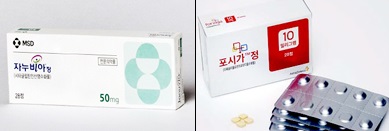
- MSD Dapagliflozin+Sitaglipin from 45 companies, which can only be sold in September next year, has been approved. Analysts say that the number of licensed companies is increasing as Dongkoo and Daewon, which succeeded in developing products, start supplying generics. On the 28th, the MFDS approved 13 additional items of Dapagliflozin+Sitagliptin. As a result, the number of Dapagliflozin+Sitaglipin increased to 45. Forxiga is an SGLT-2 inhibitory diabetes treatment and has recently grown rapidly in the diabetes treatment market. Forxiga, the original drug, recorded 42.6 billion won in outpatient prescriptions (based on UBIST) last year. Januvia has long been leading the market with DPP-4 inhibitory drugs. MSD's Januvia recorded an outpatient prescription of 459 won last year. Two single drugs are widely used as diabetes treatments, and they are often used in combination. Therefore, it is analyzed that when a combination of the two ingredients is released, the convenience of taking them will increase, and the prescription performance will increase. Due to this expectation, it is interpreted that there were many requests for the production of consigned items from Daewon and Dongkoo. So far, a total of 15 items have been approved by Daewon, including the company, and a total of 30 items have been approved by Dongkoo. Daewon's Dapacombi 10/100mg and Dongkoo's Sitaflozin 10/100mg were approved, respectively, in December last year. Both drugs are the first combinations to contain Dapagliflozin 10mg and Sitagliptin 100mg. These drugs are believed to have signed contracts and applied for permission before July last year when the consignment BA restriction system was implemented. However, these products are not immediately available for sale. Both ingredients cannot be sold to the market before September 2023 because the material patents have not expired. At the same time, there is no standard for insurance benefits for the SGLT-2+DPP-4 complex. However, insurance benefits applied by the existing licensed complex systems are expected to be completed soon, so it is expected that insurance benefits will be easily obtained before the launch in September 2023.
- Policy
- Publicized discussion on PAH reimbursement bears fruit
- by Choi-sun Jan 28, 2022 05:57am
- The issue regarding reimbursement standards set for pulmonary arterial hypertension drugs finally bore fruit three years after experts in Korea including the Korean Society of Cardiology, Korean Pulmonary Hypertension Society, The Korean Society of Hypertension, and The Korean Academy of Tuberculosis and Respiratory Diseases publicized the issue. The accumulated academic evidence presented by the academic societies on how the active use of combination therapy in the early stages directly translates to improved prognosis has shifted the government to actively embrace the data. According to societies including KSC on the 21st, the Ministry of Health and Welfare will be amending the standards for reimbursement of pulmonary arterial hypertension drugs and apply the changes from February. The average 3-year survival rate of patients with pulmonary arterial hypertension in Korea is 54.3%, ranking the lowest among OECD countries. One of the main reasons attributable to this is considered to be the fact that combined use of drugs is only allowed for reimbursement in high-risk patients in Korea, unlike global clinical practice guidelines that recommend combination therapy from the early stages of treatment. The relevant academic societies’ efforts since 2019, such as holding NA debates, releasing a Korean clinical treatment guideline, proposing improvements to relevant institutions worked as momentum and recently brought rapid change in the reimbursement guidelines. In the amendment announced by the MOHW, the phrase “Use of two-drug combinations are recognized for patients who have used monotherapy for over 3 months and saw an inadequate clinical response, who may use combination therapy by adding one more drug with a different mechanism of action” remains the same. However, the criteria used to judge clinical response were eased greatly compared to before, with reference to the guidelines overseas. The standard of the 6-minute walking distance that was set at ‘less than 300 meters’ was amended to ‘less than 440 meters,’ and the standard that patients should belong to ‘Class IV pulmonary hypertension’ under the WHO Functional Classification was eased to ‘Class III or higher.’ Also, the Peak O2 consumption level was set to ‘below 15mL/min/kg, alleviated from ‘below 12mL/min/kg’; the diagnostic index for acute respiratory distress or heart failure BNP/NT-proBNP set to ‘50/300 or higher’ from the ‘300/1800 or higher’; Hemodynamics index to ‘RAP 8mmHg or higher or below CI 2.5L/min/㎡’ from the ‘RAP over 15mmHg or CI 2.0L/min/㎡or less.’ This corresponds to the intermediate-risk group under the 3-stage evaluation criteria that classify patients as low/intermediate/high-risk groups that was proposed by the Special Committee for the Establishment of Practice Guideline for Pulmonary Hypertension in 2020. In the past, only high-risk group patients were allowed to benefit from using the combination therapy, but the improved standards now allow moderate-risk patients to use combination therapy for their conditions as well. Patients who also satisfy at least one of the following criteria - ▲clinical evidence of right ventricular failure ▲speed of symptom progression ▲syncope ▲WHO Functional Classification – as well as at least one of the following criteria - ▲BNP/NT-proBNP ▲echocardiography findings ▲Hemodynamics index – at the same time may add one more type of drug with a different mechanism of action that was not used in the two-drug combination therapy. In the past, only selexipag oral tablets were recognized for reimbursement, but the scope was extended to drugs with other mechanisms of action. Regarding such change, the academic society’s response is that ‘the most urgent issue has now been addressed’ Jae-Hyeong Park, Professor of Cardiology at Chungnam National University Hospital, said, “the standards set to judge the clinical response in patients have been greatly alleviated. This closely corresponds to the amendment proposed by the society, so I believe many inconveniences in practice will be resolved.” Park added, “I would like to express gratitude to the health authorities for accepting most of the content in the latest guidelines of overseas academic societies," adding, It would have been better if the use of three-drug combinations were also allowed for initial patients whose condition worsens greatly, but still, this is a big change.”
- Policy
- Generics for Galvus will be listed next month
- by Kim, Jung-Ju Jan 28, 2022 05:57am
- Generics, which had patent disputes with Galvus, a DPP-4 inhibitor-based diabetes treatment, will be listed in earnest next month. This is because companies applied for a change in permit conditions and the MFDS approved it, making it possible to sell it immediately. According to the industry, the MOHW is pushing for a revision (proposal) of the drug benefit list on February 1. There are a total of five items available for registration next month, including Ahngook's Avusmet 50/500mg, Ahngook newpharm's Vildamet 50/500mg, Kyongbo's Vilda 50mg, Korea United Pharm's Healusmet, and Samjin's Vilguard M 50/500mg. Earlier, these items completed the item approval process last year, but their registration was suspended. This is because it could not be sold before March 4, the expiration date of Galvus' patent duration, due to the conditions of permission. The original Galvus has been filing a patent lawsuit for the release of these generics. After the Supreme Court's appeal was rejected on October 28 last year, the expiration date of the patent was confirmed to be March 4 this year, and generic companies also submitted a "patent-related confirmation" to the MFDS. Therefore, generic companies applied for permission to change to the MFDS between December 20 and 22 last year, and the MFDS completed approval between the 14th and 17th. The change is "the case where it is determined that it does not infringe on patent rights" in the existing "sale after the expiration of the patent duration." As a result, companies will be able to sell patents immediately under the condition that they do not infringe on them, and the MOHW will include five items that were suspended after deliberation as of the 1st of next month. Meanwhile, Price of Tamiflu Capsule 75mg will be adjusted 2.6% next month to reflect the results of the pharmacy's actual transaction price survey. The government implemented a large-scale reduction in drug prices of 3,829 items as of the 1st of this month after the actual transaction price survey, of which some data were found to be missing, reflecting the drugstore's claim price for Tamiflu 75mg Capsule.
- Policy
- MNCs ask to “Innovate new drug reimbursement environment"
- by Lee, Jeong-Hwan Jan 27, 2022 05:43am
- The key content of the policy proposal that representatives of multinational pharmaceutical companies with branches in Korea presented to the People Power Party’s election campaign committee was that the government should establish or improve the National Health Insurance and drug pricing system to encourage the use of highly effective but expensive innovative new drugs. The policy proposal contained the request to pull forward the timing of insurance coverage for the companies' new drugs with measures such as preparing a separate source of finances other than the NHI finances by setting a new account for pharmaceutical expenses for severe diseases, introducing the ‘pre-(insurance) listing post-evaluation system, diversifying the risk-sharing agreement (RSA) scheme, and introducing a customized reimbursement model, etc. Also, requests on improving the domestic drug pricing system so that the innovative value of new drugs can be fully reflected in new drugs by improving the pharmacoeconomic evaluation system, and building a control tower for new drugs under the direct control of the president to reinforce nurturing/support/development of innovative new drugs. The Korean Research-based Pharmaceutical Industry Association will deliver a healthcare policy pledge proposal for the 20th presidential election that contains the contents above to People Power Party Representative Jun-Seok Lee on the morning of the 27th. The policies KRPIA asked for are laregly: ▲reducing the economic burden of patients by strengthening medical expenditure support ▲ improving the new drug listing system ▲Building a global hub to reinforce capabilities to develop blockbuster new drugs ▲introducing a global level evaluation system to rationalize the drug price decision-making structure ▲establishing a control tower for new drugs under the president. In other words, KRPIA’s policy proposal implies the need for innovation in NHI listing and reform of Korea's drug pricing system to enhance patient access to new drugs that are owned by the MNCs. The association saw that the current health insurance finances and catastrophic medical expense support system were insufficient to enhance patient access to new drugs. As its solution, KRPIA pointed to expanding subjects and the extent of catastrophic medical expense support while preparing a separate source of finances for the reimbursement of severe diseases or high-priced pharmaceuticals. In particular, the association stressed the need to establish a separate account to cover drug expenses for severe diseases by procuring additional finances from the national treasury and the Health Promotion Fund, as well as with refunds that the NHIS receives from the pharmaceutical company under their RSA contract, and cancer management fund, etc. The KRPIA also criticized the problems in Korea’s new drug listing system that reduce the use rate of new innovative new drugs compared to other advanced countries while delaying patient administration of such drugs due to the non-existence of an expedited reimbursement evaluation system. KRPIA suggested that the issue above can be resolved by introducing the ‘pre-listing post-evaluation system that allows for drugs to be listed for reimbursement first then be evaluated by health authorities to decide on a final price, diversifying the risk-sharing agreement (RSA) scheme, and introducing a customized reimbursement model, etc. Table for the pre-listing post-evaluation system KRPIA delivered to PPP KRPIA believed that signing an agreement that allows for the setting of an initial drug price based on foreign drug price while proceeding with the evaluation process so that drugs that are listed at a lower drug price or non-listed can be refunded to the government post-reimbursement, would reduce the government’s concern over wasting NHI finances. Also, as the current RSA system has a narrow scope of application, KRPIA requested that the RSA scheme cover drugs that have fiscal neutrality, recognized for the therapeutic need diseases other than cancer or rare diseases. Also, the association suggested introducing a detailed customized reimbursement model that takes into account the characteristics of individual drugs such as advanced biopharmaceuticals, rare disease drugs, and anticancer drugs and preparing an environment in which new drugs can be effectively listed through an expedited reimbursement evaluation system and advance negotiation system, etc. The KRPIA also raised the need for innovation in Korea’s drug pricing system. With the claim that the current drug pricing method cannot properly reflect the economic value of many new drugs, the association asked that the innovativeness of a drug be reflected in the drug’s price based on a drug price comparison method. Also, KRPIA stressed the need to create an environment in which the true value of a new drug is recognized by improving the evaluation process and increasing the transparency and redundancy of evaluations that are undermined during the process of multiple evaluations conducted for new drugs by several committees. In addition, the association proposed the construction of a control tower for new drugs under the direct control of the president to reinforce the competitiveness of Korea’s pharmaceutical and biopharmaceutical industry and to develop blockbuster new drugs. New drug support in the current administration is less effective as it is tended to by various ministries including the Ministry of Health and Welfare, the Ministry of Science, Technology, and Information and Communication, and the Ministry of Trade, Industry and Energy, with no control tower to oversee the process. KRPIA stressed, “We need to open the era of customized health coverage for the people in which the nation covers the innovative treatment of severe rare diseases. We need to foster Korea to become a blockbuster new drug powerhouse by building an innovative pharmaceutical and biopharmaceutical ecosystem and prepare measures such as introducing an appropriate value appraisal for new drugs.”
