
- LOGIN
- MemberShip
- 2026-05-05 07:23:14
- Policy
- P3T for Sarepta’s DMD treatment approved in Korea
- by Lee, Hye-Kyung Mar 14, 2022 05:51am
- A Phase III trial for the Duchenne muscular dystrophy treatment 'SRP-4045(casimersen)’ and 'SRP-4053 (golodirsen)' will be conducted in Korea. The Ministry of Food and Drug Safety has recently approved Ppdd Velllovement Pte Ltd’s application for the double-blind, placebo-controlled, multicenter clinical trial to evaluate Sarepta Therapeutics’s casimersen and golodirsen. Ppdd Velllovement Pte Ltd is a contract research organization that conducts multinational clinical trials. The domestic Phase III trial will be conducted in Pusan National University Yangsan Hospital and Kyungpook National University Chilgok Hospital. DMD is a type of rare genetic disorder characterized by progressive muscle degeneration and weakness due to a defect in the p21 gene in the X chromosome that causes alteration of a protein called dystrophin that helps keep muscle cells intact. DMD arises 1 in 3,600 newborn males, and its age of onset is usually between 3 and 5 years of age. Children affected with DMD rely on a wheelchair in their early teenage years and progresses to experience loss of cardiac and respiratory muscle strength and die before reaching 20 years of age. Sarepta has been developing an exon-skipping medication that removes specific exons from dystrophin. Starting with its first DMD treatment ‘Exondys 51’ in September 2016, the company received approval for its ‘golodirsen’ in December 2019 and ‘casimersen’ in February 2021 from the US FDA. However, as golodirsen and casimersen were approved through the Accelerated Approval Program by the FDA, the company is required to additionally submit Phase III trial data to confirm the clinical efficacy of the two ingredients. According to the clinical trial protocol submitted by Sarepta, the company expects to complete the study by 2024.
- Policy
- Securing Paxlovid's inventory for 120,000 people
- by Lee, Jeong-Hwan Mar 14, 2022 05:50am
- Paxlovid's inventory in Korea is about 120,000 people, it said on the 11th. The response is to the point that there is no shortage of prescriptions for confirmed patients, which has been on the rise recently, and that there is no inventory of Paxlovid at front-line pharmacies or medical sites. More and more patients want Paxlovid due to the explosion of COVID-19 confirmed patients. Contrary to the quarantine authorities' explanation that the stock of treatments is sufficient, complaints are growing that local pharmacies and other sites do not have them in stock. First controller Lee Ki-il (CDSCHQ) of Central Disaster and Safety Counters (CDSCHQ), disclosed the inventory and introduction status of Paxlovid in response to this point. He said on the 8th that an additional 45,000 people of Paxlovid were introduced and a total of 163,000 people have been introduced so far. He explains that the amount of Paxlovid prescribed so far is about 40,000 people, and the domestic inventory is about 120,000 people. Regarding the shortage of treatments at the site, the quarantine authorities explained that they recently expanded prescription medical institutions to actively utilize oral drugs. As of the 8th, it is interpreted that oral prescriptions may increase to upper general hospitals, general hospitals, and mental hospitals, which may temporarily lead to a shortage of supplies. The quarantine authorities said they would try to provide sufficient supply of additional Paxlovid inventory in the future. When looking at the introduction and usage, about inventory for 120,000 people was prescribed on the 9th, and for 4,472 people were prescribed on the 10th. Paxlovid have been expanded to actively utilize treatments. If the introduction of additional supplies is confirmed, it will be released later, he said.
- Policy
- Yoon Seok Yeol's generation
- by Lee, Jeong-Hwan Mar 13, 2022 08:03pm
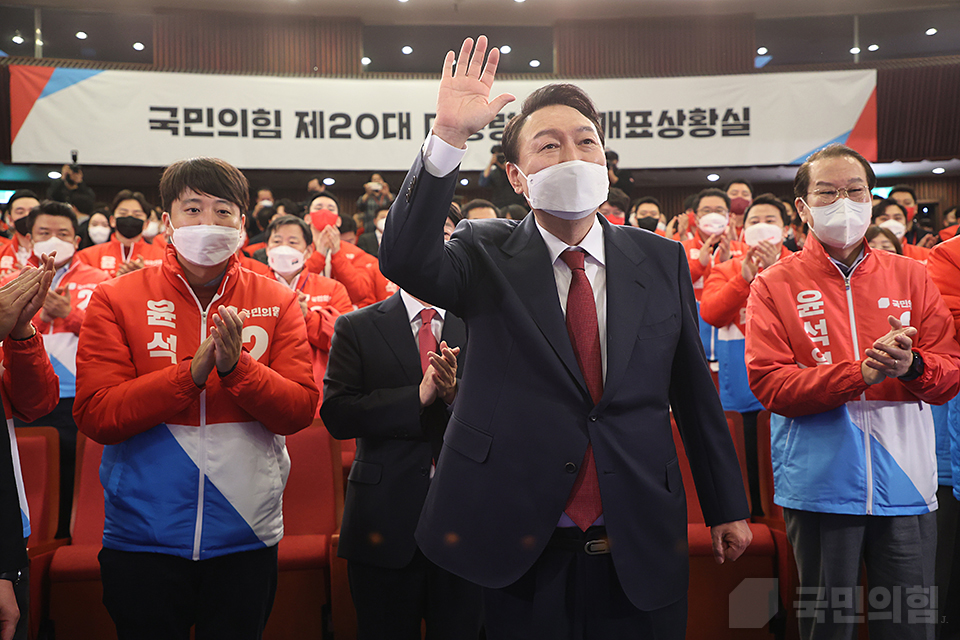
- Yoon Seok-yeol, the power of the people, was elected in the 20th presidential election, signaling significant changes in the health care and pharmaceutical bio industries as a whole. Some keywords that are drawing attention right now are "promoting remote non-face-to-face treatment" and "the establishment of a pharmaceutical bio-control tower." Yoon Seok-yeol, elected candidate, previously announced the advancement of the industry by promising to start telemedicine in earnest and establish a pharmaceutical bio-innovation committee directly under the Prime Minister during the election process. Yoon, who confirmed his election on the 10th, predicted health care and pharmaceutical bio policies to be implemented as president over the next five years. Yoon has pledged several health care policies differentiated from the Moon Jae In government. Yoon said he would improve and upgrade temporary telemedicine to the "realization of non-face-to-face treatment" stage through regulatory reform, and resolve the health insurance bomb problem through Moon Jae In Care reform. The pharmaceutical bio industry also declared securing super-gap technology. This is why attention is drawn to specific movements surrounding the pharmaceutical bio-innovation committee directly under the Prime Minister. Pledges related to pharmacist and pharmacy management were relatively dim, but just before the presidential election, the Korean Pharmaceutical Association and the people's power subrogation signed a policy agreement to form a consensus on the long-cherished desire of pharmacist society. ◆ Telemedicine in earnest= Yoon plans to expand digital healthcare through service innovation and introduction and support of a private business revitalization system. In particular, it announced the expansion of non-face-to-face treatment pilot projects for islands, mountainous areas, and the underprivileged. Yoon narrowed down telemedicine to "a reality that we should accept." The vision is to implement policies that do not conflict interests between the medical community and non-face-to-face care providers seeking new innovations so that everyone can enjoy innovative systems and high-tech benefits in the field of non-face-to-face care. Non-face-to-face treatment, which was temporarily allowed due to the prolonged COVID-19 Pandemic, had a significant impact on the pharmacy industry as well as front-line hospitals and clinics. After non-face-to-face treatment, a platform dedicated to non-face-to-face preparation and drug delivery has been industrialized, and drug delivery applications have been activated. If elected Yoon begins non-face-to-face treatment in the future, the drug delivery platform is also expected to continue to grow. In the process, attention is expected to be paid to whether elected Yoon will be able to establish and promote a reasonable non-face-to-face treatment policy to minimize conflicts with the medical community and the pharmaceutical society. ◆The establishment of the Pharmaceutical Bio Innovation Committee Yoon also issued a blueprint to create new native blockbuster drugs and build a global vaccine hub by establishing a pharmaceutical bio-innovation committee directly under the Prime Minister. It plans to significantly strengthen national R&D support so that it can protect the lives and health of the people by establishing sovereignty over pharmaceutical bio. In addition, Yoon promised to create an ecosystem that can cultivate key talents in the pharmaceutical bio industry and create jobs to grow the national economy and realize a pharmaceutical bio powerhouse. Accordingly, the pharmaceutical bio industry seems to expect a lot of administrative and financial support from elected Yoon. The KPBMA has been urging the pharmaceutical industry to strongly support the pharmaceutical industry by establishing a direct presidential organization to establish sovereignty over vaccines and drugs since 2017. Shortly after candidate Yoon was elected, the KPBMA demanded again to specify the establishment of an organization directly under the Prime Minister. The association believes that the way to establish health security and find a way to create new national wealth is to foster the pharmaceutical bio industry. Yoon also expressed sympathy for the pharmaceutical industry's opinion. Depending on when and how the Pharmaceutical Bio Innovation Committee will start its activities, national policy directions such as pharmaceutical bio R&D, policy financing, tax support, regulatory reform, and manpower training are expected to materialize.
- Policy
- Omicron's fatality rate is at the level of flu
- by Lee, Jeong-Hwan Mar 10, 2022 05:53am
- The quarantine authorities analyzed that if the COVID-19 vaccine is completed up to the third round, the fatality rate of Omicron mutation will be 0.07%, which is similar to that of the seasonal flu fatality rate (0.05 to 0.1%). In particular, the fatality rate for those under the age of 60 who completed the third vaccination was 0%, while the fatality rate for those who were not vaccinated was 0.6%, more than six times that of the seasonal flu. The quarantine authorities explained that they are considering a medical site proposal for recognizing rapid antigen testing as the final confirmation, and that the KDCA will make a separate announcement once it is concluded. Central Disaster and Safety Counters Headquaters made this announcement at a regular briefing on the 8th. The quarantine authorities analyzed and announced the fatality rate and vaccination effect of Omicron. According to an analysis of 135,000 people who completed mutation analysis from April last year to February this year, the fatality rate of Omicron among those who completed the third inoculation was 0.07%. This means that the tertiary vaccination lowers the Omicron fatality rate to a level similar to the seasonal flu fatality rate of 0.05 to 0.1%. Those under the age of 60 who completed the third vaccination had a fatality rate of 0%. However, the fatality rate for non-vaccination was analyzed to be 0.6%, and if not vaccinated, the fatality rate of Omicron was more than six times that of the seasonal flu. The explanation is that the difference in accuracy is not significant as the kit's own inspection ability is measured based on the standardized method of sampling in the approval process of the Ministry of Food and Drug Safety. The quarantine authorities added that in reality, the expert's sample collection method is more accurate than the general public, so it is reflected to some extent in the final accuracy and it is difficult to produce statistics on how significantly the accuracy of experts' sample collection increases the accuracy of rapid antigen testing. Son Young-rae, head of the social politics team, said, "The accuracy of the expert rapid antigen test and personal diagnostic kit is almost the same," adding, "However, in the actual field, the expert's collection method is more accurate than that of individual citizens, so the accuracy increases." It's hard to infer how much more statistically accurate it is," he said. The KCDA is currently reviewing the plan to recognize rapid antigen testing as a final confirmation, Son said. "We are considering all measures considering the accuracy and prevalence of the test."
- Policy
- Finding ways to utilize the Patent-approval linkage system
- by Lee, Hye-Kyung Mar 10, 2022 05:53am
- The MFDS plans to prepare a collection of data so that domestic pharmaceutical companies can pioneer the Chinese pharmaceutical market by utilizing the Patent-approval linkage system within the first half of this year. The MFDS recently announced research services for "Overseas the Patent-approval Linkage System Survey and Domestic Impact Analysis." Following the signing of the Korea-U.S. FTA in 2007, the Pharmaceutical Affairs Act has been fully implemented in Korea since March 2015 through the revision of the Pharmaceutical Affairs Act twice in 2012 and 2015. The study was designed to identify recent overseas systems and trade agreements related to the Patent-approval linkage system and to support pharmaceutical companies' development of overseas markets in the future, and will run until October 31 with 55 million won in project costs. The core of this study is a plan to utilize the Patent-approval linkage system in Korea under the recently revised Chinese patent law. Since June 1 last year, China has been fully implementing the Patent-approval linkage system. This study identifies not only the size and status of the Chinese pharmaceutical market, but also the Chinese pharmaceutical market, including Korea's exports to China, and recently investigates the organization, system, and implementation status of Chinese pharmaceuticals. Based on this, the MFDS plans to prepare a data book by July to support domestic pharmaceutical companies to explore the Chinese pharmaceutical market. Investigation and analysis of international agreements are also conducted not only in China but also in relation to the Patent-approval linkage system. Through this study, the MFDS plans to investigate the recent issues and trends of countries subscribed to the agreement by comparing the background and operation status of comprehensive and progressive CPTPP, and commonalities and differences with other trade agreements such as the Korea-U.S. FTA. Based on the results of the survey, the impact analysis on the Patent-approval Linkage System, which is expected when Korea joins the CPTPP, and countermeasures of domestic pharmaceutical companies to enter overseas markets will be presented together.
- Policy
- The fatality rate of Omicron is low
- by Lee, Jeong-Hwan Mar 08, 2022 06:08am
- The quarantine authorities announced a full-fledged easing of distancing, saying that it is becoming clearer that the COVID-19 Omicron mutation has a lower severity and fatality rate than the delta mutation. From the 5th to the 20th, the 22 o'clock operating hours limit, which will be applied to groups 1, 2, and 3, will be increased by 1 hour to 23:00, but the next adjustment of distance will be eased. In particular, the quarantine authorities urged government agencies to actively participate in blood donation and spread the voluntary participation of the people, citing the continued stage of interest in domestic blood reserves of more than 3 days and less than 5 days. On the 4th, Lee Ki-il, the first controller of the Central Disaster and Safety Countermeasure Headquarters, made the remarks at a regular COVID-19 briefing. The quarantine authorities explained that it is not enough to keep a recently relaxed distance to resolve the difficulties of self-employed and small business owners. Considering that the quarantine system is being reorganized around the management of high-risk groups, the intention is to further ease distancing. Accordingly, the quarantine authorities will adjust the distance measure, which was originally scheduled to be applied by the 13th. The quarantine authorities analyzed that unlike Delta, it is becoming increasingly clear that Omicron has a low severity and fatality rate, and that the effectiveness and efficiency of distancing are decreasing due to its high propagation power. Based on this, the 22-hour operation time limit, which is applied to some facilities of groups 1, 2, 3 and other groups, will be eased by 1 hour from the 5th to the 20th until 23:00. Private gatherings maintain standards that allow up to six people nationwide regardless of whether they are vaccinated or not. The quarantine authorities plan to lower the level of distance in earnest after this easing. Pre-recommendations are also implemented for all inpatients with quasi-severe and moderate symptoms. As of the 4th, 731 patients with COVID-19 quasi-severe and moderate hospitalization who have passed 10 days from the date of sample collection are advised in advance to move to general beds. If the medical staff determines that additional quarantine treatment is necessary and submits explanatory data on all recommendations, if the need for additional quarantine is recognized through consultation, they can continue to receive treatment in the same hospital room without all or lost. If treatment is needed for an underlying disease, pt will move to a general bed and continue to receive treatment. The quarantine authorities also requested blood donation to stabilize blood supply and demand. Recently, the stage of interest in blood retention of more than 3 days and less than 5 days continues. In order to stabilize blood supply and demand, government agencies will take the initiative for a month in March and conduct group blood donations through a "Continuing Blood Donation Event." More than 1,600 employees from 31 organizations, including the Ministry of Employment and Labor, the MOHW, the Ministry of National Defense, the Maritime Police Agency, and the Ministry of Public Administration and Security, will participate in the event. In addition, the quarantine authorities asked the public to participate in blood donation at a blood donation house or a blood donation cafe close to them.
- Policy
- DREC rejects reimb of neurofibromatosis drug ‘Koselugo'
- by Lee, Tak-Sun Mar 08, 2022 06:08am
- The new neurofibromatosis drug ‘Koselugo (selumetinib),’ failed to receive reimbursement benefits in Korea. The Health Insurance Review and Assessment Service decided the drug as a ‘non-benefit' after deliberation on the adequacy of providing medical benefit for the drug at the 3rd Drug Reimbursement Evaluation Committee that was held this year. The drug, which is sold by AstraZeneca Korea, is used to treat neurofibromatosis type 1 (NF1) with symptomatic, inoperable plexiform neurofibromas in pediatric patients over the age of 3. In the past, patients had to rely on symptomatic treatment due to the lack of appropriate treatment options. This was why expectations were high for Koselugo as the new treatment option in an area with a dire unmet need. Around half of the neurofibromatosis type 1 patients have plexiform neurofibroma (PN), and it may appear anywhere in the body. Depending on the position and size, it may limit the range of motion or bring pain or external deformity in patients, The internally developed tumors may pressure the internal organs. Most rumors are positive and grow relatively slow, but some progress into malignant tumors and can lead to an increased risk of developing breast cancer in women. The prevalence is about 1 in 3,000. The drug was approved by the MFDS in May last year based on the Phase II SPRINT study. In the study, 68% of the patients who were administered Koselugo saw a decrease in tumor volume by over 20% and achieved its primary efficacy endpoint, the objective response rate (ORR). Also, 82% of the patients who showed partial response showed saw a duration in their response of over 12 months. Compared to how only half of the untreated patients experienced disease progression after 1.5 years, only 15% of the patient who used Koselugo experienced disease progression in 3 years. As the drug costs ₩200 million a year, the demand for its reimbursement had been quite strong, but the company was unable to even pass DREC deliberations, the 1st gate to reimbursement in Korea.
- Policy
- Brukinsa was approved using phase 2 data on MCL indications
- by Lee, Hye-Kyung Mar 04, 2022 05:57am
- Brukinsa 80mg (Zanubrutinib), the first new drug in Korea by Chinese pharmaceutical company Beijing, has secured MCL indications only with therapeutic clinical trial data (phase 2). This is because there was an expert opinion that according to Article 7, No. 6 of the Regulations on Item Permission, Report, and Review of Medicines, it could replace therapeutic confirmation clinical trial data. According to the minutes of the Central Pharmaceutical Review Committee on January 21, released by the MFDS on the 3rd, an advisory review on the validity of the requirements for submitting approval data related to rare drugs for MCL treatment was conducted. At the meeting, it was concluded that "MCL, which has received more than one treatment before," among Brukinsa indications, would be replaced with therapeutic confirmation clinical data as therapeutic search clinical data. With alternative treatments approved in various countries, it is practically difficult to recruit patients who have failed the first phase of MCL treatment, a rare disease, with the annual number of patients around 100, and conduct phase 3. Brukinsa is a second-line treatment for MCL, and there is no phase 3 clinical trial currently underway, and phase 3 clinical trial is underway as a first-line treatment. There were no ongoing clinical trials in Korea. Members of the Central Pharmaceutical Affairs Council said, "There is little data on comparative clinical trials in the literature, and it is a disease that is difficult to conduct research due to a rare disease." They said, "It seems practically difficult to recruit patients who have failed the first phase of treatment and proceed with phase 3 clinical trials." There was an opinion that phase 2 was more effective than the previous treatment and showed a stable aspect in terms of side effects. Some said that it is necessary to evaluate side effects and monitor safety and effectiveness-related data based on MCL indications after using drugs according to the results of phase 3 clinical trials as a first-line treatment. Brukinsa obtained permission from the MFDS on the 24th. It was recognized for its efficacy and effectiveness ▲ in WM adult patients who had received more than one treatment before ▲ in MCL adult patients who have received more than one treatment before.
- Policy
- Janumet's salt change consigned drug have been approved for
- by Lee, Hye-Kyung Mar 04, 2022 05:57am
- A large number of Janumet's salt change combination, which is commissioned and manufactured by Daewon Pharmaceutical, have been approved for items. The MFDS applied for a diabetes complex by Jin Yang, Young Poong, Withus, and Neo Bio Korea Pharm on the 2nd. 8 items of Sitaglipin HCl+Metformin and Colloidal Silicon Dioxide have been approved. This drug is an aid to diet and exercise therapy to improve blood sugar control in patients with type 2 diabetes, and Daewon Pharmaceutical developed last year as a salt change to escape the original MSD Janumet (Sitagliptin HCl+Metformin) general for exclusive. Since Daewon Pharmaceutical obtained permission on December 30 last year, 25 pharmaceutical companies have obtained permission for 73 consigned products with the same ingredients. Janumet's material patent expires on September 2, 2023, and the composition patent expires on June 1, 2024. Hanmi Pharmaceutical and Chong Kun Dang obtained the same Sitagliptin+Metformin HCl as Janumet, and Kyung Dong, Korea Prime Pharm, Yuyu Pharma, Yongjin, SCD Pharm, Dasan, Jeil, and Samjin for generic. Competition in the diabetes complex market is expected to intensify next year as Daewon's consignment product is released.
- Policy
- Ahn Cheol Soo, promised for Vaccine Sovereignty
- by Lee, Jeong-Hwan Mar 03, 2022 06:00am
- Like other party candidates, the presidential candidate of the People's Party Ahn Cheol Soo also put securing vaccine sovereignty and fostering the pharmaceutical bio-industry at the forefront of health care pledges. It also announced specific pledges such as half-price hair loss drugs, free vaccination against rotavirus in newborns, support for vaccination against HPV, and strengthening support for essential medical care. This is the result of examining health and welfare pledges in the policy pledge book released by candidate Ahn Cheol Soo on the 28th. Candidate Ahn, also promised to "take a leap forward as a vaccine sovereign state" through national investment in the bio industry. With the will not to repeat the current government's policy practice, which caused public confusion and anxiety due to the failure to secure the COVID-19 vaccine early, the government intends to implement policies to prepare for infectious diseases that will occur periodically in the future. Specifically, candidate Ahn drastically improved unreasonable regulations on vaccine development, creating an ecosystem for the vaccine industry that is good for business, and strengthening support for clinical trials. He also revealed his vision to foster the vaccine industry into our future industry by discovering and actively supporting companies with super-gap technologies in the pharmaceutical bio sector. He also specified the half-price hair loss pledge he promised earlier Candidate Ahn explained that the application of health insurance increases the financial burden because there is currently little difference in price between the original and generic hair loss drugs. He directly criticized Democratic Party candidate Lee Jae-myung's pledge to pay health insurance for hair loss. He declared that he would reduce the burden of hair loss and secure the soundness of health insurance finances by lowering the price of generic hair loss drug to 600 to 800 won. He said he would introduce incentives to revitalize generics of hair loss and adjust them with little financial input, including them in preliminary benefits, if necessary. It pledged to significantly expand R&D support for the health industry for hair loss drugs. The neonatal rota vaccine is a household burden with an inoculation cost of about 300,000 won, and the government plans to support all newborns, including the national vaccination. Like the United States, the United Kingdom, and Germany, the government and local governments provide full support for vaccination costs. He plans to expand the number of free HPV vaccines that cause cervical cancer than now. Currently, the free vaccination standard for girls under the age of 12 will be greatly expanded to men and women under the age of 26, while women under the age of 45 will be provided with vaccination fees if desired. The government-supported vaccine will be changed from Cervarix and Gardasil, the current 2-valent and 4-valent vaccines, to Gardasil 9, the 9-valent vaccine, to expand the scope of prevention. It also included policies to reduce the medical gap between regions by strengthening support for essential medical fields Candidate Ahn expressed concern that the proportion of surgeons, pediatrics, and obstetrics and gynecologists among all doctors is on the decline, and that there may be no supply due to insufficient number of majors. As a result, the government will provide indirect expenses such as wages and education expenses for training in essential medical subjects, improve the number of unpopular subjects, and take incentives to eliminate avoidance factors such as resolving disputes over medical accidents. The project to support vulnerable delivery areas will be expanded to obstetrics and gynecology medical institutions to support facilities, equipment, operating expenses, and labor costs of delivery medical institutions, and a mandatory placement system for obstetricians with more than 200 beds will be introduced.
