
- LOGIN
- MemberShip
- 2026-05-05 07:23:19
- Policy
- The benefit adequacy of Lorviqua was recognized
- by Lee, Tak-Sun Apr 08, 2022 06:08am
- Pfizer Pharmaceutical's Lorviqua has taken a step closer to insurance benefits in recognition of benefit adequacy as a treatment for non-small cell lung cancer. If negotiations with the NHIS are smoothly concluded in the future, the final benefit will be successful. The HIRA announced on the 7th that it held the 4th Drug Reimbursement Evaluation Committee in 2022 and recognized the benefit adequacy of Pfizer Pharmaceutical. The target products were Lorviqua 25 mg and Lorviqua 100 mg, and the Drug Reimbursment Evaluation Committee judged that there was benefit adequacy as a treatment for adult patients with ALK positive progressive non-small cell lung cancer (NSCLC). Results of deliberation by the 4th Drug Reimbursement Evaluation Committee in 2022 Lorviqua was approved in Korea in July last year to use Alecensa Cap or Zykadia Cap as a sole therapy for adult patients with ALK-positive progressive non-small cell lung cancer or as treated with Xalkori and at least one other ALK inhibitor. The Drug Reimbursement Evaluation Committee judged that Sonazoid and Duchembio's Dopa check at GE Healthcare's Korean branch had benefits when accepting less than the evaluation amount. It is subject to acceptance conditions below the evaluation amount. Sonazoid applied for benefits when used for liver gastric tumor lesion ultrasonography in adult patients, and Dopa check applied for use in positron emission tomography (PET).
- Policy
- Bavencio by Merck passed the Cancer Drugs Benefit Committee
- by Lee, Tak-Sun Apr 08, 2022 06:08am
- Bavencio by Merck Immuno-cancer drug Merck Bavencio passed the Cancer Drugs Benefit Appraisal Committee as an indication for urinary tract epithelial cell cancer. The HIRA's Cancer Drugs Benefit Appraisal Committee held the 4th meeting in 2022 on the 6th and announced that Bavencio's standards for urinary epithelial cell cancer have been set. Cancer Drugs Benefit Appraisal Committee also set standards only for WM in the case of BeiGene's Brukinsa, which applied for benefits on the same day. It is expected to be used as a monotherapy in adult WM patients who have previously received more than one treatment. However, Brukinsa failed to set the standard for "single therapy in adult patients with osmotic cell lymphoma (MCL) who have previously received more than one treatment." Lynparza of AstraZeneca, Korea, known as an ovarian cancer treatment, also started to expand the standard, but it was bittersweet. The standards were set for the treatment of adult patients with BRCA mutagenic castration resistant prostate cancer, who had previously experienced disease progression after treatment with new hormone treatments, but the remaining three indications were not set. Combination maintenance therapy in adult patients with highly epithelial ovarian cancer, ovarian cancer, or primary peritoneal cancer, which is HRD-positive (defined as BRCA mutation or dielectric instability) in response to primary platinum-based chemotherapy and Bevacizumab combination therapy, did not pass the Cancer Drugs Benefit Application Committee. The treatment of gBRCA mutant HER2-negative metastatic breast cancer adult patients with previous chemotherapy experience and maintenance therapy of gBRCA mutant metastatic pancreatic cancer adult patients who did not undergo primary platinum-based chemotherapy for at least 16 weeks were not recognized.
- Policy
- Phase 3 of Voclosporin has been approved in Korea
- by Lee, Hye-Kyung Apr 07, 2022 06:10am
- Phase 3 clinical trials of Voclosporin, the first oral treatment for lupus nephritis, will be conducted in Korea. On the 6th, the MFDS approved a clinical trial of Voclosporin, an LN treatment of Aurinia Pharmaceuticals, a subsidiary of Iljin SNT. Phase 3 clinical trials will be conducted at Seoul National University Hospital and Kyungpook National University Hospital as a double blindfold, placebo-controlled, and dose-increasing test to evaluate the efficacy, safety, and pharmacokinetics of Voclosporin for adolescents with lupus nephritis. Voclosporin was approved by the FDA in January last year for the treatment of adult patients with active lupus nephritis. Voclosporin, a calcineurin inhibitor, blocks interleukin (IL)-2 expression and T cell-mediated immune response and stabilizes podocytes in the kidney. According to the results of a study released by Aurinia Pharmaceuticals in November last year, Voclosporin showed continuous safety and weakness compared to placebo in the interim analysis of phase 3 clinical continuous research. Patients in the Voclosporin group maintained a significant decrease in proteinuria. From the baseline prior to treatment of AURORA 1 to 30 months of AURORA 2, UPCR was found to be -3.32 mg/mg for the Voclosporin group and –2.55 mg/mg for the control group (n=90). The eGFR, an important measure of renal function, remained stable until 30 months, and there were no unexpected new side effects reported in the Voclosporin group compared to the control group. Treatments for lupus nephritis include Cyclophosphamide, Cellcept, and Prednisone.
- Policy
- The negotiation period for patent expired drugs ,shortened
- by Lee, Jeong-Hwan Apr 07, 2022 06:10am
- The Regulatory Reform Committee passed a regulation that would shorten the negotiation period for lowering the drug price of the original patented drug from 60 days to 20 days, effectively confirming its implementation. According to the results of the drug price reduction dispute, the revision of the law, in which the government refunds damages to pharmaceutical companies, was judged unregulated and was not reviewed by the Regulatory Reform Committee. The MOHW announced on the 4th that it received the results of a preliminary review of the Rules Amendment to the Standards of National Health Insurance Care Benefits" from the Regulatory Reform Committee. According to the MOHW, the Regulatory Reform Committee judged that among the contents of the regulations, a regulation strengthening plan to shorten the negotiation period for the reduction of drug prices from the current 60 days to 20 days is a "non-important regulation." The Regulatory Reform Committee also agreed with the MOHW's decision that the deadline for negotiations on ex officio adjustment is not needed until 60 days if the original drug price is lowered due to the registration of first generics. Regulations, which have been judged as non-critical in the preliminary review of the Regulatory Reform Committee, can be introduced immediately after going through the procedures of the Ministry of Legislation in the future. The system to shorten the original price reduction negotiation period to 20 days is expected to be implemented as scheduled, and the refund system for the price reduction lawsuit will be implemented based on the results of internal discussions by the MOHW. The timing of implementation is still difficult to estimate. This is because the MOHW must finalize the revision of the medical care benefit rule and set the effective date through all remaining administrative procedures. An official from the MOHW said, "The regulation to reduce the negotiation period for the original ex officio adjustment to 20 days has passed the Regulatory Reform Committee. The system was not reviewed by the Regulatory Reform Committee because it was judged unregulated. "We are discussing internally the revision of the rules for medical care benefits, including the two systems."
- Policy
- 76 generics for DM tx Jardiance Duo have been approved
- by Lee, Hye-Kyung Apr 06, 2022 06:06am
- Generics for Jardiance Duo, a diabetes treatment complex affiliated with SGLT-2 inhibition of Beringer Ingelheim, have been approved. On the 4th and 5th, the MFDS approved 76 items of Empagliflozin/Metformin HCl from 26 pharmaceutical companies. Generics for Jardiance Duo are commissioned by Dongkoo Bio. Empagliflozin/ Metformin for the original Jardiance Duo, which expired on March 11, 2025, but Chong Kun Dang succeeded in avoiding the patent by challenging the crystalline patent of Jardiance and Jardiance Duo, which ends on December 14, 2026. In January 2018, it was the first Korean company to request a passive judgment on the scope of rights, and the decision to establish some of them was confirmed in June 2019. Later in November last year, unlike Jardiance Duo, it was first licensed as CKD Empagliflozin Metformin, which combines Empagliflozin, Metformin HCl with L-Proline, a type of amino acid, and obtained generic for exclusivity. However, Chong Kun Dang's exclusive sale period is from August to December this year, and competition in the diabetes complex market is expected to intensify as 76 items that have been approved have also obtained generic for exclusivity. According to the drug market research firm UBIST, sales of Jardiance was 40.8 billion won last year, up 10% from 36.9 billion won in 2020, and Jardiance Duo also recorded 24.4 billion won, up 47% from 16.6 billion won a year earlier. The pharmaceutical companies that have been approved for Jardiance Duo's generics are Kookje, Hutecs , Shin Poong, Daehan Nupharm, Korea Medica, Guju, Theragen Etex, Aju, Samsung, Daewon, Dongkoo Bio, Jin Yang, SCD Pharm, Samik, Dongkwang, PharmGen Science, Myungmoon Pharm, Withus Pharmaceutical, Il Yang, Young Poong, Hana, JW Shinyak, Daewoong Bio, Dae Hwa, Daewoo, and Ahn-Gook.
- Policy
- Oral COVID-19 drugs prescribed to 1 in 100 patients
- by Lee, Jeong-Hwan Apr 06, 2022 06:06am
- One out of every 100 confirmed COVID-19 patients were found to have been prescribed oral COVID-19 treatments (Paxlovid·Lagevrio). According to the data NA’s Health and Welfare Committee member Hyun-Young Shin of the Democratic Party of Korea received from the Korea Disease Control Prevention and Control Agency on the 5th, a total of 124,571 patients were administered oral treatments from January 14th to March 26th of this year. A total of 39,747 patients were reported to have been administered the drug at medical institutions. 87.8% of the patients were over the age of 60. Specifically, 35.8% were in their 60s, 24.1% were in their 70s, and 27.9% were 80 years old or older. In particular, one in every 100 confirmed COVID-19 patients was prescribed oral COVID-19 treatments, and the prescription rate for the treatments was higher in non-metropolitan areas than in metropolitan areas. Among non-metropolitan regions, the Gyeongbuk region (1.83%), Honam region (1.55%), and Gangwon region (1.54%) received the most amount of prescriptions with Jeju (0.75%) recording the lowest. NA member Shin said, “We were able to confirm that securing a medical system that allows prescriptions in addition to procuring the treatments is important in Korea. It is necessary to ensure that the processes from prescription, dispensing, to drug delivery are provided in a quick and safe manner while allowing the establishment of clinical data for infectious diseases so that the prescription data can be properly collected and analyzed." Shin added, “To improve Korea’s medical system for the complete recovery of the nation from COVID-19, we need to start addressing the unfinished tasks in this era of infectious diseases now. With 220,000 more courses of COVID-19 treatments soon to arrive, we need to analyze the need for expanding subjects eligible for the use of oral treatments and their effect in more detail to increase the effectiveness of Korea’s COVID-19 response.”
- Policy
- It will not be easy to reflect generic positive list system
- by Lee, Tak-Sun Apr 06, 2022 06:05am
- The NHIS has completed a study of external services that only provides a positive list of excellent generics, but it is not expected to be easy to reflect the policy. This is because the research was promoted by the current government and it is still unreasonable to lead to policies. On the 31st of last month, the NHIS registered a "research report on the positive list system plan for excellent drugs" in the management information disclosure system of public institutions. However, the research results are set to be private, so it is not known what conclusions are contained. This study was conducted by Professor Bae Eun-young of Kyungsang National University College of Pharmacy. The list of published research results ▲ Current status and problems of the drug market after patent expiration, ▲ Review of foreign drug screening systems, ▲ Results of interviews with stakeholders on drug screening standards and methods, ▲ Drug screening model after patent expiration. Inferring the results through this, it is interpreted that a generic drug screening model suitable for the reality of Korea was proposed. Some foreign countries discriminate against generic drugs by dividing them into grades. In the case of Vietnam, only high-grade generic drugs are eligible for bidding. Regarding the non-disclosure of the study, Jeong Hae-min, head of the NHIS Pharmaceutical Management Office, said, "This study is a basic study focusing on foreign cases related to the generic drug screening model, and there are still things to be reviewed." The study was reportedly conducted under the direction of Kim Yong-ik, former chairman of The NHIS, who is progressive. Therefore, there is a possibility that the next conservative government will postpone the promotion. Moreover, since strong opposition from the domestic pharmaceutical industry, which has a high proportion of generic drugs, is expected, it is also expected to be cautious about reviewing policy reflection.
- Policy
- Kymriah has been listed, hope of cure
- by Lee, Jeong-Hwan Apr 05, 2022 05:57am
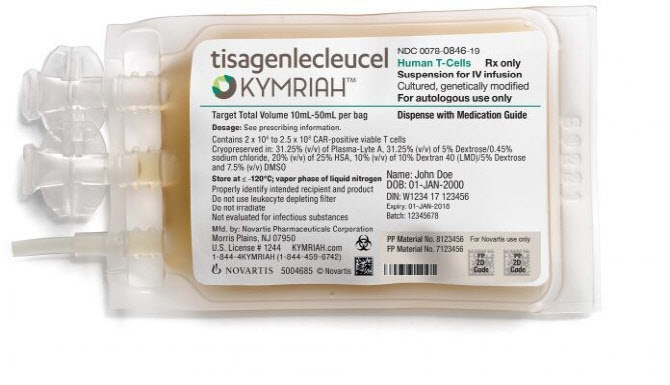
- Patients immediately welcomed the confirmation of health insurance benefits of the acute lymphocytic leukemia and lymphoma CAR-T treatment Kymriah (Tisagencleucel). The patients urged the transition committee of the next presidential post and Yoon Seok-yeol to quickly register new drugs directly related to life as health insurance benefits. On the 31st, Korea Leukemia patient organization said, "The cost of one-time non-reimbursement payment is 460 million won, and the ultra-high-priced Kymriah passed the Health Policy Review Committee and acquired health insurance benefits to even hope for cure." Kymriah will be listed with an upper limit of 360 million won for one-time health insurance from the 1st. The Korea Leuchemia patient organization believes that the appeal of Cha Eun-chan's mother, Lee Bo-yeon, who left for heaven while preparing for Kymriah treatment, and the consent of tens of thousands of Cheongwadae petitioners influenced Kymriah's health insurance registration in a year and a month. The National Human Rights Commission of Korea expressed its opinion to the MOHW to establish a rapid registration system for Kymriah's health insurance system, which was raised by the Korea Leukemia patient organization, also positively affected benefits. The Korea Association of Patients urged the government to manage the risk sharing based on patient-level performance-based risk sharing that applies only to lymphoma, as well as Refund risk sharing and Extended Cap risk sharing, which are conditions for health insurance registration for Kymriah. The Association of Patients argued, "The next presidential transition committee and the Yoon Seok-yeol government should also introduce a rapid registration system for new drugs that show excellent effects without alternative drugs for life-threatening patients such as Kymriah."
- Policy
- Phase 3 of Jetema the toxin will be conducted in Korea
- by Lee, Hye-Kyung Apr 04, 2022 06:07am
- Jetema the toxin 100U, which has been approved for export botulinum toxin, will conduct phase 3 clinical trials in Korea. The MFDS recently approved Jetema the toxin for a "multi-organization, double-blind, random assignment, parallel design, noninferiority trials, active control groups, and phase 3 clinical trials" for JTM201. The clinical trial will be conducted at Asan Medical Center in Seoul, Konkuk University Hospital, and Chung-Ang University Hospital. Jetema is conducting a clinical trial of Jetema the toxin after obtaining a drug manufacturing license in January 2019, and is expected to officially apply for an item license in Korea when the phase 3 clinical trial is completed. In June 2020, Jetema received permission from the MFDS to export Jetema the toxin for full-fledged overseas expansion and commercialization. It signed a local clinical and supply contract worth 144 billion won with Brazil even before applying for clinical trials and acquiring KGMP, and signed an exclusive sales and supply contract with HUADONG MEDICAL AESTHETICS as a Chinese market supply partner in February this year. Jetema aims to conduct phase 1 of Jetema the toxin in China by the end of this year along with phase 3 clinical trials in Korea. Since the beginning of this year, news of phase 3 clinical trials for botulinum toxin, a treatment for improving wrinkles in adults, has continued in Korea. On the 1st, the phase 3 clinical trial of Protox, a botulinum toxin A drug applied by the MFDS, was approved. Clinical trials of Protox are conducted at Chung-Ang University Hospital.
- Policy
- 20 ultra-high-priced drugs over ₩5 mil sold in Korea
- by Lee, Tak-Sun Apr 04, 2022 06:07am
- Survey results have shown that 20 high-priced drugs over ₩5 million are approved for reimbursement 10 years after, Soliris, which had been then the most expensive drug in the world, was listed for reimbursement in Korea With ‘Kymriah,’ the one-shot treatment that was listed for reimbursement on April 1st, recording the highest price at ₩360,030,000, the top 4 drugs with regards to their price were listed by the Moon’s administration. Looking at the price caps set in the reimbursement list, a total of 20 drugs were found to cost over ₩5 million. When lowering the standard to ₩10 million, the number of drugs increased to 84. The drug in 50th place is the PNH treatment Soliris which was listed 10 years ago in 2012. At the time, Soliris’s price was set at ₩5 million per year, sparking heated debate on the reimbursement of the drug. However, 49 more drugs with a higher price cap had been introduced to the market in 10 years. Of course, the price cap cannot determine the cost of each drug as their treatment period differs. For example, Kymriah is administered once in a lifetime, and in this sense, the drug’s ₩360,030,000 is cheaper than the ₩500,000,000 that was set as the annual cost for Soliris 10 years ago. By price cap alone, Kymriah is the only drug priced at the 100 million level. The second in line is the SMA treatment Spinraza, which costs ₩92,350,000. In third place is the neuroendocrine tumor treatment Lutathera set at ₩22,100,000, followed by the immunotherapy cancer drug Yervoy set at ₩14,000,000. Fourth is the stem cell therapy for Crohn’s Fistula, Cupistem at ₩13,490,000. What is unusual is that the top 4 most-expensive drugs on the list were approved for reimbursement under Moon’s administration. As new drugs with better efficacy in rare diseases are being introduced, the fact that the latest drugs have a higher price is, in a sense, natural. Spinraza was listed for reimbursement in April 2019, Yervoy in September last year, Lutathera from March this year, and Kymriah from April, after which the NHI will be supporting most of their costs. Such essential drugs that are ultra-high-priced will continue to be released in the future. The increased number of such drugs can also burden NHI finances, therefore, the government’s concern over effective fiscal sharing will also continue to deepen.
