
- LOGIN
- MemberShip
- 2026-07-23 09:29:54
- Policy
- Approval of Boryung’s new SCLC drug Zepzelca imminent
- by Lee, Hye-Kyung Sep 08, 2022 05:58am
- Boryung Pharmaceutical’s new drug for small-cell lung cancer (SCLC), 'Zepzelca inj, (lurbinectedin) is soon to be granted marketing approval in Korea. Currently, Hycamtin inj (topotecan)’ and ‘Camtobell Inj (belotecan)’ are approved for second-line use in Korea. According to industry sources on the 7th, the Ministry of Food and Drug Safety recently completed the safety and efficacy review for Zepzelca recently. With the safety and efficacy review complete for the drug, it is highly likely that Zepzelca will be approved soon if no variables arise. Zepzelca is an anticancer drug for which Boryung owns exclusive rights to development and sales in Korea. After signing a technology introduction agreement with the Spanish pharmaceutical company Pharmamar in 2017, the company has been coordinating the period for its domestic introduction after the drug received FDA marketing approval on June 15th, 2020. The FDA approved Zepzelca for the treatment of adult patients with metastatic small cell lung cancer (SCLC) with disease progression on or after platinum-based chemotherapy. Zepzelca 3.2 mg/m2 is administered as a 60-minute infusion every 21 days, and treatment is continued until disease progression or unacceptable toxicity. The drug may be administered in an outpatient setting when appropriate, and the 21-day administration schedule has the advantage of reducing the time required for treatment in the hospital compared to its other options.
- Policy
- MOHW to provide premium pricing support for innovative drugs
- by Lee, Jeong-Hwan Sep 07, 2022 05:52am
- The Korean government has emphasized the need to enact subordinate statutes to give preferential treatment to new drugs manufactured by Korea Innovative Pharmaceutical Companies and promises to prepare policy support. This announcement reflects the authorities’ determination to find a way to provide preferential treatment for drug prices based on the “Research service for the preparation of subordinate statutes for preferential pricing of drugs developed by Korea Innovative Pharmaceutical Companies that correspond to the international trade order.” However, the government had also expressed practical difficulties in its implementation, as providing pricing support for specific pharmaceutical companies, despite its legal basis, can lead to trade conflict. On the 6th, MOHW answered so to the written inquiry submitted by the People Power Party member Jong-Sung Lee regarding the preferential pricing of drugs developed by Korea Innovative Pharmaceutical Companies. NA member Lee inquired on the reason why no actual support is being provided for such companies despite legal grounds provided under the Special Act On Fostering and Support of Pharmaceutical Industry, and the MOHW’s opinion on the need for subordinate statutes to support the legal grounds. To the inquiry, the MOHW answered that although a clause for providing pricing premiums to Korea Innovative Pharmaceutical Companies does exist, the authorities must exercise caution in providing support to specific companies as this can lead to international trade conflict under international trade laws. If the final supports implemented under the act are concentrated on Korean companies, other countries may file a complaint under the WTO subsidy agreement, etc. In particular, the ‘Premium drug pricing system for global innovative new drugs’ that had been announced on July 7th, 2016, to provide preferential treatment for drugs developed by such companies, had been deleted in December 2018 as a discriminatory factor as a result of negotiations on amendments and modifications of the US-Korea (KORUS FTA). Despite such realistic difficulties, the MOHW expressed its will to enact subordinate statutes for the preferential drug pricing clause of the Special Act On Fostering and Support of the Pharmaceutical Industry. In addition, the MFDS said it will prepare measures for policy support that aligns with the international trade order and does not trigger trade conflict. The MOHW said, “We agree on the need to enact subordinate statutes to foster the Korean biohealth industry. However, the matter needs to be approached in comprehensive consideration of its impact on the domestic pharmaceutical industry, its compliance with the international trade order, its fiscal impact on NHI finances, etc.." It added, “We will also contemplate preparing policy measures for preferential pricing of new drugs manufactured by Korea Innovative Pharmaceutical Companies. And examine various angles to prepare drug pricing support that complies with the international trade order. The authorities also announced their operation plan for the Roadmap on supporting homegrown new drugs. The MOHW explained, “The government will support the full cycle of new drug R&D processes, investing ₩2.2 trillion through the pan-government National New Drug Development Project (2021-2030). With the support, we will start introducing a smart clinical trial system in 2022 to establish an environment for large-scale clinical trials and new drug development.” "We are also reviewing preparing measures to support continous new drug development for pharmaceutical companies by establishing large-scale funds in the pharma and bio industry."
- Policy
- What's patient-centered safety in the biopharmaceutical era?
- by Lee, Hye-Kyung Sep 07, 2022 05:52am
- Along with the application of the world's first CAR-T cell therapy Kymriah and Zolgensma, an alternative treatment for spinal proximal phagocytosis (SMA), the biopharmaceutical era has opened in Korea. Controversy over safety and accessibility has not yet been resolved in the process of innovative biopharmaceuticals being developed and used to treat patients. Seo Kyung-won, director of NIFDS, who attended the debate, said, "It seems to be the first session related to patient safety during the 8th session of the GBC," adding, "Thinking about how and at what point patients' opinions should be contained should begin from now on." Director Seo said, "Although it was not actually implemented due to the spread of COVID-19, we wanted to provide a place to listen to the stories of patients who participated in clinical trials of anticancer drugs developed in Korea at expert meetings such as the Central Pharmaceutical Review Committee." Director Seo expressed his willingness to directly hold the patient's opinion, saying, "It is a task I really want to do in the future." What is the controversy over biopharmaceutical safety and accessibility? Lee Hyung-ki, a clinical pharmacology professor at Seoul National University Hospital who was in charge of the topic presentation, pointed out safety problems such as unexpected side effects in clinical trials on patients due to the nature of biopharmaceuticals. Professor Lee said, "A skin injection reaction that did not occur in a preclinical trial of an innovative biopharmaceutical company in Korea occurred in a clinical trial of a patient," adding, "Biopharmaceuticals have unexpected problems, and the safety of long-term administration has not been clinically confirmed." Professor Lee's opinion is that as more innovative biopharmaceuticals have been developed and used to treat patients, the issue of safety should not be underestimated after approval. Regarding biopharmaceutical safety, the industry showed a slightly different idea. Choi In-hwa, executive director of Roche Korea, said, "Stability is under follow-up management such as management and post-marketing management to carefully review data when the Ministry of Food and Drug Safety approves products." Executive Director Choi said, "There are drugs that have been approved in foreign countries, but have not been approved in Korea, and in some cases, benefits are applied after two to three years of approval due to complicated benefit processes." Executive Director Choi said, "We have no choice but to be upset from the perspective of patients who are threatened with rare and incurable diseases or lives." Choi added, "There are products from the introduction of innovative new drugs such as rapid approval system, rare disease designation system, permit-drug link system, rare disease law, RSA, and PE exemption, but improvement is needed because there are not enough systems that reflect patient opinions." Critics of drug accessibility were also pointed out by patient groups. Lee Eun-young, director of the Korean Association of Patient Organizations, said, "The right to access drugs should start with permission." She noted, "Kymriah took more than a year to get approval from the Ministry of Food and Drug Safety after FDA approval, and it took 13 months to register benefits." Director Lee said, "Quick permission and benefit registration are important issues," adding, "The Yoon Seok-yeol government will be established and the Ministry of Health and Welfare will carry out pilot projects and main projects so that approval and drug price negotiations can be carried out at the same time for rapid registration." An important phrase here is the establishment of a cooperative relationship with the Ministry of Food and Drug Safety. Director Lee said, "If the Ministry of Food and Drug Safety does not grant prompt permission, rapid registration is useless," adding, "If a pharmaceutical company applies for an item permission, the Ministry of Food and Drug Safety must approve it and then go through the HIRA and the NHIS procedures." At this time, he emphasized that "the accessibility of new drugs will be stabilized only when patients are centered, and it will be a patient-centered policy that the Ministry of Food and Drug Safety is talking about." The association also agreed that the Ministry of Food and Drug Safety's patient-centered policy can be realized only when patients have access to new drugs. Park Jung-tae, vice chairman of the Korea Biopharmaceutical Association, said, "In foreign cases, patient safety is reflected in the policy," adding, "It is important to secure therapeutic access to patients by opening the way for active participation in regulatory science." The Ministry of Food and Drug Safety also expressed a consensus on this point, but explained why it is practically difficult. Jung Hyun-chul, head of the Ministry of Food and Drug Safety's bio-policy department, said, "The keywords of today's debate are the same as rapid screening and rapid approval," adding, "With the introduction of the Breakthrough Designation system in the U.S. in 2015, Korea also enacted the Breakthrough Drug Development Promotion Act the following year, but it was scrapped." The scrapped bill calls for introducing an occasional review to review the results of each product development process even before applying for permission to boost the development of miracle drugs and shorten the approval period. It also includes the basis for the conditional permission system, such as priority screening before other drugs so that innovative drugs can be supplied to terminal cancer patients in a timely manner, submitting clinical trial data that can confirm the effectiveness of the drug, or prescribing only specific trained medical personnel. "Because rapid approval and screening are really necessary for high-tech biopharmaceuticals, the 2019 Advanced Biopharmaceutical Act was passed, and a bill related to drugs responding to the public health crisis was prepared due to the spread of COVID-19 in 2020," said Jeong. He said, "As it requires a lot of manpower as well as the burden of reviewers, recruitment of manpower should be done." There was also an explanation for the approval of the therapeutic purpose of overseas clinical trial drugs currently being promoted. "Overseas clinical trial drugs are expected to be used for a small number of patients," Jeong said. "The problem is that there should be a great burden as the KFDA judges have to proceed with permission only with doctor's medical certificates and opinions without seeing any non-clinical data and quality data."
- Policy
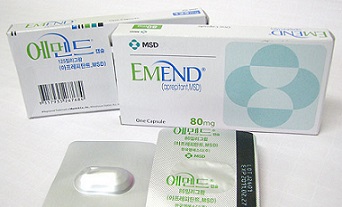
- Antiemetic Emend's generic benefit after 15 yrs since origin
- by Lee, Tak-Sun Sep 07, 2022 05:51am
- Emend As the generic of Emend will be applied starting this month, the burden of drug prices for patients is expected to decrease. It is the first time in 15 years that generic for Emend capsule has been reimbursed since the original was listed. According to industries on the 5th, Acepharma's Atant 80mg and Atant 125mg have been registered as benefits since the 1st of this month. Emend of MSD Korea is used in combination with corticosteroids and 5-HT3 antagonists, and was registered in April 2007. The 5-HT3 antagonist which ends with Setron is a popular drug. The market size is also large, so generics have also come out a lot in 5-HT3 antagonists. Aprepitant has not been released in the meantime, perhaps because of its strong partner drug nature, which is used in combination with 5-HT3 antagonists. Of course, the market size is also smaller than the 5-HT3 antagonist. Based on IQVIA, Emend's sales peaked at 6 billion won in 2019, followed by 5.2 billion won in 2020 and 4.8 billion won in 2021. Acepharma started developing generic for Emend in 2018 and succeeded in obtaining the first generic license among domestic pharmaceutical companies in January. And it was registered as of the 1st of this month. As Emend's generic Attant is registered, the burden of drug prices for patients is also reduced. Emend 80mg is listed at 11,044 won and Emend 125mg at 13,570 won. Atant was listed at 59.5% of the original price due to the addition of First Generic, with a big difference of 6,571 won for 80mg and 8,074 won for 125mg. Of course, the drug price is expected to be lowered to 70% before the addition of the original Emend is completed due to the registration of the generic. Acepharma received a license for the drug import business in 2016 and received a total of four import items, including anticancer drugs. The office is located in Munjeong-dong, Songpa-gu, Seoul.
- Policy
- Enactment of preferential pricing sublaws slow
- by Lee, Jeong-Hwan Sep 06, 2022 05:51am
- The enactment of subordinate statutes for the so-called ‘preferential drug pricing for Korean Innovative Pharmaceutical Companies’ clause of the ‘Special Act On Fostering and Support of Pharmaceutical Industry’ is hardly picking up speed. Although the research service ordered by the Ministry of Health and Welfare and the Korea Health Industry Development Institute and conducted by Professor Mi-Hye Park’s research team at the School of Pharmacy at Sungkyunkwan University, has been completed, the authorities are known to be having difficulty in preparing the specific provisions for the statute. On the 5th, the MOHW responded that it is “supplementing the final result reports, including survey results, etc” to the separately written inquiry submitted by the NA Health and Welfare Committee regarding the results of the research service on the preparation of subordinate statutes for preferential pricing of drugs developed by Korean Innovative Pharmaceutical Companies. The study had been conducted after specific subordinate statutes under the ‘Special Act On Fostering and Support of Pharmaceutical Industry (hereinafter “Special Act for the Pharma Industry”) for preferential pricing of drugs developed by Korean Innovative Pharmaceutical Companies had not been established for several years. The MOHW had previously pointed to how preparing subordinate statutes for the preferential treatment of Innovative Pharmaceutical Companies could trigger international trade conflict due to the violation of WTO and FTA agreements. However, the MOHW had initiated related studies through KHIDI after receiving much criticism at the NA audit from members of NA’s Health and Welfare Committee, including In-Soon Nam and Byung-Won Kang of the Democratic Party of Korea, and Byung-Won Kang of the People Power Party. 국내 제약사들은 혁신형 제약기업이 만든 의약품의 보험가격을 우대하는 제약산업특별법 제17조의2 조항이 위임한 하위법령이 수 년째 공백상태인 현실을 개선해 약가를 지원해야 한다는 입장이다. The study was completed earlier this year and the result report was submitted to KHIDI in May, but the results have not been disclosed to the public yet. With the research results undisclosed for nearly 4 months, some have been speculating that the government may not have been able to come up with a clear policy to provide drug pricing support for Korean Innovative Pharmaceutical Companies that do not cause trade conflict. In fact, the MOHW had agreed on the need for a drug pricing support policy for Korean Innovative Pharmaceutical Companies in line with the international trade order to reinforce technology innovation and financial competitiveness of Korean companies to foster them to become global leading companies and lay the mid-to-long term foundation for the development of innovative new drugs but was unable to present the research results. The research was conducted to survey the current status of drug pricing policy in Korea and abroad, collect opinions on drug price support for Korean Innovative Pharmaceutical Companies, review the need to provide pricing support for Korean Innovative Pharmaceutical Companies, prepare a pricing support policy measure for Korean Innovative Pharmaceutical Companies that align with the international trade order, and analyze data requested by organizations involved in establishing pricing support policiies for Korean Innovative Pharmaceutical Companies. However, on its key results, the MOHW is only repeating the explanation that it is supplementing the final result report, including the industry survey results, etc. An official from a domestic pharmaceutical company said, “It will be hard to come up with a clear plan to support drug pricing for drugs developed by Korean Innovative Pharmaceutical Companies without sparking trade conflict. The research team is known to be specifically contemplating measures to provide preferential treatment to Korean Innovative Pharmaceutical Companies with the industry survey results.” The official added, “Whether the policy research results will be publicly disclosed and lead to the enactment of subordinate statutes of the Special Act for the Pharma Industry will depend on what measures the research team, MOHW, and KHIDI will come up with. It will be significant if this leads to essential drug pricing support for products produced by Korean Innovative Pharmaceutical Companies, even if at a relatively narrow range."
- Policy
- The goal shorten the development of mRNA vaccine to 100 days
- by Lee, Hye-Kyung Sep 06, 2022 05:51am
- SK Bioscience, which developed Korea's No. 1 COVID-19 vaccine, aims to shorten the development period of the mRNA vaccine to 100 days and create innovative technology that can be supplied to the world within six months. #1 Choi Chang-won, vice chairman of SK Discovery's CEO, gave a keynote speech at the "2022 Global Bio Conference" held at Grand InterContinental Parnas in Seoul on the 5th on the importance of global cooperation to respond to the next pandemic. SK Discovery is a holding company of SK Bioscience. SK Bioscience obtained the item license for the COVID-19 vaccine SKYCovione from the Ministry of Food and Drug Safety for the first time in Korea on June 29, and has been vaccinated in earnest since the 5th. Vice Chairman Choi said, "SKYCovione is a remarkable and innovative achievement in that it has shortened the development of vaccines that take more than 10 years to two years while developing global products with high safety and effectiveness." "This is the result of global and domestic collaboration in all processes, including funding, R&D, clinical trials, production and licensing, and supply in the early stages of development," he analyzed. The development of the nation's No. 1 COVID-19 vaccine is the result of cooperation and support from the Korean government and global partners. Vice Chairman Choi added, "We will make efforts to secure the long-term and sustainability of SK Bioscience as well as global healthcare in Korea and developing countries with a sense of debt." Referring to the delay of one to two years from the SKYCovione development process to the WHO application, he said he would make efforts to develop vaccines within 100 days required by the CEPI and to provide global fairness within 6 months required by the Gates Foundation. Vice Chairman Choi said, "Speed seems to be the most important thing to prepare for the Next Pandemic based on various experiences," adding, "We have shortened the vaccine development period from 10 years to 2 years, but innovative technologies are absolutely needed as we have to shorten it to 100 days." Although there seem to be many impossible tasks like when the COVID-19 vaccine was developed, Vice Chairman Choi believes that the development period can be shortened if it is prepared in advance. SK bioscience explained that it is preparing to maintain active and close global partnerships, develop innovative technology platforms, strengthen research and production infrastructure, and strengthen clinical and licensing capabilities. In particular, by 2024, Pangyo R&D Center will be relocated to Songdo to become a global R&PD (Research & Process Development) center, which is five times larger, and Andong Plant will be expanded to more than double the production of products that meet GMP standards. Choi said, "The goal is to double the production of Andong plants by 2024 and triple by 2026. "If global cooperation proceeds, flexible production facilities such as Andong plant are needed." He said, "We will produce and supply the necessary vaccines in each region, and we will convert them as soon as a pandemic occurs to make a pandemic vaccine." Vice Chairman Choi said, "For the 100-day vaccine development operation, preparation is needed at the clinical and approval stage." "At the government level, the Ministry of Food and Drug Safety should prepare and train for the next pandemic by strengthening investment and cooperation in the bio R&D ecosystem and greatly increasing manpower," he said.
- Policy
- Checking the effectiveness of SKYCovione,
- by Kim, Jung-Ju Sep 06, 2022 05:51am
- SKYCovione, South Korea's No. 1 COVID-19 vaccine developed by SK Bioscience, has been confirmed to have an additional vaccination effect in the cross-neutralization of the omicron mutation virus (BA.1, BA.5). Korea National Institute of Health (Director Kwon Joon-wook) announced on the 2nd that it has confirmed cross-neutralizing anti-bibody testers for the domestic epidemic omicron mutation virus after additional vaccination with SKYCovione. The National Institute of Health conducted a phase 3 clinical trial sample analysis required for item approval of SKYCovione, the first COVID-19 vaccine in Korea developed by SK Bioscience, and a cross-nutritionalizing ability analysis on delta mutant viruses and omicron mutant viruses (BA.1). This analysis confirmed the extent to which SKYCovione's additional inoculation (3rd inoculation) forms neutralizing antibodies against BA.1 and BA.5 mutant viruses, and is the first result of verifying the possibility of use as an additional inoculation vaccine for SKYCovione. As a result of analyzing a total of five subjects who were additionally vaccinated with SKYCovione, the neutralization increase effect was about 51.9 times on average in BA.1 and about 28.2 times in BA.5 compared to before inoculation. The five target groups of basic vaccinations (1st and 2nd) consisted of four single vaccinations (AstraZeneca, Pfizer, Moderna, and Jansen) and one cross vaccination group (AstraZeneca, Pfizer). When additional vaccinations were given with SKYCovione (third inoculation) after basic vaccinations (1st and 2nd) with mRNA formulations, they showed high neutralization in both early Wuhan and BA. 1 and BA. 5 mutant viruses. Director Kwon Joon-wook said, "SKYCovione was born as the first COVID-19 vaccine in Korea through the support of the analysis of clinical trial samples by the Korea National Institute of Health and the International Vacine Institute." He said, "We confirmed the possibility of using additional vaccinations in Korea through mutation analysis on this additional vaccination group in the situation where mutant viruses such as BA.5 continue to occur." Director Jang Hee-chang said, "In the future, we will continue to support domestic development vaccines such as mRNA vaccines and virus transporter vaccines, such as clinical trial sample analysis and mutation virus evaluation."
- Policy
- Including SKYCovione, 6 types of COVID-19 vaccines
- by Lee, Jeong-Hwan Sep 06, 2022 05:51am
- With the seventh outbreak of COVID-19 expected this winter, the type of COVID-19 vaccine and the age of vaccination are expected to expand ahead of the winter vaccination. Following the previously licensed Pfizer, Moderna, and Janssen vaccines, domestic SK Bioscience vaccines have been approved, and additional vaccines for omicron mutation are also set to be approved. According to the quarantine authorities on the 2nd, the number of vaccinations will increase to a total of six from the 5th. Vaccines currently available are Pfizer, Pfizer Children's, Moderna, Janssen, Novavax, and SKYCovione. Advance reservations for SK Bioscience's first domestic vaccine, SKYCovione, began on the 1st. Vaccinations through advance reservations can be made from the 13th. From the 5th, vaccinations at public health centers and some consignment medical institutions on the same day and visit are also available. It targets those who are not vaccinated over the age of 18 and is used for primary and secondary vaccinations. SKYCovione, like Novavax, is a synthetic antigen (genetic recombination) vaccine used in the production of various vaccines such as hepatitis B vaccine and human papillomavirus (HPV) vaccine. Teenagers aged 12 to 17 can be vaccinated against Novavax from the 5th. Until now, only Pfizer and Moderna vaccines have been available, but the Novavax vaccine has been confirmed to be effective and safe even at this age group. According to the Ministry of Food and Drug Safety, 79.5% of inoculators aged 12 to 17 showed infection prevention effects, and the neutralizing antibody value was 1.46 times higher than those aged 18 to 25. The adverse reaction after vaccination was similar to those over the age of 18. On the 1st, the Ministry of Food and Drug Safety began reviewing import items for the early COVID-19 vaccine for Pfizer Pharmaceutical Korea for about 6 months to 4 years old. The newly applied Pfizer "SKYCovione 0.1mg/mL for 6 months to 4 years old" aims to prevent COVID-19 virus infection for 6 months to 4 years old. The active ingredients are the same as "SKYCovione", "SKYCovione 0.1mg/mL" and "SKYCovione 0.1mg/mL" approved by the Ministry of Food and Drug Safety earlier. The Korea Centers for Disease Control and Prevention is in a position to consider vaccinating infants and toddlers if necessary depending on the results of the approval review, the quarantine situation, the efficacy and safety of the vaccine. In the fourth quarter, an improved vaccine for omicron mutation will be introduced. The Korea Centers for Disease Control and Prevention announced the "2022-2023 Winter COVID-19 Vaccination Plan" on the 31st of last month and announced that it would start vaccinations by introducing an Omicron Variation (BA.1)-based Moderna and Pfizer improvement vaccine in the fourth quarter of this year. Moderna's BA.1 vaccine will be introduced first, and those aged 60 or older, those admitted to vulnerable facilities such as nursing hospitals, and those with reduced immunity will be vaccinated first. The second place is those in their 50s, people with underlying diseases, health and medical personnel, and the third place is adults over the age of 18. The introduction of improved vaccines targeting sub-variants of omicrons such as BA.5, which have become dominant species in Korea, is also expected to speed up. The U.S. Food and Drug Administration (FDA) urgently approved BA.4 and BA.5. The quarantine authorities are monitoring the development and permission process of BA.4 and BA.5 mutant improved vaccines. As soon as the approval process is completed, it will be introduced quickly. Baek Kyung-ran, head of the Korea Centers for Disease Control and Prevention, said, "The goal of this winter vaccination is to minimize health damage." "We will focus on preventing severe and death of the elderly and other health-vulnerable groups," she said. "Vaccines that can prevent infection, hospitalization, and death are the most effective now." If you have not received the basic vaccination or have not received the fourth vaccination in the fourth vaccination group, please receive the basic vaccination and the fourth vaccination.

- Policy
- Drugs granted conditional approv to report clinical progress
- by Lee, Hye-Kyung Sep 05, 2022 05:55am
- Treatments for life-threatening serious and rare diseases are being granted conditional approval from July 21st this year. However, to inform the public of the conditions, items for which data on confirmatory clinical trials were not submitted should be specified in the label’s indication, and the clinical trial status of the subject drugs needs to be reported to the Minister of Food and Drug Safety by March 31 each year. At a trade journal correspondent briefing that was held on the 30th, Soo-Jeong Lee, Director for Approval Management of the Ministry of Food and Drug Safety, said, “With the amendment of the Pharmaceutical Affairs Act and the amendment of the Regulation on Safety of Medicinal Products, etc. that followed in July, the MFDS has been granting conditional approval to treatments for life-threatening diseases such as cancer or rare diseases based on Phase II trial data. We are preparing a guideline to inform the public about this conditional approval system.” In line with the act, the MFDS released the “Guidelines for Management of Drug Items granted Conditional Approval” on the 1st to reflect the amendments recently made to the law, including subjects for conditional approval, to improve the transparency and predictability in the operation of the conditional approval system. The conditional approval system allows for the MFDS to grant marketing authorization to drugs that are used for cancer, life-threatening rare diseases, and drugs used in emergency situations, to expand treatment opportunities for the patients under the condition that the Phase III trial (confirmatory trial) results are later submitted. When a pharmaceutical company applies for conditional approval for its product to the MFDS, the Central Pharmaceutical Affairs Council holds a meeting to assess the completeness and suitability of the conditional approval on the item. The approved drug's indication must specify that “no confirmatory trial data that demonstrates the efficacy of the drug exists, or “the efficacy of the drug is evidenced by its response rate and period, and there is no available data on its improvement of overall survival in a therapeutic confirmatory trial.” The approval is provided under the condition that clinical trial data on administered patients, etc. submitted within a separately stipulated period to confirm the drug’s safety and efficacy on the human body. The specified indication and condition are deleted when the conditions are fulfilled in the future. However, if a domestic or overseas clinical trial has not yet been approved for a therapeutic confirmatory trial, the clinical trial protocol must be submitted post-approval. Items that received conditional approval must report their clinical trial status on administered patients to the Minister of Food and Drug Safety by March 31st every year. If there is a separate regular reporting schedule set for the item, clinical data on the item may be reported on that reporting date. However, the conditional approval is revoked if ▲the approval was obtained by fraudulent or other illegal means, ▲if the company that has obtained the conditional approval for the item fails to comply with the conditions without justifiable reasons, or ▲the company that has obtained the conditional approval for the item fails to report under Article 35-2 (1) or does not fulfill the measure order under clause (2) of the same article. Lee said, “The conditional approval is granted under the condition that the Phase III trial results are submitted by a specified date. As the public and medical professionals may not be aware of the conditional approval that is granted, we have prepared a guideline to specify that the approval has been granted, and its Phase III trial is currently underway.”

- Policy
- MFDS has launched permission review for Pfizer Comirnaty 2
- by Kim, Jung-Ju Sep 05, 2022 05:55am
- Pfizer's COVID-19 2-valent vaccine Comirnaty2 0.1mg/mL permission review has begun. The Ministry of Food and Drug Safety (Director Oh Yoo-kyung) announced that Pfizer Korea has applied for permission today (29th) to import 0.1mg/mL of Comirnati 2, an mRNA-type bivalent vaccine that expresses the initial COVID-19 virus and mutant virus (Omicron periphery BA.1) antigens, respectively. Comirnaty 2 0.1 mg/mL shows the preventive efficacy of COVID-19 caused by the SARS-CoV-2 virus at the age of 12 and has been developed for use in additional vaccinations after basic vaccination. The authorities will quickly and closely review the clinical, nonclinical, quality, and GMP data submitted when applying for the item license, and consult vaccine experts, including infectious medicine experts, on the safety and effectiveness of the vaccine. The Ministry of Food and Drug Safety explained that Pfizer is conducting a review as it applied for a preliminary review of 0.1 mg/mL of Comirnaty 2 clinical data on the 5th. The Ministry of Food and Drug Safety said, "We will continue to do our best to supply safe and effective vaccines to our people."
