
- LOGIN
- MemberShip
- 2026-07-23 09:29:54
- Policy
- MFDS in discord regarding promotion of oral COVID-19 Txs
- by Sep 26, 2022 06:08am
- The government is encouraging the use of oral COVID-19 treatments in high-risk groups, however, accessibility to such has been limited for healthcare professionals due to limitations in emergency use approvals. The Ministry of Food and Drug Safety is being criticized for being passive in making legal interpretations for emergency use authorized drugs, which is in discord with the government’s disease control and prevention measures. According to industry sources on the 26th, pharmaceutical companies are disallowed from conducting academic marketing for their oral COVID-19 treatments as the subject drugs were approved under Emergency Use Authorizations. Usually, when new drugs are released, companies conduct various activities to raise awareness of the drugs, making visits to hospitals to explain their drugs and holding webinars or symposiums to provide educational material. The new drugs in the market can only be actively used after the healthcare professionals gain a better understanding of the drugs and accumulate prescription experience. However, as COVID-19 treatments were granted emergency use according to the Special Act on the Promotion of Development and Urgent Supply of Medical Products in Response to Public Health Crisis, the authorities deemed that the drug are not allowed the advertising privileges granted under the Pharmaceutical Affairs Act. According to Article 68-5 of the Pharmaceutical Affairs Act, the imported pharmaceutical product’s name, manufacture method, and efficacy cannot be advertised unless the drug product has been approved or reported according to Article 42-1 of the Pharmaceutical Affairs Act. As drugs granted Emergency Use Authorization was not approved under Article 42-1 of the Pharmaceutical Affairs Act, the MFDS’s interpretation was that such drugs are not allowed to conduct advertisements. Due to this, the government is solely in charge of providing the necessary information on oral COVID-19 treatments in Korea. The Korea Disease Control and Prevention Agency is in charge of training healthcare professionals to provide medication guidance to patients, etc. However, it has been pointed out that the government’s education sessions are not enough to cover the expanded scope of institutions and pharmacies approved to prescribe and dispense oral COVID-19 treatments. Also, the participation rate, frequency, and effect of KDCA’s education sessions are relatively lower than that of pharmaceutical companies due to lack of promotions among other reasons. There are also opinions that more explanation is needed because the sessions are not carried out by medical professionals. Many healthcare professionals and pharmacists who still have not received a prescription or medication guidance yet have reported experiencing confusion. However still, officials of pharmaceutical companies that can communicate most closely with healthcare professionals have been passive in dealing with the issue due to concerns about violating the Pharmaceutical Affairs Act. As an active explanation of the drugs was prohibited, the officials can only respond when receiving inquiries from healthcare professionals. This is why the prescription rate has not risen much even though the government has greatly expanded the number of institutions that can prescribe oral COVID-19 treatments. According to the Central Disaster and Safety Countermeasure Headquarters (CDSCH), the prescription rate of oral COVID-19 treatments in those over the age of 60 as of the 2nd week of September, remained at 27%. The prescription rate has more than doubled in 4 months with the encouragement of the disease control and prevention authorities, but the government believes it is necessary to further increase the prescription rate. The importance of prescribing oral treatments has risen after the prescriptions had significantly reduced the progression to severe disease in patients in the high-risk group over the age of 60 during the COVID-19 outbreak last summer. The CDSCH’s analysis of its disease control progress and response to the resurge of COVID-19 in the summer showed that the progression to severe disease decreased as the prescription rate for oral COVID-19 treatments increased for those aged 60 years or older. The rate of progression to severe disease, which had been 1.28% in February when the administrate rate was 6.4%, dropped to 0.42% with the rise of the administration rate to 21.7% in August. The disease control and prevention authorities are also busy preparing measures to address the issue of prescriptions being limited due to a lack of clinical information in the field. According to the 'Measures to Raise Prescriptions of Oral COVID-19 Treatments’ that had been reported by CDSCH last month, healthcare professionals were reluctant to prescribe oral COVID-19 treatments due to a large number of contraindicated drugs and lack of clinical information. Accordingly, the authorities are contemplating ways to increase accessibility to information by preparing educational materials and prescription guidelines. To address the continued criticism over the limitations in information, the authorities recently partially granted pharmaceutical companies to produce and distribute materials containing drug information. As such partial activities have clear limitations, voices for proactive allowance of pharmaceutical companies to conduct academic marketing on EUA drugs have also been rising. Contrary to the government's stance, the MFDS had been passive in making legal judgments regarding EUA drugs. At the time of introductions, pharmaceutical companies had made several inquires to the MFDS on what scope of information provision activities is allowed for their drugs. At the time, the MFDS only responded that “It is difficult for the ministry to provide a definite answer due to lack of information in determining the necessity and validity of providing information." The pharmaceutical companies received the response as a “don’t.” Regarding this, the MFDS said, “The COVID-19 treatments that were granted EUA are directly managed by the KDCA, and the KDCA has been providing various information for healthcare professionals and patients. We will consult with the department in charge to see if academic marketing is allowed." The Advisory Committee on Infectious Diseases also agrees on the need for the government to make proactive decisions and improve and expand healthcare professionals’ accessibility to information. During a phone interview with Dailypharm, Gi-Seok Jeong, Director-General of Special Response of the Central Disaster and Safety Countermeasure Headquarters, said, “Despite the state’s efforts in encouraging the prescription of oral COVID-19 there are still many cases in which prescriptions are not available to patients who need them in the medical field. Adding pharmaceutical companies' information provision activities to the effort will help increase the prescription rate. It seems necessary that the government should take active action to overcome obstacles that may hinder engagement in such activities that would lead to an increase in the prescription rate, by requesting authoritative interpretation from the Ministry of Government Legislation.”
- Policy
- Lipiodol’s price reduced from 25th... 2-year suit dismissed
- by Kim, Jung-Ju Sep 26, 2022 06:07am
- The price of Guerbet Korea’s liver cancer contrast medium, Lipiodol Ultra-Fluid (iodized oil, 12.8g/10mL), which had been under legal dispute for the past 2 years after the government decided to remove the drug from the reimbursement list, will be reduced from the 25th this month. This is because the pricing discount that had been originally made by the government was reapplied upon the court’s dismissal of the lawsuit and the automatic termination of suspension of execution that followed. On the 19th, the Seoul High Court’s Administrative Court Department 6-1 decided to dismiss the administrative lawsuit filed by Guerbet Korea and notified the company and the MOHW of the termination of the suspension of execution. Accordingly, the MOHW announced that it would reduce the drug price as of the 25th as it had decided in 2020. Earlier in July 2020, the MOHW decided to lower the price of Lipiodol through ex officio adjustment upon the listing of its generic, Dongkook Pharmaceutical’s Fattiodol. Under the government’s pricing formula, the upper limit of the first product can be lowered by the government through ex officio adjustments when a generic with the same route of administration, ingredient, and formulation as the original listed. Guerbet Korea immediately filed a suit against the government, and the dispute continued until recently. The Seoul High Court’s Administrative Court Department 7 had previously decided to extend the suspension of execution that had been ordered by Administrative Court Department 12 so that the company could keep its original price. The suit was then passed on to Department 6-1, where it was dismissed. The scope of its reimbursement had also expanded in the long course of the continued litigations. As of July 6th, Lipiodol is reimbursed for lymphography, hysterosalpingography, and transarterial chemoembolization (TACE) in liver cancer. However, the price cut that will be made this time is irrelevant to the reimbursement extension, and the final price of KRW 133,000 will be applied per ample as it was originally reduced in July 2020.
- Policy
- HCV treatment Epclusa·Vosevi start pricing negotiations
- by Lee, Tak-Sun Sep 23, 2022 05:52am
- The National Health Insurance Service is known to be conducting pricing negotiations with Gilead Science Korea for the company’s new Hepatitis C treatments, ‘Vosevi (sofosbuvir/velpatasvir/voxilaprevir)’ and ‘Epclusa (sofosbuvir/velpatasvir).’ The two drugs received conditional approval from the Drug Reimbursement Evaluation Committee in July this year. According to industry sources on the 22nd, the NHIS disclosed the negotiation status above while updating the list of new drugs subject to drug pricing negotiations on the NHIS webpage. Epclusa is a new drug that was approved in February, and Vosevi in March by the Ministry of Food and Safety. Gilead, which used to dominate the Hepatitis C treatment market with ‘Sovaldi,’ had been pushed down to second place due to Abbive’s ‘Mavyret.’ In an attempt to take back its throne, Gilead has released two new drugs – Epclusa and Vosevi. Like Mavyret, Epclusa can be used in all HCV genotypes 1 to 6, this is why Gilead believes that it has a winning shot against Abbvie. Gilead is planning to fuel its drive by adding another product, Vosevi, which contains an additional ingredient. Based on IQVIA, Mavyret recorded KRW 46.6 billion in sales last year. On the other hand, Gilead’s Sovaldi made KRW 0.2 billion, and Harvoni KRW 11.7 billion. Ironically, as HCV treatments have a high cure rate if the treatments are taken within the recommended treatment period, the sales performance of these drugs tends to decline over time. Therefore, pharmaceutical companies need to attract new patients to raise sales. Currently, the new influx of patients is concentrated around Mavyret due to its low price and its broad use in all genotypes. Mavyret’s insurance ceiling price is KRW 65,014 per tablet. Compared with the KRW 126,186 of Sovalidi and KRW 130,011 of Harvoni, this is around twice the difference. Therefore, if Gilead attempts to turn around the market, the industry sees that the company would need to set the price of Epclusa and Vosevi at the same level as Mavyret. When DREC announced the results of its deliberation in June, it said it would recognize the appropriateness of the drugs’ reimbursement if the two drugs will accept a lower price than the evaluated price. As the drugs have passed the reimbursement adequacy review by the Health Insurance Review and Assessment Service and are in pricing negotiations with the NHIS, Gilead would have had to accept a price lower than DREC’s evaluated price. Although DREC’s evaluated price was not disclosed, if Mavyret was used as the alternative drug in evaluations, Epclusa and Vosevi may likely be listed at a lower price than expected.
- Policy
- On-site inspections of overseas plants will resume next year
- by Lee, Hye-Kyung Sep 23, 2022 05:52am
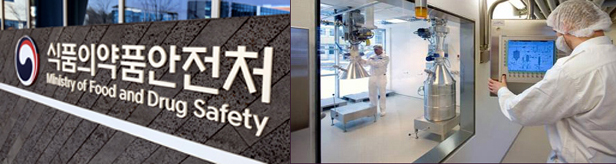
- On-site inspections of overseas biopharmaceutical manufacturing plants, which have been suspended due to COVID-19, will resume. The Ministry of Food and Drug Safety's Biopharmaceutical Quality Management Division recently sent an official letter to representatives of biopharmaceutical importers, the KOBIA, the KPBMA, Korea Pharmaceutical Traders Association, and the KRPIA to announce the pre-GMP site implementation of biopharmaceuticals. Due to the prolonged COVID-19 situation, the Ministry of Food and Drug Safety revised the "Guidelines for Pre-GMP Evaluation of Biopharmaceuticals" on March 29 last year to convert overseas manufacturers that need on-site inspections into non-face-to-face inspections. Non-face-to-face due diligence targets include manufacturing plants located in corresponding areas such as exhibitions, infectious diseases, and natural disasters, the Ministry of Foreign Affairs and the Korea Centers for Disease Control and Prevention classifies it as a travel ban (cancellation, postponement), traveler's system (careful review), or travel significance. Through preliminary GMP evaluation, the Ministry of Food and Drug Safety is determining whether the manufacturing and quality management standards of biopharmaceuticals that have applied for permission to manufacture and report (hereinafter referred to as permission) and change permission are met. Document evaluation and fact-finding surveys include manufacturing plants subject to initial evaluation, manufacturing plants that have passed the period of omission of the fact-finding survey (aseptic 3 years, aseptic 5 years), manufacturing processes that are deemed necessary in the item approval stage, etc. As the on-site inspection will be conducted in more than two years, the Ministry of Food and Drug Safety will first gradually expand the number of items classified as new drugs to overseas manufacturers will not have a history of due diligence by the Ministry of Food and Drug Safety. The on-site inspection will be applied after January 1 next year, and even if the non-face-to-face inspection schedule is confirmed after January 1 next year, overseas manufacturers of new drugs will switch to on-site inspection. However, rare drugs and drug manufacturers subject to fast track are conducted through document evaluation and non-face-to-face investigation. The on-site inspection will be conducted by two or three GMP investigators from the Ministry of Food and Drug Safety within the deadline for responding to the relevant complaint. The deadline for reply refers to the maximum period during which the approval department notifies the requesting department of the evaluation results when requesting an evaluation from the GMP evaluation department according to the receipt of a complaint for drug item approval. If it is not possible to conduct it within the deadline for reply to the consultation due to the circumstances of the company (manufacturing plant), the workload of the Ministry of Food and Drug Safety, and the lack of manpower for the fact-finding survey, the period may be extended. The detailed schedule and due diligence method shall be notified in official letter after consultation.

- Policy
- Leclaza to receive first monitoring for PVA negotiations
- by Lee, Tak-Sun Sep 23, 2022 05:52am
- The National Health Insurance Service disclosed drugs subject to monitoring for Type A and Type B of the Price-Volume Agreement negotiations in the fourth quarter of 2022. The list is attracting attention as Yuhan Corp’s novel non-small-cell lung cancer drug Leclaza was also selected for monitoring, as well as domestic homegrown drugs such as Kanarb, Supect, and Pelubi. A total of 91 drugs that are subject to monitoring for PVA negotiations in the 4th quarter this year were disclosed in advance on NHIS’s webpage on the 20th. The NHIS selects drugs that are subject to monitoring for PVA Type A and B negotiations every quarter. Drugs receive negotiations under 'Type A' when the claims amount in their same therapeutic class exceeds the expected claims amount that the company had agreed upon with the NHIS through negotiations by over 30%. Leclaza will also be monitored for Type A negotiations. As Leclaza was listed on July 1st last year, its rate of increase will be calculated by comparing the claims amount accrued from July 1st last year to June 30th this year with the expected claims amount. Leclaza’s expected claims amount is known to be KRW 14.1 billion. However, based on IQVIA data, Yuhan Corp had earned KRW 11 billion in the period. Therefore, the analysis is that the drug will not be subject to negotiations, but as the amount of the actual claims may differ, it is difficult to prejudge whether it will be included in the negotiation list. Many novel homegrown drugs were also listed for monitoring for ‘Type B’ PVA negotiations, which are applied to drugs whose maximum amount had already been adjusted according to Type A PVA. Boryung Pharmaceutical’s hypertension treatment Karnab is one representative drug that will receive monitoring in Q4. Also, Il-Yang Pharmaceuticals’ leukemia treatment Supect, and Daewon Pharm’s antipyretic, anti-inflammatory, pain reliever Peluvi were included for monitoring this quarter. Among imported novel drugs, the oral anticoagulants Xarelto and Lixiana, and immunotherapy drugs Opdivo and Yervoy whose use has increased greatly recently were listed as monitoring subjects. The claims amount of the previous year and the year before are compared for drugs that are subject to ‘Type C’ PVA negotiations. 172 items have received negotiations under Type C and unilaterally discounted on the 1st of this month.
- Policy
- Janssen's Imbruvica succeeded in setting a standard
- by Lee, Tak-Sun Sep 22, 2022 06:02am
- Janssen's anti-cancer drug Imbruvica, which has started to expand its benefit, has succeeded in setting standards for now. The HIRA announced that it held the 8th Cancer Disease Review Committee in 2022 on the 21st and made the decision. Through this deliberation committee, Imbruvica has set benefit standards for monotherapy in patients with chronic lymphocytic leukemia and small lymphocytic lymphoma, who are 65 years of age or older and have never been treated before. Since April 2018, Imbruvica has been receiving benefits for secondary therapy for recurrent and refractory chronic lymphocytic leukemia. Brukinsa, which challenged MCL benefit at this cancer screening, failed to set standards. This is the second failure following the Cancer Disease Review Committee in April. Bruckinsa of BeiGene has set a standard for monotherapy in adult patients with mantle cell lymphoma, MCL (MCL), who have previously received more than one treatment, but the Cancer Disease Review Committee has not recognized it. In April, the establishment of benefit standards for MCL indications failed. However, standards have been set for Waldenström's macro-globulinemia (WM).

- Policy
- MOHW's advisory council to respond to US’s Bio initiative
- by Lee, Jeong-Hwan Sep 21, 2022 05:47am
- The government has organized a trade advisory council to address the trade issues that may arise from the National Biotechnology and Biomanufacturing Initiative that the Biden administration launched via an Executive Order. Through the council, the government plans to strengthen communication with the pharmaceutical and bio industry and promptly respond to rising issues. The advisory council, which consists of trade experts, will hold regular meetings every quarter and actively collect industry opinions to reflect on trade policies established in the healthcare and the pharmaceutical industry. Until a specific plan is set to regulate the pharmaceutical and bio industry by the US government, the Korean government will preemptively draw up a policy framework that reflects the difficulties expressed by the industry and establish an organic public-private consultative body. On the 20th, an MOHW official said, “We organized a trade consultative council with domestic industries including the pharmaceutical and bio industries, and held the first trade policy meeting on its regular operation.” Members of the Korea Pharmaceutical and Bio-Pharma Manufacturers Association, Korea Pharmaceutical Traders Association, Korea Medical Devices Industrial Cooperative Association, Korea Medical Devices Industry Association, Korea Cosmetics Association, and Korean Research-based Pharmaceutical Industry Association attended the policy meeting that was held at the Korea Chamber of Commerce and Industry (KCCI) office by the MOHW and the Korea Health Industry Development Institute (KHIDI). The MOHW recently evaluated that US’s Executive Order for the National Biotechnology and Biomanufacturing Initiative was made to protect its industries and reduce dependence on foreign countries such as China in the pharmaceutical and bio sectors, in addition to the measures it had previously made in the semiconductors and electric vehicles sector. Korean companies that heavily rely on exports to the US are expected to have a negative impact if the US promotes and reinforces domestic manufacturing, but MOHW believes its immediate impact will be limited due to its characteristics, being pharmaceuticals products. The MOHW plans to analyze the impact the Bio Executive Order will have on Korea’s pharmaceutical and bio markets from various angles and strengthen the role of domestic supply networks that have price and technological advantages. In addition, through external expansion of the advisory council by adding industry opinions, the government will enhance its response to trade frictions and regularize roundtable meetings between the government and the pharmaceutical and bio industry around the trade advisory council to respond promptly to trade issues that may arise. An MOHW official said, “The response to the US bio executive order will be decided through pan-ministerial discussions with not only the MOHW but also the Ministry of Trade, Industry, and Energy, etc. Starting with the trade advisory council that covers both the pharmaceutical and bio fields in healthcare, we plan to hold as many meetings with the industry as possible." The official added, “We will hold the first healthcare trade forum this October. Then, we plan to institutionalize, regularize, and activate this forum in the future. Then, we plan to regularly hold forums to share information and inform the industry of the government's direction of response in advance when trade issues arise for their rapid and efficient response.” At the trade meeting, a KHIDI official explained, “The meeting was held to explain the government’s course of direction regarding the difficulties that the pharmaceutical and bio industry may face with regards to the Biden administration’s Bio Executive Order. As it may be difficult for the associations and pharmaceutical and bio industries to take individual action, there was also a request for the government to take the lead in making such response.” The official added, “The trade support counter within KHIDI acts as a channel for communication that responds to questions and requests made by associations and companies for rising trade issues. It will act as part of a network that will be established to directly convey opinions of the Trade Advisory Council.”
- Policy
- Domestic authorization for the Quadrivial Adjuvant Flu Vac
- by Lee, Tak-Sun Sep 21, 2022 05:47am
- With the flu warning issued in September, the beginning of Autumn, an upgraded flu vaccine was also approved in Korea. It is a tetravalent Adjuvant vaccine that can be used for people aged 65 or older, and is a product of a pharmaceutical company called CSL Seqirus, which is still unfamiliar in Korea. The Ministry of Food and Drug Safety announced on the 19th that it has approved Meditip's Fluad Quadrivalent PFS (MF59 Adjuvant). Meditip, a pharmaceutical consulting firm, seems to have been granted the product on behalf of CSL Seqirus, which has not yet been licensed in Korea. CSL Seqirus is a vaccine company that combines the vaccine division of Australian pharmaceutical company CSL and the Novartis influenza division. CSL Seqirus established a domestic branch this year. The approved product is the Adjuvant flu vaccine. The Adjuvant flu vaccine has the advantage of improving the immune response of the elderly with a degraded immune system to increase the preventive effect. Recently, ACIP under the U.S. CDC recommended tetravalent high-performance vaccines, including Fluad Quadrivalent, which contains immune enhancers, for senior citizens aged 65 or older. Fluad Quadriental was licensed in Korea for the purpose of preventing two types of influenza A virus and two types of influenza B virus for the elderly aged 65 or older. In clinical trials, this product proved better preventive effect than existing trivalent products. Attention is focusing on whether CSL Seqirus, including Adjuvant-containing products, will become a new issue in the domestic flu vaccine market led by GC Pharma.
- Policy
- 23 items have been designated as Fast Tracks in 2yrs
- by Lee, Hye-Kyung Sep 21, 2022 05:47am
- Goal of completion of examination within 75% of general examination period. Over the past two years, 23 items of medicine have been designated as Fast track. Specifically, it appeared as 4 items in 2020, 11 items in 2021, and 8 items until July 2022, and the reason for the increase in Fast track designated drugs last year compared to the previous year is interpreted as the impact of the COVID-19 vaccine. The MFDS (Director Oh Yoo-kyung) published a "Fast Track Drug Review Report" on the 13th by launching the "Global Innovative Products on Fast Track (GIFT) Program" to support the development of innovative medical products in Korea. Since August 31, 2020, the Ministry of Food and Drug Safety has established a Fast Track department and has designated and reviewed Fast Track items for innovative products such as life-threatening diseases or treatments for rare and incurable diseases. The items designated as Fast Track for the first time in Korea were AstraZeneca's Selumetinib and Daewoong Pharmaceutical's DWP16001, an innovative pharmaceutical development new drug, applied simultaneously on October 23, 2020. The application for Fast Track designation requires active ingredients, mechanism of action, manufacturing method, preliminary clinical trial data to confirm clinical significance in the disease, and target indications, and the application for designation will be reviewed within 30 days. Over the past two years, a total of 17 items have been approved after the Fast Track designation, including 5 chemicals, 1 biopharmaceutical, 10 COVID-19 vaccines, and 1 biopharmaceutical, with the goal of completing the screening within 75% of the screening period. From August 31, 2020 to July 31, this year, a total of 25 applications for the designation of medical products Fast Track were designated, of which 23 were designated. One of the items applied for designation was not designated due to insufficient data to prove the effectiveness improvement compared to existing treatments, and one was voluntarily withdrawn. Among the Fast Track designated items, 12 treatments for life-threatening or serious diseases, 7 drugs for preventing or treating infectious diseases for public health hazards, and 4 new drugs for developing innovative pharmaceutical companies. By drug group, anti-malignant tumors were 56.5% (13 items), COVID-19 treatments and vaccines 30.4% (7 items), chemotherapy drugs 4.3% (1 item), circulatory mechanical drugs 4.3% (1 item), and diabetes solvents 4.3% (1 item). Of the 17 Fast Track item permits, COVID-19 vaccines accounted for a high proportion of 10 items and 5 items of anti-malignant tumor drugs. Eight of the designated items are currently undergoing screening, and one item has not applied for permission. The average number of fast track days for the COVID-19 vaccine was 26 working days, and the average number of items excluding the vaccine was 51 working days. 22 preliminary reviews have been conducted so far to shorten the period of approval before applying for item permits. In the case of occasional screening using the preliminary review system when performing Fast Track, COVID-19 vaccines such as AstraZeneca, Pfizer, and Janssen applied for the screening. The Ministry of Food and Drug Safety is planning to launch a GIFT program based on its Fast Track experience over the past two years. The GIFT program is a program that supports global innovative medical products from the beginning of development (clinical) to quickly commercialize them, and pharmaceutical companies review designations when applying for Fast Track targets and, if necessary, decide on GIFT targets after consulting the Fast Track expert council. The GIFTprogram targets will receive various support such as applying rolling reviews that examine the prepared data first, close communication between reviewers and developers, regulatory consulting, and clinical results for products with excellent innovation (improvement of safety and effectiveness), submission after market, and preemptive application of global screening standards such as ICH.
- Policy
- GOV engrossed in minimizing damage from US's Bio Initiative
- by Lee, Jeong-Hwan Sep 20, 2022 05:57am
- The Korean government is busy preparing measures to protect the Korean industry from the Executive Order signed in the US by President Biden to launch a National Biotechnology and Biomanufacturing Initiative that focuses on research and manufacturing of pharmaceuticals within the United States, As the US government has not yet finalized its direction in regulating other countries on bio-related matters, the Korean government has also not yet decided on specific measures other than to actively utilize the Korea-US dialogue channel. However, the authorities are planning to seek countermeasures by increasing the frequency of joint ministerial meetings after holding an industry inspection meeting in relevant ministries. On the 19th, the Ministry of Trade, Industry, and Energy announced plans to hold a joint meeting this week with the Ministry of Health and Welfare, Ministry of Food and Drug Safety, Ministry of Science and ITC, etc. to discuss countermeasures. The authorities that will be directly responding to the US's Initiative are MOTIE and MOHW. The MOTIE and MOHW have held individual review meetings with relevant industries and institutions upon US’s decision to launch the Executive Order to launch the Initiative (Bio Executive Order). The MOTIE had discussed countermeasures with KoreaBIO and bio companies, and the MOHW with pharmaceutical and bio companies including the Korea Pharmaceutical and Bio-Pharma Manufacturers Association, based on which the ministries will be sharing results to establish future plans at the joint meeting. In particular, the MOTIE plans to convey the position of domestic pharmaceutical and bio companies at the scheduled ministerial-level dialogue with the US Secretary of Commerce. The Korean government is expected to first prepare measures to minimize the impact of the Bio Executive Order by utilizing all of the Korea-US dialogue channels in each ministry until the US government finalizes specific regulations. An MOTIE official said, “As only the broad framework of the biomanufacturing policy has been yet set by the US, we plan to continue holding joint ministerial and industry inspection meetings until a specific regulatory plan is announced. In order to maximize opportunities for Korean companies and minimize damage, we will discuss the issue through various dialogue channels including the ministerial-level Korea-U.S. supply chain and industry dialogue, etc.” he explained. The official added, “The executive order launched by the US this time has given more weight to promoting its own domestic industry rather than regulating industry of other companies. The MOTIE will be holding a joint meeting with the MOHW and other ministries based on the results of the review meeting it had held with KoreaBIO. As the case may be, the Executive Order may become an opportunity for domestic pharmaceutical and bio companies to advance into the US market.”
