
- LOGIN
- MemberShip
- 2026-09-08 05:24:27
- Policy
- Inheritance of drug price ceiling to be blocked in transfers
- by Jung, Heung-Jun May 08, 2026 01:15pm
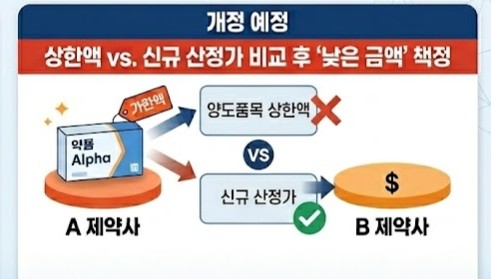
- Changes are expected to the current rules that allow drug price ceilings to be inherited during product transfers. The system is likely to revert to past regulations that apply the lower of the new calculated price and the price at the time of transfer.As a result, acquiring high-priced generics to avoid the impact of drug pricing reform will no longer be viable.According to industry sources on the 6th, a working-level consultative body comprising the Ministry of Health and Welfare and industry representatives recently discussed changes to the transfer regulations that were not brought before the Health Insurance Policy Deliberation Committee in March.The rules governing price ceilings in transfers have changed multiple times. Until 2020, prices were set based on the lower of the final ceiling price of the transferred product and the newly calculated price.However, following the stepwise pricing reform, industry backlash arose as transfers were treated as new listings, leading to significant price drops.In response, the government allowed inheritance of the existing ceiling price starting during transfers in 2021.Now, the government plans to revert to the previous rule, applying the lower of the existing ceiling and the new calculated price.Even if a high-priced generic is acquired, the newly calculated price at the moment of transfer is applied, effectively enforcing a lowest price rule.Pharmaceutical companies that had considered acquiring high-priced generics to avoid pricing reform will lose this option.With the reform, the generic pricing rate has been reduced to 45%, and the reduction rate for products failing to meet the baseline requirements has been strengthened from 85% to 85%. Combined with multi-listing management rules, prices could fall to as low as 30.6% within one year if bioequivalence studies are not conducted.Previously, companies might have chosen to acquire products with higher maintained prices.However, if prices are reset based on the calculation price at the time of transfer, transfers that take existing drug prices into account become meaningless.
- Policy
- Innovative pharmas need permanent pricing incentives
- by Lee, Jeong-Hwan May 08, 2026 01:15pm
- Rep. In-soon Nam of the Democratic Party of Korea has drawn attention by stating that permanent pricing incentives for innovative pharmaceutical companies should be institutionalized in order to advance Korea into a pharmaceutical and biotech powerhouse and create blockbuster new drugs.Rep. Nam criticized the Ministry of Health and Welfare, noting that while the ministry recently formalized a differential drug pricing system between innovative and non-innovative pharmaceutical companies through a resolution by the Health Insurance Policy Deliberation Committee, the inclusion of preferential pricing for innovative pharmaceutical companies only as a temporary provision left some gaps.Regarding legislation to introduce limited international nonproprietary name (INN) prescribing, Rep. Nam also expressed the view that it would be reasonable to either remove penalty provisions for doctors who fail to comply with mandatory INN prescribing regulations or to downgrade and relax these penalties to administrative fines.Her point is that policy and legislation should be pursued with a focus on ensuring that the public can access frequently out-of-stock and essential medicines without barriers, setting aside conflicts between specific professions such as doctors and pharmacists.Having officially announced her candidacy for Deputy Speaker of the second half of the 22nd National Assembly, Rep. Nam In-soon promised that, if elected, she would strive to create a national environment that advances the pharmaceutical and biotech industry and enhances public access to essential medicines.On the 7th, Rep. Nam held a meeting with the press corps and stated, “As the Jae-myung Lee administration has adopted a national agenda to transform Korea into a leader in digital health and the pharma-biotech industry, I will consider various ways to support this goal as Deputy Speaker.”“Pharma-biotech lost priority under Yoon administration… will restore momentum”Rep Nam assessed that while fostering the pharma-biotech industry has always been a priority across administrations, interest declined under the former Yoon, weakening growth momentum.In contrast, she noted that the Lee administration has set a goal of becoming one of the world’s top 5 pharma powerhouses and developing domestic blockbuster drugs, raising expectations for policy reforms across related ministries, including the Ministry of Health and Welfare.She therefore argued for the need to permanently extend preferential drug pricing for innovative pharmaceutical companies with the goal of fostering blockbuster new drugs.Rep Nam stated, “I have consistently advocated for differential pricing between innovative and general pharmaceutical companies, and I welcome its inclusion in the recent reform. However, making the incentive temporary limits its impact on new drug R&D investment.”“The government’s goal is to improve the domestic pharmaceutical industry’s structure using the funds secured through drug price cuts. If we want innovative new drugs and blockbusters to emerge in Korea, preferential treatment for innovative pharmaceutical companies cannot be temporary. Instead of offering temporary preferential treatment to innovative companies, we must remove the ‘temporary’ qualifier to allow for active support.”Rep Nam also noted that the Health and Welfare Minister Eun-Kyeong Jeong has shown a strong commitment to fostering domestic new drug development.She said, “The Lee administration has declared its intention to nurture blockbuster drug companies and has merged the Bio Committee and Bio-Health Innovation Committee. Previously, the Ministry of Health and Welfare did not appear to take a leading role, but after speaking with Minister Jeong Eun-kyung following the integration of the innovation committees, it appears the Ministry intends to take the initiative and carry out its duties. The atmosphere will change going forward.”He noted, “Currently, South Korea lags behind advanced countries in terms of pharmaceutical technology, new drug development, and medical AI, so we must catch up quickly. Since I enacted the Special Act on the Promotion of the Pharmaceutical Industry, preferential measures have been stalled for several years. If elected Deputy Speaker, I will prioritize this area in my legislative work.”“Let’s carry out limited INN prescribing focused on patients, without provisions punishing doctors”Regarding the limited INN prescribing bill currently pending in the National Assembly’s Health and Welfare Committee, Rep Nam expressed the view that even if provisions punishing doctors who violate the mandatory generic prescribing requirement are removed, a legislative environment must be created that ensures patients can access essential medicines without inconvenience.She emphasized that, since limited INN prescribing is a key policy agenda item of the current administration, efforts should focus on addressing resistance from the medical community and ensuring smooth institutional adoption.The current bill mandates INN prescribing for selected drugs designated by the Ministry of Health and Welfare following a government committee review, and stipulates penalties of up to one year in prison or a fine of up to KRW 10 million for violations.Rep Nam clearly stated that these penalty provisions should either be removed entirely or downgraded to administrative fines.She also noted the need to carefully consider concerns raised by the Korean Medical Association regarding the scope of bioequivalence testing and trust in substitution and INN prescribing.Rep Nam said, “The KMA is opposing the measure, raising concerns about the broad scope of bioequivalence testing, and their arguments should be taken seriously. We need further discussion on how to incorporate these concerns into policy. For now, it seems there is a lack of objective data or research on generic substitution and INN prescribing, so we need to accumulate more data.”She added, “Gradual implementation of INN prescribing for out-of-stock and essential medicines could serve as a middle ground between physicians and pharmacists. “Public awareness of generic substitution and INN prescribing has significantly increased during the COVID-19 pandemic, as more people have experienced receiving alternative drugs with the same active ingredient.”Nam emphasized, “We should activate systems such as post-notification of substitution and build more research data to support future legislative discussions. But imposing criminal penalties for INN prescribing violations is inappropriate. A more reasonable approach would be to remove penalties or reduce them to administrative fines, prioritize patient-centered legislation, and consider enforcement measures in stages.”“Warehouse pharmacy regulations need to prevent misuse”The recent amendment to the Pharmaceutical Affairs Act, which strengthens regulations on warehouse-style pharmacy advertising, is also one of Nam’s achievements.She explained that the ultimate goal of the regulation is to prevent excessive consumption and misuse of medicines that could lead to adverse effects.The provision in the Pharmaceutical Affairs Act prohibits expressions that may encourage misuse and delegates authority to the Ministry of Health and Welfare to specify concrete and unique expressions that cannot be used in pharmacy names or promotional slogans through subordinate regulations, prioritizing public safety above all else.Rep Nam said, “We also brought forward the implementation date from six months to three months after the government’s promulgation, and added a supplementary provision allowing public health centers to provide administrative guidance to pharmacists opening new pharmacies before the law takes effect. I was the one who codified the provision for pharmacists to provide medication guidance within the Pharmaceutical Affairs Act. At first, pharmacists weren’t very fond of it, but today, medication guidance has become a crucial system and phrase for ensuring public medication safety.”She continued, “When I look at warehouse-style pharmacies, I'm sorry whether pharmacists can actually provide proper medication guidance to patients. We must prevent the public from perceiving medications as mere commodities. Even after my election as Deputy Speaker, I will engage in policy monitoring to curb the misuse of medications by the public by regulating warehouse-style pharmacies.”
- Policy
- MFDS to revise labeling for 951 metformin products
- by Lee, Tak-Sun May 07, 2026 10:29am
- AI-generated imageThe government is pushing to revise the labeling for 951 metformin-containing products, the most widely used diabetes treatment in the market. This measure aims to explicitly state the potentially fatal side effects that may occur when metformin-containing products are administered to patients with hereditary mitochondrial disorders.According to industry sources on the 5th, the Ministry of Food and Drug Safety (Division of Drug Safety Evaluation) recently prepared a proposal to amend the approval conditions based on the European Medicines Agency (EMA)’s safety review regarding metformin-containing products and has begun collecting industry feedback.The key change is to restrict use and require immediate discontinuation in patients suspected or diagnosed with mitochondrial disorders.Under the proposed revision, metformin is not recommended for patients with ▲ MELAS syndrome (mitochondrial encephalopathy with lactic acidosis and stroke-like episodes) and ▲ MIDD (maternally inherited diabetes and deafness), due to increased risks of lactic acidosis and neurological complications.Additionally, if symptoms suggestive of MELAS or MIDD occur after administration, treatment should be immediately discontinued, and prompt diagnostic evaluation should be performed. The analysis indicates that metformin can affect intracellular mitochondrial metabolism, potentially causing severe energy metabolism disorders in patients with underlying genetic diseasesThe revision applies to a total of 951 products, including both monotherapy and combination drugs. As metformin is a core component of the domestic diabetes treatment market, most major pharmaceutical companies, including Chong Kun Dang, Daewoong, Hanmi, and Yuhan, are expected to be affected.The MFDS will accept feedback from relevant associations and companies until May 15. It will then comprehensively review the submitted comments and issue a final order to amend the approved product information.An MFDS official stated, “This measure aims to enhance the safe use of medicines for patients in Korea based on the latest safety information from the EMA. We ask that relevant associations and their member companies submit their review comments within the deadline.”

- Policy
- Government support for the next Leclaza discovery continues
- by Lee, Jeong-Hwan May 06, 2026 03:29pm
- Kang-seop Lim, Director of the Pharmaceutical Bio Industry Division, MOHW“A new drug candidate from the biotech venture Genosco was licensed out to Johnson & Johnson in the U.S. via the mid-sized pharmaceutical company Yuhan Corporation, leading to the creation of Leclaza. This is a prime example of a successful pharmaceutical and biotech startup from Korea. We plan to continue pushing forward with government policies this year to provide full support until the end, ensuring that more startup models emerge, with policies that support the commercialization of such early-stage discoveries.”The Ministry of Health and Welfare is unveiling a specialized startup fostering roadmap for the pharmaceutical and biotech sector for the first time in history, aiming to create domestic blockbuster drugs like a “second Leclaza” from the venture stage.The plan will provide full-cycle support to ensure promising drug candidates are not lost, linking technologies from universities, hospitals, and research institutes to startups, scaling them up, and supporting global expansion.On the 3rd, Kang-seop Lim, Director of the Pharmaceutical Bio Industry Division, stated that a startup support plan will be developed jointly with the Ministry of SMEs and Startups (MSS) and announced by June or July.With the newly established division within MOHW and Director Lim dedicating his full efforts as its first head, there is a growing momentum to develop multifaceted policies for the promotion of the pharmaceutical and biotechnology industry.This initiative follows President Jae-myung Lee’s ‘Startup Nation’ strategy announced in January.At that time, President Lee instructed all government ministries to build a startup ecosystem where anyone, including young people, regional entrepreneurs, and deep-tech startups, can pursue entrepreneurship.The MOHW is joining forces with the MSS on the plan, following their earlier announcement of collaborative measures for pharmaceutical and biotech industry policies.This amounts to establishing specific policy measures to promote and foster startups in the pharmaceutical and biotech industry, with the revitalization of startups in this sector serving as the policy goal and overarching framework.Director Lim pointed to research institutes within universities, medical institution research centers, including those in university hospitals, and government-funded research institutes as the specific targets of this policy.This administrative initiative aims to increase the number of cases where new drug candidates currently being researched by professors, doctors, and scholars are brought to the forefront through government-supported startups, commercialized and productized through processes such as licensing out, and then expanded beyond the domestic market into the global market.Director Lim cited Leclaza as a representative example. He explained that this is a policy in which the MOHW and MSS joined forces to ensure that a highly marketable domestic new drug, capable of succeeding in both domestic and overseas markets, was developed through the Genosco-Yuhan Corporation-Johnson & Johnson track.Director Lim stated, “Lecraza is a representative success case in which an early-stage drug candidate developed by Genosco was licensed by the mid-sized pharmaceutical company Yuhan, and later out-licensed to Johnson & Johnson for commercialization in overseas markets. This is a prime example of a successful pharmaceutical and biotech startup, and the government plans to support more cases like this.”He added, “In Korea, pharma-biotech startups typically emerge through several routes, including ventures founded by professors and researchers in university labs, physicians in hospitals, and researchers at government-funded institutes. A significant number of new drug candidates are likely to originate at the researcher or academic stage. The policy focus is on how the government can support these efforts when they transition into pharma-biotech startups.”Lim continued, “Given the limited size of the domestic market, global expansion is inevitable. We will support pharma-biotech startups not only in scaling up after their establishment, but also through to global expansion and commercialization.”He further stated, “This is the first time the Ministry of Health and Welfare has introduced a policy specifically targeting pharma-biotech venture startups. While we are still working through the details and identifying actionable support measures, we plan to finalize and announce the startup support plan by July. Ultimately, our goal is to establish a Ministry of Health and Welfare policy that identifies and supports startups that will serve as the seeds for large-scale innovative drug development.”

- Policy
- Remote delivery of medical supplies for rare disease patients allowed
- by Lee, Jeong-Hwan May 06, 2026 03:29pm
- Minister Eun-kyeong Jeong ㅆhe Ministry of Health and Welfare announced that starting on the 4th, it will implement a “non-face-to-face direct delivery service for medical products” targeting rare disease patients, patients with severe intractable diseases, and severely ill children.This is to ensure stable access to medical products for patients with rare diseases who are facing difficulties in securing necessary medical supplies due to the prolonged Middle East conflict.Target conditions include short bowel syndrome, Cornelia de Lange syndrome, Pompe disease, and biliary atresia. Medical products (including pharmaceuticals and medical devices) in high demand for each disease group, such as syringes and IV lines, are included in the remote delivery program.The Ministry will provide one-stop support through the telemedicine platform ‘Soldoc,’ which allows patients to consult with representatives via chat and make product purchases and delivery after patients and caregivers go through the verification process.In the future, the model will expand to include customized in-person and remote care, collaboration between large and local hospitals, and delivery of pharmaceuticals and medical supplies.On the 3rd, Minister Eun-kyeong Jeong held a roundtable meeting at Seoul National University Hospital Rare Disease Center with representatives from the Korean Organization for Rare Diseases, SNUH medical staff, and the Soldoc platform to discuss the initiative.During the meeting, participants shared challenges faced by rare disease patients due to the Middle East conflict, and decided to immediately launch a direct delivery service for medical supplies in collaboration with the telemedicine platform Soldoc.Patients with rare diseases are defined as those suffering from rare conditions affecting 20,000 people or fewer, as stipulated by the Rare Disease Management Act. Among these patients, those who must manage their conditions at home using medical supplies such as syringes and IV sets are facing difficulties due to rising prices and shortages of medical supplies caused by the war in the Middle East.In fact, Mr. A, a caregiver for a patient with short bowel syndrome, expressed his anxiety, saying, “I was worried because the IV sets I used to buy online were often out of stock due to the situation in the Middle East.”Ms. B, who cares for a child with Cornelia de Lange syndrome, also said, “Syringes and disposable vials are essential for the children’s nutritional support (enteral feeding) and medication administration, so I was worried I wouldn’t be able to obtain the supplies I usually buy from online shopping sites.”Ultimately, the difficulties in securing medical supplies purchased through online shopping sites due to the fallout from the Middle East conflict led to a partnership between the Ministry of Health and Welfare and the telemedicine platform SolDoc.Unlike general online shopping sites, Soldoc has a system in place to verify eligibility, being linked with medical institutions to confirm whether a patient has a rare disease.Through this system, when a patient with a rare disease or their caregiver submits a purchase request via the internet or app, eligibility verification is easily conducted through the National Health Insurance Service system.Once verified, they can purchase products and receive delivery, paying out-of-pocket for non-reimbursed items.For items covered under medical expense reimbursement that require prescriptions, patients can consult doctors via telemedicine before purchase. Claims are handled by the provider, and patients only pay their coinsured share.Items available include syringes, infusion sets, suction tips, suction catheters, sterile saline, and disinfectant swabs.The Ministry plans to expand the program to include patients with severe intractable diseases and children receiving medical expense support, if necessary.Additionally, the Ministry is considering pharmaceutical delivery for urgent cases.Telemedicine will be formally implemented in December, following revisions to the Medical Service Act. The revised law allows telemedicine for rare disease patients.In particular, patients with rare diseases can receive telemedicine services even at hospital-level or higher medical institutions, and the delivery of drugs and supplies is also permitted. The Ministry plans to strengthen services focused on those requiring essential medical services through telemedicine before the law takes effect.Minister Eun-kyeong Jeong promised, “The state and society will take responsibility to ensure that patients are not marginalized or left in anxiety simply because their diseases are rare. We will provide financial support for the cost of medical supplies if needed after reviewing the burden of medical supply costs.”Meanwhile, on the same day, Minister Jeong, Soon-heon Kwak, Director General of Health and Medical Policy, Jin-hyang Jeong, Secretary General of the Korean Organization for Rare Diseases, seven patients, and six medical staff members, including Joong-shin Park, Vice President for Medical Services at Seoul National University Hospital, held a staff meeting at Seoul National University Hospital in Jongno-gu, Seoul, after the roundtable meeting.
- Policy
- Incrementally modified drugs unaffected by price reform
- by Jung, Heung-Jun May 06, 2026 03:28pm
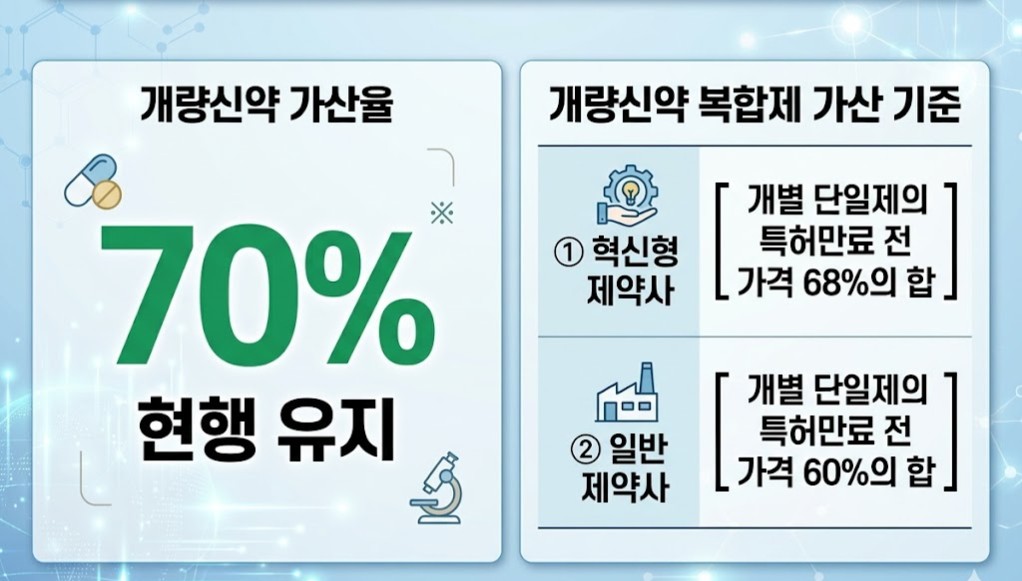
- Under the government’s drug pricing system reform, the insurance pricing premium rates for incrementally modified drugs and their combination products are expected to remain unchanged. Only some conditions related to the duration of the premium are likely to be adjusted.As the pricing calculation rate for generics is set to drop to 45%, domestic companies are expected to show greater interest in developing incrementally modified drugs.According to industry sources on the 6th, during working-level discussions between the government and the pharmaceutical industry, a consensus was reached not to lower the premium for incrementally modified new drugs.Although maintaining the current premium was discussed at the Health Insurance Policy Deliberation Committee (HIPDC) in November last year, the point was excluded from the reform plan approved by the HIPDC in March this year.This led to concerns within the industry that the premium might also be reduced along with the lower pricing calculation rate. There were concerns that lowering the premium could eliminate incentives for R&D investment.Under the current pricing system, incrementally modified drugs receive a premium on a base pricing rate of 53.55%, resulting in a final price of 70%. For new dosage or administration forms, a 58.9% premium is applied, resulting in a price of 77%.For incrementally modified combination drugs, pricing is calculated as the sum of pre-patent-expiry prices of each component. Innovative pharmaceutical companies receive 68% of that sum, while general pharmaceutical companies receive 59.5%.The government is not expected to significantly adjust these premium rates. Instead, it is reported that the preferential premium rate for combination drugs by general pharmaceutical companies—currently a 59.5% sum—will be slightly adjusted to a 60% sum.As the generic pricing rate is reduced from 53.55% to 45% while the incrementally modified drug premium remains unchanged, the price gap between generics and modified drugs is expected to widen further.The conditions for the premium duration are expected to be simplified. Previously, a one-year premium could be extended in two-year increments through conditional approvals and reviews.Going forward, a basic one-year premium will be granted, with an additional three-year extension if domestic manufacturing criteria are met. If no follow-on generics are listed thereafter, the premium may continue.Modified drugs and their combination products that are domestically produced and face no market competition will be able to maintain their premium drug prices for a long time.
- Policy
- What's the reason behind domestically developed CAR-T 'Rimqarto' obtaining Phase 3 waiver?
- by Lee, Tak-Sun May 04, 2026 10:33am
- CAR-T therapy Rimqarto (source: Curocell)Rimqarto (anbalcabtagene autoleucel, Curocell), the first domestically developed CAR-T therapy to be approved in South Korea, has been granted a waiver for Phase 3 clinical trials.This decision is interpreted as the result of a comprehensive consideration of the unique characteristics of the drug as a third-line treatment for lymphoma, as well as the ethical dilemmas associated with comparative clinical trials against existing therapies.According to the results of the Ministry of Food and Drug Safety (MFDS)'s Central Pharmaceutical Affairs Advisory Committee (CPAC) meeting held on April 2, it was concluded that it is appropriate to waive the Phase 3 clinical trial for the new CAR-T (Chimeric Antigen Receptor T-cell) therapy 'Rimqarto' and replace it with post-marketing surveillance.CPAC members highlighted that while Rimqarto has the same basic mechanism as existing CAR-T agents, it introduces a novel mechanism that simultaneously inhibits PD-1 and TIGIT to prevent T-cell exhaustion.According to a recently disclosed meeting report, one member highly evaluated the product's efficacy, stating, "The response rates were better than the clinical results of previously approved therapies, particularly with a high proportion of patients achieving complete remission (CR) and encouraging long-term survival results."Regarding safety, no specific issues were found besides the adverse events typically reported in similar agents (such as CRS and ICANS), and deaths during the trial were judged to have a low correlation with the drug.On the highly debated issue of giving a 'conditional pass for Phase 3 clinical trials,' the committee reached a consensus that it is "practically impossible." First, they viewed it as lacking ethical validity. Given that already-proven CAR-T products are approved and in use, administering a less effective control drug to patients was deemed unethical.The difficulty of patient recruitment was also considered. The patient population in the third-line lymphoma treatment phase has a low survival rate and a small number of candidates, making it extremely difficult to conduct large-scale confirmatory trials that include a control group. Consequently, the CPAC concluded that it is more rational to continuously verify safety and efficacy using Real-World Data (RWD) collected in clinical settings or Post-Marketing Surveillance (PMS), rather than mandating a Phase 3 trial.Based on this CPAC advisory, the MFDS finalized the approval conditions for Rimqarto. The committee agreed that the "product approval is appropriate, given that it is a third-line lymphoma treatment," and decided to disclose the meeting report anonymously.This decision served as a stepping stone toward the rapid supply of an independently developed domestic CAR-T therapy to the field. It is expected to provide new treatment opportunities for patients with severe hematologic cancers who do not respond to existing treatments.Meanwhile, 'Rimqarto Inj' is an orphan drug for the treatment of adult patients with diffuse large B-cell lymphoma (DLBCL) and primary mediastinal B-cell lymphoma (PMBCL) that is relapsed or refractory after two or more systemic therapies.Rimqarto works by inserting genetic information into the patient's immune cells (T-cells) to enable them to recognize CD19, a surface antigen on B-cells, and then re-injecting these cells into the patient's body to identify and destroy cancer cells expressing CD19. It is designed to inhibit the expression of immune checkpoint receptors PD-1 and TIGIT, thereby blocking cancer cells' immune evasion and inducing enhanced, sustained T-cell responses to increase anti-tumor effects.
- Policy
- US tests pay-for-performance to address fee-for-service limits
- by Jung, Heung-Jun May 04, 2026 10:33am
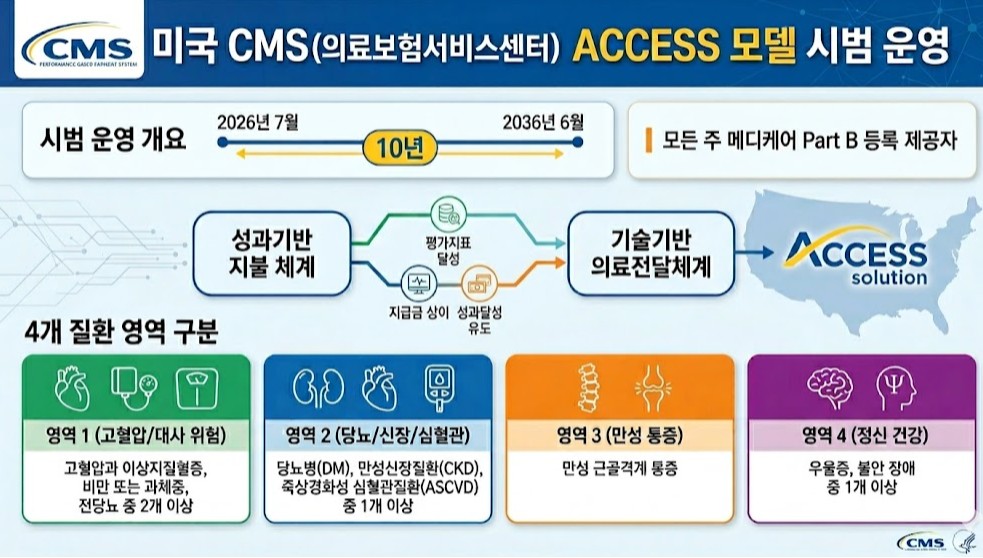
- To address the issues of an aging population and rising healthcare costs, the U.S. will launch a pilot program for a pay-for-performance system nationwide starting this July.This model links payments to the achievement of chronic disease management metrics and represents an attempt to overcome the limitations of the traditional fee-for-service (FFS) system.On the 30th, Soo-min Kwon, a senior researcher at the Health Insurance Review and Assessment Service (HIRA) Benefits Policy Research Division, published the policy implications of “The US’s New Performance-Based Payment Model for Chronic Disease Management” through an HIRA Issue report.The US Centers for Medicare & Medicaid Services (CMS) will pilot the ACCESS (Advancing Chronic Care with Effective, Scalable Solutions) model from July this year through June 2036. This model combines performance-based payment systems with technology-enabled healthcare delivery.All Medicare Part B providers across all states are eligible. Patients are categorized into four groups;▲ those with at least two of hypertension, dyslipidemia, obesity/overweight, or prediabetes, ▲ those with at least one of diabetes (DM), chronic kidney disease (CKD), or atherosclerotic cardiovascular disease (ASCVD); ▲ chronic musculoskeletal pain; ▲ those with at least one of depression or anxiety disordersParticipating institutions provide integrated services including clinical consultations, lifestyle interventions, education, and medication management. They also conduct clinical improvement activities, collecting outcome data through remote monitoring tools and implementing interventions using digital health platforms.Final control and minimum improvement targets are set for each evaluation metric, with targets adjusted annually over the treatment period.Institutions receive payments for managing patients over a one-year period. During the initial six months of treatment, they receive 50% of the annual payment in monthly installments, while the remaining 50% is paid based on whether performance targets were met and whether the patient received services for the same condition from other healthcare providers.The payment structure differs between the initial treatment year and subsequent management phases to incentivize early achievement of clinical outcomes.Kwon explained, “This represents a shift from service-based to performance-based payment systems, redesigning reimbursement criteria around clinical results rather than service quantity.”She added, “In line with global trends in payment system reform, this could serve as a reference model for designing integrated chronic disease payment systems in Korea and ensuring the sustainability of the national health insurance finances.”
- Policy
- Kwangdong secures first generic exclusivity for Tagrisso
- by Lee, Tak-Sun May 04, 2026 10:33am
- Domestic pharmaceutical companies are intensifying their push into the KRW 110 billion non-small cell lung cancer (NSCLC) treatment market centered on Tagrisso (osimertinib). Following Chong Kun Dang’s first generic approval in January, Kwangdong Pharmaceutical has also joined the ranks of companies obtaining first generic exclusivity, marking the start of a full-scale race to capture the market.Kwangdong Pharmaceutical’s ‘Ktinib Tab’ Approved… Second after Chong Kun DangAccording to the Ministry of Food and Drug Safety, Kwangdong Pharmaceutical obtained first generic exclusivity on April 30 for its osimertinib mesylate product ‘Ktinib Tab (40mg, 80mg).’ This is the second such approval following Chong Kun Dang’s ‘Otinib Tab,’ which received approval on January 27.The drug’s indications include, as a monotherapy: ▲Adjuvant treatment following complete resection in patients with NSCLC harboring EGFR exon 19 deletions or exon 21 (L858R) substitution mutations ▲Treatment of patients with unresectable locally advanced (Stage III) NSCLC harboring EGFR exon 19 deletions or exon 21 (L858R) substitution mutations whose disease has not progressed during or after platinum-based chemoradiotherapy ▲First-line treatment of patients with locally advanced or metastatic NSCLC harboring an EGFR exon 19 deletion or exon 21 (L858R) substitution mutation ▲Treatment of patients with EGFR T790M-positive locally advanced or metastatic NSCLC who have previously been treated with an EGFR-TKI.Additionally, as a combination therapy, it is indicated for the first-line treatment of patients with locally advanced or metastatic non-squamous NSCLC harboring EGFR exon 19 deletions or exon 21 (L858R) substitutions, in combination with pemetrexed and platinum-based chemotherapy. These indications are identical to the original Tagrisso.Like Chong Kun Dang, Kwangdong succeeded in circumventing Tagrisso’s formulation patent (set to expire January 2035), thereby securing first generic exclusivity. As a result, both companies will hold a roughly 9-month market exclusivity period starting from the expiry of the substance patent.First, generic exclusivity is granted when a company successfully challenges a patent and meets the criteria of being among the first to file for approval. Both companies achieved patent circumvention in September last year by winning a passive scope confirmation trial regarding the formulation patent. AstraZeneca has since appealed, and a lawsuit to cancel the ruling is currently ongoing at the Intellectual Property High Court.The approval applications were also submitted simultaneously to the MFDS, meaning both companies met the requirements for exclusivity.The exclusivity period for Ktinib (during which sales of identical drugs are restricted) is set from December 28, 2033, to September 27, 2034.Since the original drug Tagrisso’s substance patent remains valid until 2033, immediate market entry is not possible. However, both companies plan to enter the market immediately upon patent expiry, block latecomers, and capture the KRW 110 billion market.Tagrisso vs. Leclaza… generics join the competitionCurrently, the domestic NSCLC treatment market is dominated by AstraZeneca’s original drug Tagrisso and Yuhan’s domestic new drug Leclaza, which are competing fiercely for market share. With Chong Kun Dang and Kwangdong preparing to launch generics, the market landscape is expected to become even more complex.A pharmaceutical industry insider analyzed, “Given the high commercial potential of the product, generic companies are continuing to challenge the patents. With Chong Kun Dang and Kwangdong securing generic exclusivity, the generic market is highly likely to evolve into an initial two-horse race starting in 2033
- Policy
- Novartis Korea's SMA therapy undergoes expedited approval review
- by Lee, Tak-Sun Apr 29, 2026 03:48pm
- Product photo of onasemnogene abeparvovecOnasemnogene abeparvovec, Novartis Korea’s new drug for spinal muscular atrophy (SMA), has been designated as an item for the Ministry of Food and Drug Safety (MFDS)’s Global Innovative Products on Fast Track (GIFT).According to industry sources on the 28th, the MFDS designated the drug as the 67th GIFT item on the 8th and initiated a full-scale expedited approval review. This designation is based on recognition of the drug's innovation in treating rare diseases and its improved efficacy compared to existing treatments. The brand name of onasemnogene abeparvovec is known asItvisma.The version of this drug approved for GIFT this time changes the administration route from the existing intravenous (IV) formulation, Zolgensma, to an intrathecal (IT) injection.Unlike the original Zolgensma, which was primarily designed for use in infants and young children due to weight restrictions (under approximately 13.5 kg), this new formulation has been submitted for all SMA patients of any age who have biallelic mutations in the Survival Motor Neuron 1 (SMN1) gene. New formulation is garnering significant anticipation because it offers the opportunity for gene therapy to pediatric patients aged 2 and older and to adult patients.Onasemnogene abeparvovec utilizes an adeno-associated virus serotype 9 (AAV9) vector to deliver a functional SMN1 gene directly to the patient's target cells. This mechanism addresses the disease's fundamental cause by inducing continuous expression of the deficient SMN protein.The MFDS decided on the GIFT designation based on the drug's outstanding motor neuron improvement effects demonstrated in clinical trials and data showing improved efficacy that complements existing treatments.The drug has already proven its value in the global market. The U.S. FDA completed its approval on November 24th of last year, and Japan's PMDA also approved on April 3rd.Following this GIFT designation, Novartis Korea will receive significant support from the MFDS throughout the approval process. Analysis suggests that the review period will be shortened by approximately 25% compared to general reviews, making domestic approval possible as early as the second half of this year or early next year.A pharmaceutical industry official stated, "The introduction of innovative new drugs into Korea is accelerating through the GIFT system. This expedited review approval is favorable news for older SMA patients who faced limitations with existing treatments."
