
- LOGIN
- MemberShip
- 2026-07-22 06:54:19

- Policy
- Opposition to labeling obesity drugs as 'misuse drug'
- by Lee, Tak-Sun Apr 10, 2026 08:27am
- AI-generated imageVoices are growing against the plan to designate GLP-1 obesity treatments, such as Wegovy and Mounjaro, as "high potential misuse and abuse." Critics point out that such a designation could instead drive patients toward illegal distribution channels.Analysis suggests that other countries are already putting effort into establishing an environment for safe use by monitoring distribution and prescription, rather than regulating the drug itself.On the 8th, the Ministry of Food and Drug Safety (MFDS) will discuss whether to designate these treatments through the Central Pharmaceutical Affairs Advisory Committee (CPAC).Currently, this category includes erectile dysfunction treatments, premature ejaculation treatments, and anabolic steroids. Once designated, the phrase "high potential misuse and abuse" must be displayed on the product packaging, and sales without a prescription are prohibited even in areas exempt from the separation of prescribing and dispensing.The MFDS's push for this designation is due to issues such as non-face-to-face prescribing, online black-market transactions, and indiscriminate off-label use, following the immense popularity of Wegovy and Mounjaro. Following discussions in last year's parliamentary audit, health authorities have been reviewing this designation.However, the industry is voicing concern that the designation could lead to illegal distribution, resulting in a balloon effect.However, the industry warns that labeling these drugs as potentially misused could shrink the patient base and prevent those who genuinely need treatment from receiving it.They argue that global trends focus on regulating the distribution and prescription stages rather than the drugs themselves.In Japan, as the prescribing of Ozempic (semaglutide) for obesity purposes increased, guidelines were established for prescribing institutions. According to an analysis conducted by the University of Tokyo research team of Japanese medical institution websites, institutions that advertised non-reimbursed prescriptions for GLP-1 receptor agonists exhibited significantly lower information quality. Furthermore, a large majority of these institutions were found to violate pharmaceutical advertising guidelines.Japan's Ministry of Health, Labor and Welfare (MHLW), when approving health insurance coverage for Wegovy in February 2024, set strict standards for prescribing institutions and patient lifestyle habits.Australia is also focusing on blocking unofficial distribution channels. From October 2024, Australia's Therapeutic Goods Administration (TGA) excluded GLP-1 drugs from the pharmacy compounding exemption. The system is designed to allow pharmacies to prepare similar drugs in response to drug shortages or to provide customized preparation for a specific patient.They also intensified advertising regulations, imposing fines of approximately 198,000 AUD (about 200 million KRW) for illegal advertisements on telehealth platforms.Japan and Australia have clear medical evidences and are focusing on monitoring illegal distribution and prescriptions, rather than designating obesity drugs that are approved by the regulatory authority as having the potential to be misused and abused.The WHO also emphasized 'regulated distribution networks, prescriptions by qualified medical professionals, and strong supervision' in its December 2023 global guidelines to counter the spread of counterfeit and substandard GLP-1 products.An industry official stated, "Major countries are setting standards for eligible prescribing institutions and restrictions on non-face-to-face prescriptions," adding, "They are putting effort into monitoring whether prescriptions align with BMI and comorbidities." The official added, "The Korean government and medical community should develop systematic management plans that block cosmetic use while protecting patient access for those who truly need treatment."There is also concern that the negative stigma of being a "high potential to misuse and abuse" could affect severely obese and type 2 diabetic patients. Another industry official stated, "Designation of 'high potential to misuse and abuse' mandates labeling, and the label points at all obesity patients. Not only those with severe obesity but also type 2 diabetic patients would receive medication stamped with 'potential to misuse'."Furthermore, there is a risk that patients who find it harder to obtain legitimate prescriptions may turn to unverified online purchases or illegal distribution channels. With cases of fraud and harm from illegal transactions already present in Korean online communities, critics fear that the official designation could expand this illegal market.
- Policy
- Samsung Bioepis-Hanmi joint sales 'Obodence' wins nod for IIT
- by Lee, Tak-Sun Apr 10, 2026 08:27am
- Product photo of ObodenceA large-scale investigator-initiated trial (IIT) for 'Obodence,' Samsung Bioepis' denosumab biosimilar, will begin.Led by Yeouido St. Mary's Hospital, this clinical trial is drawing significant attention as a large-scale study involving 13 medical institutions across South Korea. It is expected that this trial will provide clearer evidence of Obodence's efficacy, specifically in Korean patients.On the 8th, the Ministry of Food and Drug Safety (MFDS) approved the clinical trial protocol for 'Obodence Prefilled Syringe' requested by Catholic University of Korea Yeouido St. Mary's Hospital.The clinical trial aims to evaluate the efficacy of the denosumab biosimilar in postmenopausal women diagnosed with advanced osteopenia. It is designed as a multicenter, randomized, open-label study, corresponding to a Phase 4 post-marketing clinical trial.Obodence was launched in July of last year as a biosimilar to Prolia, an osteoporosis treatment. Prolia has dominated the osteoporosis market in South Korea, recording annual sales of approximately KRW 180 billion, given its strong efficacy and the convenience of once-every-six-month administration.The biosimilar market took off last year. In March, the first biosimilar, Celltrion's 'Stoboclo,' began joint sales with Daewoong Pharmaceutical. In July, Samsung Bioepis launched Obodence in the market through a partnership with Hanmi Pharmaceutical.The market share for biosimilars is on the rise, with Stoboclo recording sales of KRW 11.8 billion within its first 10 months.Samsung Bioepis, with Obodence launched slightly later than Stoboclo, is now focusing on marketing strategies to secure trust through clinical evidence.Notably, Samsung Bioepis is emphasizing to medical professionals that Obodence demonstrated results highly similar to the original in Phase 3 trials that included Korean participants. The Phase 3 study involved 457 postmenopausal patients with osteoporosis across five countries, including South Korea.In this regard, the current IIT is expected to serve as an opportunity to accumulate further evidence of its efficacy in Koreans. Given that the trial is being conducted across 13 domestic hospitals, it is anticipated to include a larger number of Korean subjects than the Phase 3 trial did.However, the company clarified that, as this is an investigator-initiated trial, it does not necessarily reflect the firm's specific corporate objectives.Stoboclo also received approval for an IIT last February. The study, conducted by Ajou University Hospital, is designed to evaluate the efficacy of denosumab in obese subjects treated with GLP-1 receptor agonists who exhibit weight loss and bone metabolism risk factors.

- Policy
- Drug pricing premium to hinge on innovative status
- by Jung, Heung-Jun Apr 10, 2026 08:26am
- As interest in innovative pharmaceutical company certification rises following the government’s drug pricing reform, pharmaceutical companies are keeping a close eye on the changed review requirements.With the required R&D investment ratio set to rise by 2 percentage points in three years, companies are particularly focused on the certification process scheduled for the second half of this year.According to industry sources on the 9th, whether a company receives the Innovative Pharmaceutical Company certification has become a key factor determining whether a company is a winner or a loser under the revised drug pricing system. Although all companies are subject to the same structural changes, they are effectively being handed very different report cards because of differences in treatment regarding existing price cuts and pricing premiums.An official from a domestic pharmaceutical company stated, “For Innovative Pharmaceutical Companies, price reductions for existing listings are spread out over 10 years, and there are pricing premiums and reduction clauses, so the impact of the reform plan is likely to be less severe. The extent of the impact will inevitably differ from what non-innovative companies experience.”The Korea Pharmaceutical and Bio-Pharma Manufacturers Association held two explanatory sessions on the pricing reform, one online on the 3rd and another on the 8th, and many of the questions were reportedly related to innovative and quasi-innovative company certifications.There was also interest in when and how the price adjustment method would be applied if a non-innovative company’s status were to change to innovative or quasi-innovative.The introduction of the quasi-innovative category has broadened interest beyond companies that had already been focused on the certification system to a wider range of firms.However, with the Ministry of Health and Welfare revising the Enforcement Decree and Enforcement Rules of the “Special Act on the Promotion and Support of the Pharmaceutical Industry,” companies now face the need to redesign their certification strategies.In particular, as the government has signaled a shift toward more microscopic scrutiny, such as the introduction of quantitative evaluations, while simplifying review criteria, more thorough preparation has become necessary.One of the most significant changes is that four items among the detailed evaluation criteria for certification, which include R&D investment, the number of clinical trials, and export volume, have been converted into quantitative indicators.Given the high level of interest from the pharmaceutical industry, the Ministry of Health and Welfare is holding a briefing session today (the 9th) for pharmaceutical companies to explain the improvements to the certification system.Another official from a domestic pharmaceutical company stated, “Although we have avoided an immediate increase in the R&D ratio, since the review criteria have changed, even companies that were already preparing will likely be re-evaluating their plans.”An official from a pharmaceutical company preparing for certification this year said, “Companies with an R&D ratio in the 5% range are particularly interested in the revised certification system. We have already completed our preparations to a certain extent, but we will still attend the briefing session.”
- Policy
- Obesity drugs likely to be designated as drugs at risk of misuse or abuse
- by Lee, Jeong-Hwan Apr 10, 2026 08:26am
- The Ministry of Food and Drug Safety’s Central Pharmaceutical Affairs Council has issued an advisory opinion that GLP-1-based obesity treatments such as Wegovy and Mounjaro should be designated as drugs at risk of misuse and abuse.As GLP-1 obesity injections have gained popularity nationwide, indiscriminate prescribing and sales in areas exempt from the separation of prescribing and dispensing, as well as a sharp increase in pediatric prescribing, are said to have influenced the recommendation.According to the pharmaceutical industry on the 9th, following discussions on the validity of designating obesity treatments as drugs of concern for misuse or abuse, the Central Pharmaceutical Affairs Council agreed on the need to designate GLP-1 injectables as such.If regulations are finalized in line with the council’s recommendation, GLP-1 injections are expected to be designated as drugs of concern for misuse or abuse in the near future.Industry sources say that this decision was driven by a sharp rise in cases where GLP-1 obesity drugs are prescribed and sold for cosmetic purposes beyond obesity treatment, by exploiting areas exempt from the separation of prescription and dispensing, as well as growing risks associated with off-label prescriptions for children without approved indications.In fact, the Ministry of Health and Welfare has been working with the MFDS since last year to address misuse and abuse of newer obesity injections such as Wegovy and Mounjaro.To regulate indiscriminate prescriptions for cosmetic purposes, they have established an administrative policy to discuss designating these drugs as “drugs of concern for misuse or abuse” and to strengthen crackdowns on in-house dispensing by medical institutions that violate the principle of separation of prescribing and dispensing.GLP-1 obesity drugs have been associated with adverse effects ranging from relatively mild gastrointestinal side effects such as nausea, vomiting, and diarrhea to severe complications, including pancreatitis and intestinal obstruction.In particular, some medical institutions have also been criticized during NA audits for undermining the prescribing-dispensing separation principle by directly selling GLP-1 injections within hospitals through irregular in-house dispensing practices.If GLP-1 injectables are designated as drugs of concern for misuse or abuse in the future, they will be subject to much stricter distribution, prescription, and sales regulations compared to general prescription drugs.First, GLP-1 injectables will no longer be sold without a prescription, even in areas exempt from the separation of prescription and dispensing.In addition, product containers, package inserts, and outer packaging will be required to clearly display wording indicating that they are drugs at risk of misuse and abuse, so that consumers and healthcare professionals can immediately recognize the risk.Distribution oversight and surveillance will also be strengthened. The MFDS and the Ministry of Health and Welfare will more closely monitor distribution records among pharmaceutical companies, wholesalers, medical institutions, and pharmacies. If abnormal bulk purchases or prescribing patterns are identified, entities may face administrative penalties following intensive on-site inspections.A pharmaceutical industry official stated, “As Wegovy, Mounjaro, and similar agents have become extremely popular, usage has risen sharply, and GLP-1 prescriptions surged in conjunction with telemedicine during the early stages when regulations were absent. Even now, telemedicine continues to serve as a conduit linking medical institutions with patients seeking GLP-1 obesity prescriptions. In this context, the Central Pharmaceutical Affairs Council appears to have concluded that designation as drugs with a risk of misuse or abuse is unavoidable in order to control adverse effects.”Meanwhile, drugs designated as being at risk of misuse and abuse have so far included erectile dysfunction treatments such as sildenafil and tadalafil, premature ejaculation treatment dapoxetine, diuretics, and anabolic steroids. No obesity drug has previously been designated.
- Policy
- Multiple myeloma drug 'Blenrep inj' seeking reimbursement
- by Jung, Heung-Jun Apr 08, 2026 07:47am
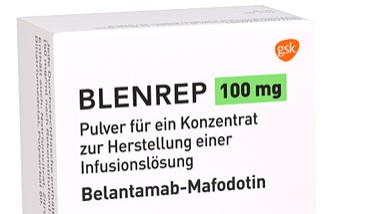
- GSK Korea's Blenrep inj (belantamab mafodotin), a new treatment for multiple myeloma, has officially entered the race for health insurance reimbursement listing.It has been just three months since receiving marketing authorization in December of last year as a designated new drug under the Global Innovative Product on Fast Track (GIFT) system.According to industry sources on the 8th, GSK Korea recently submitted an application to the Health Insurance Review and Assessment Service (HIRA) for the determination of reimbursement for Blenrep.Blenrep is a first-in-class Antibody-Drug Conjugate (ADC) targeting the B-cell maturation antigen (BCMA), which is overexpressed on the surface of multiple myeloma cancer cells. It induces cell death by releasing cytotoxic agents directly into the cancer cells. It has been approved as a second-line treatment for adult patients with relapsed or refractory multiple myeloma who have received at least one prior therapy.Blenrep holds clinical value by expanding treatment options for hematologic malignancies in an ADC market that has been focused on solid tumors in recent years, represented by drugs like Enhertu and Trodelvy.The approved indications in Korea are not for monotherapy but for combination therapies with ▲bortezomib and dexamethasone ▲ pomalidomide and dexamethasone.While the Central Pharmaceutical Affairs Council (CPAC) of the Ministry of Food and Drug Safety (MFDS) previously raised concerns regarding ocular toxicity, it concluded that the clinical benefits outweigh the risks. Consequently, the approval included management conditions, including regular ophthalmic examinations and the use of monitoring checklists.The approved dosage and administration also include requirements for eye exams and dose adjustments to manage adverse reactions. The upcoming reviews by the Cancer Disease Review Committee and the Pharmaceutical Reimbursement Evaluation Committee are expected to involve a thorough examination of reimbursement criteria and verification of cost-effectiveness in light of these requirements.Since this drug was approved as a second-line combination therapy to be used alongside existing anticancer drugs, analyzing the impact on National Health Insurance finances due to increased total treatment costs and negotiating Risk Sharing Agreements (RSA) are expected to be significant challenges in the listing process.
- Policy
- Government to prevent drug supply disruptions amid Middle East tensions
- by Jung, Heung-Jun Apr 07, 2026 07:22am
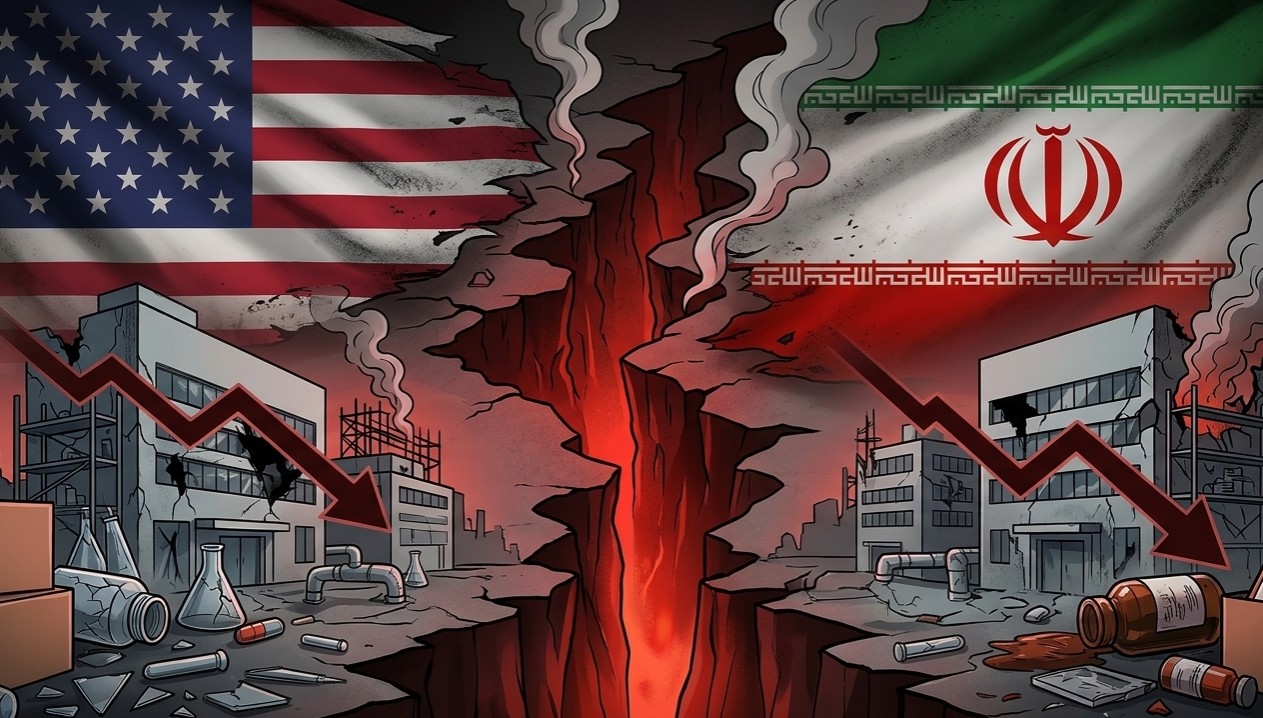
- Concerned that geopolitical risks in the Middle East could escalate into instability in the drug supply chain, the government is simultaneously pursuing regulatory improvements and conducting a survey of the current supply situation.This is because logistical disruptions involving raw materials and packaging materials could affect the domestic drug supply. In particular, there are concerns that shortages of petrochemical raw materials, such as naphtha, could exacerbate packaging supply issues.On the 3rd, the Pharmaceutical Supply Management Division of the Health Insurance Review and Assessment Service (HIRA) launched a survey on pharmaceutical supply status through the Korea Pharmaceutical and Bio-Pharma Manufacturers Association.The aim is to identify which drugs are being affected by import delays and supply disruptions due to risks in the Middle East. HIRA plans to use this information to proactively prepare countermeasures.HIRA is monitoring drug distribution inventory levels through the Korea Pharmaceutical Information Center. However, there is a limitation in that, while it has data on domestically distributed drugs, it is difficult to predict supply disruptions caused by import and logistics delays.HIRA is expected to compile information from pharmaceutical companies, including product names, packaging materials, and inventory levels, by next week and use this as a basis for formulating strategies such as future drug price management and securing alternative medications.If disruptions in the logistics networks for raw materials and packaging materials persist, the impact on domestic pharmaceutical companies’ production costs and supply stability could increase even further. Consequently, the government appears to be taking preemptive action before supply instability becomes a reality.The Ministry of Food and Drug Safety also discussed countermeasures last week with three companies supplying basic IV fluids and introduced unprecedented regulatory easing measures, including a fast-track system for approval changes.The measures were announced on the 3rd during a joint meeting of the Emergency Economic Measures Headquarters Meeting and Ministerial Meeting on Economic Affairs. The government announced regulatory easing measures. The MFDS lowered regulatory barriers to enable pharmaceutical and medical device manufacturers to diversify their supply chains for raw materials and packaging materials, such as IV solutions and syringe needles.First, in cases where changes to product approval are required due to shortages of petrochemical raw materials such as naphtha, a 'fast-track system' has been newly established to prioritize review over other items.Additionally, for medical devices, the agency allowed manufacturers to make changes to packaging materials to undergo document reviews instead of on-site GMP inspections.This is intended to reduce the one to two months it typically takes for pharmaceutical companies to complete product license amendment reviews. The measures to shorten review periods will be implemented immediately as part of the government’s proactive administration initiative.

- Policy
- Silymarin to undergo reimbursement reevaluations this year
- by Jung, Heung-Jun Apr 07, 2026 07:22am
- The ingredient 'silymarin (milk thistle extract),' which was the subject of a lawsuit after the company contested the results of the 2021 reimbursement reevaluation, is finally being put to the test once again. It is scheduled to be included in this year’s list of items subject to re-evaluation, alongside ginkgo biloba and dobesilate, which were previously on the list.According to industry sources on the 6th, the Health Insurance Review and Assessment Service (HIRA) Drug Reimbursement Evaluation Committee recently discussed a proposal to add silymarin to the list of items subject to reevaluation.In the 2021 reimbursement reevaluation, which also included dried bilberry extract and Avocado-soya unsaponifiables, silymarin was deemed inappropriate for reimbursement. In November of that year, the Ministry of Health and Welfare announced its decision to delist.Pharmaceutical companies filed injunction requests and administrative lawsuits. While the first trial in November 2023 upheld the reimbursement withdrawal, the appellate court overturned the decision in December last year, ruling in favor of the companies. The ruling became final after the Ministry of Health and Welfare chose not to appeal.Based on a review of the appellate court’s ruling, it appears that the direction has been set to conduct a re-evaluation of reimbursement appropriateness rather than delisting.This is interpreted as the court having pointed out procedural flaws in the reevaluation process rather than having judged the clinical utility of the drugs.Seven ingredients, including ginkgo biloba extract and calcium dobesilate, had already been discussed for reevaluation this year. It is reported that there have been changes to some of the other items. Although the agenda for items subject to reimbursement reevaluation was submitted to the Drug Reimbursement Evaluation Committee last January, the Health Insurance Policy Deliberation Committee has not yet reached a decision.Generally, items for reimbursement reevaluation are decided by the Health Insurance Policy Deliberation Committee immediately after being submitted to the Drug Reimbursement Evaluation Committee, but the process has been delayed due to the drug pricing reform, which includes changes to the reimbursement reevaluation criteria.Since the drug pricing reform plan was finalized at the March Health Insurance Policy Deliberation Committee meeting, the items are expected to be submitted to the committee this month.Furthermore, the items to be reevaluated next year remain unclear. Because the drug pricing reform has changed the annual reimbursement reevaluation to be conducted on an as-needed basis, the decision on items for 2027 will require further observation.

- Policy
- INN prescribing bill may be resubmitted to April subcommittee
- by Lee, Jeong-Hwan Apr 06, 2026 03:51pm
- 소병훈 보건복지위원장Attention is mounting within the healthcare and pharmaceutical sectors on whether a bill mandating limited international nonproprietary name (INN) prescribing for essential medicines or drugs with unstable supply will be reviewed by the National Assembly’s Health and Welfare Committee’s legislative subcommittee in April.The bill was included on the agenda of the Health and Welfare Committee’s legislative subcommittee last March, but did not get a chance to be reviewed as it was pushed back by other bills.On the 3rd, lawmakers from the Democratic Party of Korea have emphasized the need to convene the subcommittee in April to discuss bills under their purview that were not reviewed last month.As it is highly unlikely that the subcommittee will convene in May, just one month before the June 3 local elections, the Democratic Party of Korea members of the Welfare Committee saw a strong need to expedite the review of bills this month.Currently, the Health and Welfare Committee is led by Rep. Byung-hoon So (Gwangju-gap, Gyeonggi Province; third-term), who took over as the new chair following the resignation of former Chair Rep. Ju-min Park, who stepped down to run in the Democratic Party’s primary for the Seoul mayoral race.Accordingly, Chair Byung-hoon So, Democratic Party Executive Secretary Soo-jin Lee, and People Power Party Executive Secretary Mi-ae Kim are expected to begin discussions on the schedule for the April subcommittee meeting.Once the subcommittee meeting is confirmed, the bill mandating the limited use of INN prescribing, which was not reviewed last month, is highly likely to be placed on the agenda.Last month, on the day of the subcommittee meeting, the Korean Medical Association (KMA) held a “Rally to Block INN Prescriptions” on the steps in front of the National Assembly Main Building to pressure the Health and Welfare Committee.At that time, KMA President Taek-woo Kim made it clear that the association would take strong collective action if the bill were to be formally introduced.KMA President Taek-woo Kim led the rally to block the INN prescribing bill on the steps in front of the National Assembly Main Building on the 11th of last month.In particular, President Kim maintains a hardline stance that the bill must not be tabled at the April subcommittee meeting. The KMA is currently using the threat of a general doctors’ rally as leverage to block the review of the limited mandatory INN prescribing bill.However, the Democratic Party argues that the INN prescribing bill is part of President Lee’s campaign pledge and a national policy agenda adopted after his inauguration. They maintain that legislation is necessary to improve public access to medicines.A committee official stated, “The Democratic Party is calling for the need to convene the April subcommittee, but whether it will actually take place has not yet been finalized. It will be determined soon following consultations between the ruling and opposition party floor leaders, taking into account the schedule for the June 3 local elections.”There are three bills related to limited INN prescribing currently pending in the National Assembly: an amendment to the Pharmaceutical Affairs Act proposed by Rep. Yoon Kim of the Democratic Party of Korea, and amendments to the Medical Service Act and Pharmaceutical Affairs Act proposed by Rep. Jong-tae Jang of the same party.
- Policy
- Korea to use RWD for post-listing control of expedited drugs
- by Jung, Heung-Jun Apr 06, 2026 03:51pm
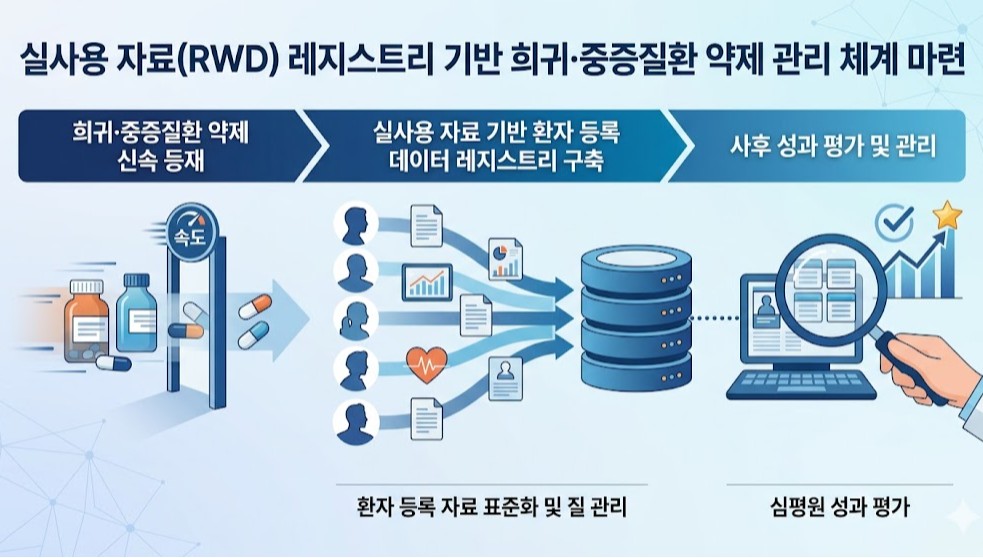
- A plan is being developed to utilize patient registry data, a subset of real-world data (RWD), to strengthen post-listing management of rare and severe disease treatments.This is an extension of the drug pricing system reform announced by the government last month through the National Health Insurance Policy Deliberation Committee. Previously, the government had revealed plans to expedite the listing of treatments for rare and severe diseases and then reevaluate their reimbursement status based on real-world data.According to industry sources on the 6th, HIRA and the Pharmacuetical Performance Assessment Department will conduct a study this year to establish an RWD registry-based management system. A registry refers to patient-level data collected by disease or drug.Although a call for proposals has not yet been issued, the research is scheduled to be completed by the end of this year.Following last year’s study on RWE (Real-World Evidence) guidelines for drug performance assessment, the government is now moving to establish a management system based on RWD registries.This research is significant as it moves beyond the conceptual definition stage towards building an actionable infrastructure. It also serves as a key follow-up measure for implementing the government’s drug pricing system reform.This is because a patient data management system must be established to implement measures such as performance-based reimbursement, adjustments to reimbursement scope, or drug price based on post-marketing evaluation results using real-world data.A HIRA official stated, “Building a registry is essential for managing rare disease treatments. We will conduct policy research on how to actually build such a system. I expect results to be available by the end of the year, following approximately 6 months of research.”The official further explained, “While this can be seen as an extension of the drug pricing system reform, there has long been a consensus that a registry is essential for establishing a management system for rare and severe disease drugs.”However, patient or disease-specific registration data in clinical settings have not yet been standardized, and concerns regarding proper quality control remain unresolved. These issues are expected to be key points of contention during the process of establishing a registry-based management system.An HIRA official stated, “We plan to commission the research soon. We ask researchers to show strong interest, given the high accessibility and utility of the registry data.”
- Policy
- Study to improve ICER threshold underway
- by Jung, Heung-Jun Apr 02, 2026 08:46am
- With the government announcing plans to raise the ICER threshold next year, detailed reform measures are expected to be prepared by October this year.For this, research aimed at ensuring fiscal sustainability while realigning cost-effectiveness evaluation criteria to become more realistic will be conducted over approximately 6 months.On the 31st, the Health Insurance Review and Assessment Service (HIRA) issued a request for proposal for a research project titled “Establishing rational cost-effectiveness evaluation criteria for listing new drugs under the national health insurance system.”This study was launched in response to criticism that the current ICER threshold fails to reflect ▲rising national income and inflation ▲demands for enhanced patient coverage ▲trends in innovative drug development.Through this research, a model for calculating the ICER threshold that incorporates socioeconomic factors such as income and inflation will be developed. A weighting system that takes disease severity, therapeutic benefits, and fiscal impact into account will also be designed.The study will also explore ways to systematize and categorize ICER thresholds and develop models for applying evaluation criteria to reimbursement decisions through pilot implementation.Additionally, the government will review the introduction of a system for periodically adjusting ICER thresholds by referencing major countries. It also plans to gather input from stakeholders, including the pharmaceutical industry, patient groups, and academia.HIRA plans to sign the research service agreement between March and April, conduct an interim review, and complete the study by October. The total budget for the project is KRW 60 million.Through this study, the agency expects to establish rational cost-effectiveness evaluation criteria, thereby improving patient access to treatment and incentivizing new drug development. It also aims to build trust among pharmaceutical companies, patients, and the government by establishing clear standards and procedures.Previously, the Ministry of Health and Welfare announced plans to raise the ICER threshold next year through reforms to the drug pricing system. It decided to introduce a weighting system to allow for the flexible application of ICER values. The ministry plans to conduct policy research this year and implement a rational plan in 2027 based on the results.The government is expected to finalize detailed implementation plans based on the research results, which are due around October, and proceed with full-scale adjustments to the ICER threshold sometime next year.
