
- LOGIN
- MemberShip
- 2026-07-23 02:55:08
- Policy
- Sotyktu, the world's first TYK2I, received domestic approval
- by Lee, Hye-Kyung Aug 04, 2023 05:38am
- The Ministry of Food and Drug Safety (Minister Oh Yoo-Kyung) approved BMS Korea's new plaque psoriasis drug 'Sotyktu 6mg' on the 3rd. Psoriasis is a chronic skin disease caused by immune abnormalities, and plaque psoriasis is the most common form. Sotyktu treats psoriasis by selectively inhibiting 'tyrosine kinase-2 (TYK2)' receptors related to inflammation and immune response by oral administration. The drug was approved by the US FDA in 2022 for use in adult patients with moderate to severe psoriasis who require systemic therapy or phototherapy. Sotyktu is the world's first and only TYK2 inhibitor approved for use and is the first oral drug available for moderate to severe psoriasis in 10 years. It is based on the comparative phase 3 POETYK PSO-1 and POETYK PSO-2 studies. This drug confirmed improved efficacy at 16 and 24 weeks after administration compared to the placebo and Otezla, and the clinical efficacy was found to last up to 52 weeks. This drug is expected to provide a new treatment opportunity for adult patients with moderate to severe plaque psoriasis who require phototherapy or systemic treatment. The Ministry of Food and Drug Safety said it would continue to do its best to expand treatment opportunities for patients by promptly supplying treatments whose safety and efficacy have been sufficiently confirmed based on regulatory science expertise.
- Policy
- Cancer immunotherapy Jemperli passes DREC review
- by Kim, Jung-Ju Aug 04, 2023 05:38am
- Jemperli GSK Korea’s immno-oncology latecomer drug ‘Jemperli (dostarlimab)’ has passed its first step to reimbursement in Korea. On the other hand, Koselugo (selumetinib), AstraZeneca’s new drug for pediatric patients with neurofibromatosis type 1 (NF1), received a redicussion decision, warning of a bumpy journey ahead. The Health Insurance Review and Assessment Service held its 8th 2023 Drug Reimbursement Evaluation Committee meeting and deliberated on the adequacy of reimbursement of 6 new drugs and made the decisions above. New drugs that were deliberated and deemed eligible for reimbursement include Jemperli and Ono Pharma Korea’s BRAF inhibitor for colorectal cancer, ‘Bratovi Capsule 75mg (encorafenib)’, and Roche Korea’s treatment for adult patients with neuromyelitis optica spectrum disorder (NMOSD), ‘Enspryng Prefilled Syringe (satralizumab)'. Among the drugs, Jemperli is the first drug in its class to be approved to treat adult patients with primary advanced or recurrent endometrial cancer that is mismatch repair deficient (dMMR) or microsatellite instability-high (MSI-H) that has progressed on or following a prior platinum-containing regimen. BMS Korea’s ‘Zeposia Capsule 0.92mg‘ and ‘Zeposia Capsule Starter Pack 0.23mg/0.46mg (ozanimod hydrochloride) received a ‘conditional approval,’ allowing the drugs to proceed on to drug pricing negotiations with the National Health Insurance Service if the company accepts a price below the evaluated amount. These new drugs are indicated to treat moderate-to-severe ulcerative colitis (UC). AstraZeneca Korea’s Koselugo Capsule 10,25mg (selumetinib hydrogen sulfate) received a rediscussion decision. The drug is indicated to treat NF1 accompanied by plexiform neurofibroma, Koselugo had received a non-reimbursement decision by DREC in March last year, but attention had been rising on the possibility of it passing DREC review this time as the company immediately submitted supplementary data thereafter in May and a risk-sharing proposal this time. Although DREC did not decide to non-reimburse the drug this time, the industry predicts that it would take some time for Koselugo to receive reimbursement as DREC has temporarily postponed making a reimbursement decision on the drug. On the other hand, BMS Korea’s Reblozyl Inj 25,75mg (luspatercept) received a non-reimbursement decision. Reblozyl was designated an orphan drug in 2021 in Korea and is used to treat ▲ myelodysplastic syndromes with ring sideroblasts (MDS-RS) or with myelodysplastic/myeloproliferative neoplasm with ring sideroblasts and thrombocytosis (MDS/MPN-RS-T) and ▲anemia in adult patients with beta-thalassemia who require regular red blood cell (RBC) transfusions.
- Policy
- Animal drugs can be manufactured at human drug factories
- by Kang, Shin-Kook Aug 03, 2023 05:35am
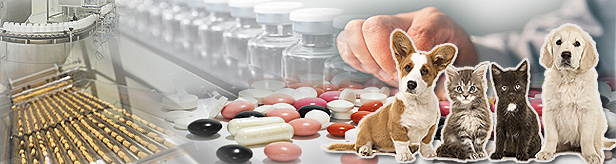
- The manufacture of veterinary drugs are now allowed at manufacturing facilities that manufacture human drugs. The Ministry of Agriculture, Food and Rural Affairs recently announced the legislation of an amendment to the ‘Decree on the Facility Standards for Veterinary Pharmacies and Manufacturers, Importers, and Retailers of Veterinary Drugs’ and will be collecting industry opinion until September 4th. According to the amendment, in order to minimize the impact on the existing industry, the products that can be manufactured at human drug manufacturing facilities are limited to those for companion animals. In addition, among the active pharmaceutical ingredients that have been approved for human use in Korea, those that have not been approved for animal use before August 31, 2023, can be manufactured until the expiry date. However, 22 ingredients that have been approved for both human and veterinary use are allowed for use in manufacturing drugs for companion animals. The amendment will take effect immediately after promulgation. The Ministry of Agriculture and Food and Rural Affairs said, "We seek to ease the burden of redundant investment that is required for the establishment of a separate manufacturing facility for veterinary drugs by enabling human drug manufacturers to produce drugs for companion animals using existing facilities." The goal of the amendment is to develop and produce high-value-added veterinary drugs and grow the domestic veterinary drug industry qualitatively and quantitatively through coexistence with existing veterinary drug manufacturers.”
- Policy
- Countdown to the Prime Minister’s Biohealth Committee
- by Lee, Jeong-Hwan Aug 03, 2023 05:35am
- Expected to be completed before the regular session of the National Assembly this year. The work of establishing a pan-governmental control tower dedicated to fostering Korea’s biopharmaceutical and healthcare industries has entered the countdown. The Ministry of Health and Welfare, along with the Office of the Prime Minister, plans to revise the order for the establishment of the Biohealth Innovation Committee in the near future. Although the specific schedule has not been disclosed to the outside world, the National Assembly and the pharmaceutical industry expect that the order will be completed by the time the regular National Assembly opens this year in September and October. On the 2nd, an official from the Ministry of Health and Welfare explained, "We plan to complete the establishment of the Biohealth Innovation Committee as soon as possible through the revision of the directive rather than legislation." The domestic pharmaceutical industry, led by the Korea Pharmaceutical Bio Association, has repeatedly requested the government to establish a Pharmaceutical Bio Innovation Committee directly under the President's Office. During the presidential election, President Yoon Seok-yeol pledged to become a member of the Pharmaceutical and Bio-Innovation Committee directly under the president, and after the inauguration of the new government, he put forward a plan to establish a new organization under the Prime Minister. Jeong-suk Seo also proposed a bill that the Pharmaceutical Bio Innovation Committee, chaired by the Prime Minister, serves as an industrial control tower. However, the establishment of the Biopharmaceutical Innovation Committee is promoted not by legislation, but by the revision of the Prime Minister's Office order, and the scope was also determined to target the 'bio health' industry, not just the 'pharmaceutical bio' industry. Accordingly, the name of the organization to be established by the revision of the directive is also expected to be the Biohealth Innovation Committee. This is in line with the attitude the Ministry of Health and Welfare showed in the process of reviewing the National Assembly's Health and Welfare Committee's proposal for Seo Jeong-sook. At the time, the Ministry of Health and Welfare expressed the view that an organization was needed to nurture a wider range of areas, such as medical devices and digital healthcare, in addition to the biopharmaceutical industry, regarding the provision of 'upgrading under the Prime Minister's Office of the Pharmaceutical and Bio-Industry Innovation Committee' contained in the bill of Congressman Seo Jung-sook. The external and internal structure of the BioHealth Innovation Committee, which will be newly organized by the Yoon Seok-yeol administration, can be predicted in detail only when the revised order is released. An official from the National Assembly's Welfare Committee said, "The Ministry of Health and Welfare has expressed its position to create a biopharmaceutical innovation committee by revising the Prime Minister's Office directive without legislation, and the outline will be revealed sooner or later." It may not be necessary, but it remains to be seen whether the effectiveness will be equal."
- Policy
- MOHW ‘Cannnot defer price cuts made under PVA'
- by Lee, Jeong-Hwan Aug 02, 2023 05:25am
- The government has once again put its foot down and opposed to the request made by the pharmaceutical industry and the National Assembly to postpone drug price cuts applied under the Price-Volume Agreement (PVA) system until the exchange rate and prices stabilize. The government also added that it is working on an improvement plan for the drug pricing system that includes a preferential drug pricing policy for homegrown new drugs or preferential drug prices for drugs using domestic APIs. On the 1st, the Ministry of Health and Welfare announced so through the ‘Report on the 2022 National Audit Results Correction and Processing Requirements'. The MOHW again expressed the opinion that a careful review is required to postpone the application of the PVA system. The reason was that for drugs whose use rises temporarily due to treatment of an infectious disease such as COVID-19 or where normal supply was not procured in the previous year due to problems with production facilities or API supply, etc., the authorities are already adjusting the negotiation reference price in comprehensive consideration of each drug’s supply and demand situation and their direct affect on NHI finances. The government added, if a volume-related issue arises due to an exceptional situation, the authorities are already reasonably adjusting the price according to the situation, therefore application of the PVA system does not need to be postponed. Regarding the criticism that the PVA system hinders cooperation between domestic pharmaceutical companies and global pharmaceutical companies for the development of innovative new drugs, the MOHW said it would come up with an improvement plan. The MOHW said, “Since these exceptional circumstances are being reflected in the negotiations, a careful review is required on temporarily suspending the system until the exchange rate or price level stabilizes. We will prepare a policy improvement plan based on the policy research service organized by NHIS and operate a public-private consultative body to come up with measures to improve policies.” Regarding preferential drug pricing for drugs developed by innovative pharmaceutical companies or pharmaceutical companies that produce and develop raw materials in Korea, the MOHW briefly replied, “We are preparing a policy.” The MOHW explained that it is reviewing measures to increase investment in innovative pharmaceutical companies and provide preferential treatment for drugs manufactured with Korean APIs while avoiding WTO disputes as the 3rd Comprehensive Plan to Foster and Support Pharmaceutical Bio-Industry. In particular, the MOHW added that it is preparing a drug pricing system improvement plan to provide preferential treatment for homegrown incrementally modified drugs and new drugs made with native natural products, and has begun to establish a bio-health innovation committee for the Pharma-Bio Innovation Committee that will be directly under the Prime Minister. The MOHW said, “We are preparing a plan for the improvement of the drug pricing system that compensates for innovative values such as preferential drug prices for domestically developed new drugs that have proven clinical superiority. Also, we have been pushing for a revision of order among others for the establishment of a new health innovation committee."
- Policy
- Incentives for phase 3 among Koreans raise public opinion
- by Nho, Byung Chul Aug 01, 2023 05:33am
- In order to prepare a reasonable drug price calculation for new drugs that have undergone phase 3 clinical trials in Korea, attention is focused on whether the special drug price system of Japan, Taiwan, and France can be applied and introduced. According to the industry, the public-private consultative body for improving the drug price system is conducting in-depth discussions to form a consensus on the introduction of a positive incentive system for innovative new drugs developed in Korea and to derive positive results. Furthermore, the basis for preferential drug prices for domestic new drugs, such as Article 17-2 of the 'Special Act on the Promotion and Support of the Pharmaceutical Industry' amended in December 2018, such as 'preferential treatment in addition to the maximum amount of drugs', is already in place. It is expected that it will be able to be institutionalized from next year. The purpose of the clinical drug pricing system for Koreans is to evaluate the appropriate value of new drugs by raising them from 90% to 95-100% of the current alternative drug market price in the case of skipping drug price negotiations for new drugs that have undergone phase 3 clinical trials for patients residing in Korea. is wearing Institutional strengths include ▲securing evidence for safety, efficacy, and clinical usefulness for Koreans, ▲easiness of tracking and management of clinical trials, improvement of R&D capabilities according to the full domestic clinical staff, ▲upgrade and employment of clinical trial institutions creation, and ▲compensation for contributions to the development of new drugs suitable for the health conditions and diseases of Koreans. Then, how about the case of Japan, which is most actively operating such a system? In this regard, Japan's additional system is largely classified and applied into four categories: innovation, usefulness, marketability, children, and preferential introduction. The usefulness bonus is a drug that meets two of the three requirements of the innovativeness supplement and can receive an incentive benefit of 5 to 60% depending on the detailed application criteria. Additives for children (5~20%) are drugs for which the contents of children and infants are explicitly included in the dosages related to the main or corresponding efficacy of the new listing, and drugs for which the comparator of the new drug is not subject to the additives for children. belong to this category Priority introduction (10%) includes new drugs approved for the first time in Japan and drugs with new mechanisms different from similar drugs already approved in foreign countries (US, UK, Germany, France) and Japan. It is understood that France determines the addition by focusing on improvements such as medical benefits, clinical value, and dental efficacy as well as the reduction of side effects. CT oversees technical reviews such as SMR and ASMR under the Ministry of Health, and CEPS determines drug prices through negotiations with pharmaceutical companies after consultation with the committee. When negotiating drug prices, the level of clinical benefit improvement of drugs, the price of alternative drugs, the expected amount of use, and the predictable status of prescriptions are reviewed from various angles. Contracts regarding refunds in case of exceeding expected usage and expenditures are made, and drug prices and drug expenditures are made accordingly. The level of clinical benefit improvement is classified into 5 grades according to the degree of improvement compared to existing treatments, and the drug price is determined according to the grade. New drug pricing categories in Taiwan are divided into Group 1, group 2A, and Group 2B. Group 1 is determined by the median price of drugs in A10 countries, and Groups 2A and 2B are finalized considering the lowest price in A10 countries, drug prices in countries of origin, relative comparison prices of foreign prices, and comparison of drug administration costs. As for the additional requirements, premiums of up to 15% are given for domestic clinical trials (10%), domestic economic evaluation (maximum 10%), pediatric drugs (maximum 15%), and improvement in therapeutic effect, safety, and convenience of taking. The public-private consultative body for improving the drug price system is composed of officials from the Ministry of Health and Welfare, the Korea Pharmaceutical Bio Association, and the Global Pharmaceutical Industry Association. It is understood that the government is working on a plan to improve and classify the new drug price system, such as maintaining the period for adding the maximum amount of drugs to stabilize the supply of drugs.
- Policy
- Decided to re-discuss reimbursement criteria for Mylotarg
- by Lee, Tak-Sun Jul 31, 2023 05:29am
- Acute myeloid leukemia treatment drug Mylotarg decided to re-discuss setting reimbursement standards. This drug received attention as the first Antibody-Drug Conjugate (ADC) treatment, but in May of last year, the Cancer Disease Review Committee failed to establish reimbursement standards. The HIRA (Chief Director Kang Jung-gu) announced that it decided to re-discuss Mylotarg as a result of the review of the reimbursement standards for drugs used in cancer patients, which were reviewed at the 5th Cancer Disease Review Committee in 2023 held on the 26th. This drug, licensed in Korea in December 2021, is an ADC consisting of a CD33-targeting monoclonal antibody and calicheamicin, a cytotoxic drug, and blocks cancer cell growth through a mechanism that acts on cells expressing the CD33 antigen that appears in 90% of all AML patients. induce extinction. In a clinical trial on 271 patients with acute myeloid leukemia, the Mylotarg+Daunorubicin+Cytarabine combination group showed a median event-free survival of 17.3 months, which was approximately 7.8 months longer than the daunorubicin+Cytarabine combination group's 9.5 months. As the deliberation committee decided to re-discuss it, attention is paid to whether it will succeed in setting the salary standard through data supplementation. BOSULIF, a treatment for Philadelphia chromosome inactive chronic myelogenous leukemia, failed to set reimbursement standards as a first-line treatment but succeeded as a second-line treatment. Therefore, criteria for use were established for Ph+ CML in the chronic phase, AP, or acute phase (BP) who showed resistance or intolerance to previous therapies. Oxaliplatin + Capecitabine combination therapy, which has been expanding the reimbursement standard, has also been set as adjuvant therapy after surgery for patients who have received chemotherapy before or after surgery for rectal cancer. On the other hand, Besremi, which is used for polycythemia vera that is resistant or intolerant to hydroxyurea, failed to establish reimbursement standards.
- Policy
- Bill proposed to allow Kymriah’s use at transplant hospital
- by Kim, Jung-Ju Jul 31, 2023 05:28am
- A bill was proposed to amend the law and improve patient access to Novartis’s Kymirah, the ultra-high-priced ‘one-shot drug,’ by realistically amending the requirements for institutions that use the drug. The main point of the amendment is to allow hematopoietic stem cell transplant institutions designated as transplant hospitals to provide Kymriah treatment. Rep. Young Woo Lee of the Democratic Party of Korea proposed the bill for the ‘Partial Amendment to the Act On The Safety Of And Support For Advanced Regenerative Medicine And Advanced Biological Products’ that contained the proposal above on the 27th. Kymriah was approved in March 2021 as the world’s first chimeric antigen receptor T-cell (CAR-T) therapy and the first advanced biopharmaceutical under the ‘Advanced Regenerative Bio Act.' With the enactment of the Act, the Ministry of Food and Drug Safety classified Kymriah as a biodrug and stipulated the medical institutions that seek to use Kymriah to receive a permit for a human cell management business under the newly implemented ‘Advanced Regenerative Bio Act.’ However, to receive the permit, the law requires the institution to be equipped with a GMP facility that meets the pharmaceutical manufacturing management standards. Rep. Lee pointed out that the irony lies in how medical institutions that seek to use Kymriah for treatment only ‘draw, extract, and freeze’ the patient’s blood to send to Novartis. Lee criticized that requiring treatment institutions to have pharmaceutical manufacturing facilities is wasteful and unnecessary as the institutions are not in charge of making the drug itself. Due to such limitations, only the 5 large hospitals in Seoul - the ‘Big 5 Hospitals’ of Korea - were permitted to use Kymriah. Due to this restriction, patients living in rural areas had to come all the way to Seoul to receive treatment. The amendment aims to reduce the patient's suffering and waste and alleviate the concentration of medical care in the metropolitan area by allowing hematopoietic stem cell transplantation institutions designated as ‘transplant hospitals’ under Article 25 of the Organs Transplant Act to use Kymriah for treatment. In addition to Rep. Young Woo Lee, the bill was jointly proposed by Rep. Young In Ko, Ju Young Kim, Gab Seok Song, Soo Jin Lee, Sung Ho Jung, Il Young Chung, Pil Mo Jung, Oseop Jo, and Jung Min Hong.
- Policy
- Re-evaluation of the upper limit amt, scheduled for August
- by Lee, Tak-Sun Jul 31, 2023 05:27am
- The final result of the re-evaluation of the upper limit amount standard requirement will be presented as an agenda for the Pharmaceutical Reimbursement Evaluation Committee to be held on August 3. It is expected that negotiations with NHIS will proceed in earnest after the submission of the committee. The results of the re-evaluation of the adequacy of this year's benefits are expected to be presented in September. According to HIRA and the industry on the 28th, the committee meeting on the 3rd of next month will review the final result of the re-evaluation of the upper limit amount standard. This is the final review following the first review in May. HIRA notified pharmaceutical companies of the results after the first review by the review committee in May. After that, the final result will go to the committee on the 3rd of next month after the appeal. This is about two months behind the original plan to reflect drug price adjustment through re-evaluation in July. This is because data submissions were rushed all at once in February, and more than 1,000 objections came out after the first evaluation. After this committee is over, the NHIS is expected to hold negotiations with pharmaceutical companies regarding supply for the month of August. It is expected that the re-evaluation results will be reported to the health policy review committee in August, and the drug price adjustment plan will be reflected in the reimbursement list on September 1. The re-evaluation of the upper limit amount is being carried out by maintaining or lowering the upper limit amount depending on whether the drug has met its own BA test and DMF listing criteria for already-listed drugs. The upper limit is maintained if both BA and DMF requirements are met, and if one is met, the price is reduced to 85% of the adjusted standard price, and if both are not met, the price is reduced to 72.25%. Currently, the first evaluation of 14,000 items is underway, and the second round of about 5,000 drugs will begin in earnest after submitting data in July. The re-evaluation of the adequacy of wages this year is expected to be somewhat delayed due to the re-evaluation of the maximum amount. The original plan was to submit the re-evaluation results to the Drug Evaluation Committee in August, but it is likely to be presented in September at the earliest. This year, the target item for re-evaluation of benefit adequacy is peptic ulcer medicine Rebamipide, a drug for the circulatory system Limaprost Alfadex, an antipyretic, analgesic, anti-inflammatory drug Loxoprofen Sodium, a drug for the digestive system Levosulpiride, a drug for allergy Epinastine Hydrochloride, an ophthalmic hyaluronic acid eye drop. Among them, hyaluronic acid eye drops are the largest with a market size of 231.5 billion won (3-year average billing amount). Next, the pharmaceutical industry is paying attention to the results of the re-evaluation of the adequacy of reimbursement for these drugs.
- Policy
- Janssen’s MM drug Tecvayli Inj is approved in KOR
- by Lee, Hye-Kyung Jul 28, 2023 05:30am
- On the 26th, the Ministry of Food and Drug Safety (Minister: Yu-Kyung Oh) approved ‘Tecvayli Inj (teclistamab),’ a rare disease drug used to treat multiple myeloma. Tecvayli is used in adult patients with relapsed and refractory multiple myeloma who have received at least three previous lines of treatment, including a proteasome inhibitor, an immunomodulatory agent, and an anti-CD38 antibody and have demonstrated disease progression on the last therapy. Tecvayli is a bispecific antibody that binds to the B-cell maturation antigen (BCMA) on myeloma cells, and CD3 on T-cells. Tecvayli binds to BCMA and CD3 and induces myeloma cell death via activation of T cells. BCMA is a cell surface protein that is selectively induced during plasma cell differentiation. It is an ideal target for plasma cell cancer (multiple myeloma). The MFDS stressed that it will continue being committed to the rapid provision of safe and effective treatment for the Korean people based on its expertise in regulatory science.
