- LOGIN
- MemberShip
- 2026-07-29 06:14:39
- Rybrevant accelerates expansion into solid tumors
- by Son, Hyung Min | translator Alice Kang | 2026-06-08 08:52:50
Johnson & Johnson’s EGFR-MET bispecific antibody Rybrevant (amivantamab) is expanding its development program beyond lung cancer into new solid tumor indications, including colorectal cancer and head and neck cancer.
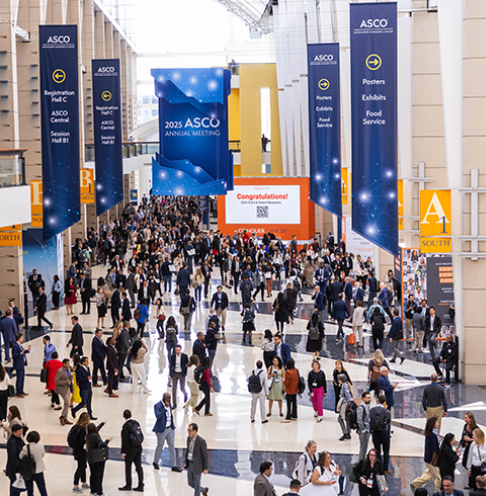
Major clinical data for Rybrevant in solid tumors were presented at the 2026 American Society of Clinical Oncology (ASCO 2026) Annual Meeting, which was held recently in Chicago.
While Rybrevant has steadily expanded its presence in the treatment of EGFR-mutated non-small cell lung cancer (NSCLC), the company is now broadening its research focus to a variety of solid tumors in which EGFR and MET signaling pathways play important roles.
In particular, attention is rising over the possibility of future label expansion, as meaningful clinical outcomes have been observed in patient populations with limited treatment options or in those who have not achieved sufficient benefit with existing EGFR inhibitors.
High response rates in head and neck cancer… shows potential as a later-line treatment alternative
The most notable findings came from a study involving recurrent or metastatic head and neck squamous cell carcinoma (HNSCC).
Although treatment outcomes for recurrent or metastatic HNSCC have improved following the introduction of immuno-oncology drugs and platinum-based chemotherapy, treatment options remain limited after disease progression. In particular, patients with HPV-unrelated disease tend to have poor prognoses, creating an ongoing need for new treatment alternatives.
The Phase Ib/II OrigAMI-4 study evaluated subcutaneous (SC) Rybrevant monotherapy in 102 patients with HPV-unrelated recurrent or metastatic HNSCC whose disease had progressed after treatment with PD-(L)1-based immunotherapy and platinum-based chemotherapy.
The analysis showed an objective response rate (ORR) of 47%. Four patients achieved a complete response (CR), while 44 achieved a partial response (PR). Tumor reduction in target lesions was observed in 79% of patients.
Responses were also rapid. The median time to first response was 6.6 weeks, while the median duration of response (DOR) was 7.2 months. Median progression-free survival (PFS) was 6.8 months.
Industry experts believe these results compare favorably with those of Merck’s EGFR-targeted therapy ‘Erbitux (cetuximab),’ which is currently used in this setting. According to previously published data cited by the investigators, Erbitux demonstrated an ORR of 24% and a median PFS of 3.8 months in a comparable patient population.
The high rate of tumor shrinkage was also noteworthy. In the study, 79% of all patients experienced reductions in target lesions.
The safety profile was consistent with that found in Rybrevant studies. The most common adverse events included hypoalbuminemia, rash, acneiform dermatitis, paronychia, stomatitis, and fatigue. Treatment-related reactions occurred in 13% of patients, but were all Grade 1 or 2. The treatment discontinuation rate due to treatment-related adverse events (TRAEs) was 6%.
Company seeks to gain first-line indication for head and neck cancer … Phase III development underway
Johnson & Johnson is also conducting a global Phase III trial on Rybrevant’s use in the first-line treatment setting for recurrent or metastatic HNSCC.
The OrigAMI-5 study is a Phase III trial evaluating Rybrevant in combination with Keytruda (pembrolizumab) and carboplatin in approximately 500 patients with HPV-unrelated recurrent or metastatic HNSCC. The regimen is being directly compared with the current standard-of-care combination of Keytruda, platinum-based chemotherapy, and 5-FU.
Although Keytruda-based regimens are currently considered the standard first-line treatment for recurrent or metastatic HNSCC, response rates and long-term survival outcomes remain limited. Investigators are looking into whether adding Rybrevant could improve outcomes, given the high levels of EGFR and MET expression observed in head and neck cancer.
The study will be conducted at approximately 205 sites across 22 countries worldwide. Co-primary endpoints are ORR and overall survival (OS). Additional endpoints include PFS, DOR, and patient-reported outcomes (PROs).
Given that Rybrevant monotherapy achieved a 47% ORR in patients whose disease had progressed after immunotherapy and platinum-based chemotherapy in the OrigAMI-4 study, attention is now turning to whether the Phase III results could potentially alter future treatment strategies for head and neck cancer.
Demonstrates activity in CMS4 colorectal cancer… Highlighting the potential of MET-targeted therapy
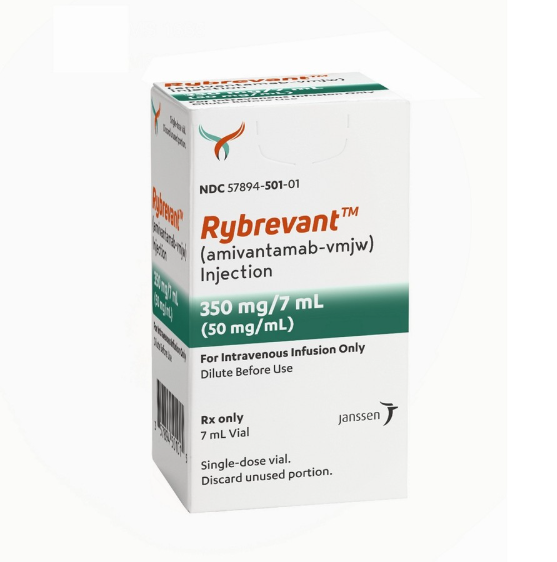
In colorectal cancer, new data suggest that Rybrevant may help overcome some of the limitations associated with existing EGFR inhibitors.
The OrigAMI-1 study evaluated Rybrevant monotherapy in patients with metastatic colorectal cancer lacking KRAS, NRAS, BRAF, and EGFR extracellular domain mutations, as well as HER2 amplification. All participants had previously received second- or third-line treatment in the metastatic setting.
This analysis focused on Consensus Molecular Subtypes (CMS), one of the major molecular classification systems for colorectal cancer.
CMS2 is a classic subtype characterized by high EGFR dependency and is known to respond well to EGFR inhibitors. In contrast, CMS4 exhibits mesenchymal characteristics associated with MET signaling activation and is known for its poor prognosis and generally limited responsiveness to EGFR inhibitors.
Previous studies reported that disease control rates (DCR) with Erbitux monotherapy were 68% in CMS2 patients but only 29% in CMS4 patients.
However, Rybrevant demonstrated relatively consistent efficacy across both subtypes.
Median PFS was 4.2 months in CMS2 patients and 5.3 months in CMS4 patients. Median OS was 11.3 months and 13.5 months, respectively, showing no major differences between the groups.
ORR was 26% in CMS2 patients and 16% in CMS4 patients, while DCR reached 83% and 74%, respectively. According to the investigators, treatment outcomes were also generally consistent regardless of tumor location.
The researchers concluded that Rybrevant maintained antitumor activity even in CMS4 subtypes, which are less dependent on EGFR signaling, based on the drug’s dual-target inhibition effect that targets both EGFR and MET pathways.
Because CMS4 is widely recognized as a subtype associated with resistance to conventional EGFR inhibitors, the findings are being viewed as evidence supporting the clinical value of a strategy that targets MET alongside EGFR.
-

- 0
댓글 운영방식은
댓글은 실명게재와 익명게재 방식이 있으며, 실명은 이름과 아이디가 노출됩니다. 익명은 필명으로 등록 가능하며, 대댓글은 익명으로 등록 가능합니다.
댓글 노출방식은
댓글 명예자문위원(팜-코니언-필기모양 아이콘)으로 위촉된 데일리팜 회원의 댓글은 ‘게시판형 보기’와 ’펼쳐보기형’ 리스트에서 항상 최상단에 노출됩니다. 새로운 댓글을 올리는 일반회원은 ‘게시판형’과 ‘펼쳐보기형’ 모두 팜코니언 회원이 쓴 댓글의 하단에 실시간 노출됩니다.
댓글의 삭제 기준은
다음의 경우 사전 통보없이 삭제하고 아이디 이용정지 또는 영구 가입제한이 될 수도 있습니다.
-
저작권·인격권 등 타인의 권리를 침해하는 경우
상용 프로그램의 등록과 게재, 배포를 안내하는 게시물
타인 또는 제3자의 저작권 및 기타 권리를 침해한 내용을 담은 게시물
-
근거 없는 비방·명예를 훼손하는 게시물
특정 이용자 및 개인에 대한 인신 공격적인 내용의 글 및 직접적인 욕설이 사용된 경우
특정 지역 및 종교간의 감정대립을 조장하는 내용
사실 확인이 안된 소문을 유포 시키는 경우
욕설과 비어, 속어를 담은 내용
정당법 및 공직선거법, 관계 법령에 저촉되는 경우(선관위 요청 시 즉시 삭제)
특정 지역이나 단체를 비하하는 경우
특정인의 명예를 훼손하여 해당인이 삭제를 요청하는 경우
특정인의 개인정보(주민등록번호, 전화, 상세주소 등)를 무단으로 게시하는 경우
타인의 ID 혹은 닉네임을 도용하는 경우
-
게시판 특성상 제한되는 내용
서비스 주제와 맞지 않는 내용의 글을 게재한 경우
동일 내용의 연속 게재 및 여러 기사에 중복 게재한 경우
부분적으로 변경하여 반복 게재하는 경우도 포함
제목과 관련 없는 내용의 게시물, 제목과 본문이 무관한 경우
돈벌기 및 직·간접 상업적 목적의 내용이 포함된 게시물
게시물 읽기 유도 등을 위해 내용과 무관한 제목을 사용한 경우
-
수사기관 등의 공식적인 요청이 있는 경우
-
기타사항
각 서비스의 필요성에 따라 미리 공지한 경우
기타 법률에 저촉되는 정보 게재를 목적으로 할 경우
기타 원만한 운영을 위해 운영자가 필요하다고 판단되는 내용
-
사실 관계 확인 후 삭제
저작권자로부터 허락받지 않은 내용을 무단 게재, 복제, 배포하는 경우
타인의 초상권을 침해하거나 개인정보를 유출하는 경우
당사에 제공한 이용자의 정보가 허위인 경우 (타인의 ID, 비밀번호 도용 등)
※이상의 내용중 일부 사항에 적용될 경우 이용약관 및 관련 법률에 의해 제재를 받으실 수도 있으며, 민·형사상 처벌을 받을 수도 있습니다.
※위에 명시되지 않은 내용이더라도 불법적인 내용으로 판단되거나 데일리팜 서비스에 바람직하지 않다고 판단되는 경우는 선 조치 이후 본 관리 기준을 수정 공시하겠습니다.
※기타 문의 사항은 데일리팜 운영자에게 연락주십시오. 메일 주소는 dailypharm@dailypharm.com입니다.
- “Drug pricing intervention contributes to the crisis in essential healthcare and shortage of drugs”
- Reporter's view | Lee, Jeong-Hwan