- LOGIN
- MemberShip
- 2026-09-09 06:01:48
- Traditional pharmas join in the Dupixent biosimilar race
- by Kim, Jin-Gu | translator Alice Kang | 2026-06-04 09:39:51
Korean pharmaceutical and biotechnology companies are increasingly entering the race to develop biosimilar versions of Dupixent (dupilumab), a blockbuster biologic with annual global sales approaching KRW 27 trillion.
According to industry sources, Daewoong Pharmaceutical signed an agreement on May 28 with Chime Biologics, a global Chinese contract development and manufacturing organization (CDMO), to collaborate on the development, manufacturing, and commercialization of a Dupixent biosimilar. Under the agreement, the companies will leverage Chime Biologics' biologics development and manufacturing capabilities to develop the biosimilar, while Daewoong Pharmaceutical will lead commercialization efforts in major international markets.
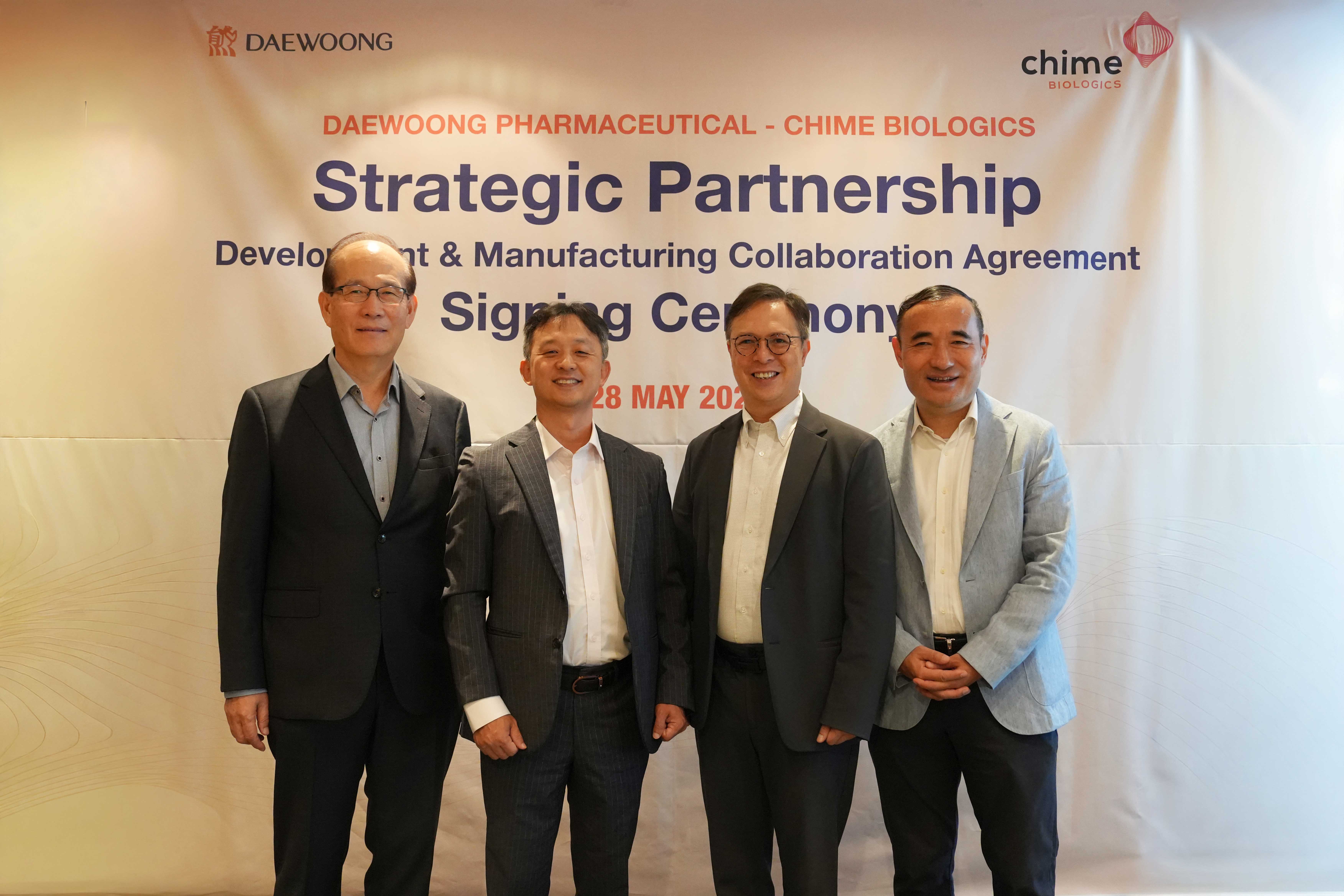
Daewoong established a dedicated biosimilar business division in June last year, and the Dupixent biosimilar has reportedly been identified as one of its initial strategic targets.
Chime Biologics operates KUBio, a modular biologics manufacturing platform, and is regarded as having manufacturing capabilities that meet global cGMP standards required by both the U.S. FDA and the European Medicines Agency (EMA). The company has also expanded partnerships with Korean biotech firms such as MedPacto and Panolos Bioscience.
CKD and Samsung Bioepis pursue ‘independent development,’ Daewoong and KyongBo seek ‘joint development’…targets global market
Prior to Daewoong's announcement, Chong Kun Dang (CKD), Samsung Bioepis, and KyongBo Pharmaceutical had already formalized their strategies for entering the Dupixent biosimilar market.
In January, CKD received approval to initiate a European Phase I trial for its biosimilar candidate CKD-706. The study will evaluate pharmacokinetic equivalence to Dupixent in healthy adult volunteers while also comparing pharmacodynamics, safety, and immunogenicity. Industry observers assess CKD to be among the most advanced Korean companies in Dupixent biosimilar development.
Samsung Bioepis announced at the J.P. Morgan Healthcare Conference 2026 that it had begun development of 7 blockbuster biosimilars, including a Dupixent biosimilar.
KyongBo Pharmaceutical signed a comprehensive collaboration agreement with Protium Science in September last year and formally announced its Dupixent biosimilar development program in December.
The participating companies are pursuing different development models. CKD has chosen an independent development strategy aimed at maximizing long-term profitability through its own R&D capabilities. Samsung Bioepis is likewise expected to pursue an in-house development approach, in line with its previous biosimilar programs.
By contrast, Daewoong Pharmaceutical and KyongBo Pharmaceutical are pursuing joint development. The companies are employing a practical strategy to lower early-stage development risks and improve process efficiency through joint development.
Dupixent sales expected to reach USD 30 billion…substance patent to expire around 2030 in major countries
Commercialization strategies are also expected to differ once the companies complete development . Samsung Bioepis is likely to pursue a two-track strategy combining direct sales and global partnerships, similar to its existing biosimilar portfolio.
Daewoong plans to leverage the global commercialization experience gained through its botulinum toxin product Nabota to support future marketing of a Dupixent biosimilar. KyongBo Pharmaceutical, which is relatively new to the biologics sector, is expected to explore licensing-out opportunities or co-marketing models with large multinational pharmaceutical companies through its partnership with Protium Science.
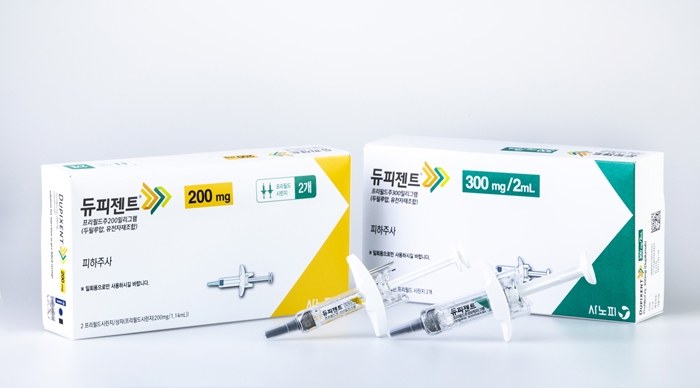
Dupixent generated USD 17.8 billion in annual sales last year, making it one of Sanofi's most successful products.
The drug has maintained strong growth through successive indication expansions across immune-mediated diseases, including atopic dermatitis and asthma. More recently, indications have been expanded to include ▲ chronic rhinosinusitis with nasal polyps (CRSwNP), ▲ prurigo nodularis, ▲ eosinophilic esophagitis (EoE), and ▲ chronic obstructive pulmonary disease (COPD). Industry analysts project that global sales could exceed USD 20 billion (KRW 30.3 trillion) before patent expiration.
Dupixent's core composition patents are scheduled to expire between 2029 and 2031 in major markets. Although Sanofi is pursuing an aggressive patent defense strategy through formulation changes and additional patent filings that could potentially extend exclusivity by up to a decade, the market generally expects a large-scale biosimilar market opportunity to emerge around 2030.
-

- 0
댓글 운영방식은
댓글은 실명게재와 익명게재 방식이 있으며, 실명은 이름과 아이디가 노출됩니다. 익명은 필명으로 등록 가능하며, 대댓글은 익명으로 등록 가능합니다.
댓글 노출방식은
댓글 명예자문위원(팜-코니언-필기모양 아이콘)으로 위촉된 데일리팜 회원의 댓글은 ‘게시판형 보기’와 ’펼쳐보기형’ 리스트에서 항상 최상단에 노출됩니다. 새로운 댓글을 올리는 일반회원은 ‘게시판형’과 ‘펼쳐보기형’ 모두 팜코니언 회원이 쓴 댓글의 하단에 실시간 노출됩니다.
댓글의 삭제 기준은
다음의 경우 사전 통보없이 삭제하고 아이디 이용정지 또는 영구 가입제한이 될 수도 있습니다.
-
저작권·인격권 등 타인의 권리를 침해하는 경우
상용 프로그램의 등록과 게재, 배포를 안내하는 게시물
타인 또는 제3자의 저작권 및 기타 권리를 침해한 내용을 담은 게시물
-
근거 없는 비방·명예를 훼손하는 게시물
특정 이용자 및 개인에 대한 인신 공격적인 내용의 글 및 직접적인 욕설이 사용된 경우
특정 지역 및 종교간의 감정대립을 조장하는 내용
사실 확인이 안된 소문을 유포 시키는 경우
욕설과 비어, 속어를 담은 내용
정당법 및 공직선거법, 관계 법령에 저촉되는 경우(선관위 요청 시 즉시 삭제)
특정 지역이나 단체를 비하하는 경우
특정인의 명예를 훼손하여 해당인이 삭제를 요청하는 경우
특정인의 개인정보(주민등록번호, 전화, 상세주소 등)를 무단으로 게시하는 경우
타인의 ID 혹은 닉네임을 도용하는 경우
-
게시판 특성상 제한되는 내용
서비스 주제와 맞지 않는 내용의 글을 게재한 경우
동일 내용의 연속 게재 및 여러 기사에 중복 게재한 경우
부분적으로 변경하여 반복 게재하는 경우도 포함
제목과 관련 없는 내용의 게시물, 제목과 본문이 무관한 경우
돈벌기 및 직·간접 상업적 목적의 내용이 포함된 게시물
게시물 읽기 유도 등을 위해 내용과 무관한 제목을 사용한 경우
-
수사기관 등의 공식적인 요청이 있는 경우
-
기타사항
각 서비스의 필요성에 따라 미리 공지한 경우
기타 법률에 저촉되는 정보 게재를 목적으로 할 경우
기타 원만한 운영을 위해 운영자가 필요하다고 판단되는 내용
-
사실 관계 확인 후 삭제
저작권자로부터 허락받지 않은 내용을 무단 게재, 복제, 배포하는 경우
타인의 초상권을 침해하거나 개인정보를 유출하는 경우
당사에 제공한 이용자의 정보가 허위인 경우 (타인의 ID, 비밀번호 도용 등)
※이상의 내용중 일부 사항에 적용될 경우 이용약관 및 관련 법률에 의해 제재를 받으실 수도 있으며, 민·형사상 처벌을 받을 수도 있습니다.
※위에 명시되지 않은 내용이더라도 불법적인 내용으로 판단되거나 데일리팜 서비스에 바람직하지 않다고 판단되는 경우는 선 조치 이후 본 관리 기준을 수정 공시하겠습니다.
※기타 문의 사항은 데일리팜 운영자에게 연락주십시오. 메일 주소는 dailypharm@dailypharm.com입니다.


-

- "SpaceOAR reduces rectal bleeding…major shift in radiation therapy"
- Prostate cancer is the most common cancer diagnosed in men…treatment demand increases among elderly patients