- LOGIN
- MemberShip
- 2026-09-08 15:50:17
- Opposition to labeling obesity drugs as 'misuse drug'
- by Lee, Tak-Sun | translator Hong, Ji Yeon | 2026-04-10 08:27:16
Voices are growing against the plan to designate GLP-1 obesity treatments, such as Wegovy and Mounjaro, as "high potential misuse and abuse."
Critics point out that such a designation could instead drive patients toward illegal distribution channels.
Analysis suggests that other countries are already putting effort into establishing an environment for safe use by monitoring distribution and prescription, rather than regulating the drug itself.
On the 8th, the Ministry of Food and Drug Safety (MFDS) will discuss whether to designate these treatments through the Central Pharmaceutical Affairs Advisory Committee (CPAC).
Currently, this category includes erectile dysfunction treatments, premature ejaculation treatments, and anabolic steroids.
Once designated, the phrase "high potential misuse and abuse" must be displayed on the product packaging, and sales without a prescription are prohibited even in areas exempt from the separation of prescribing and dispensing.
The MFDS's push for this designation is due to issues such as non-face-to-face prescribing, online black-market transactions, and indiscriminate off-label use, following the immense popularity of Wegovy and Mounjaro.
Following discussions in last year's parliamentary audit, health authorities have been reviewing this designation.
However, the industry is voicing concern that the designation could lead to illegal distribution, resulting in a balloon effect.
However, the industry warns that labeling these drugs as potentially misused could shrink the patient base and prevent those who genuinely need treatment from receiving it.
They argue that global trends focus on regulating the distribution and prescription stages rather than the drugs themselves.
In Japan, as the prescribing of Ozempic (semaglutide) for obesity purposes increased, guidelines were established for prescribing institutions.
According to an analysis conducted by the University of Tokyo research team of Japanese medical institution websites, institutions that advertised non-reimbursed prescriptions for GLP-1 receptor agonists exhibited significantly lower information quality. Furthermore, a large majority of these institutions were found to violate pharmaceutical advertising guidelines.
Japan's Ministry of Health, Labor and Welfare (MHLW), when approving health insurance coverage for Wegovy in February 2024, set strict standards for prescribing institutions and patient lifestyle habits.
Australia is also focusing on blocking unofficial distribution channels.
From October 2024, Australia's Therapeutic Goods Administration (TGA) excluded GLP-1 drugs from the pharmacy compounding exemption.
The system is designed to allow pharmacies to prepare similar drugs in response to drug shortages or to provide customized preparation for a specific patient.
They also intensified advertising regulations, imposing fines of approximately 198,000 AUD (about 200 million KRW) for illegal advertisements on telehealth platforms.
Japan and Australia have clear medical evidences and are focusing on monitoring illegal distribution and prescriptions, rather than designating obesity drugs that are approved by the regulatory authority as having the potential to be misused and abused.
The WHO also emphasized 'regulated distribution networks, prescriptions by qualified medical professionals, and strong supervision' in its December 2023 global guidelines to counter the spread of counterfeit and substandard GLP-1 products.
An industry official stated, "Major countries are setting standards for eligible prescribing institutions and restrictions on non-face-to-face prescriptions," adding, "They are putting effort into monitoring whether prescriptions align with BMI and comorbidities."
The official added, "The Korean government and medical community should develop systematic management plans that block cosmetic use while protecting patient access for those who truly need treatment."
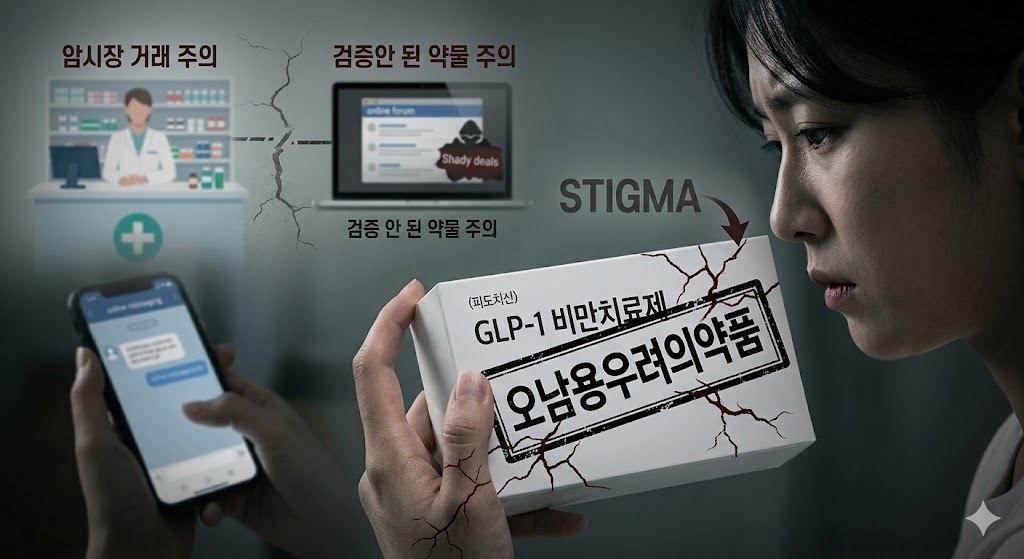
There is also concern that the negative stigma of being a "high potential to misuse and abuse" could affect severely obese and type 2 diabetic patients.
Another industry official stated, "Designation of 'high potential to misuse and abuse' mandates labeling, and the label points at all obesity patients. Not only those with severe obesity but also type 2 diabetic patients would receive medication stamped with 'potential to misuse'."
Furthermore, there is a risk that patients who find it harder to obtain legitimate prescriptions may turn to unverified online purchases or illegal distribution channels. With cases of fraud and harm from illegal transactions already present in Korean online communities, critics fear that the official designation could expand this illegal market.
-

- 0
댓글 운영방식은
댓글은 실명게재와 익명게재 방식이 있으며, 실명은 이름과 아이디가 노출됩니다. 익명은 필명으로 등록 가능하며, 대댓글은 익명으로 등록 가능합니다.
댓글 노출방식은
댓글 명예자문위원(팜-코니언-필기모양 아이콘)으로 위촉된 데일리팜 회원의 댓글은 ‘게시판형 보기’와 ’펼쳐보기형’ 리스트에서 항상 최상단에 노출됩니다. 새로운 댓글을 올리는 일반회원은 ‘게시판형’과 ‘펼쳐보기형’ 모두 팜코니언 회원이 쓴 댓글의 하단에 실시간 노출됩니다.
댓글의 삭제 기준은
다음의 경우 사전 통보없이 삭제하고 아이디 이용정지 또는 영구 가입제한이 될 수도 있습니다.
-
저작권·인격권 등 타인의 권리를 침해하는 경우
상용 프로그램의 등록과 게재, 배포를 안내하는 게시물
타인 또는 제3자의 저작권 및 기타 권리를 침해한 내용을 담은 게시물
-
근거 없는 비방·명예를 훼손하는 게시물
특정 이용자 및 개인에 대한 인신 공격적인 내용의 글 및 직접적인 욕설이 사용된 경우
특정 지역 및 종교간의 감정대립을 조장하는 내용
사실 확인이 안된 소문을 유포 시키는 경우
욕설과 비어, 속어를 담은 내용
정당법 및 공직선거법, 관계 법령에 저촉되는 경우(선관위 요청 시 즉시 삭제)
특정 지역이나 단체를 비하하는 경우
특정인의 명예를 훼손하여 해당인이 삭제를 요청하는 경우
특정인의 개인정보(주민등록번호, 전화, 상세주소 등)를 무단으로 게시하는 경우
타인의 ID 혹은 닉네임을 도용하는 경우
-
게시판 특성상 제한되는 내용
서비스 주제와 맞지 않는 내용의 글을 게재한 경우
동일 내용의 연속 게재 및 여러 기사에 중복 게재한 경우
부분적으로 변경하여 반복 게재하는 경우도 포함
제목과 관련 없는 내용의 게시물, 제목과 본문이 무관한 경우
돈벌기 및 직·간접 상업적 목적의 내용이 포함된 게시물
게시물 읽기 유도 등을 위해 내용과 무관한 제목을 사용한 경우
-
수사기관 등의 공식적인 요청이 있는 경우
-
기타사항
각 서비스의 필요성에 따라 미리 공지한 경우
기타 법률에 저촉되는 정보 게재를 목적으로 할 경우
기타 원만한 운영을 위해 운영자가 필요하다고 판단되는 내용
-
사실 관계 확인 후 삭제
저작권자로부터 허락받지 않은 내용을 무단 게재, 복제, 배포하는 경우
타인의 초상권을 침해하거나 개인정보를 유출하는 경우
당사에 제공한 이용자의 정보가 허위인 경우 (타인의 ID, 비밀번호 도용 등)
※이상의 내용중 일부 사항에 적용될 경우 이용약관 및 관련 법률에 의해 제재를 받으실 수도 있으며, 민·형사상 처벌을 받을 수도 있습니다.
※위에 명시되지 않은 내용이더라도 불법적인 내용으로 판단되거나 데일리팜 서비스에 바람직하지 않다고 판단되는 경우는 선 조치 이후 본 관리 기준을 수정 공시하겠습니다.
※기타 문의 사항은 데일리팜 운영자에게 연락주십시오. 메일 주소는 dailypharm@dailypharm.com입니다.


-

- "SpaceOAR reduces rectal bleeding…major shift in radiation therapy"
- Prostate cancer is the most common cancer diagnosed in men…treatment demand increases among elderly patients