- LOGIN
- MemberShip
- 2026-09-17 20:18:36
- Lilly launches Ebglyss in Korea… sparks competition
- by Son, Hyung Min | translator Alice Kang | 2025-07-03 06:12:19
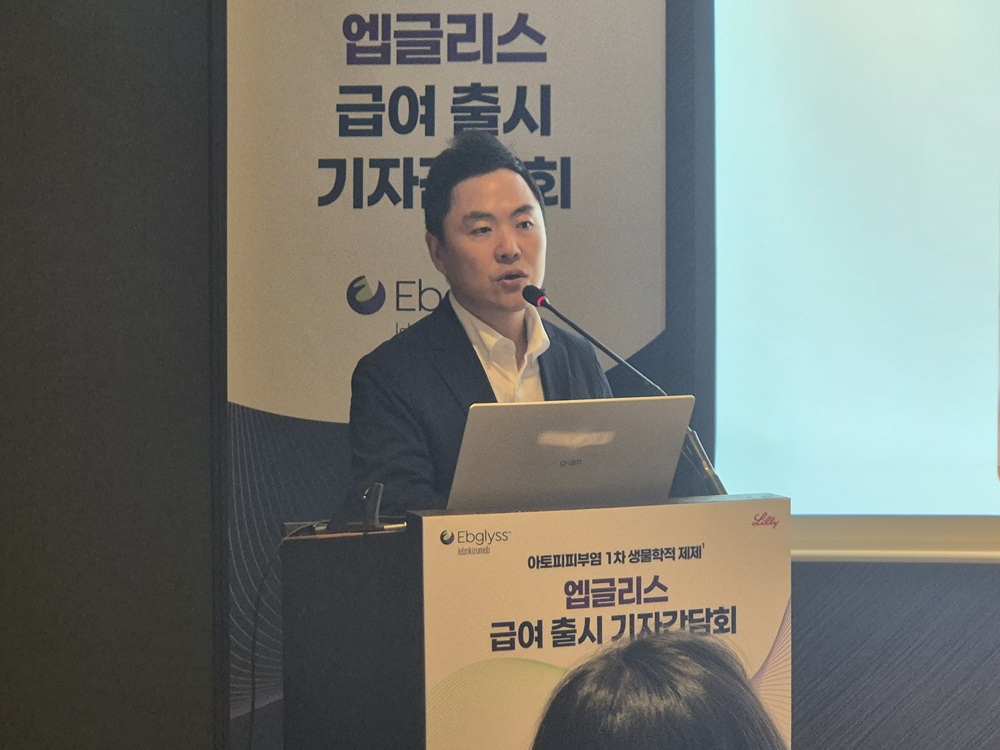
With the arrival of Ebglyss, the number of biological agents available for the treatment of atopic dermatitis in Korea has increased to three.
Experts welcomed the emergence of diverse treatment options but emphasized that there is still room for improvement in terms of patient access, due to the inability to switch between different classes of drugs.
On the 2nd, Lilly Korea held a press conference at the Plaza Hotel in Jung-gu, Seoul, to commemorate the domestic launch of Ebglyss.
Ebglyss is a new biological agent that selectively blocks interleukin (IL)-13, a cytokine that is a major cause of atopic dermatitis.
This treatment was approved in August last year as a treatment for moderate-to-severe atopic dermatitis in adults and adolescents aged 12 years and older (weighing 40 kg or more) who are not adequately controlled with topical treatments or for whom these treatments are not recommended, and was granted reimbursement starting this month.
Previous atopic dermatitis treatments included Dupixent, which inhibits IL-4 and IL-13, the Janus kinase (JAK) inhibitor Rinvoq, and Adtralza, which targets IL-13.
However, the introduction of Ebglyss has expanded treatment options.
As atopic dermatitis is a chronic condition with no cure and a long treatment period, diverse treatment options are essential.
Ebglyss has demonstrated efficacy and safety in Phase III clinical trials, including ‘ADvocate-1,’ 'ADvocate-2,‘ and 'ADhere.’ In the ‘ADvocate-1’ and ‘ADvocate-2’ studies evaluating Ebglyss monotherapy, the Ebglyss group achieved an EASI-75 response rate of 58.2% and 52.1% during the induction period (0–16 weeks), compared to 16.2% and 18.1% in the placebo group.
The EASI-90 rate was 38.3% and 30.7% in the Ebglyss group, respectively, while the placebo group was 9% and 9.5%.
EASI measures the severity and spread of atopic eczema.
Also, after one year of maintenance therapy, the EASI-75 achievement rate in the severity group at Week 52 was 81.7%, and the EASI-90 ratio was 66.4%.
These figures were higher than those in the placebo group (66.4% and 66.4%, respectively).
In terms of safety, the most common adverse reactions were conjunctivitis (6.9%), injection site reactions (2.6%), allergic conjunctivitis (1.8%), and dry eyes (1.4%).
Most adverse reactions were mild or moderate and did not lead to treatment discontinuation.
Professor Hyun-Chang Ko of the Department of Dermatology at Pusan National University Yangsan Hospital commented, “Dupixent can be administered at two-week intervals, but extending the interval tends to reduce its efficacy.
Ebglyss demonstrated sustained clinical efficacy and safety even with monthly maintenance therapy.
Its long-lasting therapeutic effect also offers the advantage of greater convenience in administration.” He added, “In particular, Dupixent had a high rate of erythema and conjunctivitis, and this rate was lower in the pivotal clinical trial for Ebglyss.
In terms of safety, Ebglyss did not show any notable adverse reactions compared to the placebo group.” Despite the emergence of various treatments, unmet needs remain Ebglyss is the third biological agent to enter this market.
With the introduction of Ebglyss, patients, following Dupixent from Sanofi and Adtralza from Leo Pharma.
However, some experts say that despite the introduction of various treatments, there are still unmet medical needs.
According to domestic atopic dermatitis guidelines, systemic treatment is strongly recommended for patients with moderate-to-severe atopic dermatitis.
However, while the proportion of moderate-to-severe patients among domestic atopic dermatitis patients increased from 30.9% in 2002 to 39.7% in 2019, the prescription rate for systemic immunosuppressants in this patient group remained at just 5%.
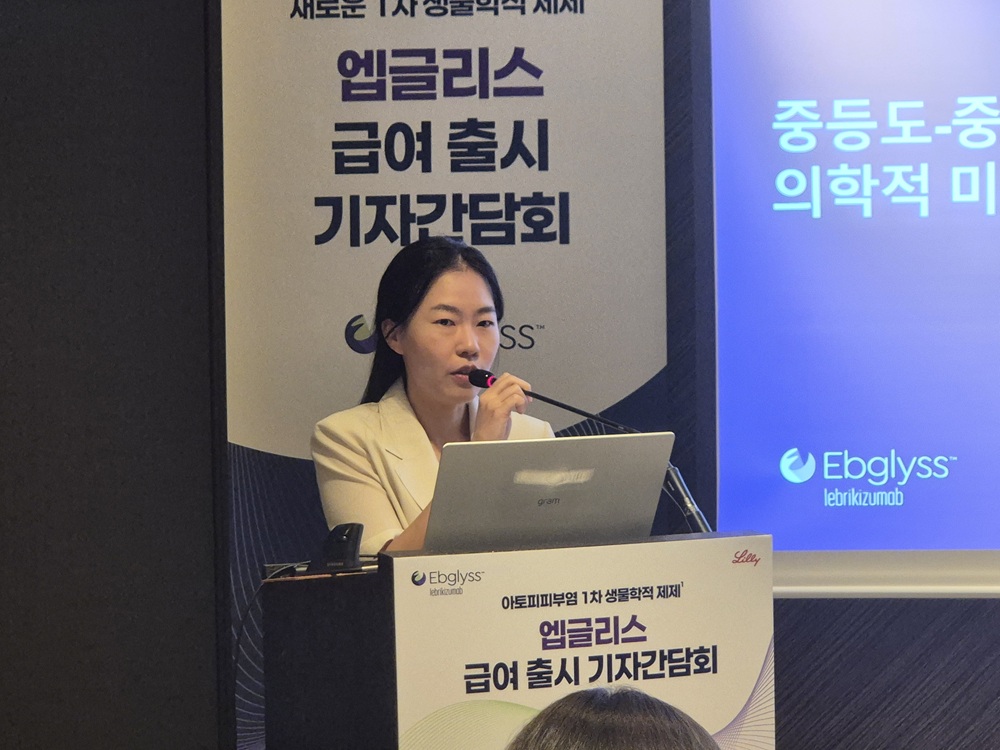
We are treating patients in consideration of their response to side effects such as latent tuberculosis, as well as whether the treatment can help with comorbidities, patient preferences, and clinical phenotypes.” Shin added, “Even though biological agents and JAK inhibitors are reimbursed in Korea, many patients are unable to receive optimal treatment due to financial burdens.
Although it is possible to switch between biological agents and JAK inhibitors, it is still not possible to switch between treatments within the same class, so there is room for improvement.”
-

- 0
댓글 운영방식은
댓글은 실명게재와 익명게재 방식이 있으며, 실명은 이름과 아이디가 노출됩니다. 익명은 필명으로 등록 가능하며, 대댓글은 익명으로 등록 가능합니다.
댓글 노출방식은
댓글 명예자문위원(팜-코니언-필기모양 아이콘)으로 위촉된 데일리팜 회원의 댓글은 ‘게시판형 보기’와 ’펼쳐보기형’ 리스트에서 항상 최상단에 노출됩니다. 새로운 댓글을 올리는 일반회원은 ‘게시판형’과 ‘펼쳐보기형’ 모두 팜코니언 회원이 쓴 댓글의 하단에 실시간 노출됩니다.
댓글의 삭제 기준은
다음의 경우 사전 통보없이 삭제하고 아이디 이용정지 또는 영구 가입제한이 될 수도 있습니다.
-
저작권·인격권 등 타인의 권리를 침해하는 경우
상용 프로그램의 등록과 게재, 배포를 안내하는 게시물
타인 또는 제3자의 저작권 및 기타 권리를 침해한 내용을 담은 게시물
-
근거 없는 비방·명예를 훼손하는 게시물
특정 이용자 및 개인에 대한 인신 공격적인 내용의 글 및 직접적인 욕설이 사용된 경우
특정 지역 및 종교간의 감정대립을 조장하는 내용
사실 확인이 안된 소문을 유포 시키는 경우
욕설과 비어, 속어를 담은 내용
정당법 및 공직선거법, 관계 법령에 저촉되는 경우(선관위 요청 시 즉시 삭제)
특정 지역이나 단체를 비하하는 경우
특정인의 명예를 훼손하여 해당인이 삭제를 요청하는 경우
특정인의 개인정보(주민등록번호, 전화, 상세주소 등)를 무단으로 게시하는 경우
타인의 ID 혹은 닉네임을 도용하는 경우
-
게시판 특성상 제한되는 내용
서비스 주제와 맞지 않는 내용의 글을 게재한 경우
동일 내용의 연속 게재 및 여러 기사에 중복 게재한 경우
부분적으로 변경하여 반복 게재하는 경우도 포함
제목과 관련 없는 내용의 게시물, 제목과 본문이 무관한 경우
돈벌기 및 직·간접 상업적 목적의 내용이 포함된 게시물
게시물 읽기 유도 등을 위해 내용과 무관한 제목을 사용한 경우
-
수사기관 등의 공식적인 요청이 있는 경우
-
기타사항
각 서비스의 필요성에 따라 미리 공지한 경우
기타 법률에 저촉되는 정보 게재를 목적으로 할 경우
기타 원만한 운영을 위해 운영자가 필요하다고 판단되는 내용
-
사실 관계 확인 후 삭제
저작권자로부터 허락받지 않은 내용을 무단 게재, 복제, 배포하는 경우
타인의 초상권을 침해하거나 개인정보를 유출하는 경우
당사에 제공한 이용자의 정보가 허위인 경우 (타인의 ID, 비밀번호 도용 등)
※이상의 내용중 일부 사항에 적용될 경우 이용약관 및 관련 법률에 의해 제재를 받으실 수도 있으며, 민·형사상 처벌을 받을 수도 있습니다.
※위에 명시되지 않은 내용이더라도 불법적인 내용으로 판단되거나 데일리팜 서비스에 바람직하지 않다고 판단되는 경우는 선 조치 이후 본 관리 기준을 수정 공시하겠습니다.
※기타 문의 사항은 데일리팜 운영자에게 연락주십시오. 메일 주소는 dailypharm@dailypharm.com입니다.


-
- "Leclaza, the best first-line option…expanded reimb will increase accessibility"
- PALOMA-2 recorded an objective response rate (ORR) of 90 and the 3-year overall survival (OS) rate of 70%…mOS has not yet been reached